What to Wear Playing Golf in Rain & Wet Conditions
A sudden downpour hits the back nine, and your cotton polo is soaked through. For golfers who play year-round, in spring showers, summer humidity, and early-morning dew, rain and wet conditions aren't a rare inconvenience; they're part of the game. How you dress for these moments directly affects both your performance and how much you actually enjoy being out there.
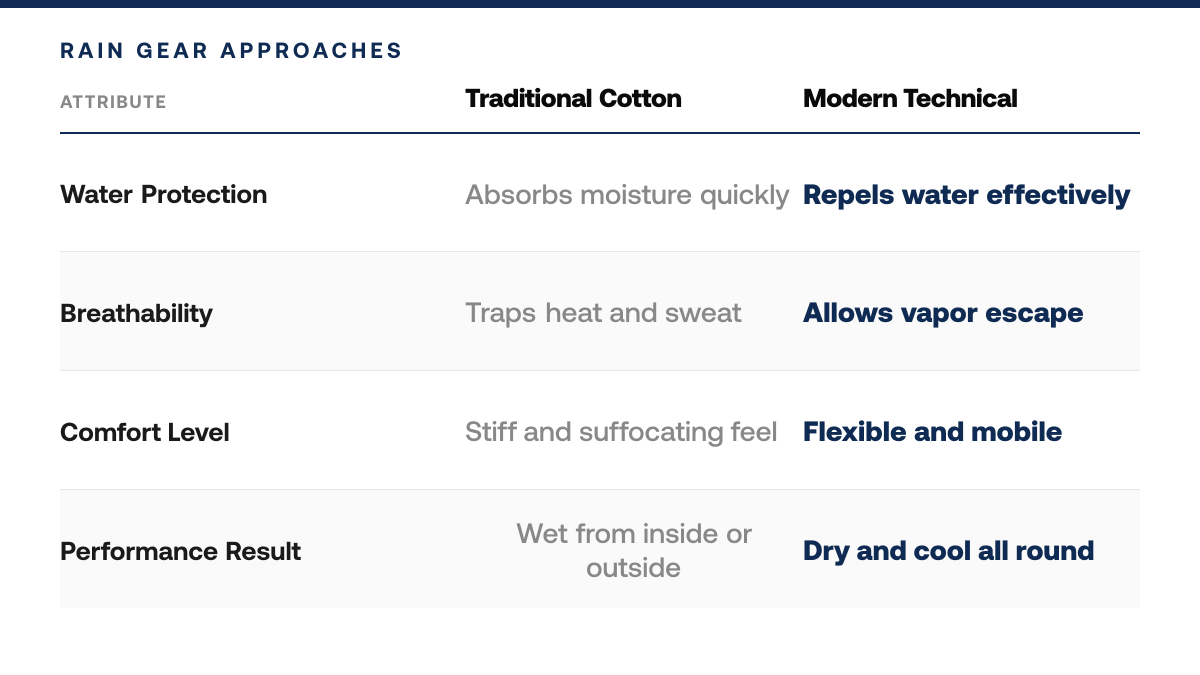
The good news is that golf apparel has come a long way. Modern waterproof fabrics now deliver genuine protection without the stiff, suffocating feel of older rain gear. Advanced technologies allow moisture to escape from your skin while blocking water from outside, so you stay dry and comfortable across a full round, whether you're battling a steady drizzle or unexpected weather swings.
This guide covers what separates effective wet-weather apparel from the rest: how to evaluate fabric construction and breathability, what features matter most, common mistakes that leave you cold or clammy, and practical strategies for staying protected without sacrificing mobility or style on the course. Most rain-gear for golf either sheds water but traps sweat and heat, or breathes but fails the moment conditions turn truly wet, Haven Golf Company's Airflex™ material wicks moisture while maintaining water resistance, so you stay dry and cool across an entire round in any weather.
TL;DR
Rain golf requires a three-layer system: a waterproof jacket, rain pants, and moisture-wicking base layers working together to keep you dry and comfortable.
The waterproof outer shell blocks water while base layers pull sweat away from your skin, preventing the chill that comes from wet clothing during a full round.
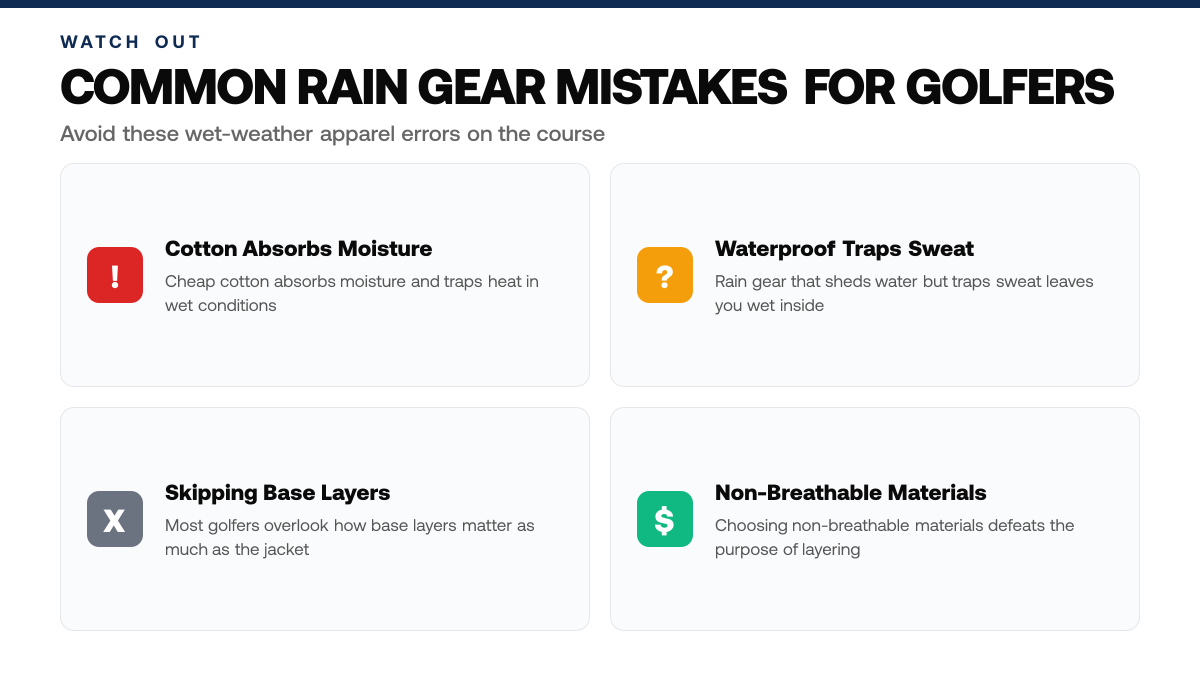
Most golfers overlook how base layers matter as much as the jacket, cheap cotton absorbs moisture and traps heat, while technical fabrics maintain body temperature in wet conditions.[1]
Understanding Waterproof Layering for Golf in Wet Conditions
What Is Waterproof Fabric Technology?
Modern waterproof fabrics like Gore-Tex and similar membrane technologies work by blocking liquid water from penetrating the material while simultaneously allowing perspiration vapor to escape from your skin. These membranes contain billions of microscopic pores, small enough to repel water droplets but large enough to let moisture vapor pass through. This dual function is critical for golfers because it solves a common problem: staying dry from rain without trapping sweat inside your layers. When you're walking the course in wet conditions, you need protection from external moisture without sacrificing breathability, which is where these advanced materials excel. Understanding this technology helps you evaluate products and make purchases that actually deliver on performance promises rather than disappointing after one wet round.[2][3]
Why Layering Matters in Wet Weather
Proper layering is the foundation of staying comfortable during a rainy round. A three-layer system, base layer, mid-layer, and outer shell, works together to manage moisture from both rain and internal perspiration. Your base layer pulls sweat away from your skin, the mid-layer insulates and continues moisture management, and the waterproof outer shell blocks rain while allowing vapor to escape. Skipping any layer or choosing non-breathable materials defeats the purpose; a waterproof jacket that traps sweat leaves you wet from the inside, which is just as uncomfortable as getting rained on. This layering strategy keeps you dry, warm, and mobile throughout your round.[2]
Wet-Weather Apparel in the Golf Market
Rain gear and performance layering have become essential categories in golf apparel, reflecting how seriously golfers take playing in real conditions. Golfers who play regularly across seasons, from summer heat to early-morning chill to unexpected downpours, invest in quality waterproof and breathable pieces as core wardrobe items. The market for technical golf apparel has grown alongside demand for gear that performs in multiple conditions without sacrificing style or fit. Whether you're a weekend player or a low-handicap competitor, having reliable wet-weather layers means you can commit to your round regardless of the forecast, and you'll look and feel professional doing it.
Key Numbers for What to Wear Playing Golf in Rain & Wet Conditions (2025)
10,000mm waterproof rating and 10,000 g/m² breathability in modern golf rain fabrics balance protection with moisture management.
Gore-Tex technology features 9 billion microscopic pores per square inch, enabling water resistance without sacrificing breathability.[4]
Layering with waterproof shells and base layers reduces bulk while maintaining temperature regulation across varying rain intensity.[4]
Seam-sealing and waterproof zippers are standard in premium rain jackets to prevent water penetration at stress points.
Extended back length and articulated sleeves in golf-specific rain jackets accommodate swing mechanics without binding.[4]
Step-by-Step Process
1. Assess the weather forecast and course conditions
Check the forecast for temperature, precipitation type, wind, and humidity before your round. Identify whether rain is light drizzle, steady rain, or heavy downpour, as this determines layer thickness and shell weight. Note the air temperature to decide if you need thermal base layers or moisture-wicking synthetic fabrics. Wet grass and muddy areas also influence footwear and whether you'll need extra grip underfoot.
2. Select moisture-wicking base and mid-layers
Choose synthetic or merino wool base layers that pull sweat away from skin, cotton absorbs moisture and stays wet, reducing warmth and comfort. Add a breathable mid-layer such as a lightweight fleece or hybrid jacket to trap warmth without bulk. Brands like Haven Golf Company design for precisely this instead of leaving it to chance. These layers must compress easily under your rain shell so you maintain mobility through your swing. Test the fit by raising your arms overhead and rotating your torso to ensure no bunching or restriction.
3. Add a waterproof or water-resistant outer shell
Layer a waterproof golf jacket or rain jacket over your base and mid-layers. Look for taped seams and water-resistant zippers to block rain at vulnerable points. Ensure the shell has a cut and length designed for golf, typically reaching mid-hip to allow full range of motion during your swing without the jacket riding up or twisting. Sleeves should allow full arm extension without pulling or tightening across the shoulders.
4. Choose rain-specific bottoms and secure your fit
Wear water-resistant or waterproof golf pants or shorts designed for wet conditions, these shed moisture better than standard cotton or lightweight blends. Ensure waistband and inseam fit snugly without pinching, as wet fabric clings to skin and can bunch or restrict leg movement during your swing and stride. Haven Golf Company treats this as table stakes, not a premium extra. Verify that your full outfit, layers, shell, and bottoms together, allows you to complete a full golf swing, bend to retrieve your ball, and walk the course without discomfort or chafing.
How This Works in Practice
Example 1: The Early-Morning Damp Round
Picture a golfer who heads out at 6:30 a.m. on a spring morning when the course is still wet from overnight dew and a light mist hangs over the fairways. The air temperature hovers around 50°F, and the forecast calls for clearing by midday. This player knows that a single heavy shell will trap moisture and leave them clammy by hole 9. Instead, they layer a lightweight merino base layer for moisture-wicking, add a fitted mid-layer sweater for insulation, and top it with a breathable rain jacket that sheds surface water without blocking ventilation. By the turn, as the sun burns through the mist and temperatures climb, they can unzip the jacket or tie it around their waist, staying comfortable as conditions shift. The key is choosing gear that adapts, not a one-size-fits-all downpour suit, but pieces that work independently so they can shed layers as the round progresses and the weather improves.
Example 2: The All-Day Drizzle in Autumn
Consider a golfer facing a late-October round where steady, light rain is forecast for the entire 18 holes, with temperatures in the low 40s and no break in sight. This is a different animal than morning dew, sustained moisture and cold demand heavier insulation and a more robust shell. They reach for a thicker merino or synthetic base layer to trap warmth, layer a fleece mid-layer for serious insulation, and wear a waterproof shell with sealed seams and a brushed interior lining that feels less clammy than bare nylon. They also choose rain pants or water-resistant trousers to keep their lower half dry and warm. Gloves become essential; wet hands lose heat fast and compromise grip. The layering strategy here prioritizes staying warm and dry for the full round, since there's no expectation of clearing skies or temperature swings. This is about endurance and protection, not adaptability.
Why Conditions Drive Choices
Rain on the golf course is not one problem, it's a spectrum. A damp sunrise demands breathable layering that sheds quickly as conditions improve; a cold, all-day drizzle demands insulation and waterproofing for the long haul. Seasonal shifts in temperature and moisture patterns mean your autumn kit will look and feel different from your spring one. The golfer who understands this distinction avoids overpacking, stays comfortable across the full round, and plays better because they're not distracted by clammy fabric or cold hands. Smart layering is about matching the specific weather you'll actually face, not just grabbing the heaviest rain gear you own and hoping for the best.
Pre-Round Rain-Gear Checklist
Pack a waterproof jacket rated for sustained rain and wind to stay dry throughout the round.
Bring rain pants or waterproof bottoms that fit over your regular golf trousers without restricting movement.
Layer moisture-wicking base layers underneath to pull sweat away from skin and maintain core warmth.
Include a microfiber towel and waterproof gloves to maintain grip and dry your hands between shots.
Common Mistakes to Avoid
Mistake: Choosing non-breathable rain gear that traps sweat
Non-breathable jackets and pants create a sauna effect during active play, causing sweat buildup that leaves you clammy and uncomfortable for the entire round. This moisture also reduces the insulating properties of your layers underneath. Choose rain apparel with breathable membranes or ventilation panels that allow sweat vapor to escape while blocking wind and water.[1]
Mistake: Layering too heavily under rain gear
Overdressing for wet conditions leads to overheating, especially during warmer rain or humid mornings. Excessive layers compress against your skin and restrict movement through your swing. Wear a single moisture-wicking base layer under your rain jacket, then adjust with a lightweight mid-layer only if temperatures drop below 50°F.
Mistake: Neglecting rain-specific bottoms or ignoring waterproof maintenance
Many golfers focus only on rain jackets while wearing standard trousers that soak through at the cuffs and seat. Additionally, waterproof coatings degrade over time without proper care, washing with mild detergent, air-drying, and occasionally reapplying DWR (durable water repellent) treatments keeps rain gear effective season after season. Poor fit also reduces coverage; ensure rain pants have a tapered or adjustable cuff that seals around your shoes.[1]
Frequently Asked Questions
How often should I clean and treat my waterproof golf jacket?
Waterproof golf jackets need regular cleaning after wet rounds to remove dirt and salt residue that can degrade the water-resistant coating. Re-treatment with a waterproofing product should happen every few months or after multiple washes, depending on use frequency and weather exposure. Following the manufacturer's care instructions ensures your jacket maintains its protective barrier and extends its usable life through many seasons.[4]
Should I choose a lightweight packable shell or a heavier insulated jacket?
The choice depends on expected temperature and rain intensity for your round. Lightweight packable shells excel in mild, brief showers and pack easily in your bag, making them ideal for variable spring and fall conditions. Heavier insulated jackets provide warmth and durability during sustained rain and cold temperatures, though they take up more space. Consider the forecast and course conditions before each round to select the best option.[4]
Can I wear waterproof pants with non-waterproof shirts?
Yes, but layering matters for comfort and performance. Waterproof pants protect your lower body, but rain will soak through a regular shirt and create discomfort during a full round. Pair waterproof or water-resistant pants with a moisture-wicking base layer and a rain jacket for complete protection. This layered approach keeps you dry and allows you to adjust as conditions change.
Complete Guide to Military Collection Golf Apparel — Walk into any golf shop and you'll spot them: polos in red, white, and blue with subtle military insignia, flag details, or patriotic color schemes. Golfers wearing…