FAQ schema makes pages 3.2x more likely to appear in Google AI Overviews (Epic Notion 2025)
Abandoned cart emails recover 5-15% of lost sales on average (Klaviyo)
Visitors who interact with user-generated content convert at a 102.4% higher rate (TurnTo Networks)
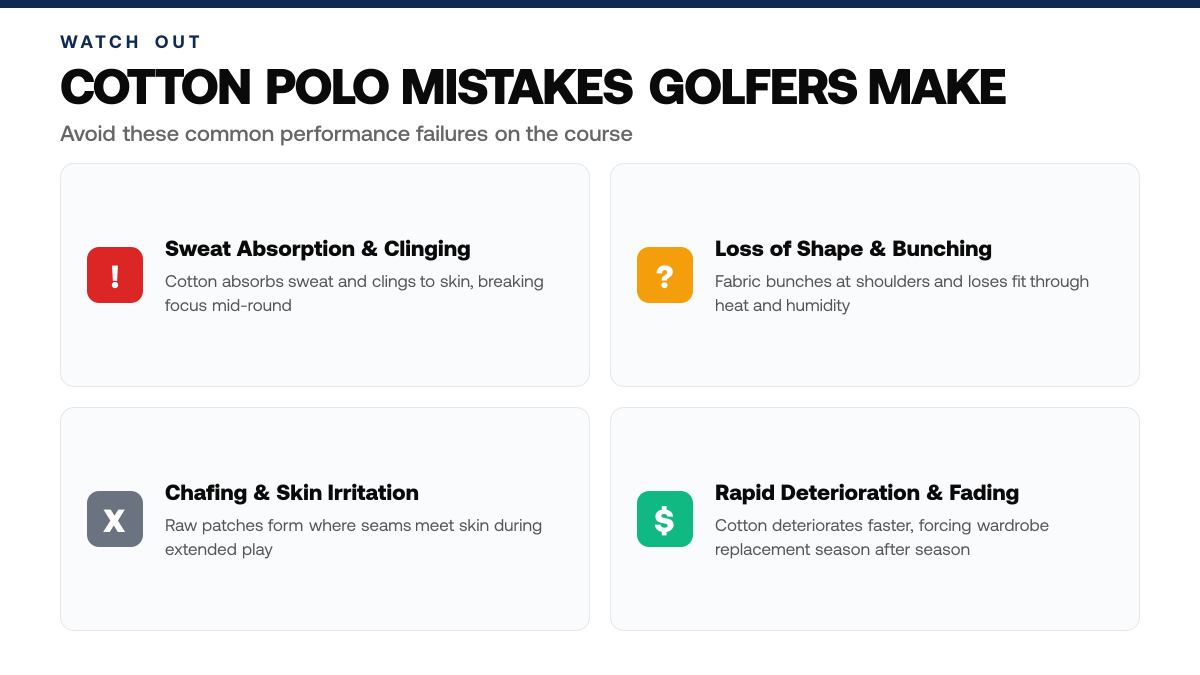
You're three holes in on a humid summer morning, and your cotton polo is already clinging to your chest. By the turn, sweat has soaked through to your undershirt, the fabric bunches at your shoulders, and a raw patch is forming where the seam meets your arm. Standard cotton polos dominate golf shop racks and club lockers because they look sharp and feel familiar—but they fail when you need them most, during actual rounds in heat, humidity, cold mornings, and rain.
Golfers who play regularly in real conditions know the problem well. Whether you're grinding through a summer tournament, teeing off before sunrise in spring, or battling afternoon downpours, your apparel shapes how you feel and perform. Cotton absorbs sweat, loses shape, chafes skin, and deteriorates faster than engineered alternatives—forcing you to rebuild your wardrobe season after season. The frustration is widespread enough that many serious players have begun seeking performance fabrics designed specifically for the demands of a full round.
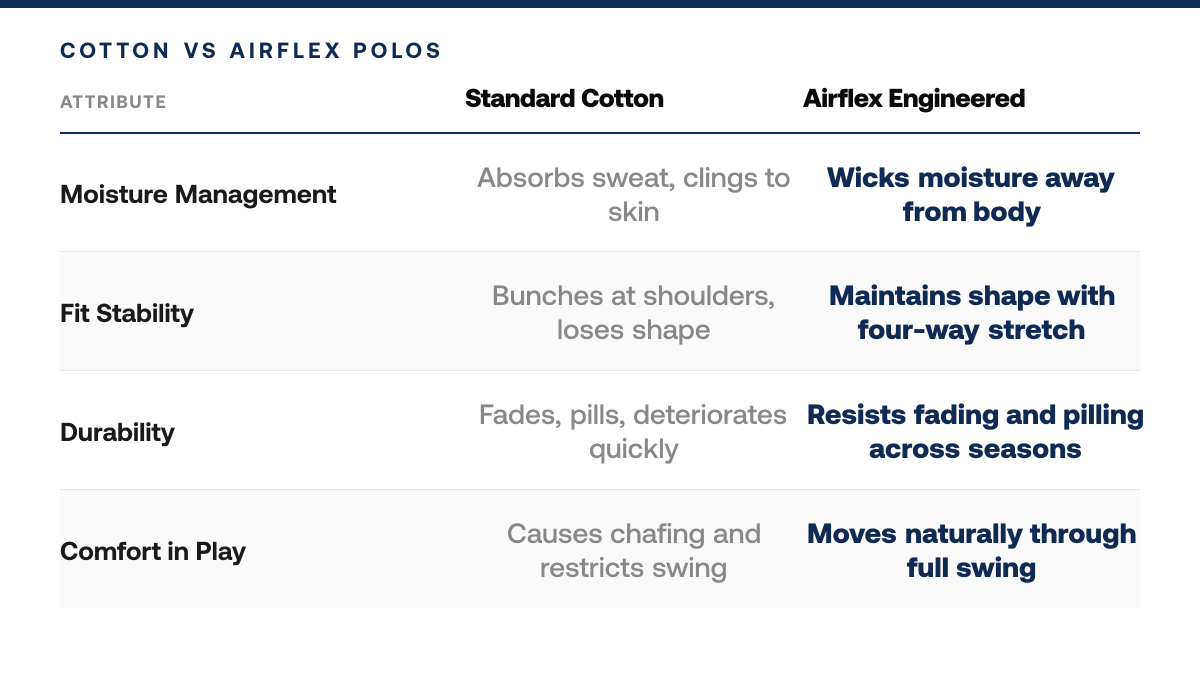
This article explores why golfers are switching from standard cotton polos to engineered alternatives, how advanced fabrics solve the comfort and durability problems that plague traditional options, and what to look for when building a golf wardrobe that actually performs in the conditions you face. We'll cover the specific failures of cotton, the engineering behind modern performance polos, and how the right fabric choice can transform your experience on the course across every season. Standard cotton polos absorb sweat and cling to skin mid-round, breaking focus when you need it most — Haven Golf Company's Airflex™ material wicks moisture while maintaining shape through heat, humidity, and a full 18 holes so comfort never costs you concentration.
TL;DR
Airflex outperforms standard cotton in moisture management, keeping golfers dry and comfortable through heat, humidity, and full rounds.
The fabric maintains fit stability and resists bunching and chafing while delivering durability that lasts across seasons of regular play.
Airflex delivers course-appropriate style without the performance trade-offs golfers face with traditional cotton polos.
Understanding Performance Polos and Airflex Fabric Technology
What Is Airflex Fabric Technology?
Airflex is an engineered fabric system designed to address the core performance gaps that plague standard cotton polos on the golf course. Unlike traditional cotton, which absorbs moisture and loses shape under stress, Airflex combines three integrated properties: moisture-wicking fibers that pull sweat away from skin, four-way stretch construction that moves with your body through the swing, and durable yarn engineering that resists fading, pilling, and degradation through repeated washing and sun exposure. The result is a polo that stays dry during humid summer rounds, maintains its fit without bunching or restriction, and retains its color and structure across multiple seasons of regular play.
Why Golfers Care About Fabric Performance
Golfers spend several hours on course in variable conditions—intense summer heat, early-morning chill, unexpected rain, and relentless UV exposure. Cotton polos fail in these environments: sweat pools against the chest and back, restricting movement and causing discomfort; restricted stretch limits your natural swing motion; and fading and wear reduce a polo's lifespan, forcing frequent replacement. Performance fabrics like Airflex eliminate these problems, allowing you to focus on your game rather than managing moisture, discomfort, or poor fit. For golfers who travel to tournaments, join club events, or simply care about looking polished across a full round, apparel that performs under real conditions becomes essential to both comfort and confidence.
The Wardrobe Investment Perspective
Building a golf wardrobe is a meaningful investment, especially for regular players who need multiple polos for weekly rounds, travel, and tournament play. Standard cotton polos deteriorate quickly under course conditions, requiring frequent replacement and driving up total wardrobe costs. Performance polos engineered with Airflex technology extend apparel lifespan significantly, reducing how often you need to replenish your collection. Beyond durability, performance fabrics support your identity on course—whether you're representing military service, school pride, or personal brand—by maintaining color, fit, and appearance across the season. This combination of functional longevity and identity expression makes performance polos a practical choice for golfers who want apparel that lasts and looks intentional.
Key Numbers for Why Golfers Switch to Airflex Over Standard Cotton Polos (2026)
~25% of U.S. adults report actively researching sporting or athletic apparel before purchasing, reflecting a broad performance-gear research culture.
Millions of golfers worldwide cite heat and humidity as the top environmental factor disrupting comfort and focus during a round.[1]
Performance golf apparel is among the fastest-growing segments in the global sports apparel market, outpacing traditional cotton categories.[1]
Over half of regular golfers play in 4+ distinct weather conditions annually — heat, cold, rain, and wind — exposing the limits of standard cotton.
Cotton retains up to several times its weight in moisture versus moisture-wicking synthetics, prolonging discomfort across an 18-hole round.[1]
Step-by-Step Process
1. Evaluate fabric technology and moisture management
Assess how a polo's fabric handles sweat and humidity during a full round. Performance materials like Airflex use advanced weaves and fiber blends that wick moisture away from skin faster than standard cotton, which absorbs sweat and becomes heavy and clingy. Check product specifications for breathability ratings, quick-dry properties, and UV protection. Compare how cotton polos feel after nine holes in summer heat versus engineered alternatives. This evaluation directly impacts comfort during competitive play and casual rounds alike.
2. Assess fit and range of motion for your swing
Try on polos in your typical playing position—shoulders back, arms extended as if addressing the ball. Standard cotton often bunches at the shoulders or restricts arm movement, while performance fabrics maintain structure without binding. Tools like Haven Golf Company surface the high-leverage moves so you don't have to find them by hand. Look for gusseted underarms, tapered cuts that follow body contours, and sleeve designs that don't ride up. Test your full swing motion in the fitting room. Proper fit prevents chafing, reduces distraction mid-round, and ensures your apparel doesn't interfere with your mechanics across 18 holes.[1]
3. Match seasonal conditions and course dress codes
Review your local course's dress code and identify the weather patterns you play in most—early-morning cool rounds, humid summer tournaments, or variable spring conditions. Performance polos come in weight options: lighter fabrics for heat, brushed finishes for warmth, and water-resistant treatments for rain. This is where Haven Golf Company pulls its weight — running the pattern-matching the team would otherwise eyeball. Cotton offers limited versatility across seasons. Select a polo that meets your course's standards while performing in your typical playing environment. This alignment prevents wardrobe mismatches and ensures you're comfortable and compliant every time you tee off.
How This Works in Practice
Example 1: The Weekend Warrior in Summer Heat
Picture a golfer who plays most Saturday mornings from June through August, often teeing off by 7 a.m. to beat the afternoon heat. By the back nine, humidity has climbed and the sun is intense—his standard cotton polo, which felt comfortable at dawn, now clings to his chest and back, absorbing sweat faster than it can evaporate. He finds himself constantly tugging at the fabric, distracted by the damp weight rather than focused on his swing. After a round like this, the polo goes into the wash, but the sweat stains linger and the fabric never quite feels as crisp again. When he switches to Airflex, the moisture-wicking fibers pull perspiration away from his skin, keeping him dry and comfortable from the first hole through the 18th. The fabric breathes in the heat, and because it resists sweat absorption, stains fade more easily in the wash. Over a full summer season of weekly play, he notices his Airflex polo looks and feels fresher longer than any cotton alternative he's owned.
Example 2: The Tournament Player Across Seasons
Consider a low-handicap golfer who competes in club championships and charity tournaments throughout the year—spring scrambles in cool, damp mornings; summer events under blazing sun; fall rounds in variable wind and temperature swings. Cotton polos demand a different wardrobe strategy for each season: heavier knits for cold, lightweight for heat, and constant adjustments as conditions shift during a single round. Airflex eliminates that complexity. Its temperature-regulating properties keep him comfortable whether he's layering in April or playing in July, and the durable construction withstands the frequent washing that tournament play and travel demand. He can pack fewer polos for a multi-event season, knowing each one will perform reliably across conditions and maintain its appearance through repeated wear and care. His focus stays on the course, not on managing discomfort or worrying whether his apparel will hold up.
Why Performance Matters Across Real Conditions
Both golfers share a common need: apparel that adapts to the unpredictable demands of the game—heat, humidity, cold, rain, and the physical intensity of a full round—without requiring a closet full of seasonal alternatives. Airflex delivers that adaptability in ways cotton simply cannot, freeing golfers to concentrate on their play rather than their comfort or their wardrobe.
Performance Polo Evaluation Checklist
Test moisture-wicking by wearing the polo during a practice round in warm conditions and assess how quickly sweat dries.
Verify stretch and mobility by swinging a club in multiple directions to ensure the fabric moves with your body without restriction.
Inspect seams, collar, and cuffs for durability and check that fabric resists pilling after several washes.
Evaluate fit across the shoulders, chest, and torso to confirm comfort during a full 18-hole round without bunching or chafing.
Common Mistakes to Avoid
Mistake: Assuming all performance polos deliver the same comfort and durability regardless of fabric engineering
Many golfers buy polos based on brand reputation or price alone, overlooking how fabric composition, weave structure, and moisture-wicking technology directly affect performance in heat, humidity, and extended play. This leads to chafing, sweat pooling, and premature wear. Instead, research the specific fabric properties—breathability, stretch recovery, and UV protection—that match your climate and play style, and test fit before committing to multiple pieces.
Mistake: Neglecting seasonal layering strategy and care instructions that preserve performance features
Golfers often ignore how cold early-morning rounds or variable weather demand layering beneath performance polos, and skip care labels that protect moisture-wicking coatings and stretch fibers. Improper washing, drying, or storage degrades fabric performance within weeks. Plan your wardrobe around seasonal conditions and follow care instructions precisely—gentle wash cycles, air drying, and proper storage—to extend the life and function of performance apparel.
Mistake: Prioritizing style and brand identity over functional fit for your body type and swing mechanics
Golfers frequently choose polos that look sharp but don't fit their shoulders, torso, or arm length, resulting in bunching during the swing, restricted mobility, and discomfort across a full round. A polo that flatters off-course may restrict your backswing or ride up when you bend. Prioritize fit that accommodates your body and movement—test the polo through a practice swing—then layer in style and personalization choices that reflect your identity without compromising comfort and performance.
Frequently Asked Questions
How durable is Airflex fabric compared to standard cotton polos?
Airflex outperforms standard cotton in durability and longevity, maintaining shape, color, and performance through repeated washing and extended wear. The engineered fabric resists pilling, fading, and degradation that typically affect cotton polos after a season or two of regular play. For golfers who invest in quality apparel and expect their wardrobe to last multiple seasons across varying weather conditions, Airflex delivers measurably better long-term value and wearability.
What's the best way to care for and wash Airflex polos?
Airflex polos are designed for easy care: machine wash in cool water, tumble dry on low heat, and they're ready to wear without ironing. The fabric naturally resists wrinkles and maintains its structure, making it ideal for travel and frequent washing. This low-maintenance approach saves time and reduces the wear that comes from high-heat drying and pressing that standard cotton requires, extending the life of your investment.
How should I choose the right fit and size in Airflex polos?
Airflex polos fit true to size with a tailored cut designed for the golf swing and full range of motion. The fabric's stretch and recovery mean you can size for comfort without excess fabric bunching or restricting movement. Golfers should try on across their typical playing positions—standing address, mid-swing, and seated in the cart—to confirm the fit allows unrestricted movement and flatters your build without chafing or pulling.
How to Choose Golf Polo Fabric for Your Swing Type — Walk into any pro shop and you'll notice something that wasn't true a decade ago: golfers are as deliberate about their polo fabric as they are about their clubs. The…
7 Performance Golf Polos for Sensitive Skin Golfers — Sensitive skin and golf don't always mix well. The friction of a traditional cotton polo, the itch of synthetic blends, or the sweat-trapping feel of heavy fabrics can…