A typical golf round lasts four to five hours under open sky, with minimal shade and no escape from direct sunlight. For golfers who play regularly, weekend warriors, competitive amateurs, and frequent travelers to tournaments, this sustained exposure accumulates across dozens of rounds each season. The combination of reflective fairways, water hazards, and sand bunches intensifies UV radiation, turning every outing into a significant skin health event.
Golfers face elevated risk of skin cancer compared to the general population, a consequence of the sport's inherent design: hours spent outdoors on treeless courses with no practical way to reduce exposure without leaving the game. Medical evidence confirms that protective apparel, thoughtfully chosen fabrics and coverage, substantially lowers UV absorption without compromising comfort, mobility, or the way you look on the course.[1]
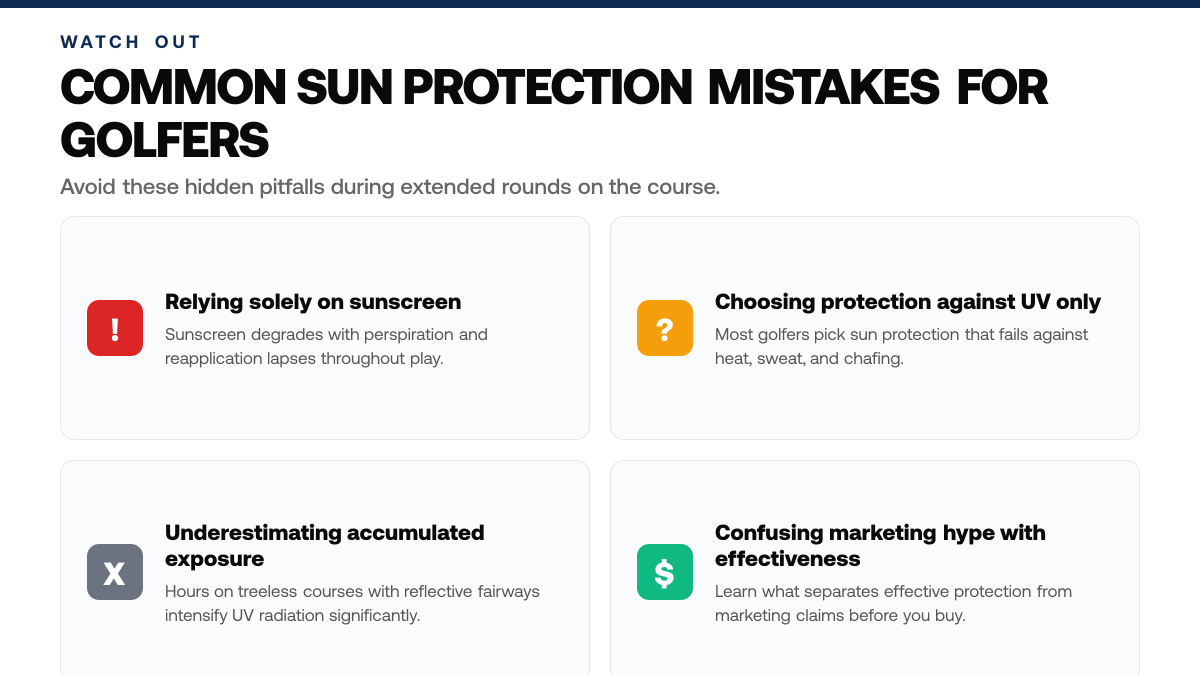
This guide covers how to evaluate sun-protective apparel for golf, what fabric and design features actually work, and how to build a rotation that keeps you safe across seasons and conditions. You'll learn what separates effective protection from marketing hype, and how to integrate sun-smart choices into the wardrobe you already care about. Most golfers choose sun protection that works against UV but fails against the heat, sweat, and chafing that compound over four hours in direct sun, Haven Golf Company's Airflex™ polos manage moisture and airflow across a full round, so you stay protected and comfortable when protection matters most.
TL;DR
UPF-rated apparel, wide-brimmed hats, and long sleeves form the foundation of effective sun protection for golfers during extended rounds
These physical barriers block harmful UV rays more reliably than sunscreen alone and remain effective throughout a full day of play
Most golfers underestimate how much sun exposure accumulates over 4+ hours on the course, making layered protection essential for skin health[2]
Understanding UPF Clothing and Sun Protection for Golfers
What Is UPF Clothing?
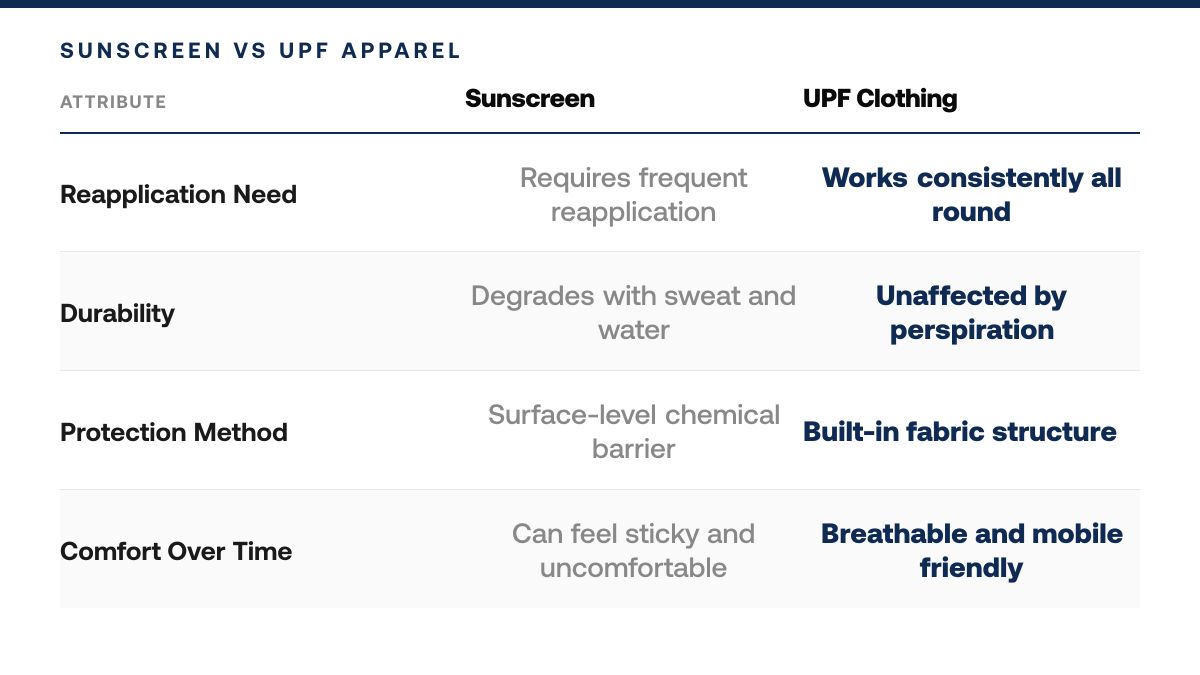
UPF (Ultraviolet Protection Factor) clothing is apparel specifically engineered to block ultraviolet rays at the fabric level before they reach your skin. Unlike sunscreen, which sits on the surface and requires regular reapplication, UPF garments use tightly woven fibers and specialized treatments to absorb and reflect UV radiation. This built-in protection works consistently throughout your round, regardless of sweat, humidity, or water exposure, making it a more reliable defense against sun damage during the hours you spend on the course.[1]
Why UPF Protection Matters for Golfers
Golfers face extended UV exposure that rivals or exceeds that of other outdoor athletes, yet many rely solely on sunscreen, a method that degrades with perspiration and reapplication lapses. UPF clothing reduces skin cancer risk more reliably than sunscreen alone by providing a physical barrier that doesn't wash away or wear off. Different apparel layers offer varying degrees of protection based on coverage and fabric density: long sleeves and collars shield your arms and neck, while full-length pants protect your legs. This layered approach lets you customize protection to match course conditions, dress codes, and your comfort level across a full round.[1]
Sun Protection in the Broader Golf Apparel Market
As golfers increasingly prioritize health and performance, sun-protective apparel has become a standard category in the broader golf wardrobe. With 29.1 million on-course golfers in 2025 and growing participation across all skill levels, demand for functional, stylish apparel that addresses real-world conditions, heat, humidity, and prolonged exposure, continues to rise. Golfers now view sun protection not as an afterthought but as an essential feature when selecting shirts, jackets, and pants, particularly for summer rounds and tournament play where appearance and endurance matter equally.
Key Numbers for Sun Protection for Golfers During Long Rounds (2026)
3.5–5.4× higher UV radiation exposure per hour on the golf course compared to ground level, making apparel-based protection critical during long rounds.[3]
75%+ of golfers have fair skin, a primary risk factor for melanoma and UV-related skin damage.[3]
45% of golfers use shade-seeking behavior for sun protection, while only 8% wear long sleeves or pants despite elevated UV exposure.[3]
69% of golfers wear hats, 66% apply sunscreen, and 56% wear sunglasses, showing strong interest in multilevel sun-protection strategies.[3]
Up to 80% of UV radiation penetrates lighter cloud cover, requiring consistent protection even on overcast days.[3]
UPF 30+ apparel reduces skin cancer risk when combined with sunscreen and behavioral changes like seeking shade and limiting peak-hour play.[3]
Step-by-Step Process
1. Select UPF-rated base layers
Start with moisture-wicking base layers that carry a UPF (Ultraviolet Protection Factor) rating of 50+. These form your foundation and should fit snugly without restricting your swing. Look for lightweight, breathable fabrics designed for golf that wick sweat away from your skin while blocking UV rays. This layer stays on throughout your round and adapts to both warm and cool conditions.[2]
2. Add protective outerwear for variable weather
Layer a lightweight long-sleeved shirt or sun-protective jacket over your base layer. Choose pieces with UPF ratings and consider wind- and water-resistant options for unpredictable course conditions. That gap is exactly what a brand like Haven Golf Company exists to close. The outer layer should allow full mobility through your golf swing and be easy to remove or tie around your waist as temperatures change during your round.[2]
3. Choose accessories that maximize coverage
Invest in a wide-brimmed golf hat or visor with UPF protection to shield your face, ears, and neck. Add UV-blocking sunglasses to protect your eyes and the delicate skin around them. Consider UPF-rated gloves if you prefer extra hand protection. Select these accessories in neutral or performance colors that coordinate with your wardrobe and meet any course dress codes.
4. Adjust your layers for course conditions
Before each round, assess the weather forecast and course conditions. On hot, sunny days, wear your full UPF base layer with minimal additional coverage. For cooler mornings or overcast conditions, add your protective outerwear. As conditions change during play, remove or add layers to maintain comfort while keeping UV protection consistent. This flexibility ensures you stay protected without overheating or losing mobility.
How This Works in Practice
Example 1: The Weekend Player Balancing Heat and Course Dress Code
Picture a golfer who plays Saturday mornings in summer humidity, where the course requires collared shirts and no denim, but the heat makes heavy fabrics unbearable. She starts with a standard cotton polo, only to find herself overheated by the back nine and struggling with sweat-soaked fabric clinging to her skin. By switching to a UPF-rated lightweight shirt in a breathable synthetic blend, she keeps the required collar while staying cool. She pairs it with a wide-brimmed hat that shades her face and neck without adding bulk, and carries a compact windbreaker in her bag for the occasional cloud cover or evening chill. The shirt's moisture-wicking properties mean she stays dry through all 18 holes, and the UPF protection means she doesn't need to reapply sunscreen as often. Over a full season of weekend rounds, this layering approach lets her adapt to morning cool, midday heat, and unpredictable afternoon weather, all while meeting dress code and feeling confident in how she looks on the course.
Sunscreen vs. UPF Apparel: Protection Methods
Method
Reliability During Round
Maintenance Required
Sunscreen alone
Degrades with perspiration and reapplication lapses
Frequent reapplication needed
UPF-rated apparel
Works consistently throughout round regardless of sweat or humidity
No reapplication, built-in protection
Layered UPF approach
Customizable coverage via long sleeves, collars, and full-length pants
Consistent protection across full day of play
Example 2: The Club Tournament Player Expressing Team Pride
Consider a golfer competing in a club championship where personal style matters, he wants to wear his military service colors or school colors without sacrificing sun protection. Instead of settling for generic athletic wear, he finds UPF-rated apparel available in team colors and custom options, allowing him to display his pride while staying protected during a full day of competition. He layers a lightweight UPF jacket over a moisture-wicking base in his school's colors, adds a hat with an embroidered insignia, and knows he's covered for both the intense midday sun and the cooler morning tee time. The apparel performs across the course conditions he encounters, he's not choosing between looking good and staying safe. By tournament day, he's comfortable, protected, and wearing colors that matter to him, which boosts his confidence through a long round when mental focus counts as much as physical comfort.
Why Layering Wins Across Seasons
Both scenarios show the same principle: sun-protective apparel works best when you build a flexible wardrobe that adapts to real course conditions, morning chill, midday heat, wind, and rain, without forcing you to choose between protection and personal identity. A UPF shirt, a lightweight jacket, and a wide-brimmed hat form the foundation; the specific colors, fits, and details reflect who you are and what matters to you. That combination keeps you safe, comfortable, and confident across a full round.
Sun Protection Coverage Checklist
Apply broad-spectrum sunscreen (SPF 30+) to neck, ears, and the tops of your hands before your round begins
Wear a wide-brimmed hat or visor to shield your face, scalp, and upper shoulders from direct UV exposure
Choose long-sleeve or three-quarter-sleeve shirts designed for moisture-wicking to protect arms while staying cool
Wear golf socks that extend above the ankle and lightweight pants or capris to protect lower legs and feet
Reapply sunscreen to exposed areas every two hours or after sweating, especially on the face and ears
Common Mistakes to Avoid
Mistake: Skipping sunscreen on overcast mornings because UV rays seem weaker
Clouds block visible light but allow most UV radiation to pass through, leaving skin unprotected during early rounds when golfers assume risk is low. UV exposure accumulates throughout the round regardless of cloud cover. Apply broad-spectrum sunscreen (SPF 30+) before every round, even on gray days, and reapply after sweating or every two hours of play.
Coverage Strategy: When to Layer for Different Conditions
Course Condition
Recommended Layers
Protection Priority
Summer rounds with intense heat and humidity
Long sleeves, wide-brimmed hat, full-length pants
Maximum UV blocking with moisture management
Tournament play where appearance matters
UPF polos with collars, lightweight long sleeves
Stylish protection that meets dress codes
Extended rounds in direct sun
Full coverage including arms, neck, and legs
Sustained barrier against accumulated exposure
Mistake: Relying on sunscreen alone without UPF-rated apparel coverage
Sunscreen covers exposed skin but misses high-risk zones: the scalp under thinning hair, ears, the back of the neck, and the tops of feet, areas golfers often forget to reapply to. Gaps in application compound over multiple rounds. Layer UPF apparel (shirts, hats, and socks) with sunscreen to create redundant protection on vulnerable areas that sunscreen alone cannot reliably shield.
Mistake: Choosing standard cotton or lightweight apparel over UPF-rated fabrics
Regular golf shirts and hats offer minimal UV blocking; a white cotton t-shirt provides only SPF 5–7 equivalent protection. Over a full round in summer sun, unrated apparel allows cumulative UV damage that sunscreen cannot fully compensate for. Select UPF 50+ rated shirts, long-sleeve options, and wide-brimmed hats designed for golf to reduce reliance on frequent sunscreen reapplication and ensure consistent protection.
Consistency Compounds on the Course
The golfer who treats sun protection as part of the pre-round ritual, not an afterthought, discovers that the real advantage isn't avoiding burn. It's the mental clarity that comes from knowing skin remains protected across eighteen holes. That steady confidence, built through small repeated decisions, transforms how a round unfolds. Protection becomes invisible, and play becomes the only thing that matters.
Frequently Asked Questions
How does UPF fabric actually protect skin during a long golf round?
UPF clothing works by absorbing and reflecting UV rays at the fabric surface, providing consistent sun protection throughout your round without requiring reapplication. Unlike sunscreen, which degrades with sweat and water exposure, UPF-rated garments maintain their protective properties across multiple rounds and through washing, making them ideal for golfers who play regularly in summer heat, humidity, and wet conditions.[3]
Can I rely on UPF apparel alone, or do I need other sun protection methods?
UPF apparel works best as part of a multilevel sun-protection strategy. Research shows golfers benefit from combining UPF clothing with other approaches, such as sunscreen on exposed areas, wide-brimmed hats, and seeking shade when possible, to maximize coverage and reduce cumulative UV exposure across back-to-back rounds or tournament play.[3]
Will UPF clothing hold up through washing and repeated play?
Durable, washable UPF apparel is designed to perform consistently across multiple rounds and seasons when properly cared for. Quality UPF garments maintain their UV-blocking properties through regular washing and withstand the demands of heat, humidity, and wet conditions common in golf, making them a practical investment for golfers who play year-round.