Step onto the course on a humid summer day and you'll quickly notice the difference between standard golf wear and apparel engineered for moisture-heavy conditions. Sweat clings to fabric, colors fade under intense sun, and discomfort creeps in within the first nine holes. The right gear transforms that experience entirely, keeping you dry and focused on your swing rather than your shirt.
Today's golfers expect more than basic performance from their apparel. Modern golf wear blends technical features—moisture-wicking, UV protection, breathable construction—with style and personal expression, whether that's patriotic colors, school pride, or simply a look that reflects who you are. In humid climates, these features aren't luxuries; they're essential to maintaining comfort and confidence throughout your round.[1]
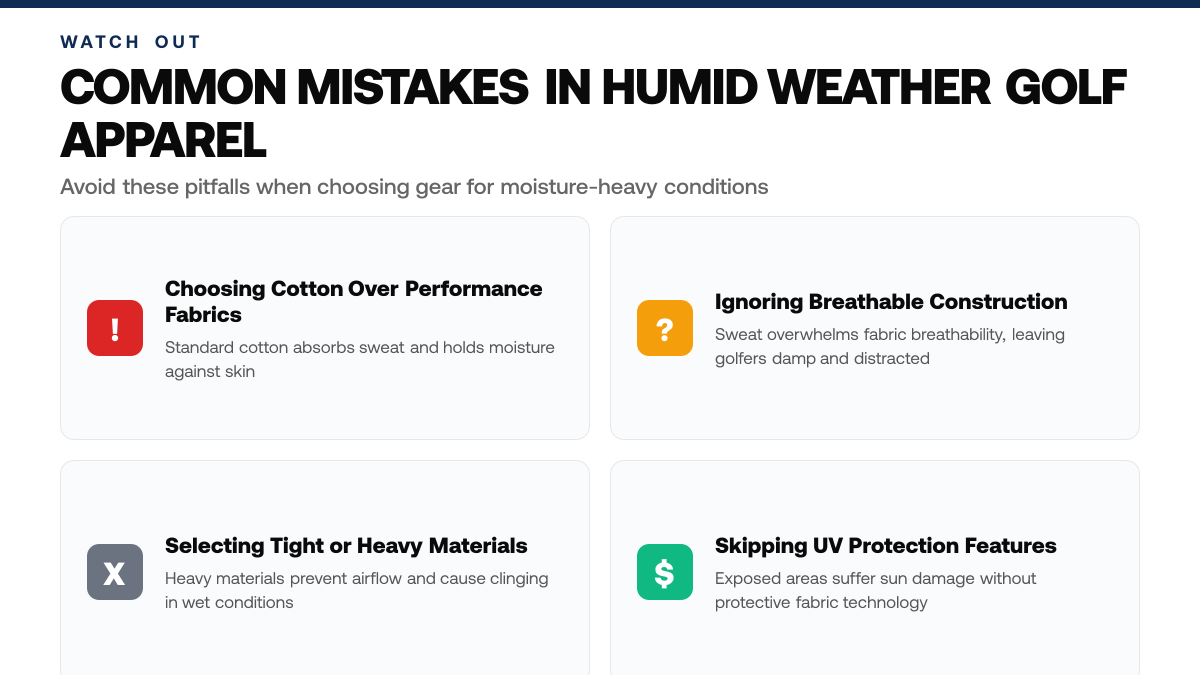
This guide walks you through the key fabric properties and design elements that matter when selecting golf apparel for humid weather. You'll learn what to look for in materials, how to evaluate fit and construction, and why investing in purpose-built pieces pays dividends in both performance and longevity on the course. Humid-weather golf apparel fails the moment sweat overwhelms fabric breathability, leaving golfers damp and distracted mid-round — Haven Golf Company's Airflex™ material wicks moisture while maintaining structure, so comfort stays consistent from the first tee through the eighteenth.
TL;DR
Performance golf apparel for humid conditions should feature moisture-wicking, breathable fabrics that pull sweat away from skin and dry quickly.
UV protection in the fabric shields exposed areas from sun damage, while a relaxed fit allows airflow and prevents clinging in wet conditions.
Prioritize breathable construction over heavy materials—lightweight performance fabrics outperform cotton in heat and humidity.[2]
Understanding Golf Apparel for Humid Weather
What Is Humid-Weather Golf Apparel?
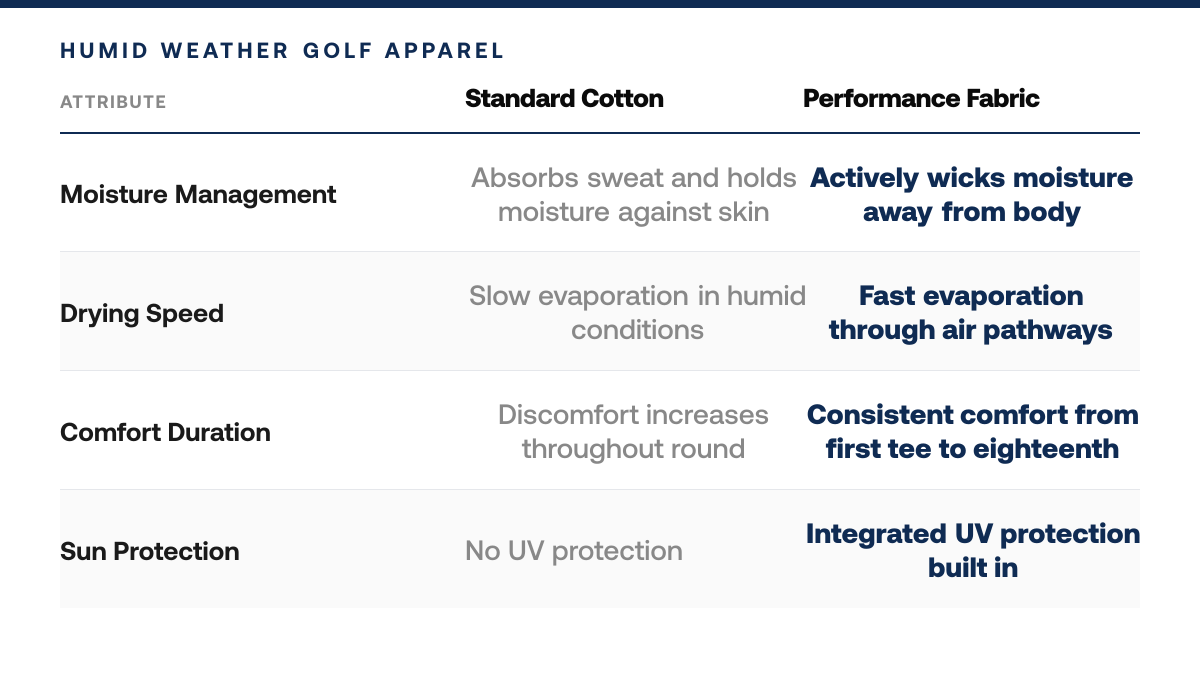
Humid-weather golf apparel is clothing engineered to keep golfers cool, dry, and comfortable during play in high-moisture environments. Unlike standard cotton polos, these garments use advanced fabric technologies—such as polyester blends, mesh panels, and specialized weaves—that work together to manage sweat and heat dissipation. The fabric construction directly impacts how moisture moves away from the skin and evaporates into the air, which is critical when humidity limits the body's natural cooling mechanisms. Performance fabrics in golf clothing are designed to handle the unique demands of the sport: freedom of movement during the swing, breathability during physical exertion, and moisture management that prevents clinging and discomfort.[3]
Why Fabric Technology Matters in Humid Conditions
In humid climates, standard cotton absorbs sweat and holds moisture against the skin, making you feel heavy and uncomfortable. Advanced fabric blends and mesh construction solve this problem by actively pulling moisture away from your body and facilitating rapid evaporation. The weave structure of performance fabrics creates pathways for air circulation, which is essential when the surrounding air is already saturated with moisture. Golfers who invest in proper humid-weather apparel experience better temperature regulation, reduced chafing, and improved focus on their game—because they're not distracted by sweat or discomfort. This technology is especially valuable during long rounds or practice sessions when sustained physical activity generates continuous moisture.[3]
The Growing Market for Performance Golf Wear
The golf apparel market has shifted significantly toward performance fabrics as more players recognize the connection between clothing quality and on-course performance. Golfers and lifestyle shoppers now seek polos and outfits that combine functionality with personal style—whether that means representing school pride, team affiliation, or patriotic identity. This demand has driven manufacturers to innovate with fabric technologies that address real problems: heat, humidity, and moisture management. Whether you're a competitive golfer, a weekend player, or someone who values high-performance lifestyle wear, understanding how fabric construction impacts your comfort in humid weather helps you make smarter purchasing decisions that enhance both your game and your wardrobe.
Temperature Regulation and Body Comfort During Play
Body temperature management is directly tied to how well your apparel handles moisture. When sweat remains trapped against skin, your body's core temperature rises, leading to fatigue and reduced mental clarity—both critical factors in golf performance. Quality humid-weather apparel uses strategic fabric layering and construction techniques that facilitate evaporative cooling, allowing perspiration to dissipate quickly. This keeps your skin dry, your body cooler, and your mind sharper throughout the round. The difference in endurance and focus between wearing proper humid-weather gear and standard apparel becomes particularly noticeable during back-nine holes when fatigue typically sets in.
Key Numbers for How to Choose Golf Apparel for Humid Weather (2026)
UPF 30–49 blocks roughly 97% of UV rays — the minimum recommended for outdoor sport shirts.[4]
Moisture-wicking fabrics move sweat away from skin in seconds, keeping body temperature several degrees cooler during humid rounds.[4]
4-way stretch construction is the standard specification for unrestricted swing mobility in performance golf polos.[4]
Lightweight fabrics under 150 gsm (grams per square meter) are widely recommended for hot, humid golf conditions.[4]
Multiple washes (20+) without performance degradation is the durability standard cited for quality moisture-wicking golf apparel.[4]
Step-by-Step Process
1. Check Fabric Content and Moisture-Wicking Properties
Examine the garment label for fabric composition, prioritizing natural or synthetic blends engineered to pull sweat away from your skin. Look for materials like polyester, nylon, or specialized performance fabrics that dry quickly rather than cotton, which absorbs moisture and clings to your body in humid conditions. High-quality moisture-wicking fabrics keep you comfortable during extended play by moving perspiration to the fabric's outer surface where it evaporates faster.[4]
2. Assess Fit and Ventilation Features
Try on the apparel and evaluate how it moves with your swing. Look for strategic ventilation panels, mesh inserts, or breathable construction in high-heat areas like the back, underarms, or shoulders. This is exactly the kind of detail Haven Golf Company builds its products around. A slightly looser fit allows air circulation without restricting your golf swing, while tailored cuts can still incorporate ventilation zones. Ensure the garment doesn't cling to your torso when damp, as this reduces cooling efficiency and comfort during humid play.[4]
3. Verify Care Requirements and Durability
Review the care label to confirm the apparel can withstand frequent washing without losing its moisture-wicking properties or color vibrancy. Many performance fabrics require specific washing temperatures or gentle cycles to maintain their technical features. Check whether the material resists pilling, fading, or degradation after multiple washes, since humid-weather play often means more frequent laundering than casual wear. Fabrics engineered for durability will maintain their performance characteristics even after 20+ washing cycles, making them a smart long-term investment.
4. Select a Style That Reflects Your Identity
Choose a design, color, or pattern that aligns with your personal taste, patriotic values, or team affiliation while meeting the technical requirements above. Performance doesn't require sacrificing style—many high-quality, moisture-wicking polos and apparel come in versatile colors and designs that work both on the course and in everyday settings. Your confidence in how you look directly influences your comfort and enjoyment during play.
How This Works in Practice
Example 1: The Weekend Golfer Playing in High Humidity
Picture a weekend golfer who typically plays in humid, subtropical conditions and has struggled with moisture-heavy polos that cling to his skin and lose their shape by the back nine. He's tried standard cotton blends, but they absorb sweat and feel heavy within the first few holes. When he switches to a moisture-wicking synthetic blend with a looser fit, the difference becomes immediately apparent: the fabric pulls perspiration away from his body, dries faster between shots, and maintains its structure even after 18 holes. His swing feels less restricted, his confidence improves, and he finds himself reaching for that polo week after week because it performs consistently regardless of the day's heat or humidity level.
Example 2: The Competitive Player Balancing Style and Performance
Consider a female golfer who competes in club tournaments and wants apparel that reflects her personal style—perhaps a patriotic or team-branded design—without sacrificing performance in muggy conditions. She discovers that modern performance polos come in a range of colors, fits, and finishes that don't compromise on breathability or moisture management. By choosing a tailored cut in a moisture-wicking fabric with UV protection, she gets the aesthetic identity she wants while staying cool and dry throughout her round. The combination of form and function means she can focus on her game rather than adjusting damp fabric or worrying about sun exposure, proving that high-performance gear and personal expression aren't mutually exclusive.
Why Fabric Fit Matters in Humidity
Both scenarios highlight the same underlying principle: in humid conditions, the right apparel choice—one that prioritizes moisture management, breathability, and a fit that allows freedom of movement—transforms how a golfer feels and performs. Whether playing casually or competitively, selecting polos engineered for moisture-wicking and built with synthetic or performance-blend fabrics ensures comfort and confidence across varying humidity levels and play styles. The investment in quality apparel pays dividends in every round, resulting in better scores, improved endurance, and greater enjoyment of the game itself.
Humid-Weather Golf Apparel Checklist
Verify the fabric has moisture-wicking properties designed to pull sweat away from skin.
Check that the polo or shirt offers UPF sun protection suitable for extended outdoor play.
Confirm the fit allows full range of motion through the shoulders and arms during your swing.
Test the collar and seams for comfort when wet or damp from humidity and perspiration.
Evaluate color and design options that reflect your personal style, team affiliation, or patriotic pride.
Review care instructions to ensure the garment maintains performance properties after frequent washing.
Look for ventilation panels or mesh construction in high-heat zones like the back and underarms.
Common Mistakes to Avoid
Mistake: Choosing oversized or loose-fitting polos in humid conditions
Oversized fits trap moisture against your skin and restrict airflow, causing sweat to pool rather than evaporate. This leads to discomfort, chafing, and reduced mobility during your swing. Choose a tailored fit that allows breathability without clinging—modern performance polos are engineered to move with your body while maintaining a clean silhouette.
Mistake: Selecting cotton-blend shirts without checking moisture-wicking properties
Cotton absorbs sweat and holds moisture, making you feel heavy and clammy on humid courses. Even cotton blends can underperform if the synthetic component isn't optimized for moisture management. Prioritize synthetic or high-performance fabric blends specifically labeled for moisture-wicking and quick-dry capabilities to stay dry throughout your round.
Mistake: Ignoring ventilation features like mesh panels or strategic breathability zones
Apparel without ventilation design forces heat to build up, especially around the chest, back, and underarms—areas that generate the most perspiration. This compromises both comfort and performance. Look for polos with mesh inserts, perforated panels, or open-weave construction in high-heat zones to maximize air circulation and temperature regulation.
Mistake: Washing performance polos with fabric softener or high heat settings
Fabric softeners and high-temperature drying damage the moisture-wicking properties of performance fabrics, reducing their effectiveness over time. These practices cause the synthetic fibers to break down and diminish the garment's ability to manage moisture. Always use cool water, gentle cycles, and air-dry your polos to preserve their technical qualities and extend their lifespan.
Frequently Asked Questions
What fabric properties matter most for humid-weather golf?
Moisture-wicking and breathability are essential. Look for synthetic blends or technical fabrics designed to pull sweat away from skin and allow quick evaporation, preventing the clammy feeling that reduces comfort and mobility. Fabrics with these properties help you stay cool and maintain focus throughout your round, even when humidity is high.
How often should I wash performance golf polos to maintain durability?
Wash after each wear or every few rounds, depending on sweat level and visible soiling. Use cool water, gentle cycles, and avoid fabric softeners, which can degrade moisture-wicking properties over time. Air-drying preserves fabric integrity better than machine drying, extending the life of your apparel.
Can I wear the same style polo in different colors to match my personal brand?
Yes. Many golfers build a rotation of the same cut and fit in multiple colors to maintain a cohesive look while expressing personal style or team pride. This approach simplifies packing, ensures consistent fit and performance, and lets you coordinate with different outfits throughout the season.
How to Choose Performance Golf Apparel for Hot Weather — Step onto a sun-baked fairway in July and you'll feel the difference immediately: standard cotton absorbs sweat, clings to skin, and drains your focus within nine holes…
How to Choose Golf Polo Fabric for Your Swing Type — Walk into any pro shop and you'll notice something that wasn't true a decade ago: golfers are as deliberate about their polo fabric as they are about their clubs. The…