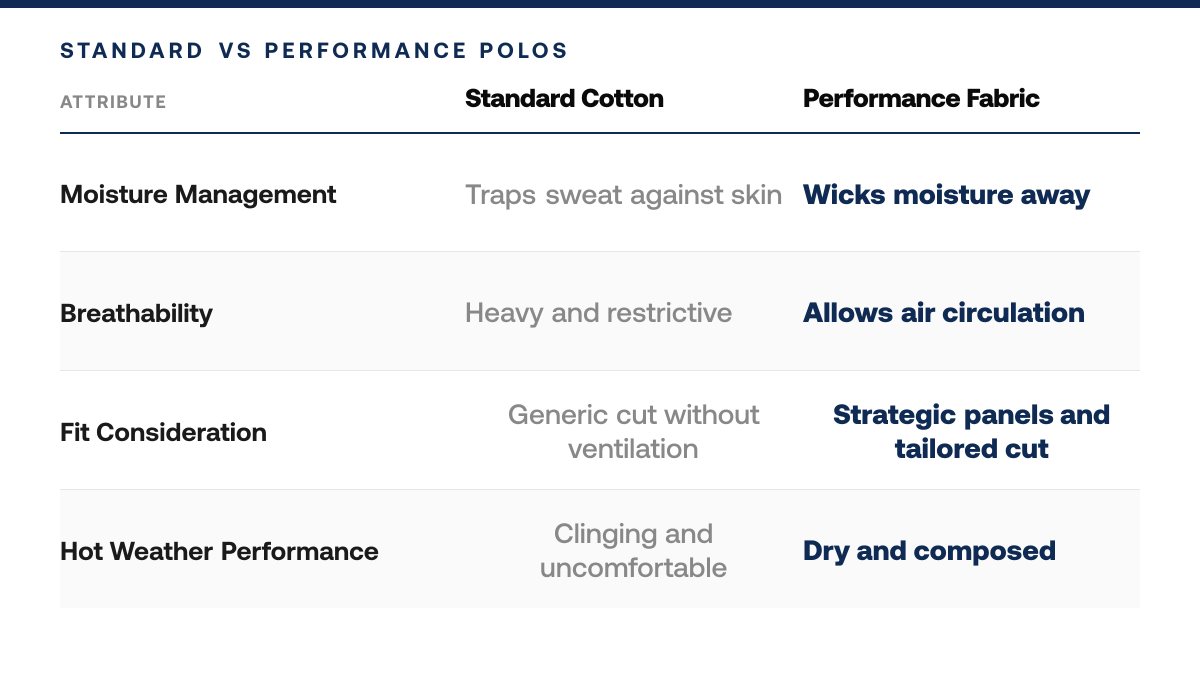
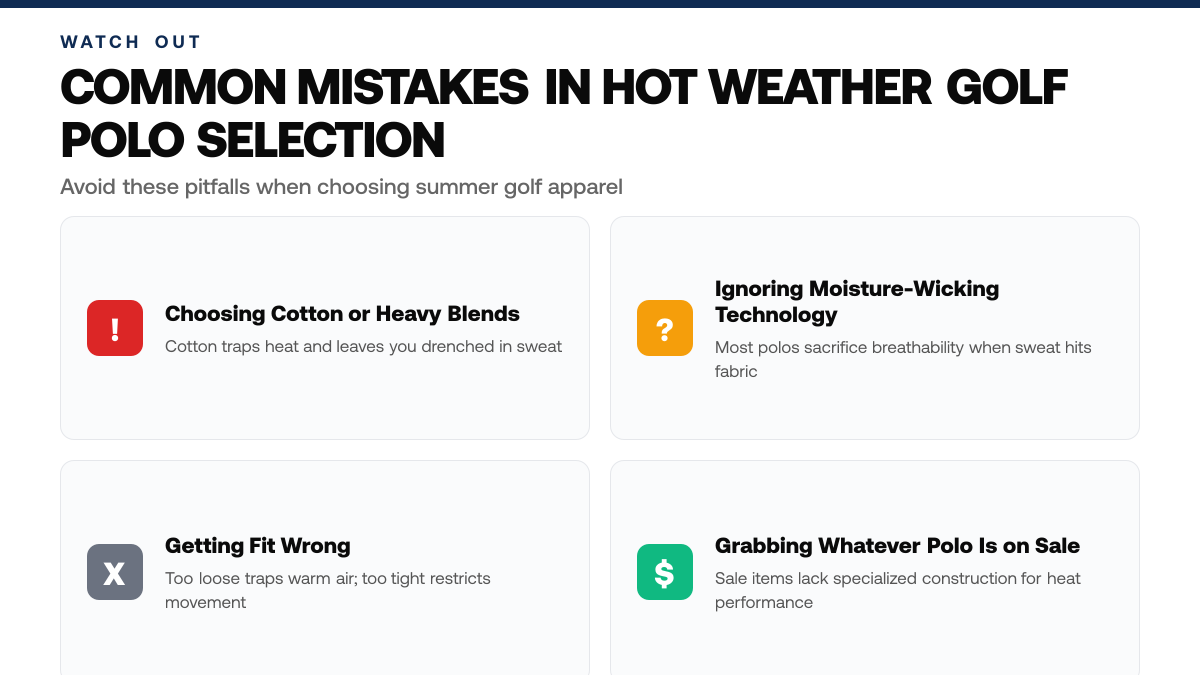
Step onto the course on a sweltering afternoon and you'll notice immediately which golfers chose their polos thoughtfully and which ones didn't. The ones drenched in sweat, clinging uncomfortably to their skin, are wearing cotton or heavy blends that trap heat. The ones moving freely, staying dry, and looking sharp have made an intentional choice about fabric and fit—decisions that transform how golf feels in hot weather.
Hot weather golf demands more than just grabbing whatever polo is on sale. Specialized apparel designed for summer conditions balances performance, comfort, and personal style in ways standard golf wear cannot. Whether you're playing in scorching heat or humid conditions, the right polo keeps you cool, supports your swing, and lets you express your identity through color, fit, and design—whether that's school pride, team loyalty, or simply your aesthetic. Understanding fabric technology and fit rather than guessing transforms your entire round.[1]
This guide walks you through the essentials of choosing a golf polo built for heat. You'll learn what fabric properties matter most, how fit affects both comfort and performance, and how to balance technical features with the personal style that makes you feel confident on the course. Most hot-weather golf polos sacrifice breathability the moment sweat hits the fabric, trapping moisture and killing comfort by the back nine — Haven Golf Company's Airflex™ material wicks moisture while maintaining structure, so you stay dry and composed through every round.
TL;DR
Golf apparel designed for hot weather relies on moisture-wicking fabrics and breathable construction to keep you cool and dry on the course.
These performance features pull sweat away from your skin and allow air circulation, preventing the discomfort that comes with heavy, saturated clothing.
Look for polos with these core technologies rather than standard cotton to maintain comfort and style during warm-weather rounds.[5]
Understanding Hot Weather Golf Polos
What Makes a Golf Polo Suitable for Hot Weather?
A hot-weather golf polo is a performance shirt engineered to keep you cool and comfortable during rounds in high temperatures and humidity. The best options combine three key technologies: moisture-wicking fabrics that pull sweat away from your skin, breathable weaves that allow air circulation, and UV protection that shields you from sun damage. These elements work together as an integrated cooling system, each enhancing the others' effectiveness. Beyond fabric choice alone, the fit and cut of the polo significantly impact comfort—a properly designed silhouette with strategic ventilation panels and a tailored cut promotes airflow across your body just as effectively as the material itself. When these factors align, you stay dry, protected, and focused on your game.[3]
Why Fit and Design Matter as Much as Fabric
Many golfers assume that buying a moisture-wicking fabric is enough, but construction and tailoring are equally critical to performance in heat. A polo cut too loosely traps warm air and sweat against your body; one cut too tightly restricts movement and prevents ventilation. The best hot-weather polos feature strategic design elements—gusseted underarms, vented side panels, and a slightly relaxed but still athletic fit—that allow air to flow freely while maintaining a polished appearance. Sleeve length, collar design, and hem placement all influence how much sun exposure you face and how well your body can regulate temperature. When you combine a thoughtfully engineered cut with high-performance fabrics, you create a shirt that adapts to your movement and the climate, rather than fighting against both.[3]
The Growing Market for Performance Golf Apparel
Golf apparel has evolved dramatically over the past decade, driven by demand from players who want both style and function. Today's golfers—whether they're weekend warriors, competitive players, or lifestyle enthusiasts—expect their polos to perform in challenging conditions while reflecting their personal identity, team affiliation, or patriotic pride. The market now offers a diverse range of options that don't compromise on aesthetics for the sake of performance. This shift has made it easier to find polos that work hard on the course and look great off it, whether you're playing in intense summer heat or simply want apparel that matches your values and sense of style.
Key Numbers for How to Choose Golf Polos for Hot Weather Golf (2026)
35°C (95°F): the extreme heat conditions used to real-world test golf polo fabric performance in published cooling trials.[4]
~150 gsm: lightweight fabric weight threshold where moisture-wicking polos show measurably faster sweat evaporation on course.[4]
4-way stretch weave construction: the minimum weave flexibility benchmark linked to improved airflow and reduced heat retention during play.[4]
UPF 30+: the sun-protection rating commonly found in performance golf polo fabrics designed for sustained outdoor heat exposure.[4]
2–3°F: the approximate perceived skin-temperature reduction reported when mesh-ventilated panels replace solid-knit fabric across the back yoke.[4]
Step-by-Step Process
1. Assess fabric composition and breathability
Start by examining the material blend of potential polos. Look for lightweight, moisture-wicking fabrics such as polyester blends, mesh panels, or performance synthetics designed to pull sweat away from skin and dry quickly. Check product descriptions for terms like 'breathable,' 'ventilated,' or 'quick-dry.' Hot weather golf demands fabrics that allow air circulation and prevent moisture buildup, which compromises comfort and performance on the course. Premium options often include specialized fibers like nylon or advanced polyester blends engineered with capillary action that moves moisture away from your body faster than conventional materials.[4]
2. Test fit and range of motion
Try on polos in your typical size and one size up to evaluate how each fits across the shoulders, chest, and arms during a golf swing. Ensure the fabric doesn't bunch or restrict movement when you raise your arms or rotate your torso. This is exactly the kind of detail Haven Golf Company builds its products around. The polo should be snug enough to look polished but loose enough that you can move freely without tension. A proper fit prevents distraction and allows you to focus on your game rather than adjusting your shirt. Pay attention to how the fabric drapes—performance polos should contour naturally without excess fabric pooling at the sides or back.
3. Validate performance features for hot conditions
Confirm that the polo includes features suited to heat and sun exposure, such as UPF protection, anti-odor treatment, or flat seams that reduce chafing during extended wear. Check whether the collar design resists curling and whether the fabric maintains its shape after washing. It's the standard Haven Golf Company holds every piece in its range to. These details matter in hot weather, where durability and comfort degrade quickly with inferior construction or materials.[4]
How This Works in Practice
Example 1: The Weekend Golfer Seeking Comfort and Style
Picture a casual golfer who plays most Saturdays and wants a polo that won't cling to his body in humidity while still looking polished on the course. He's tried standard cotton polos before—they absorbed sweat, felt heavy by the back nine, and offered no real performance benefit. When he shifts to a moisture-wicking polo designed for hot weather, the fabric pulls perspiration away from his skin, keeping him cooler and more comfortable throughout his round. At the same time, he can choose a polo in a color or pattern that reflects his personality—perhaps a bold stripe or a design that shows team pride. The result is a garment that performs when it matters most while letting him express who he is, both on and off the course.
Example 2: The Tournament Player Balancing Function and Identity
Consider a competitive golfer preparing for a club championship in midsummer heat. She needs every advantage—breathable fabric, UV protection, and a cut that allows a full swing without restriction. But she also wants her polo to reflect her school colors or a cause she supports, not just disappear into generic athletic wear. By selecting a performance polo that combines advanced fabric technology with meaningful design elements—whether that's a custom embroidery, a patriotic motif, or school affiliation—she gets both the technical edge and the personal statement. Over the course of a tournament, that combination of comfort, protection, and identity reinforces her confidence and presence on the course.
Why Personal Expression Matters
Both scenarios reveal the same truth: hot-weather golf polos don't have to choose between performance and personality. The best options deliver moisture-wicking, breathability, and sun protection while still offering the colors, patterns, and design choices that let golfers feel like themselves. When a polo performs well and reflects who you are, you're more likely to reach for it, wear it with confidence, and enjoy the game itself.
Hot Weather Golf Polo Checklist
Check the fabric composition for moisture-wicking materials like polyester blends or technical fabrics designed to pull sweat away from skin.
Verify the collar and sleeve construction allows for adequate airflow and won't trap heat against your neck and shoulders.
Test the fit in the shoulders and torso to ensure mobility for your golf swing without excess fabric bunching or restricting movement.
Confirm the color and design reflect your personal style, team affiliation, or patriotic expression without compromising performance features.
Review the care instructions and fabric treatment details to understand how the polo will maintain performance through multiple wash cycles.
Inspect seams and hem construction to ensure quality stitching and reinforced stress points that endure extended play in heat.
Common Mistakes to Avoid
Mistake: Choosing polos based on brand name or price without checking fabric technology specs
Many golfers assume a well-known brand automatically delivers cooling performance, but style and cost are poor proxies for moisture-wicking or breathability. This leads to sweat buildup, discomfort during play, and shortened garment lifespan. Instead, examine the fabric composition—look for polyester blends, nylon, or performance synthetics designed to wick moisture and dry quickly, not just cotton or basic blends.[2]
Mistake: Oversizing or undersizing polos to chase comfort without considering fit's role in cooling
A polo that's too loose won't allow moisture-wicking fabrics to function properly against your skin, while one that's too tight restricts airflow and traps heat. Either extreme undermines the advanced fabric technology you paid for. Measure your chest and shoulders against the brand's sizing chart, then choose a fit that's snug but allows a finger's width of movement at the chest—this optimizes both cooling performance and the fabric's ability to manage moisture.[2]
Mistake: Ignoring seam placement and sleeve design when prioritizing aesthetics
Decorative elements or poor seam construction can create friction points and hot spots on the shoulders and underarms, especially during a full 18 holes in heat. Aesthetic details matter, but they shouldn't compromise function. Inspect seams for flatlock or minimal stitching, and choose sleeve cuts that sit naturally on your shoulder without bunching—this prevents chafing and keeps air flowing where you need cooling most.[2]
Frequently Asked Questions
How do I care for hot weather golf polos to extend their lifespan?
Wash polos in cool water and air-dry them when possible to preserve fabric integrity and color vibrancy. Avoid high heat in the dryer, which degrades performance materials and elastic fibers. For polos with moisture-wicking treatments, skip fabric softener—it reduces breathability. Check the care tag for specific guidance, as advanced fabrics like Airflex™ may have unique requirements that protect your investment.[6]
Can I layer polos for cooler mornings and still stay comfortable?
Yes, layering works well with performance polos designed for hot weather. Wear a lightweight long-sleeve shirt or windbreaker underneath or over your polo during early rounds, then remove it as temperatures rise. Choose breathable outer layers that won't trap heat, and ensure your base polo fits comfortably without bunching under additional clothing. This approach maximizes comfort across changing seasonal conditions.[6]
What fabric properties make a polo durable in hot weather?
Look for moisture-wicking blends that pull sweat away from skin, reducing stress on seams and fibers. Polyester-based or performance-blend fabrics resist fading and shrinkage better than 100% cotton. Reinforced seams and quality stitching prevent unraveling after repeated wear and washing. Fabrics with UV protection add durability by preventing sun damage and color degradation over time.
How to Choose Performance Golf Apparel for Hot Weather — Step onto a sun-baked fairway in July and you'll feel the difference immediately: standard cotton absorbs sweat, clings to skin, and drains your focus within nine holes…
5 Best Golf Polos for Hot Weather Conditions — Stepping onto the course on a scorching summer day, you're immediately aware of every layer of fabric clinging to your skin. The sun beats down, humidity rises, and your…