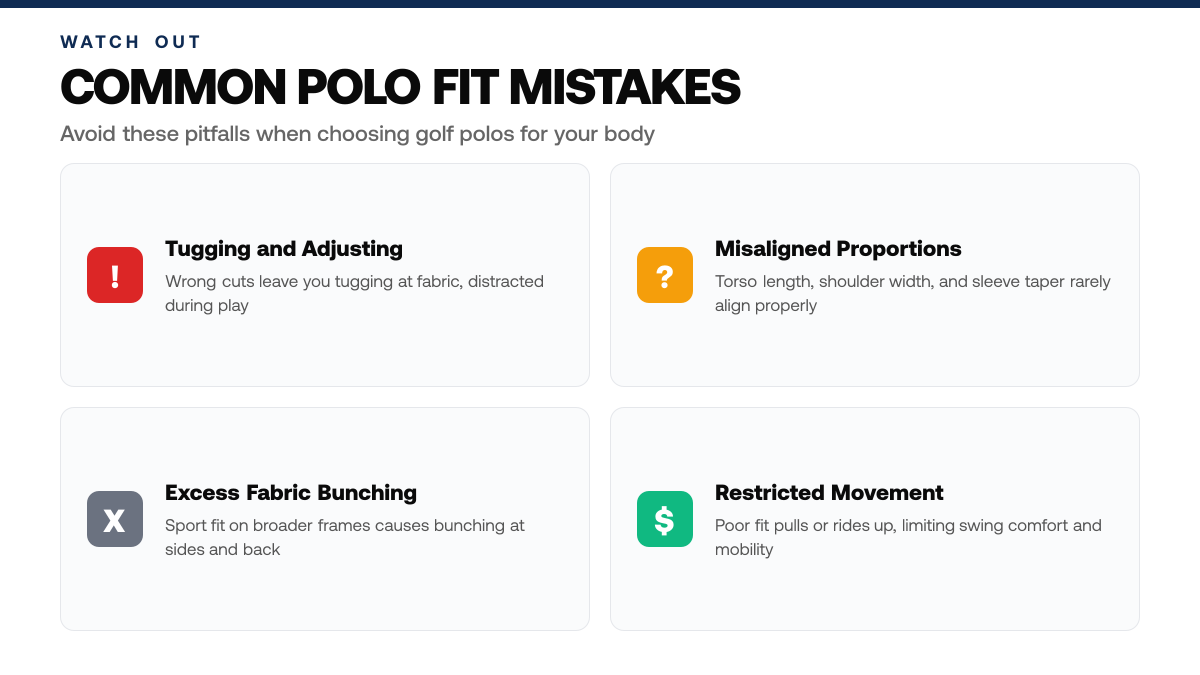
A polo that fits well does more than keep you comfortable on the course—it shapes how you feel about yourself when you step up to the tee. The wrong cut can leave you tugging at fabric, distracted by excess material or restricted movement, while the right fit lets you focus entirely on your swing. Fit is the bridge between comfort and confidence.
Your body type is the foundation for choosing polos that work with your silhouette rather than against it. Whether you're athletic, lean, broad-shouldered, or carry weight in your midsection, understanding how different cuts and fabrics interact with your frame helps you select pieces that enhance your presence on the course. This awareness transforms polo shopping from guesswork into strategy.[1]
This guide walks you through identifying your body type, understanding how fit impacts both performance and style, and finding polos that let you play your best while looking sharp. You'll learn which cuts flatter different frames, how fabric choice affects comfort during play, and what to prioritize when building a rotation of course-ready polos that reflect your personal style. Most golfers buy polos that fit one body type, then spend rounds tugging and adjusting because torso length, shoulder width, and sleeve taper rarely align—Haven Golf Company's Airflex™ material stretches and moves with your frame in all directions, so the polo stays in place through your swing.
TL;DR
The best golf polo combines proper sleeve length, torso fit, and collar style that work with your frame and build.
Sleeve length and shoulder seams should align with your proportions; torso fit prevents excess fabric while maintaining mobility for your swing.
Collar style—whether spread, button-down, or standard—should complement your neck and face shape for a polished, comfortable look.[3]
Understanding Sport Fit vs. Classic Fit in Golf Polos
What Are Sport Fit and Classic Fit Polos?
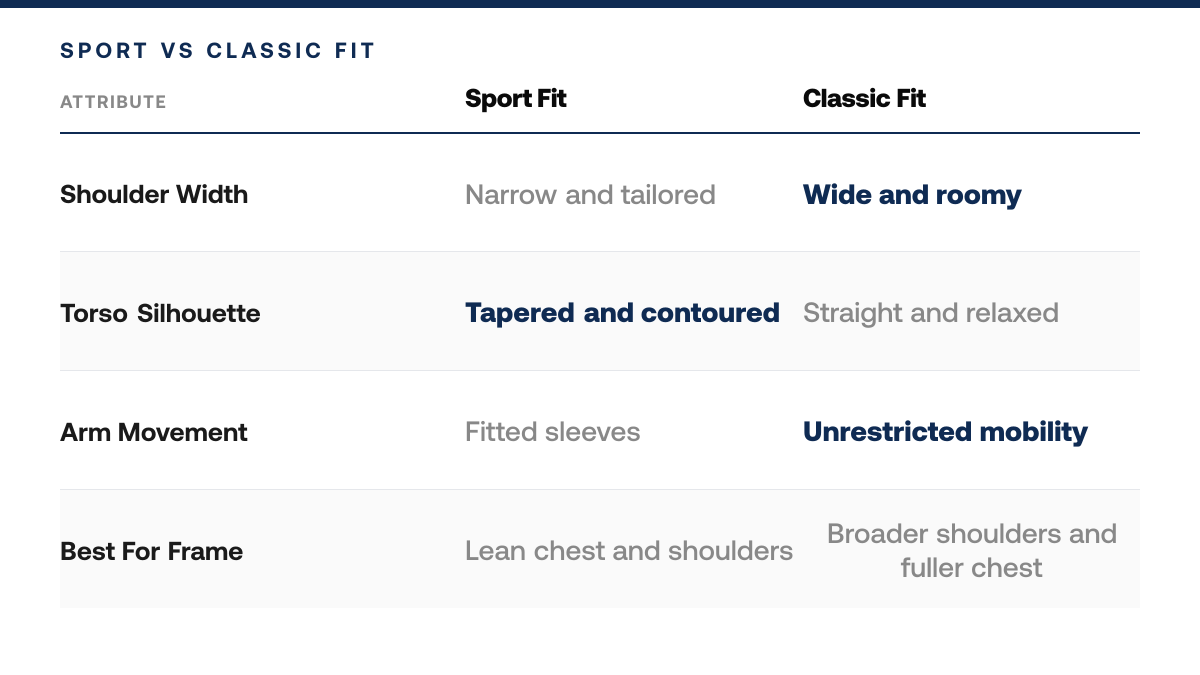
Sport fit and classic fit represent two distinct approaches to polo construction, each engineered for different body proportions and movement needs. Sport fit polos feature a more tailored silhouette with narrower shoulders, a slimmer chest, and a tapered waist that hugs the torso. Classic fit polos, by contrast, offer a roomier cut through the shoulders and chest with a straighter line from armpit to hem, providing greater ease of movement and comfort for those with broader frames. The difference extends to sleeve length and overall proportions—sport fit typically features shorter sleeves and a more contoured shape, while classic fit offers longer sleeves and a relaxed drape. Understanding these construction differences helps you recognize which category aligns with your body type before you try on or purchase.[2]
Why Fit Category Matters for Your Body Shape
Choosing the right fit category is essential because it directly affects how a polo flatters your silhouette and supports your mobility on the course. If you have narrower shoulders and a lean chest, sport fit polos will accentuate your frame without excess fabric bunching at the sides or back. If you have broader shoulders, a fuller chest, or prefer unrestricted arm movement, classic fit provides the room you need to swing comfortably without the shirt pulling or riding up. The interaction between sleeve length, chest room, and waist taper determines whether a polo feels tailored or baggy—and getting this balance right enhances both appearance and performance during your round.[2]
Market Diversity and Styling Flexibility
Both fit categories are widely available across premium and everyday golf apparel brands, giving you flexibility to build a wardrobe that reflects your personal style and body confidence. Sport fit polos work well for golfers who prefer a modern, streamlined aesthetic and have the frame to wear them comfortably. Classic fit appeals to those seeking timeless versatility and a roomier, more forgiving cut. Many golfers own both styles and rotate them based on the occasion, their mood, or how they want to present themselves that day. The key is recognizing your shoulder width, chest proportions, and preferred mobility level, then matching those traits to the fit category that serves you best.[7]
Key Numbers for How to Choose Golf Polos for Your Body Type (2026)
Multi-billion-dollar global golf apparel market is projected to grow steadily through the late 2020s, driven by rising demand for performance wear.[4]
3 primary fit categories — classic, sport, and slim — define how golf polos are sized and marketed across body types.[4]
Moisture-wicking and stretch fabrics now appear in the majority of performance golf polos, reflecting a shift toward athletic functionality.[4]
4-way stretch construction is among the most cited technical features golfers prioritize when selecting a polo for on-course movement.
UPF 50+ sun protection is a standard spec offered across a growing share of golf polo product lines targeting outdoor athletes.[4]
Step-by-Step Process
1. Measure your chest, shoulders, and sleeve length
Take accurate baseline measurements across your body to establish a consistent sizing reference. Use a soft measuring tape and measure your chest at the fullest point, shoulder width from seam to seam, and sleeve length from the center back neck down to your wrist. Record these measurements and compare them against brand-specific size charts before ordering. This creates a foundation for evaluating how different brands fit your frame, accounting for variations in cut and construction across manufacturers.[5]
2. Check shoulder seam placement on the garment
When trying on a polo, verify that the shoulder seam sits directly at the edge of your shoulder bone, not drooping down your arm or riding up toward your neck. Misaligned shoulder seams restrict movement and create an unflattering silhouette. This is exactly the kind of detail Haven Golf Company builds its products around. This single point of contact determines whether the entire shirt will drape correctly on your torso and allows your arms full range of motion for your golf swing and everyday activities.[5]
3. Assess arm mobility and torso taper
Raise your arms to shoulder height and perform a few practice golf swings to confirm the fabric doesn't pull or bind across the chest and shoulders. Check that the torso tapers appropriately at your waist—not too loose (which adds bulk) and not too tight (which restricts breathing and movement). A well-fitted polo should follow your body's natural contours without excess fabric bunching or gaping at the sides.[5]
4. Test fit across multiple brands before committing
Try on polos from several manufacturers, as sizing standards vary significantly. A medium in one brand may fit differently than a medium in another due to differences in fabric weight, sleeve length, and torso length. Wear the polo for a few minutes in-store or during a return window to confirm comfort during movement. Only commit to a purchase once you've verified the fit matches your measurements and movement requirements.[5][7]
How This Works in Practice
Example 1: The Broader-Shouldered Golfer
Picture a golfer with a naturally broader frame—muscular shoulders and a fuller chest—who has struggled with standard polos that bunch at the seams or restrict movement during the swing. He tries a slim-fit polo expecting a sleek look, but the tight chest and shoulder seams limit his range of motion on the course. Switching to a sport-fit polo with generous chest room and structured shoulders changes everything. The fabric drapes across his shoulders without pulling, the chest panel accommodates his build without excess fabric at the waist, and he moves freely through his entire swing. The structured shoulders maintain shape throughout the round, and he feels both comfortable and intentional in his appearance—whether he's on the fairway or in the clubhouse.[6]
Example 2: The Lean-Frame Player
Consider a golfer with a leaner, more angular frame who finds that classic-fit polos hang loosely, creating an unflattering silhouette and excess fabric that moves around during his swing. He wants a polo that looks tailored and feels secure without clinging. A slim-fit polo with a tapered waist and fitted sleeves transforms his look—the fabric follows his natural lines, the taper at the waist eliminates billowing, and the overall effect is sharp and intentional. He gains confidence in his appearance without sacrificing mobility, and the streamlined cut complements his frame rather than fighting against it. The result is a polo that feels custom-made for his build.[6]
Why Fit Unlocks Confidence
Both golfers discovered that the right fit isn't about chasing a single style—it's about matching the cut to your body's proportions. A sport-fit polo works beautifully for broader shoulders because it's engineered for that build; a slim-fit excels for leaner frames for the same reason. Choosing by body type rather than trend ensures you look polished, move freely, and feel genuinely comfortable on the course and beyond. When you invest in polos that align with your specific body measurements and proportions, you eliminate the guesswork from every future purchase in that brand's lineup.[6]
Golf Polo Fit Checklist
Measure your sleeve length from the center back neck to wrist to ensure sleeves hit at the wrist bone without bunching.
Check chest fit by buttoning the polo and confirming no pulling across the shoulders or excess fabric at the sides.
Verify waist taper by pinching the fabric at your sides—it should follow your natural contour without gaps or tightness.
Test collar comfort by ensuring the neckline sits flat against your neck without choking or gaping at the front.
Common Mistakes to Avoid
Mistake: Oversizing to hide your frame or undersizing for a trendy look
Choosing a polo size based on concealment or fashion trends rather than your actual measurements compromises both comfort and swing mechanics on the course. An oversized polo restricts shoulder mobility and creates excess fabric that catches during your backswing, while undersizing limits breathing room and creates tension across the chest. Instead, measure your chest, shoulders, and sleeve length, then try on polos in your true size—comfort during a full swing is the only metric that matters.[4]
Mistake: Assuming one brand's size translates across all brands
Golf apparel brands vary significantly in fit, fabric stretch, and cut—a medium from one manufacturer may fit completely differently than a medium from another. Ignoring these brand-specific variations leaves you with an inconsistent wardrobe where some polos feel great and others pull or sag. Always check the brand's fit guide and customer reviews before ordering, and don't assume your usual size will work across different labels.[4]
Mistake: Prioritizing style over performance fabric properties
Selecting a polo purely for its look without considering moisture-wicking, breathability, or stretch capability means you'll overheat, feel restricted, and struggle with sweat management during play. A stylish polo that doesn't perform undermines your game and comfort. Verify that your choice includes moisture-wicking technology and four-way stretch, even if the design is trendy—performance and aesthetics aren't mutually exclusive.[4]
Frequently Asked Questions
What makes a polo fit well across different body types?
A well-fitting polo balances shoulder seam placement, sleeve length, and torso room without excess fabric. The key is choosing between sport fit—which accommodates broader shoulders and athletic builds—and classic fit, which suits slimmer frames. The right tool engineers polos with thoughtful construction and material choices specifically designed to address fit challenges across diverse body types, ensuring the garment moves with your body rather than against it.
How do I know if I need sport fit or classic fit?
Sport fit works best if you have broader shoulders, an athletic build, or prefer a more relaxed silhouette through the chest and waist. Classic fit suits slimmer frames and those who prefer a closer, more tailored look. Try both cuts if possible—the right choice depends on your natural proportions and personal comfort preference, not your size alone.
What should I check when trying on a golf polo?
Inspect shoulder seams (they should sit at your natural shoulder point), sleeve length (ending mid-bicep), chest room (enough to move freely without pulling), and overall length (hitting mid-hip). The fabric should drape smoothly without bunching or gaps. Make these checks while standing, sitting, and rotating your arms to simulate a golf swing.[7]
How to Choose Golf Polo Fabric for Your Swing Type — Walk into any pro shop and you'll notice something that wasn't true a decade ago: golfers are as deliberate about their polo fabric as they are about their clubs. The…
How to Choose Golf Polos for Military Pride — Walk into any golf clubhouse and you'll spot them: polos embroidered with military insignia, service branch colors, or patriotic motifs. For veterans, active-duty…