How to Wash Performance Golf Polos (Keep Airflex™ Lasting)
A performance golf polo fresh from the course looks sharp, but throw it in the washing machine on a standard cycle and something shifts. The moisture-wicking fabric that kept you dry under the sun begins to lose its edge, the colors fade faster, and within a few seasons that premium polo feels more like a regular shirt. The difference comes down to how you care for it after every round.
Advanced fabrics like Airflex™ are engineered to perform—they wick sweat, breathe, and maintain their shape through hours of play. But these technical properties are fragile. Improper washing degrades the fibers that make moisture-wicking work, shortens the lifespan of your investment, and undoes the precision that went into making the garment in the first place. Most golfers don't realize their laundry habits are the real threat to durability.
This guide walks you through the right way to wash performance golf polos so they stay soft, functional, and looking sharp. You'll learn which water temperature works best, what detergents to avoid, how to dry without damage, and why a few simple tweaks to your routine can add years to the life of your favorite polos. Most golfers wash performance polos the same way they wash everyday cotton, stripping the moisture-wicking properties and breathability that justify the premium price — Haven Golf Company's Airflex™ material retains its stretch and durability only when cleaned with the specific low-heat, low-agitation method that preserves the fabric's engineered structure.
TL;DR
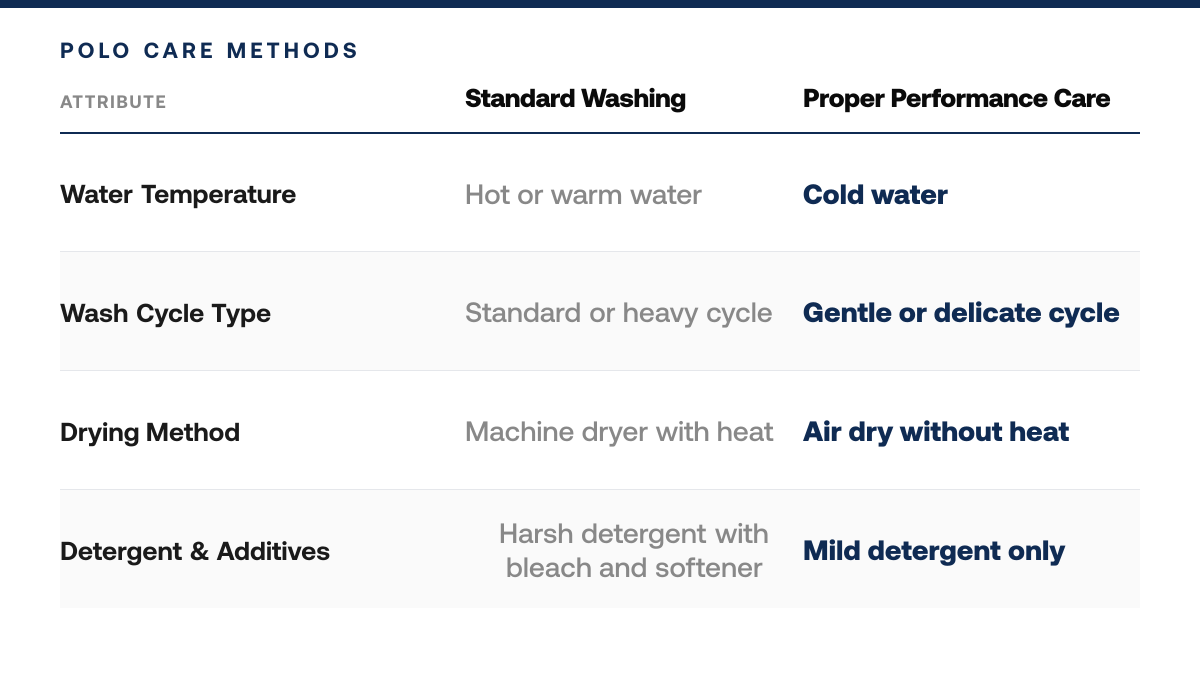
Wash performance golf polos in cold water on a gentle cycle to protect the Airflex™ technology and maintain fabric integrity.
Use mild detergent and skip bleach and fabric softener, which can degrade the performance fibers and reduce breathability.
Air-dry your polos instead of machine drying to prevent heat damage and ensure they stay soft, durable, and game-ready.[1]
Understanding Performance Golf Polo Fabric Care
What Is Moisture-Wicking Technology?
Moisture-wicking technologies like Airflex™ are engineered micro-fiber systems designed to pull sweat away from your skin and move it toward the fabric's outer surface, where it can evaporate more efficiently. This process keeps you dry, comfortable, and focused on your game rather than clinging fabric. These specialized fibers are delicate by nature—their effectiveness depends on maintaining their structural integrity and ability to transport moisture. Understanding how these fabrics work is the first step toward preserving their performance through proper washing and care.[2]
Why Fabric Composition Matters for Golfers
The materials in your performance polo directly affect how it breathes, stretches, and performs under pressure. Harsh detergents, high heat, and aggressive washing methods can damage the micro-fibers that make moisture-wicking possible, gradually reducing breathability and comfort over time. Golfers who invest in high-performance apparel deserve to know that their washing choices either extend or shorten the lifespan of these technologies. By learning your polo's fabric composition and choosing gentler care methods, you protect your investment and maintain the comfort and style that drew you to the shirt in the first place. Performance polos typically blend synthetic fibers like polyester or nylon with spandex for stretch, creating a complex structure that requires thoughtful maintenance to preserve all these qualities simultaneously.[2]
The Market for Performance Golf Apparel
Performance golf polos have become essential for serious golfers and lifestyle shoppers alike—whether you're expressing patriotism, school pride, or simply demanding the best from your gear. The market for high-quality, breathable golf wear continues to grow as players recognize that comfort and functionality directly impact their game. With so many options available, the ability to care for and maintain your polos properly becomes a competitive advantage, ensuring your favorite shirts stay fresh, functional, and looking sharp season after season. Investing in proper care techniques protects the performance features that set premium polos apart from standard cotton alternatives, making your wardrobe investment worthwhile for years to come.
How Sweat and Environmental Factors Degrade Polos
Salt from perspiration, chlorine from pools, and UV exposure from sun exposure all contribute to fabric degradation if not properly managed. Regular washing with the correct methods removes these damaging residues without compromising the fabric's performance capabilities. Understanding these environmental stressors helps explain why proper care isn't just about aesthetics—it's about functional longevity and maintaining the technical advantages that performance fabrics provide.
Key Numbers for How to Wash Performance Golf Polos (Keep Airflex™ Lasting) (2026)
Cold water (30°C/86°F or below) is the recommended wash temperature to preserve moisture-wicking fabric technology.[2]
1 wash cycle on a gentle/delicate setting is all performance polo fabrics need — aggressive cycles break down stretch fibers faster.[2]
0 fabric softeners: manufacturers universally advise against softeners, which coat moisture-wicking fibers and eliminate breathability.[2]
Low heat (under 40°C/104°F) or air-dry only — high dryer heat is the #1 cause of performance fabric degradation.
1 inside-out turn before washing protects printed logos and color-treated panels from friction damage during the spin cycle.[2]
Harsh chlorine bleach reduces fabric elasticity and moisture-management performance after even a single use.
3-5 wears between washes is ideal for performance polos to minimize washing frequency while maintaining cleanliness and freshness.
Step-by-Step Process
1. Pre-treat stains and soils before washing
Inspect your performance polo for visible stains, sweat marks, or dirt before placing it in the washer. Gently rinse or spot-treat affected areas with cool water and a mild detergent, working the solution in with a soft brush or cloth. Allow the pre-treatment to sit for a few minutes to break down stubborn residue. This step prevents stains from setting during the wash cycle and protects the fabric's performance properties. For stubborn stains like grass or red wine, consider using an enzyme-based stain remover specifically designed for synthetic fabrics, as these work gently without aggressive chemicals.[3]
2. Select cool water and a gentle cycle
Use cool or lukewarm water—never hot—when washing your polo. Hot water can damage synthetic fibers and compromise the fabric's moisture-wicking and stretch recovery. Choose a gentle or delicate cycle on your washing machine to minimize agitation. Add a small amount of mild, sport-specific detergent designed for technical fabrics. Avoid bleach, fabric softeners, and heavy detergents that can degrade performance coatings and reduce breathability. If you have hard water, consider using distilled water for the final rinse to prevent mineral buildup that can dull colors and reduce fabric softness.[3]
3. Dry using low heat or air-drying methods
After washing, remove your polo promptly to prevent mildew. If using a dryer, select a low-heat or air-dry setting; high heat can shrink synthetic blends and weaken elastic fibers. Alternatively, hang the polo on a clothesline or lay it flat to air-dry in a well-ventilated space away from direct sunlight. Air-drying is the gentlest option and best preserves the fabric's integrity and performance longevity.[3]
4. Store properly to maintain shape and performance
Once fully dry, fold or hang your polo in a cool, dry closet away from direct heat and moisture. Avoid wire hangers that can stretch the shoulders; use padded hangers or fold neatly on a shelf. Store away from harsh chemicals, perfumes, and strong odors that can cling to technical fabrics. Proper storage between wears ensures your polo remains game-ready and maintains its color, fit, and performance characteristics for seasons to come.[3]
How This Works in Practice
Example 1: The Weekend Golfer Avoiding Common Washing Mistakes
Picture a weekend golfer who loves wearing his Airflex™ polo to the course every Saturday. After a few rounds, he tosses it in the washing machine with hot water and a splash of bleach to brighten the fabric. Within a month, the polo's moisture-wicking properties start to fade, the fabric feels stiff, and the color begins to dull. He realizes his mistake: hot water breaks down the performance fibers, while bleach weakens the material's elasticity. The next time he washes, he uses cool water, a gentle detergent, and skips the bleach entirely. He also air-dries instead of using the machine dryer, which can damage the fabric's stretch. Over the following weeks, his polo maintains its soft feel, vibrant color, and performance benefits—proof that small washing habits make a real difference in longevity.
Example 2: The Team Pride Wearer Building a Lasting Wardrobe
Consider a golfer who wears performance polos embroidered with his club's logo—pieces that represent his identity and commitment to the game. He initially washed them aggressively, machine-drying them after every wear to save time. The embroidery started to fray, the fabric pilled, and the fit shifted slightly. He switched tactics: rinsing in cool water, using a mesh laundry bag to protect the embroidery, and laying the polo flat to dry. By treating each wash as an investment in the garment's future, he extended the life of his collection significantly. His polos now look fresh season after season, and the pride he feels wearing them—knowing they'll hold up—makes the extra care worthwhile.
Example 3: The Frequent Golfer Spacing Out Wash Days
A dedicated golfer who plays multiple times weekly discovered that washing polos less frequently was actually better for longevity. Instead of washing after each round, he rotates through several performance polos, allowing them to air out between uses. He washes them every third or fourth wear, using the proper technique. This approach reduces cumulative wear from washing while maintaining freshness and hygiene. His polos last longer because each garment undergoes fewer total wash cycles, and the extended time between washes allows moisture to evaporate naturally, reducing the need for frequent laundering.
Why Care Habits Compound
All three golfers discovered the same truth: washing mistakes happen quickly, but their damage compounds over time. The difference between a polo that lasts one season and one that lasts several comes down to consistent, intentional care. Cool water, gentle detergent, and air-drying aren't complicated steps—they're small habits that protect your investment and keep your polos performing and looking sharp when it matters most.
Pre-Wash and Post-Wash Polo Care Checklist
Check all pockets and seams for debris before loading the washer
Turn polos inside out to protect color and Airflex™ fabric integrity during the wash cycle
Use cold water and a gentle cycle to preserve performance fabric properties
Air-dry flat or on a hanger away from direct heat to maintain shape and elasticity
Inspect seams and trim after drying before storing to catch any wear early
Use a mesh laundry bag for polos with embroidery or special prints for extra protection
Avoid overloading the washing machine, which increases agitation and friction
Remove polos from the washer immediately after the cycle completes to prevent wrinkles and mildew
Common Mistakes to Avoid
Mistake: Washing performance polos in hot water
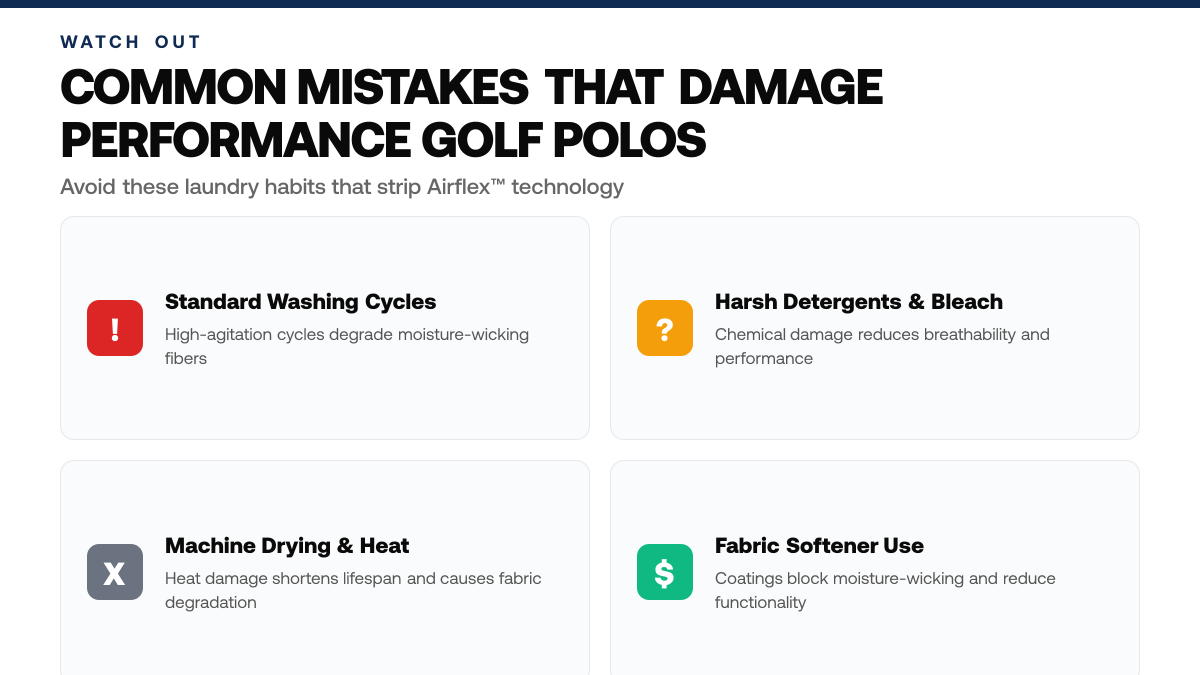
Hot water breaks down the synthetic fibers and moisture-wicking properties that make performance fabrics like Airflex™ effective. This causes premature fading, shrinkage, and loss of breathability. Always use cold water to preserve the fabric's integrity and extend the life of your investment.[4]
Mistake: Using fabric softener on performance polos
Fabric softeners coat synthetic fibers with a waxy residue that clogs the fabric's moisture-wicking channels, reducing breathability and performance. This buildup also traps odors and reduces durability. Skip softener entirely and opt for a gentle detergent designed for technical fabrics instead.[4]
Mistake: Drying polos on high heat
High-heat dryers damage synthetic fibers, causing shrinkage, pilling, and weakening of the fabric's structural integrity. This is one of the leading causes of premature polo degradation. Air-dry your polos flat or on a low-heat setting to maintain their shape, color, and performance longevity.[4]
Mistake: Overloading the washing machine
Cramming too many polos into one wash cycle increases friction and agitation, leading to premature wear, pilling, and color fading. Give each garment room to move freely during the gentle wash cycle for optimal care and longevity.
Mistake: Ignoring care label instructions
Performance polo care labels contain specific guidance based on the fabric blend and construction. Ignoring these instructions and applying generic laundry practices can void the benefits of technical fabrics and lead to unexpected damage or shrinkage.
Frequently Asked Questions
How often should I wash my performance golf polo?
Wash your polo after every few rounds or when visibly soiled, rather than after each wear. Performance fabrics like Airflex™ maintain their moisture-wicking and durability best with less frequent washing. According to care guidelines, limiting wash cycles extends the lifespan of the garment and preserves color vibrancy, so you can wear your polo confidently for seasons to come.[5]
Will washing affect the color of my performance polo?
Color retention depends on proper washing technique. Use cold water, turn the polo inside out, and avoid chlorine bleach or harsh detergents that fade fabric dyes. Following the step-by-step process outlined in care instructions helps maintain the rich colors in patriotic, military, or college-themed designs, so your polo looks as vibrant as the day you bought it.[5]
What's the best way to remove grass or sweat stains from my polo?
Treat stains promptly by rinsing with cool water and applying a mild stain remover before washing. For organic stains like grass or sweat, gentle pre-treatment works better than aggressive scrubbing, which can damage performance fibers. Wash in cold water on a gentle cycle to remove the treatment without setting the stain permanently into the fabric.[5]
How to Choose Golf Polo Fabric for Your Swing Type — Walk into any pro shop and you'll notice something that wasn't true a decade ago: golfers are as deliberate about their polo fabric as they are about their clubs. The…
5 Best Golf Polos for Women Comfort and Style — A well-fitted golf polo can make or break your round, not just for appearance, but for comfort and confidence on the course. Women golfers have long faced limited…