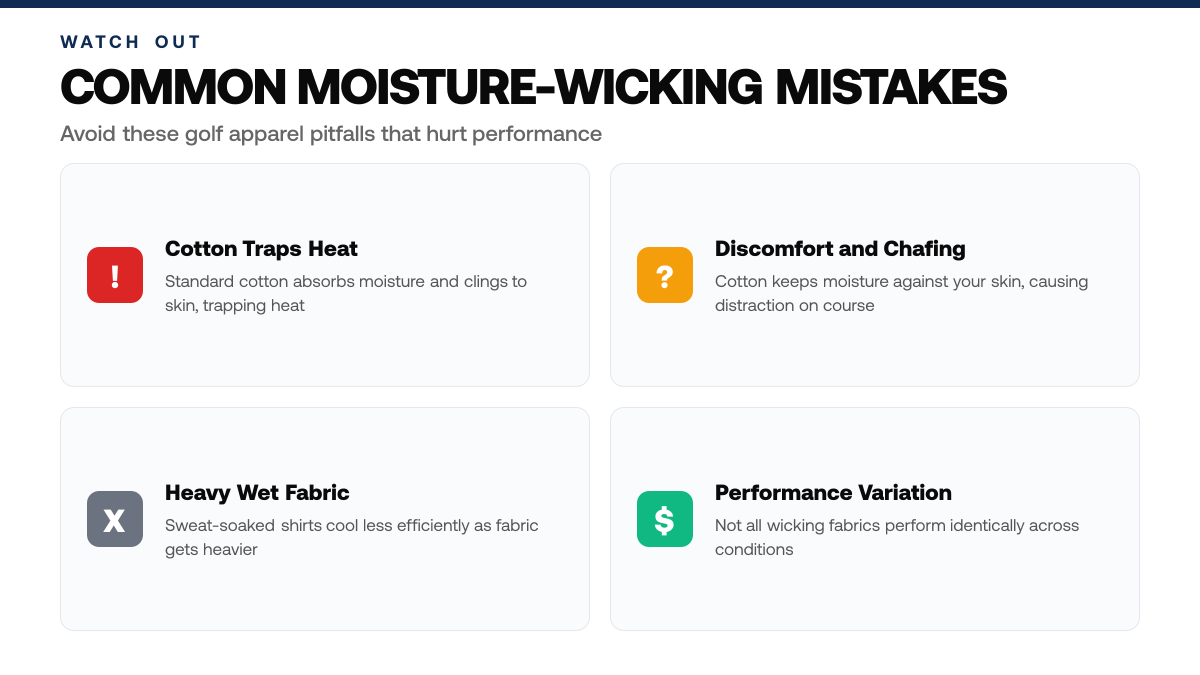
You're three holes in on a humid afternoon, and sweat is pooling across your chest and back. Standard cotton absorbs that moisture and clings to your skin, trapping heat and making every swing feel heavier. This is the core problem that moisture-wicking fabric solves, it pulls sweat away from your body and spreads it across the garment surface, where it can evaporate quickly and efficiently.[1]
Golf presents a unique set of physical demands that everyday apparel simply cannot handle. You're exposed to direct sun for hours, often in high humidity, with constant movement and exertion. Cotton keeps moisture against your skin, leading to discomfort, chafing, and distraction when you need to focus most. Understanding how moisture-wicking technology works is essential for anyone serious about staying comfortable and performing well on the course.
This article explores what moisture wicking is, why it matters specifically for golfers, and how to choose a golf shirt that will keep you dry and comfortable from the first tee to the clubhouse. You'll learn the science behind the technology and discover what separates high-performance apparel from standard options. Most golfers don't realize their sweat-soaked shirts are actually cooling them less efficiently as the fabric gets heavier and clings to the skin, Haven Golf Company's Airflex™ material actively wicks moisture away from the body, keeping the fabric light and your core temperature regulated throughout the round.
TL;DR
Moisture wicking fabrics actively pull sweat away from your skin, allowing it to evaporate quickly instead of pooling on the surface
This keeps you dry, comfortable, and focused on your game throughout the round, especially in warm or humid conditions
The technology works by moving moisture through fabric layers faster than traditional cotton, which absorbs and holds perspiration[3]
Moisture wicking is a fabric technology that actively pulls sweat and moisture away from your skin and moves it to the outer surface of the garment, where it can evaporate quickly. The process works through capillary action, the fibers in the fabric create tiny channels that draw liquid away from your body. Once the moisture spreads across a larger surface area on the fabric's exterior, it dries faster than it would if left pooling against your skin. This continuous cycle keeps you drier, cooler, and more comfortable throughout your round, whether you're walking the course or riding in a cart.[2]
Why Moisture Wicking Matters for Golfers
Staying dry during a round of golf directly impacts your comfort, confidence, and performance. When sweat accumulates on your skin, it creates a clammy feeling that distracts from your focus and can affect your swing mechanics. Moisture-wicking golf shirts solve this problem by keeping your body temperature regulated and your clothing fresh throughout 18 holes. For golfers who play in warm weather, humid conditions, or during physically demanding rounds, the difference between a standard cotton polo and a technical moisture-wicking shirt is noticeable, you'll feel more energized and less fatigued as the day progresses.
Fiber Types and Performance Variations
Not all moisture-wicking fabrics perform identically. Synthetic blends, merino wool, and technical polyesters each offer distinct advantages depending on the conditions and your personal preferences. Synthetic blends excel at rapid moisture transport and are often the most affordable option. Merino wool provides natural temperature regulation and odor resistance, making it ideal for cooler rounds or multi-day trips. Technical polyesters deliver superior breathability and durability for high-intensity play. Understanding these differences helps you choose a golf shirt that matches your typical playing conditions, climate, and style preferences while ensuring you stay comfortable and dry on the course.[2]
Key Numbers for Why Moisture Wicking Matters in Golf Shirts (2026)
Advanced moisture-wicking technologies with 8C microporous structure achieve water absorption rates of up to 342%, enabling rapid moisture transfer away from skin.[2]
Regular cotton takes over 45 minutes to dry and retains significant moisture, creating heavy, damp feeling during extended outdoor activity.[2]
The moisture-wicking fabrics market is projected to reach $3.86 billion in 2029 at a compound annual growth rate of 6.4%.[2]
Moisture-wicking technology addresses multiple performance demands: temperature regulation, odor control, and durability across repeated wear and washing cycles.
Step-by-Step Process
1. Evaluate fiber content and performance blend
Check the garment label for fiber composition, polyester, nylon, and merino wool blends are common moisture-wicking materials. Look for fabrics engineered to pull sweat away from skin and dry quickly. Higher-quality blends often combine synthetic fibers with natural materials to balance moisture management with breathability and comfort during extended play.
2. Assess fit, weight, and intended use conditions
Choose a fit that allows movement without excess fabric bunching, slim, standard, or relaxed cuts suit different body types and playing styles. Consider weight: lightweight shirts work for warm-weather rounds, while heavier blends suit cooler conditions. Haven Golf Company holds every piece in its range to that same standard. Match your selection to your typical play environment, casual weekend rounds versus competitive tournament conditions demand different performance levels.
3. Wash in cool water and skip fabric softeners
After each use, launder your moisture-wicking shirt in cool water to prevent fiber damage and preserve elasticity. Avoid fabric softeners and bleach, which coat fibers and block moisture-wicking capability. Gentle cycles protect the fabric structure that enables sweat transport and quick drying.
4. Air dry to extend garment lifespan and performance
Lay the shirt flat or hang it to dry naturally instead of using a dryer. High heat can degrade synthetic fibers and reduce moisture-wicking effectiveness over time. Air drying preserves the fabric's engineered properties and extends the shirt's usable life, ensuring consistent performance across multiple seasons of play.
How This Works in Practice
Example 1: The Summer Tournament Player
Picture a golfer competing in a summer tournament where temperatures climb into the high 80s and humidity sits well above 70%. Over 18 holes in the morning round and another 18 in the afternoon, sweat accumulates quickly, not just on the skin, but throughout the shirt fabric. Without moisture-wicking technology, cotton or standard blends absorb that sweat, becoming heavy and clingy by hole 12. The golfer's focus drifts from the game to discomfort: the shirt clings to the shoulders, the collar feels damp, and concentration fractures. A moisture-wicking polo, by contrast, pulls perspiration away from the skin and disperses it across the fabric surface where it evaporates rapidly. The golfer stays dry to the touch, the shirt remains lightweight, and body temperature regulation stays stable. By the back nine of the second round, when fatigue and heat typically erode performance, the wicking shirt keeps the player cool and mentally sharp, free to focus on the shot instead of the sweat.
Natural temperature regulation and odor resistance
Cooler rounds or multi-day trips
Technical Polyesters
Superior breathability and durability
High-intensity play and demanding rounds
Example 2: The Lifestyle Golfer in Variable Climates
Consider a casual golfer who plays across multiple seasons and climates, spring rounds in mild, damp conditions, summer outings in intense heat, and occasional fall tournaments in cool but humid weather. A generic polo might work adequately in one season but fail in another: in spring, it holds moisture; in summer heat, it becomes uncomfortable; in humidity, it clings. The player finds themselves buying multiple shirts to suit different conditions, or simply accepting discomfort as part of the game. A moisture-wicking shirt, engineered to perform across temperature and humidity ranges, adapts to each scenario. In mild spring weather, it prevents the clammy feel of trapped moisture. In summer heat, it accelerates evaporation and keeps the player cool. In humid fall rounds, it still moves sweat away from the skin rather than trapping it. One versatile shirt handles all conditions, reducing the need for a seasonal wardrobe and ensuring consistent comfort and performance whether the golfer is chasing a club championship or enjoying a casual weekend round with friends.
Why Comfort Drives Performance
In both scenarios, moisture wicking solves the same core problem: it separates the golfer's body from the discomfort and distraction of sweat-soaked fabric. Whether facing a grueling back-to-back tournament day or adapting to unpredictable seasonal conditions, a shirt engineered to pull moisture away and evaporate it quickly keeps the player focused, cool, and confident. That freedom from physical distraction is what transforms a good round into a great one.
Moisture Wicking Golf Shirt Selection Checklist
Verify the fiber blend includes polyester, nylon, or merino wool for superior moisture-wicking performance.
Check the shirt weight, lightweight fabrics dry faster and offer better breathability during active play.
Confirm the fit accommodates your swing without restricting shoulder and arm movement.
Review care instructions to ensure the shirt maintains moisture-wicking properties after washing and drying.
Test the fabric feel against your skin to ensure comfort during extended wear on the course.
Common Mistakes to Avoid
Mistake: Choosing 100% cotton for moisture-wicking golf shirts
Pure cotton absorbs sweat rather than moving it away from skin, leaving you damp and uncomfortable during play. Cotton also dries slowly, extending the time moisture sits against your body. Instead, select blended or synthetic fabrics engineered for moisture wicking, these pull perspiration away from skin and allow it to evaporate quickly, keeping you dry and focused on your game.[4]
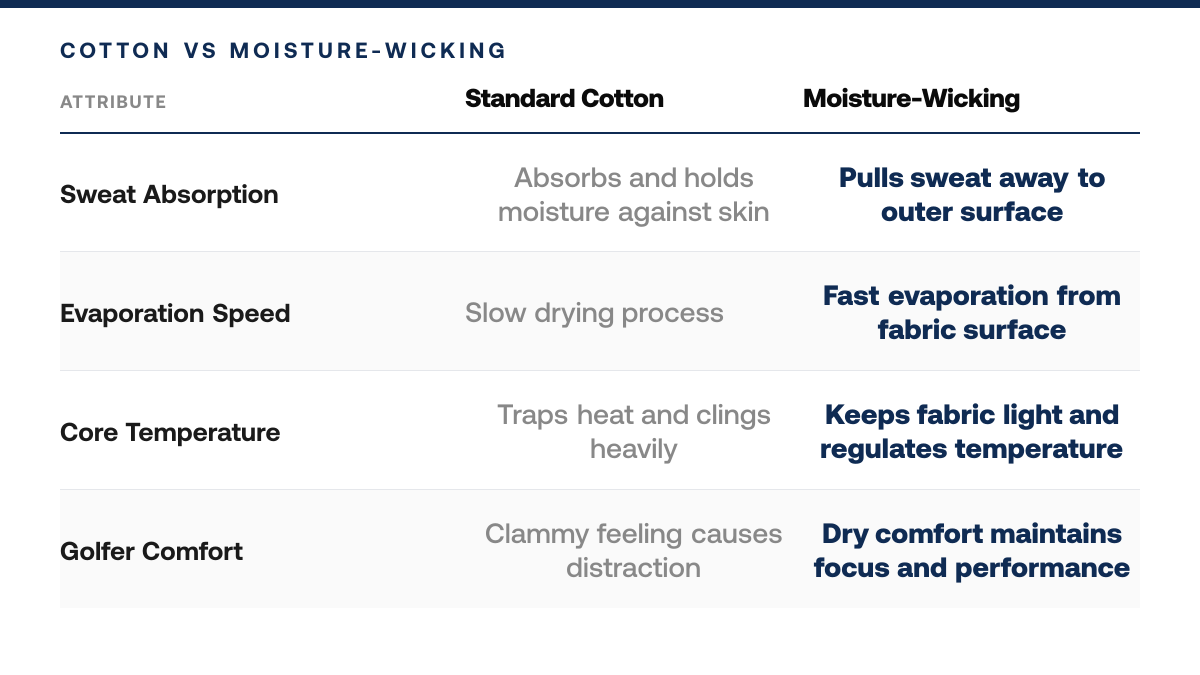
Cotton vs. Moisture-Wicking: On-Course Experience
Factor
Standard Cotton
Moisture-Wicking Fabric
Sweat Management
Absorbs and clings to skin, trapping heat
Pulls sweat away via capillary action for quick evaporation
Physical Comfort
Clammy feeling causes distraction and fatigue
Keeps body temperature regulated and fabric light
Performance Impact
Heavier garment reduces swing efficiency
Sustained energy and focus throughout round
Ideal Conditions
Cooler, dry weather only
Warm, humid, or high-exertion rounds
Mistake: Ignoring fabric weight when prioritizing moisture wicking
Lightweight fabrics alone don't guarantee performance; a heavy, poorly constructed material can trap moisture despite its weight. The weave structure and fiber composition matter equally. Choose fabrics specifically designed with moisture-wicking technology that balances weight with breathability, ensuring both sweat transport and comfort during extended rounds.[4]
Mistake: Using standard laundry practices on performance golf shirts
Washing moisture-wicking garments in hot water or using fabric softener can coat fibers and reduce their ability to pull sweat away from skin, degrading performance over time. Wash in cool water, skip softeners, and air-dry when possible to preserve the fabric's wicking properties and extend garment durability.[4]
Comfort Becomes Invisible
The golfer who understands moisture wicking stops thinking about fabric and starts thinking about the course. When sweat moves away from skin rather than pooling against it, the body's energy redirects from managing discomfort to managing the game itself. This shift, from fighting the environment to moving through it, separates rounds that feel labored from rounds that flow.
Frequently Asked Questions
How does moisture wicking differ from water resistance?
Moisture wicking pulls sweat away from your skin and moves it to the fabric's outer surface where it evaporates, keeping you dry and comfortable. Water resistance, by contrast, creates a barrier that repels liquid from entering the fabric, useful for rain protection but not for managing body perspiration. For golf, moisture wicking is the priority during play, as it regulates temperature and prevents the clammy feeling that hampers your swing and focus.[3]
Does moisture wicking work in hot, humid, or rainy conditions?
Moisture-wicking fabrics excel in hot and humid weather by accelerating sweat evaporation and reducing cling to your body. In rainy conditions, performance depends on the fabric blend and finish, many modern golf shirts combine wicking with water-resistant treatments to handle both. For pure rain protection, you may layer a water-resistant shell, but the wicking layer underneath ensures you stay comfortable even if moisture does reach the fabric.[3]
How do I identify a quality moisture-wicking golf shirt when shopping?
Look for synthetic or synthetic-blend fabrics such as polyester, nylon, or specialized performance materials designed to move moisture away from skin. Check product descriptions for terms like "moisture-wicking," "quick-dry," or "performance fabric." Feel the material, quality wicking fabrics feel smooth and lightweight, not heavy or cotton-like. Read reviews from other golfers about how the shirt performs during play, and verify that seams and construction are reinforced for durability during your swing.[3]
How to Choose Golf Apparel for Humid Weather — Step onto the course on a humid summer day and you'll quickly notice the difference between standard golf wear and apparel engineered for moisture-heavy conditions…