A round of golf under the summer sun leaves more than just memories on your performance polo. Sweat seeps into the fabric, sunscreen transfers from skin and arms, and both create stubborn stains that seem to set deeper with each wash. For golfers who invest in quality apparel, these marks feel like a threat to the garment's longevity and appearance.
The challenge runs deeper than aesthetics. Sweat and sunscreen stains are common obstacles for anyone wearing performance polos on the course, and how you treat them determines whether your favorite shirt stays vibrant or fades into the back of the closet. The right removal technique preserves fabric integrity and can extend the lifespan of your gear significantly.
This guide walks you through proven stain removal methods tailored to the unique demands of golf apparel. You'll learn when to treat stains, which products work best, and how to protect your polos from damage during the cleaning process so they look and perform like new for seasons to come. Sweat stains set fastest in synthetic blends because moisture gets trapped in the fibers rather than wicked away, Haven Golf Company's Airflex™ material actively pulls moisture to the surface where it evaporates, leaving no damp pocket for stains to anchor.
TL;DR
Act immediately with cold water and enzyme-based detergent to break down sweat proteins before they set into fabric
Enzyme cleaners target the organic compounds in perspiration, making them the fastest path to complete stain removal
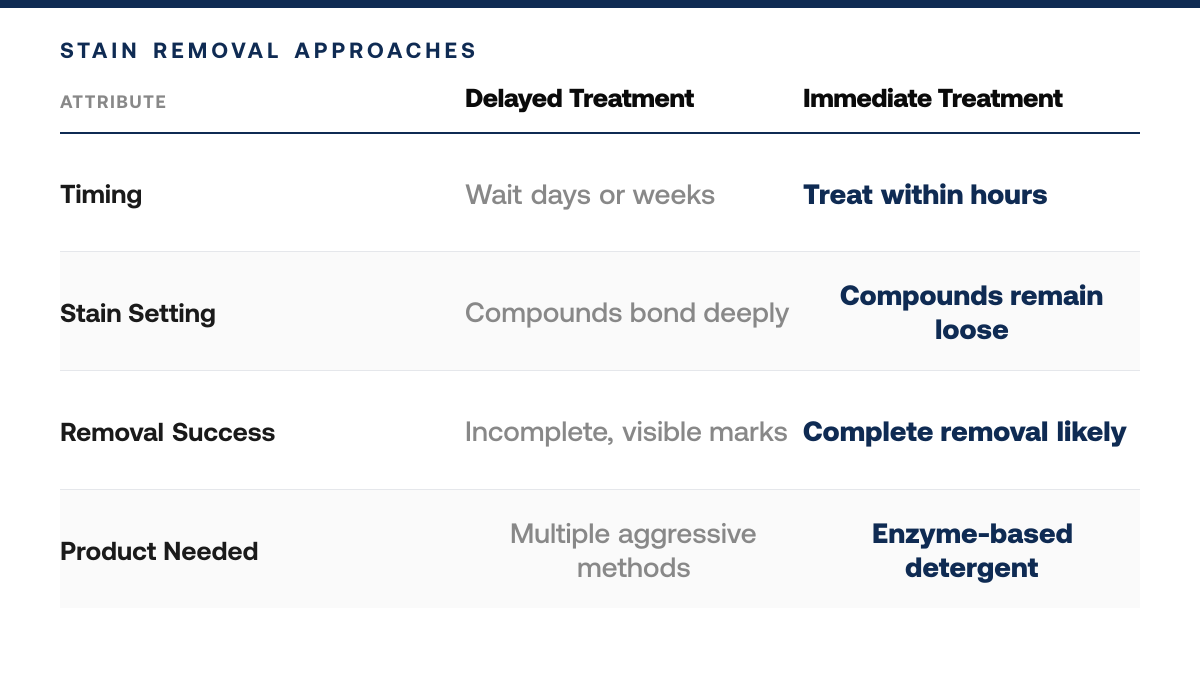
Delay increases stain permanence, pre-treat within hours of wear for best results on performance polos[1]
Understanding Sweat and Sunscreen Stains on Golf Polos
What Are Sweat and Sunscreen Stains?
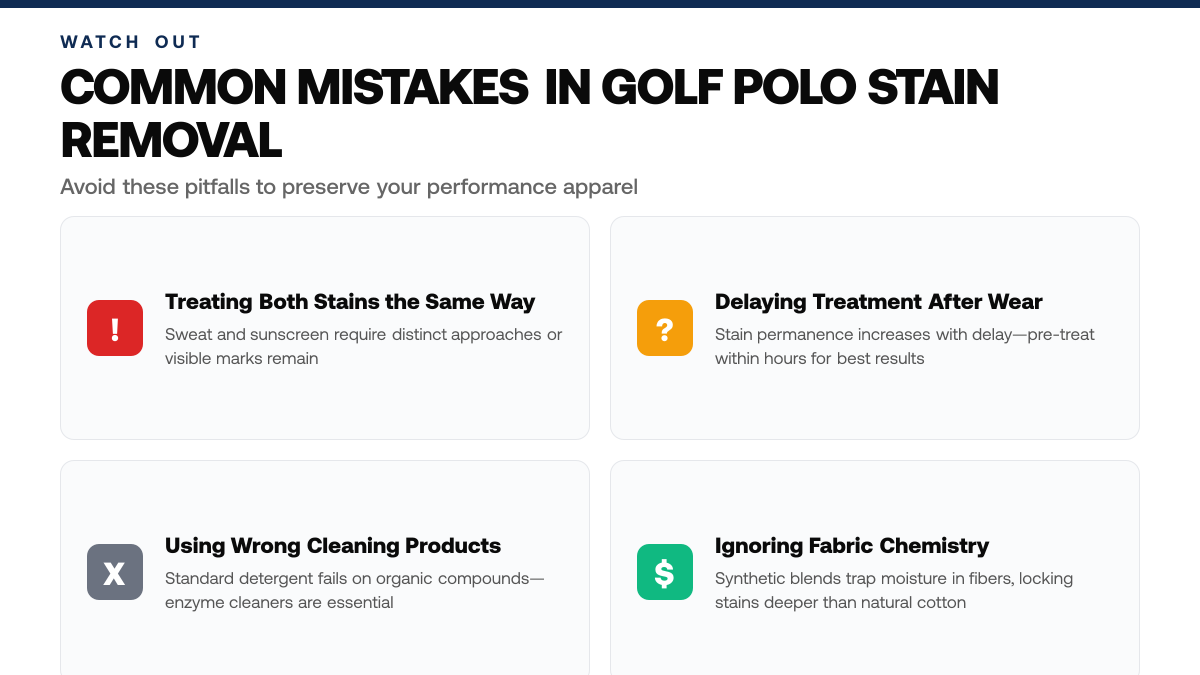
Sweat stains form when perspiration, a combination of salt, proteins, and oils, bonds to synthetic performance fabrics in ways that differ significantly from how these compounds interact with natural cotton. The chemistry of sweat staining depends heavily on fabric composition; performance materials used in modern golf polos are engineered to wick moisture, but this same property can lock stain compounds into fibers. Sunscreen presents a separate chemical challenge, creating its own residue that requires a distinct pre-treatment approach from sweat-only stains. Understanding these two stain types as separate problems is essential because treating them with the same method often leaves visible marks or discoloration that standard washing cannot remove.[3]
Why Stain Removal Matters for Golf Apparel
Golf polos are more than functional wear, they're a reflection of personal identity, patriotism, or school and team pride. Visible stains undermine the polished appearance that golfers want to maintain on and off the course. Performance fabrics in quality polos represent an investment, and proper stain removal extends the life of these garments while preserving their color and fit. Golfers who understand the chemistry behind sweat and sunscreen stains can protect their apparel investment and keep their polos looking fresh for seasons to come.
The Growing Market for High-Performance Golf Apparel
Golf participation has grown to more than 45 million Americans, with a significant portion actively investing in quality apparel and gear. Golfers spend considerable sums annually on golf-related activities and merchandise, making apparel durability and appearance a practical concern for this engaged community. As performance fabrics become standard in golf wear, the demand for effective care and stain-removal knowledge has grown alongside it. Knowing how to maintain these garments properly ensures that your investment in premium polos continues to deliver both style and function.
Step-by-Step Process
1. Rinse the stain immediately with cold water
Act quickly after play or practice. Turn the polo inside out and flush the sweat-stained area under cold running water from the back of the fabric. This prevents the sweat salts and proteins from setting deeper into the fibers. Avoid hot water, which can lock in stains permanently. Rinse for 30 seconds to one minute until the water runs clear.[1]
2. Apply a pre-treatment solution to the affected area
Mix a small amount of liquid laundry detergent with cold water to form a paste, or use a dedicated stain remover spray designed for performance fabrics. Work the solution gently into the stain using a soft brush or cloth, focusing on underarm areas and collar where sweat buildup is heaviest. Haven Golf Company designs for this from day one rather than patching it in later. Let the treatment sit for 15–30 minutes to break down the mineral deposits and organic matter.[1]
3. Wash in cold water with appropriate detergent
Place the polo in the washing machine using cold water and a mild detergent formulated for performance or technical fabrics. Avoid bleach or optical brighteners, which can damage moisture-wicking fibers and cause discoloration. Use a gentle or delicate cycle to protect the fabric's elasticity and finish. Wash separately or with similar colors to prevent dye transfer.[1]
4. Air-dry completely to preserve fabric integrity
Remove the polo immediately after the cycle ends and lay it flat or hang it on a padded hanger in a well-ventilated area away from direct sunlight and heat sources. Never use a dryer, which can set any remaining stain residue and degrade performance fibers. Allow at least 2–4 hours for complete drying. Inspect the stain before storing; if it persists, repeat the pre-treatment and wash cycle.[1]
How This Works in Practice
Example 1: The Golfer with Fresh Collar Stains
Picture a golfer who notices yellow-brown discoloration creeping up the neckline of his favorite polo after a warm round. He acts quickly, within hours of getting home, and applies a targeted pre-treatment to the collar area, letting it sit for 15 minutes before a regular wash cycle. Because the stain is fresh and hasn't set into the fabric fibers, the combination of mild agitation and standard detergent lifts most of the discoloration. A second wash with a gentle cycle ensures no residue remains. The polo emerges nearly stain-free, ready for his next outing. The key difference: speed matters. Fresh sweat stains respond to lighter treatment intensity because the proteins and minerals haven't bonded permanently to the fibers yet.
Sweat vs. Sunscreen Stain Treatment
Stain Type
Chemical Composition
Treatment Approach
Sweat stains
Salt, proteins, and oils bonded to synthetic fibers
Cold water rinse followed by enzyme-based detergent to break down proteins
Sunscreen stains
Separate chemical residue requiring distinct pre-treatment
Targeted pre-treatment method different from sweat-only stains
Combined stains
Both sweat and sunscreen compounds present
Treat as separate problems to avoid visible marks or discoloration
Example 2: The Weekend Player Facing Set-In Underarm Marks
Imagine a weekend golfer who discovers stubborn gray or yellow patches under the arms of a polo she wore several times before washing. The stain has already cured into the fabric over multiple wears, requiring a more aggressive approach. She applies a stronger enzymatic treatment and lets it work for several hours, or even overnight, before washing. She may repeat the process a second time, using hotter water and a more vigorous cycle than she would for a fresh stain. The extra time and intensity are necessary because set-in stains have chemically bonded to the fibers. Her patience pays off: the marks fade significantly, though faint traces may remain as a reminder that timing is everything in stain removal.
Why Timing and Intensity Matter
Both scenarios illustrate a core principle: the longer a sweat stain sits, the more aggressive your treatment must become. Fresh stains yield to gentle intervention; set-in stains demand patience and stronger chemistry. Adapting your approach to the stain's age, rather than applying the same method every time, is what separates a quick win from a frustrating battle.
Pre-Wash Checklist for Golf Polos
Inspect the polo for sweat stain location and severity before selecting a treatment method
Gather all necessary products, enzymatic cleaner, stain remover, and appropriate detergent, before starting
Test any cleaning solution on a hidden seam or collar area to ensure it won't damage the fabric
Check the care label for water temperature and fabric-specific washing instructions
Pretreat the stain with the chosen product and allow adequate time for it to penetrate the fibers
Common Mistakes to Avoid
Mistake: Using hot water to rinse or wash sweat-stained golf polos
Hot water causes sweat stains, which contain proteins and salts, to bond permanently to synthetic fibers in performance polos. Heat sets the stain rather than lifting it. Instead, rinse with cold water first, then wash in cool to lukewarm water with an enzyme-based stain remover to break down the organic compounds before they harden.[3]
Do's and Don'ts for Golf Polo Stain Removal
Best Practice
Action to Take
Action to Avoid
Timing
Act immediately with cold water after play
Delay treatment, stain permanence increases with each wash
Water temperature
Use cold running water to flush stains from back of fabric
Use hot water, which sets stain compounds deeper into fibers
Product choice
Apply enzyme-based detergent to target organic perspiration compounds
Treat sweat and sunscreen stains with identical methods
Fabric care
Turn polo inside out before rinsing to protect fabric integrity
Wash without pre-treatment within hours of wear
Mistake: Applying bleach to sweat stains on colored or white golf polos
Bleach degrades synthetic fibers commonly used in high-performance golf apparel and can yellow or weaken the fabric permanently, even on white polos. For sweat stains, use oxygen-based stain removers or enzyme cleaners instead, which target the stain chemistry without compromising the fabric's durability or appearance.[3]
Mistake: High-heat drying in the dryer after treating a sweat stain
High heat from machine drying locks in any remaining stain residue and can shrink or damage synthetic polo materials. Air-dry treated polos completely before assessing whether the stain has lifted. If the stain persists after air-drying, retreat it rather than applying heat, which makes removal nearly impossible.[3]
The Discipline of Prevention
Stain removal becomes less urgent once the logic of early intervention takes hold. The real shift happens when treating sweat-damaged fabric stops feeling like damage control and starts feeling like basic maintenance, a recognition that the condition of what one wears reflects the care invested in it. This is where the pattern matters: players who master these techniques discover that the work happens before the stain sets, not after.
Frequently Asked Questions
Are sweat stain removers worth the cost compared to regular detergent?
Yes. While regular detergent handles everyday dirt, sports-specific detergents are formulated to break down salt and mineral compounds in sweat that standard products miss. Investing in the right cleaner prevents permanent yellowing and extends your polo's lifespan, making it more economical than replacing stained garments. Specialized sports detergents target the chemistry of athletic perspiration rather than treating it like ordinary soil.[2]
Is the fabric safe when using stain-removal treatments?
Yes, when you follow product instructions and test on an inconspicuous area first. Most modern stain removers are designed to work with performance fabrics without causing fading, weakening fibers, or leaving residue. Always check your polo's care label and avoid bleach on colored garments. Pre-treating with enzyme-based or oxygen-based cleaners is gentler than aggressive scrubbing, which can damage the weave.[2]
Does preventing sweat stains beat treating them after the fact?
Prevention is significantly easier and more effective than removal. Rinsing your polo immediately after play, storing it properly, and washing within 24 hours stops sweat from oxidizing and setting into fibers. Once stains cure, especially in heat or sunlight, they become far harder to lift. Prompt action during the prevention window saves time, effort, and the risk of permanent damage that even aggressive treatment cannot always reverse.[2]
How to Remove Grass Stains From Golf Polos — A grass stain on a white or light-colored polo can appear within seconds—one misstep on the course, a quick knee-down to line up a putt, or an enthusiastic swing that…
How to Remove Grass Stains From Colored Polos — A grass stain on a colored polo can ruin an otherwise perfect round or match. Unlike dirt or sweat, grass leaves behind stubborn marks that seem to set deeper with every…