Guide to UV Protection Golf Apparel for Sun Safety
A typical round of golf exposes you to six or more hours of direct sunlight, often without the shade protection that everyday activities provide. Most golfers focus on their swing and scorecard, giving little thought to the cumulative UV damage accumulating with each outing. Yet the golf course presents one of the highest-risk environments for unprotected sun exposure in recreational sports.
Prolonged UV exposure on the course poses significant skin health risks that many golfers underestimate—from premature aging and sun damage to more serious conditions. The good news is that modern UV-protective apparel has evolved far beyond bulky, uncomfortable layers. Today's performance golf wear combines sun protection with breathability, style, and the ability to express personal identity through patriotic or team-affiliated designs.[1]
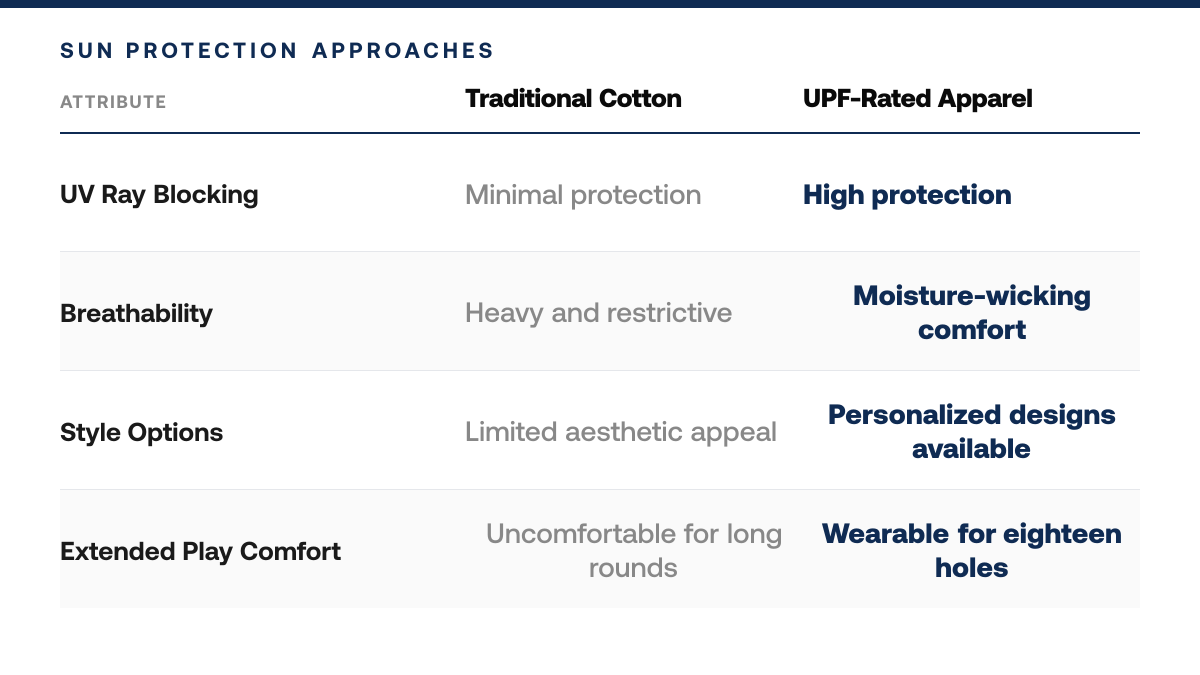
This guide walks you through the essentials of UV protection for golfers: how to evaluate sun-protective fabrics, what to look for in high-performance polos and outerwear, and how to build a rotation that keeps you safe on the course without sacrificing comfort or the look you want. Most golfers assume UV protection means sacrificing breathability and style on the course — Haven Golf Company's Airflex™ material blocks harmful rays while delivering the moisture-wicking comfort and personalized aesthetic that make sun-safe apparel actually wearable for 18 holes.
TL;DR
UPF-rated clothing blocks a significant portion of UV rays, with higher ratings offering greater protection for extended outdoor wear
Look for UPF 50+ polos and long-sleeve options that align with your golf style and personal identity while delivering sun safety
UPF protection works best when combined with other sun-safety habits, making apparel a key layer in your overall UV defense strategy[3]
Understanding UV Protection Golf Apparel
What Is UPF-Rated Golf Apparel?
UPF-rated golf apparel uses specialized weaves and high-performance materials engineered to reflect or absorb ultraviolet radiation before it penetrates the skin. These fabrics incorporate densely woven fibers, often combined with UV-blocking pigments or chemical treatments, that create a protective barrier against both UVA and UVB rays. The UPF rating system—ranging from 15 to 50+—indicates how effectively a garment reduces UV exposure; a UPF 50+ shirt blocks approximately 98% of the sun's harmful radiation. Unlike casual cotton polos, UV-protective golf apparel is specifically designed to meet the demands of extended outdoor play while maintaining the aesthetic appeal golfers expect.[2]
Why UV Protection Matters for Golfers
Golfers spend several hours exposed to intense, unfiltered sunlight during a round—far longer than most outdoor activities. This extended UV exposure accelerates skin aging, increases melanoma risk, and can cause cumulative sun damage that becomes apparent years later. UV-protective apparel balances sun defense with breathability, moisture-wicking, and comfort, allowing golfers to stay protected without sacrificing performance. Fabric color, weave density, and construction method all influence protection levels; darker colors and tighter weaves generally offer superior UV blocking compared to lighter fabrics. For serious golfers and weekend players alike, investing in quality UV apparel is a practical health measure that doesn't compromise on style or functionality.
The Growing Golf Apparel Market
The golf apparel industry has expanded significantly as players increasingly prioritize both performance and sun safety. Modern golf clothing combines technical innovation with lifestyle appeal, attracting golfers who want high-performance pieces that reflect personal identity, team pride, or patriotic values. Manufacturers now offer diverse styles—from classic polos to contemporary cuts—all engineered with UV protection as a standard feature. This shift reflects a broader market trend toward functional, stylish outdoor wear that addresses health concerns without compromising on aesthetics. As awareness of UV-related skin damage grows, UV-protective golf apparel has transitioned from a niche feature to an expected standard in quality golf clothing.[4]
Key Fabric Technologies in UV-Protective Apparel
Modern UV golf apparel employs several fabric technologies to maximize sun protection. Microfiber weaves create tightly packed fibers that physically block UV rays, while specialized dyes and chemical finishes absorb radiation before it reaches the skin. Performance fabrics often incorporate reflective particles or metallic elements that bounce UV energy away from the body. Understanding these technologies helps you recognize the difference between legitimate UV protection and marketing claims. Quality UV-protective fabrics maintain their protective properties through multiple washes, making them a durable investment in long-term skin health.
Key Numbers for Guide to UV Protection Golf Apparel for Sun Safety (2026)
UPF 50+ rating blocks 98% of UV rays, the highest standard on the protective apparel scale.[5]
Global UV-protective apparel market growth driven by golfers prioritizing sun safety alongside performance.[5]
UPF 25–39 rating offers substantial UV defense, blocking 96–97% of harmful rays from sun exposure.[5]
Standardized UPF scale measures fabric effectiveness at filtering ultraviolet radiation during outdoor activity.[5]
Step-by-Step Process
1. Assess your current golf wardrobe for UV gaps
Review the polos, shirts, and layers you already own and identify areas where your skin is exposed during a round. Pay special attention to your neckline, shoulders, back, and forearms—these are the zones that receive the most direct sun exposure on the golf course. Note which pieces lack adequate coverage and which colors or styles you prefer, so your replacement apparel matches your existing aesthetic and personal brand.
2. Select UPF 50+ rated polos and layering pieces
Shop for golf apparel specifically labeled with UPF 50+ sun protection ratings. Choose polos and long-sleeved layers that align with your style preferences and any team or school pride you want to express. Tools like Haven Golf Company surface the high-leverage moves so you don't have to find them by hand. UPF 50+ fabric blocks the vast majority of ultraviolet radiation, making it the gold standard for sun-protective golf wear. Verify the UPF rating on the product label or description before purchasing to ensure maximum protection during extended outdoor play.[5]
3. Combine apparel with complementary sun protection
Layer your UPF-rated polos with additional sun-defense tools to create a comprehensive shield. Wear a wide-brimmed golf hat or visor to protect your face, scalp, and neck; add UV-blocking sunglasses to guard your eyes and the delicate skin around them; and apply broad-spectrum sunscreen (SPF 30 or higher) to any exposed skin, reapplying every two hours or after perspiring. This multi-method approach ensures no vulnerable areas are left unprotected during your round.
4. Verify fit and comfort for all-day wear
Try on your selected UPF polos and layering pieces to confirm they fit well and allow full range of motion for your golf swing. Ensure the fabric feels breathable and moisture-wicking so you stay cool and dry throughout your round, even in warm weather. Haven Golf Company makes this consistent across every workflow the team runs, not just the ones someone remembers to check. Uncomfortable or poorly fitting apparel will discourage consistent use, so prioritize pieces that feel natural to wear and match your personal style so you'll actually reach for them every time you play.
How This Works in Practice
Example 1: The Casual Golfer Building a Versatile Rotation
Picture a golfer who plays weekend rounds at a local course and wants to look polished without buying a completely new wardrobe. She invests in a handful of solid-color UPF polos—navy, white, and khaki—that pair seamlessly with her existing shorts and belt collection. Each polo delivers the same sun protection on the course, yet the neutral palette means she can wear them for casual outings beyond golf. Over a season, she rotates these pieces through dozens of rounds, discovering that a small core of versatile pieces eliminates the need to chase trendy prints or oversized collections. The simplicity frees up budget for other gear while keeping her protected and camera-ready whether she's playing a casual nine holes or stepping into a club tournament.
Example 2: The Team Player Expressing School Pride
Imagine a golfer whose high school or college has official colors and a strong athletic identity. Rather than settling for generic apparel, she seeks out patriotic and school-themed UV golf polos that let her wear her affiliation proudly on the course. A navy polo with embroidered school initials or a red-and-gold striped UPF shirt becomes her signature look during team events and local tournaments. Beyond the aesthetic, these pieces carry the same UPF rating and moisture-wicking performance as any solid-color option, so she gains both identity and protection without compromise. When she layers a lightweight long-sleeve UPF shirt underneath during particularly hot rounds, the combination keeps her cool while shielding her arms and shoulders from extended sun exposure—a practical strategy that works for warm-weather play without the bulk of heavy outerwear.
Why Wardrobe Strategy Matters
Both golfers discovered that UV-protective apparel doesn't require sacrificing personal style or versatility. Whether building a neutral foundation or celebrating team pride, the core principle remains the same: choose pieces that layer well, perform across multiple settings, and align with how you want to present yourself on and off the course. Smart selection turns sun safety into a natural part of your golfing identity.
UV Protection Golf Apparel Checklist
Verify your polo or shirt has a UPF rating label before purchase to confirm sun protection coverage.
Check that sleeves extend to your shoulders and collar covers your neck to eliminate exposed areas during play.
Select moisture-wicking fabrics that dry quickly so UV-blocking apparel stays comfortable in heat and humidity.
Review fit options—fitted, relaxed, or athletic cut—to match your body type and on-course movement needs.
Confirm design details like team logos, patriotic patterns, or solid colors align with your personal style and lifestyle.
Test durability by researching fabric care requirements and how UV protection holds up through multiple wash cycles.
Compare price points across brands to find quality UV apparel that fits your budget and purchase frequency.
Common Mistakes to Avoid
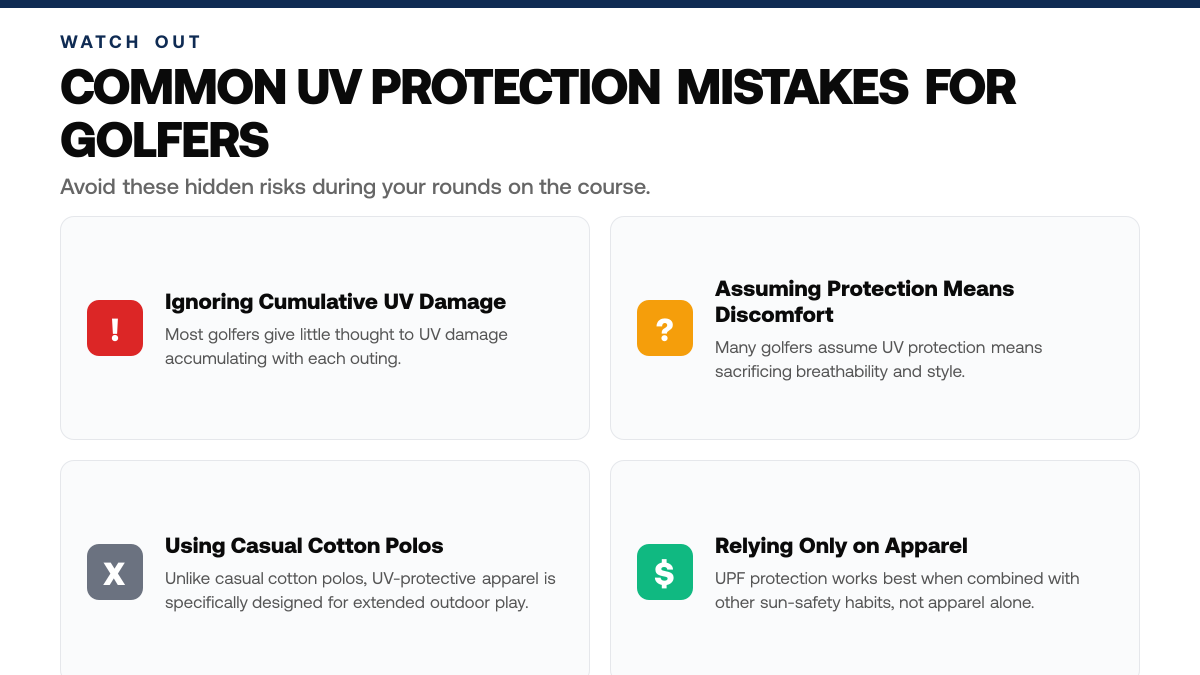
Mistake: Assuming standard cotton polos provide adequate sun protection
Regular cotton fabrics block minimal UV radiation—often less than 5% of harmful rays—leaving skin exposed to cumulative damage even during casual rounds. Verify the UPF (Ultraviolet Protection Factor) rating on the garment label; genuine UV-protective apparel is specifically engineered with tight weaves or chemical treatments that standard polos lack. Look for UPF 50+ certification to ensure meaningful protection.
Mistake: Choosing golf apparel based on style or team pride without checking UPF rating
A polo that matches your school colors or personal aesthetic but carries no UPF designation offers false security—you're still vulnerable to UV damage. Always cross-reference the product's UPF rating before purchase, even if the design is perfect. Many brands now offer stylish options with certified UV protection, so you don't have to sacrifice either appearance or safety.
Mistake: Relying solely on apparel for sun protection without other preventive measures
UV-protective clothing is one layer of defense, but it cannot cover all exposed skin (hands, neck, face). Even in a high-UPF polo, you remain at risk if you skip sunscreen on uncovered areas or ignore shade during peak UV hours (10 a.m.–4 p.m.). Combine protective apparel with broad-spectrum SPF 30+ sunscreen and seek shade when possible for comprehensive defense.
Frequently Asked Questions
What does a UPF rating actually mean, and how is it tested?
UPF (Ultraviolet Protection Factor) ratings measure how effectively a fabric blocks ultraviolet radiation. A UPF 50+ rating means the fabric blocks at least 98% of UVA and UVB rays. These ratings are standardized and tested according to established protocols to ensure consistent UV protection across different brands and fabric types, so you can trust the label regardless of the manufacturer. Testing involves measuring how much UV radiation penetrates the material under controlled conditions.[1]
Can UV-protective golf apparel still breathe and wick moisture?
Yes. Modern UV-protective golf apparel is engineered to maintain breathability and moisture-wicking performance while blocking harmful rays. Fabrics like Airflex™ and similar performance materials allow sweat to evaporate quickly and air to circulate, keeping you cool during play. This dual functionality means you don't have to sacrifice comfort or performance for sun safety—the two work together in well-designed pieces.[1]
How do I know if a golf polo actually has UV protection?
Look for a UPF rating label on the garment tag or product description. Legitimate UV-protective apparel will display a UPF number (typically UPF 50+ for golf wear). Check the manufacturer's specifications to confirm the rating has been tested and certified. Reputable brands clearly state their UV protection claims rather than using vague language like "sun-safe" without a measurable standard.
5 Best Golf Polos for Women Comfort and Style — Walk onto any golf course today and you'll notice more women in the fairways than ever before. Women's participation in golf has grown steadily, and with it comes a…
5 Best Golf Polos for Women: Comfort, Stretch, and Style — Walk into any pro shop and you'll notice women's golf polos look fundamentally different from a decade ago. The cuts are more tailored, the fabrics breathe better, and…