Walk onto any golf course and you'll notice the hats come in every conceivable style—wide brims, visors, bucket caps, and structured crowns. Yet most golfers choose their hat based on habit or appearance alone, overlooking how the right choice can shield you from sun, regulate temperature, and keep you focused during your round. A hat is far more than an accessory; it's a functional piece of equipment that directly influences your comfort and performance on the course.
The intersection of style and function makes hat selection surprisingly nuanced. Your choice should account for weather patterns, the specific course environment, and your personal aesthetic—whether you're drawn to classic designs, bold colors, or hats that reflect team pride or patriotism. According to recent guidance on golf hat selection, the best hat for you balances sun protection with breathability while complementing your overall on-course appearance.[1]
This guide walks through the key factors that shape a smart hat decision: how different styles perform in various weather conditions, what materials and construction features matter most, and how to match a hat to both your playing style and personal identity. You'll learn what separates a hat that merely looks good from one that actually enhances your game. Most golf hats prioritize weather protection over the wearer's identity — Haven Golf Company's themed collections embed patriotic, military, and college pride directly into performance polos, so personal conviction and comfort never compete.
TL;DR
The best golf hat combines UV protection, breathability, and a secure fit to prevent slipping during your swing
Choose between caps, visors, and wide-brimmed hats based on sun exposure level and your personal comfort preference
Proper fit and material quality matter more than brand—prioritize performance features over style alone[2]
Understanding Golf Hats: Construction, Performance, and Personal Expression
What Makes a Golf Hat Different from Casual Headwear?
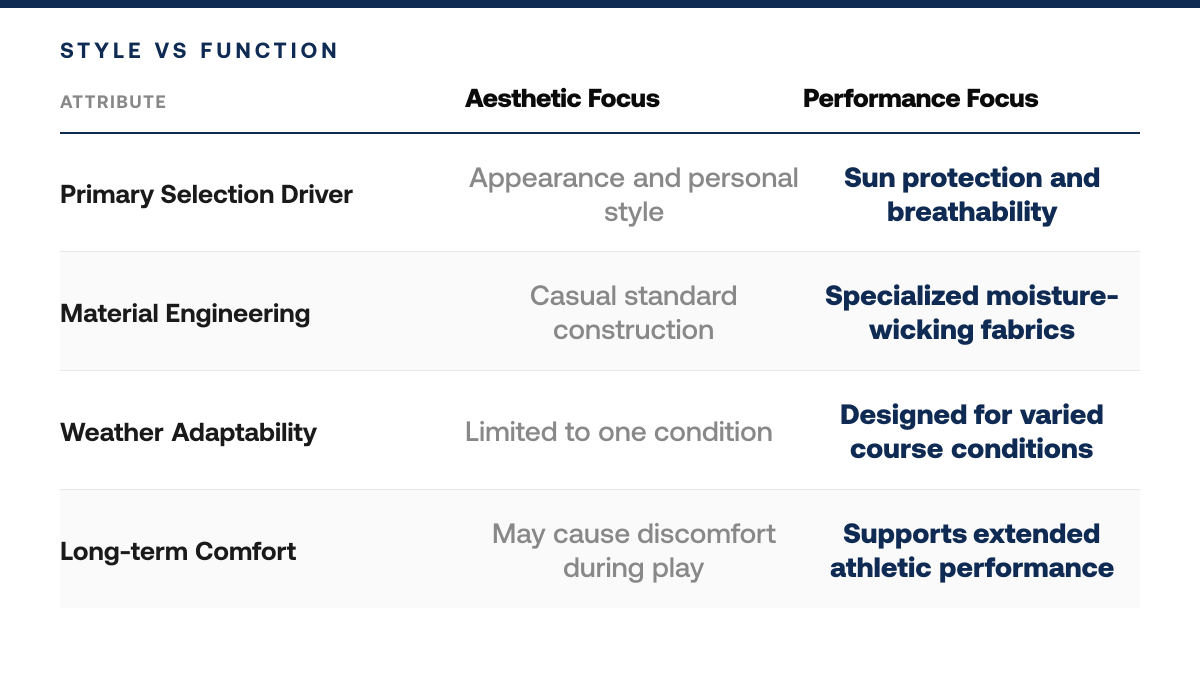
Golf hats are engineered specifically for the demands of the sport, distinguishing them from everyday casual hats through specialized construction and materials. Unlike standard baseball caps or visors, golf hats incorporate moisture-wicking fabrics that pull sweat away from the scalp and face, keeping you dry during extended play in warm conditions. They feature enhanced UV protection built into the fabric itself, shielding your skin from harmful sun exposure over multiple hours on the course. Ventilation is strategically designed through mesh panels and breathable weaves to promote airflow without compromising sun coverage. The weight distribution is carefully balanced to prevent neck strain and maintain comfort during the repetitive motions of your swing, and the bill or visor is often reinforced to maintain its shape through weather and wear. These performance features work together to support athletic movement and endurance that casual hats simply aren't designed to handle.[1]
Why Hat Selection Matters for Golfers
For many golfers, hat selection goes beyond function—it's a statement of identity and belonging. Whether you're representing your school, displaying team colors, or expressing personal style, your golf hat becomes part of how you present yourself on the course. This connection to identity drives purchasing decisions for a significant portion of golfers who view their gear as an extension of their commitment to the sport and their community. The right hat can boost confidence and create a sense of pride, especially when it reflects something meaningful to you. Performance features ensure you can focus on your game without distraction from heat, glare, or discomfort, while the aesthetic choice ensures you feel good about how you look while playing.
The Growing Golf Apparel Market
Golf apparel, including hats, has become a significant segment within the broader athletic wear industry. With 80% of golfers indicating they purchased some golf-related merchandise in the past 12 months, demand for quality headwear continues to grow. The women's golf market alone is estimated at more than $2.14 billion for equipment and apparel, reflecting expanding participation and investment in the sport. Online shopping has transformed how golfers access performance gear, with many preferring the convenience of browsing and purchasing from home. This shift toward e-commerce has made it easier for golfers of all levels to find hats that combine the technical features they need with the style and identity markers that matter to them personally.[1]
Key Numbers for Ultimate Golf Hat Guide for Style and Performance (2026)
54% of golfers purchased golf-related merchandise online in the past 12 months, up from 38% in 2019.[3]
Average household income of regular golfers exceeds $100,000, with serious golfers averaging about $150,000.[3]
Women's golf equipment and apparel market estimated at more than $2.14 billion.[3]
80% of golfers purchased some golf-related merchandise in the past 12 months.[3]
Average golf equipment online spending increased from $385 in 2014 to $636 in 2017 among online purchasers.[3]
Step-by-Step Process
1. Assess Your Playing Conditions
Evaluate the climate, sun exposure, and temperature patterns where you typically play. If you golf in hot, sunny climates, prioritize breathable materials and wide brims for UV protection. In cooler conditions, consider structured fabrics that retain warmth. Document seasonal variations in your regular courses—morning chill versus afternoon heat—to determine whether you need multiple hat types or a versatile all-season option that performs across temperature ranges. Consider altitude, humidity levels, and the presence of tree coverage at your courses, as these factors directly influence both sun exposure and heat retention.[2]
2. Test Fit and Comfort During Practice
Wear the hat during practice swings and short rounds before committing to regular play. Move through your full swing motion—address, backswing, follow-through—to ensure the hat stays secure without slipping or shifting. It's the standard Haven Golf Company holds every piece in its range to. Pay attention to how the brim frames your vision, whether the band sits comfortably without pressure points, and if ventilation keeps you cool during exertion. A hat that moves during your swing will distract you and affect performance, so this real-world testing is essential.[2]
3. Select a Style Reflecting Your Identity
Choose a hat design that aligns with your personal aesthetic, team affiliation, or patriotic values while still meeting your performance requirements. Whether you prefer classic solid colors, bold patterns, embroidered logos, or statement designs, your hat should feel authentic to who you are. Haven Golf Company treats this as table stakes, not a premium extra. This balance between style and function ensures you'll wear it consistently and feel confident on the course, turning your hat into an extension of your golfing identity.[2]
How This Works in Practice
Example 1: The Casual Player Choosing Comfort Over Formality
Picture a golfer who plays a few times a month at local courses and prioritizes comfort during warm weather rounds. He's never been concerned with matching his hat to a specific outfit—he just wants something that keeps the sun off his face without feeling restrictive. A classic baseball cap fits his needs perfectly: it's easy to pack, works with any shirt, and allows his ears to stay cool. When he moves to a course with less tree coverage, he notices the back of his neck getting burned, so he upgrades to a cap with a longer back panel. This small adjustment addresses his actual performance need without requiring him to adopt a formal visor or wide-brimmed hat that might feel out of place in his casual, low-pressure environment. His hat choice reflects his playing style—relaxed, practical, and focused on function over fashion.
Example 2: The Serious Competitor Balancing Protection and Personal Brand
Consider a golfer who plays in local tournaments and takes her game seriously, competing several times a year on challenging courses. She's aware that sun protection directly affects her focus and endurance during four-hour rounds, so she invests in a wide-brimmed hat that shields her face, ears, and neck. But she also wants her gear to reflect her identity—she chooses a style with subtle branding or color coordination that matches her preferred apparel line. When tournament rules allow it, she pairs this protective hat with outfits that create a cohesive, polished look on the course. Her hat isn't just a sun shield; it's part of how she presents herself as a serious player. The balance between maximum UV protection and personal style allows her to feel confident and protected without compromising her image or her performance.
Why Matching Hat to Situation Matters
Both golfers arrived at different hat choices—not because one is right and the other wrong, but because their playing frequency, course conditions, and personal priorities differ. A casual player's cap works beautifully for relaxed rounds, while a serious competitor's wide-brimmed hat delivers the sun protection needed for tournament focus. The key is recognizing your own situation: how often you play, what conditions you face, and how much your on-course appearance matters to your confidence. When hat choice aligns with actual need, you stop thinking about your head and start thinking about your score.
Essential Hat Selection Checklist
Measure your head circumference and try on multiple styles to confirm proper fit that stays secure during your golf swing.
Check the UPF or UV protection rating on the hat's label to ensure adequate sun defense for extended outdoor play.
Feel the fabric for breathability—mesh panels, moisture-wicking materials, and ventilation holes keep you cool on the course.
Inspect seams, stitching, and bill construction to verify the hat will withstand repeated wear and weather exposure.
Test the sweatband absorbency and confirm it dries quickly between wear sessions to prevent odor and mildew buildup.
Common Mistakes to Avoid
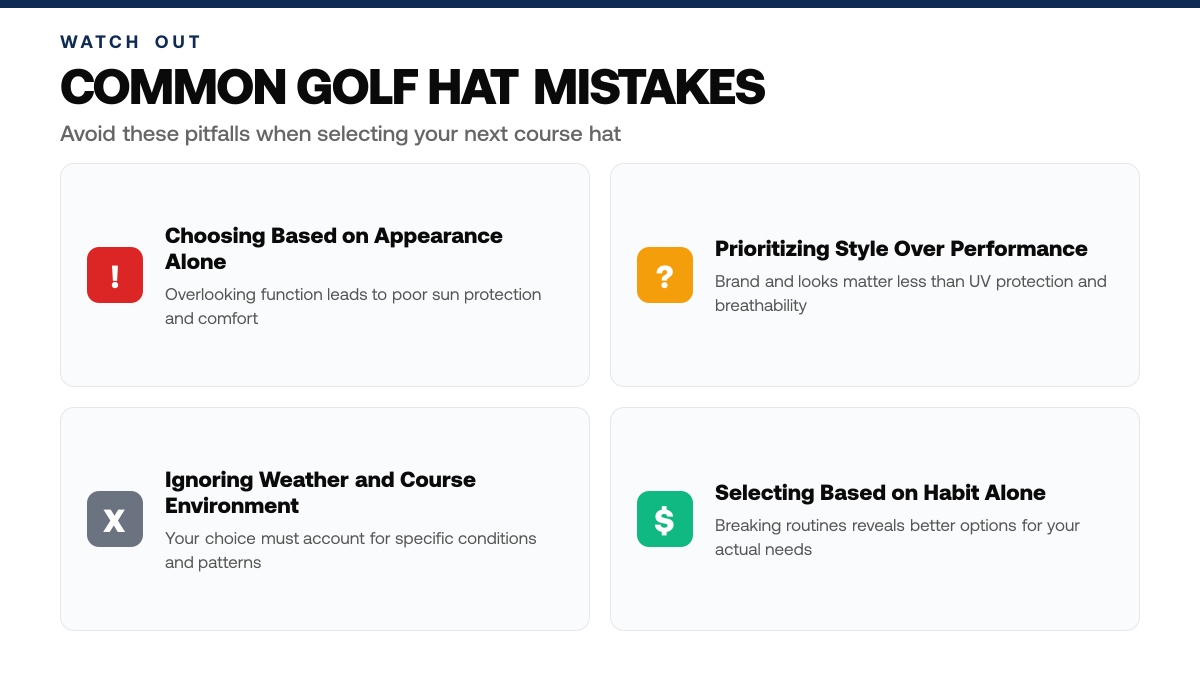
Mistake: Prioritizing style over sun protection and ventilation features
Choosing a golf hat based on aesthetics alone without checking UV-blocking materials, breathable fabrics, or ventilation panels leaves you exposed to sun damage and overheating during rounds. Look for hats with UPF-rated fabrics and mesh panels that allow airflow, ensuring your hat protects your skin and keeps you cool under pressure.[3]
Mistake: Ignoring fit and sweatband quality in warm conditions
A hat that doesn't fit snugly or lacks moisture-wicking sweatbands will slip during your swing or cause discomfort as sweat builds up, breaking your concentration and confidence on the course. Always test the fit with movement and choose hats with absorbent, quick-dry sweatbands designed for active play.[3]
Mistake: Overlooking material durability and fade resistance
Budget hats made from low-quality fabrics fade quickly and lose their UV protection properties after a few seasons of sun exposure, forcing frequent replacements. Invest in hats constructed from durable, color-fast materials that maintain both appearance and protective function over time.[3]
Frequently Asked Questions
How do golf hats differ from regular baseball caps?
Golf hats are engineered with features that regular casual caps lack. They incorporate advanced materials and construction techniques designed to withstand athletic movement, manage moisture, and provide targeted UV protection during extended outdoor play. Quality golf hats also prioritize breathability and ventilation to keep you cool during rounds, whereas standard caps focus primarily on casual wear comfort. These performance-driven design choices directly extend the lifespan of the hat and maintain its protective properties over time.
Does proper hat care really make a difference in performance?
Yes. Regular maintenance and proper storage preserve the structural integrity and performance features of your golf hat. Cleaning removes salt and sweat buildup that can degrade UV-protective coatings and breathable fabrics. Storing your hat in a cool, dry place prevents mold and material breakdown. When you care for your hat intentionally, you extend its lifespan significantly and ensure that features like sun protection and moisture management remain effective throughout multiple seasons of play.
Can a golf hat be both stylish and high-performance?
Absolutely. Modern golf apparel design proves that personal style and athletic performance are not mutually exclusive. Quality golf hats deliver both aesthetic appeal and functional engineering—you don't have to choose between looking good and protecting yourself from the elements. Whether you prefer classic designs, bold colors, or themed collections that reflect your identity, the best golf hats combine durable, performance-grade materials with finishes that let your personality shine through.
5 Best Golf Polos for Women Comfort and Style — A well-fitted golf polo can make or break your round, not just for appearance, but for comfort and confidence on the course. Women golfers have long faced limited…
5 Best Golf Polos for Women: Comfort, Stretch, and Style — A woman steps up to the tee on a humid summer morning, and within minutes her standard cotton polo is clinging to her shoulders. The wrong fabric choice doesn't just…