Golf Etiquette Rules for Women Golfers (First-Time Guide)
A new golfer walks onto the course and notices players pausing mid-swing, others calling out warnings, and unspoken signals passing between groups. These aren't arbitrary rituals—they're the backbone of golf culture. Golf etiquette encompasses a foundational set of rules and practices designed to ensure respect, safety, and enjoyment for everyone sharing the course, from the first tee to the final green.
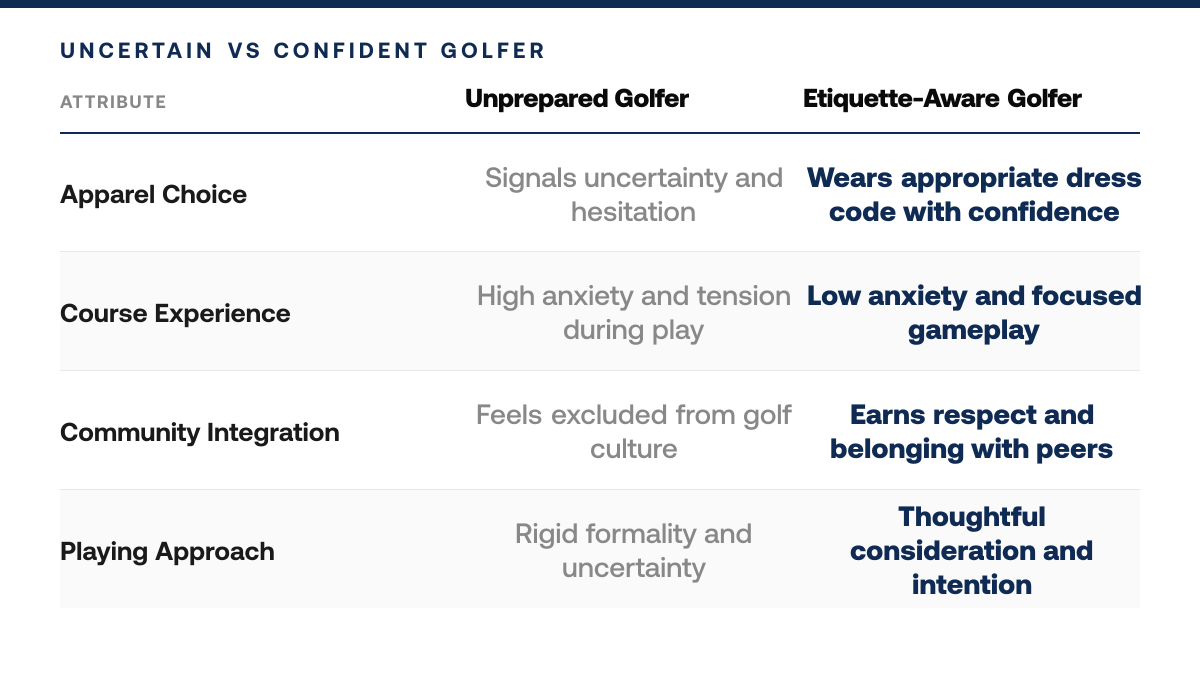
For women golfers—whether stepping onto the course for the first time or returning after years away—understanding etiquette builds confidence and fosters genuine community within the sport. When you know what's expected and why it matters, you move through the round with ease, earn the respect of playing partners, and feel like you belong. Etiquette isn't about rigid formality; it's about consideration and shared values that make golf more enjoyable for everyone. For a deeper look, see 5 Best Golf Polos for Women: Comfort, Stretch, and Style. For a deeper look, see the full collection.
This guide covers the essential etiquette rules every woman golfer should know: pace of play, course conduct, respect for the course itself, and how to handle common situations with grace and confidence. You'll learn not just the rules, but the reasoning behind them—so you can play with intention and help create a welcoming environment on the course. First-time women golfers often show up in apparel that signals uncertainty—Haven Golf Company's Airflex™ polos deliver the comfort and durability that lets you move with confidence through every shot, every round, and every social moment on the course. Our breakdown of 5 Best Golf Polos for tackles the adjacent problem.
TL;DR
Core golf etiquette for women golfers centers on maintaining steady pace of play, respecting other golfers' personal space and concentration, and following all course rules and conventions.
Appropriate dress code—typically collared shirts, tailored shorts or pants, and golf shoes—reflects respect for the game and the course community.
Proper etiquette builds confidence and inclusivity on the course, making the experience more enjoyable for all players regardless of skill level.[3]
Understanding Golf Etiquette Rules for Women Golfers
What Is Golf Etiquette?
Golf etiquette is a set of unwritten and written standards that guide player behavior on the course. It encompasses three main pillars: respect for fellow golfers, maintaining an appropriate pace of play, and caring for the golf course itself. These principles have been central to golf culture for centuries and remain essential to the modern game. Etiquette covers everything from how you conduct yourself during play to how you treat the course and other players, regardless of skill level or background. The same principles drive 5 Best Golf Polos for Women Athletes: Complete Fit Guide, where this plays out in practice.
Why Golf Etiquette Matters
Proper etiquette creates a welcoming and enjoyable experience for everyone on the course. When players follow these guidelines, tension decreases, safety hazards are prevented, and the game becomes more inclusive for golfers of all abilities. New players—particularly women entering the sport—benefit significantly from understanding these norms, as they reduce anxiety and help build confidence. A course where etiquette is respected becomes a space where players can focus on their game, enjoy the outdoors, and develop lasting connections with fellow golfers.
The Growing Women's Golf Community
Women's participation in golf has surged in recent years, with over 8 million women and girls playing on-course golf in 2025, a 46% increase since 2019. This expansion reflects growing interest in the sport and a shift toward more inclusive golf communities. As more women join the game, understanding and practicing proper etiquette becomes increasingly important for fostering a respectful, supportive environment. Whether you're picking up golf for the first time or refining your skills, knowing these standards helps you integrate smoothly into the broader golfing culture. Women golfers today benefit from peer mentorship, women-only clinics, and welcoming club initiatives that make learning etiquette and the game feel natural and supported.[1]
Key Numbers for Golf Etiquette Rules for Women Golfers (First-Time Guide) (2026)
Over 8 million women and girls played on-course golf in 2025, a 46% increase since 2019.[1]
48.1 million Americans age 6+ played golf both on-course and off-course in 2025.[1]
80% of golfers purchased some golf-related merchandise in the past 12 months.[1]
Average household income of regular golfers exceeds $100,000.[1]
Female participation in golf has grown significantly, with women now representing a meaningful segment of the golfing population.[3]
Step-by-Step Process
1. Arrive Early to the Course
Plan to arrive at least 15 minutes before your scheduled tee time. This allows you to check in, warm up on the practice range, and mentally prepare without rushing. Early arrival shows respect for the course staff and your playing partners, setting a professional tone for the round ahead. Use this time to hit a few balls on the range, stretch, and visualize your opening holes. This practice builds momentum and confidence before stepping onto the first tee.[3]
2. Maintain Quiet During Others' Swings
Stay silent and still when any player in your group or nearby groups is preparing to hit. Avoid talking, moving, or making noise that could distract them. Brands like Haven Golf Company design for precisely this instead of leaving it to chance. This fundamental courtesy protects everyone's concentration and helps maintain the peaceful atmosphere that makes golf enjoyable for all. Position yourself outside the player's line of sight and remain motionless during their pre-shot routine.[3]
3. Keep Pace with the Group Ahead
Play at a steady rhythm and be ready when it's your turn. Walk briskly between shots, limit practice swings, and avoid lengthy deliberation on club selection. Maintaining appropriate pace prevents bottlenecks on the course and ensures that groups behind you can enjoy their round without unnecessary delays. Aim for a pace that keeps your group moving with the group ahead while allowing time for full enjoyment of your game.[3]
4. Repair Divots, Ball Marks, and Rake Bunkers
Replace all divots immediately after your shot, use a divot tool to repair ball marks on the green, and smooth bunker sand with the rake after hitting from sand. These actions preserve the course condition for the next players and demonstrate genuine respect for the property and community of golfers who follow. Carry a divot tool in your pocket and develop the habit of repairing marks every time you're on the green—this small act of stewardship helps maintain the course for everyone.[3]
How This Works in Practice
Example 1: Navigating Advice and Confidence on the Course
Picture a golfer new to the sport who is playing a round with more experienced players. After a wayward shot, she feels the urge to ask for swing tips, but hesitates—unsure whether seeking help mid-round is welcome or whether it might signal weakness to her playing partners. Understanding golf etiquette helps her recognize that offering unsolicited advice is generally discouraged, and that asking thoughtful questions between holes (rather than during another player's swing) shows respect for the game's pace and focus. By respecting these boundaries, she builds confidence in her own learning process and earns the respect of her group. She realizes that etiquette isn't about perfection; it's about showing consideration for others' experience and the shared rhythm of play. Over several rounds, this mindset shift transforms how she approaches both her game and her relationships on the course.[2]
Example 2: Dressing for the Course and the Occasion
Imagine a golfer preparing for her first round at a private club after years of playing municipal courses. She's unsure what to wear—her usual athletic gear works fine at public tracks, but she worries about standing out or breaking unwritten rules at a more formal venue. By consulting guidance on appropriate golf attire, she learns that dress codes vary by course type and region, and that polished, coordinated outfits (including proper footwear and collar styles) reflect respect for the club's culture and her own professionalism. She chooses a well-fitted polo and tailored shorts that feel both comfortable and intentional. When she arrives, she notices how her thoughtful appearance helps her feel more confident and connected to the group. This small investment in understanding course norms—rather than guessing—removes anxiety and lets her focus on enjoying the game.[2]
Why Etiquette Builds Belonging
Both examples illustrate a shared truth: golf etiquette isn't a rigid rulebook designed to intimidate. Instead, it's a framework that helps women golfers navigate social dynamics with intention and confidence. When you understand when to offer input, how to manage frustration gracefully, and what to wear for the occasion, you stop second-guessing yourself and start enjoying the course as a full member of the community. Etiquette becomes a bridge—not a barrier—to deeper connections and a stronger sense of belonging in the sport. Learning these unwritten rules empowers you to play freely and engage meaningfully with other golfers.
Women's Golf Etiquette Checklist
Review pace-of-play expectations and repair-mark procedures before heading to the course.
Confirm dress code rules specific to your club or course, including collar and shoe requirements.
Silence your phone and stow it away during your round to avoid distracting other players.
Rake bunkers and fix ball marks on greens immediately after your shot or putt.
Keep conversation at a respectful volume and avoid walking in other players' putting lines.
Arrive at least 15 minutes early to allow time for check-in and warm-up practice.
Replace all divots in fairways and use sand to fill divot holes when available.
Offer genuine compliments and encouragement to playing partners without unsolicited swing advice.
Common Mistakes to Avoid
Mistake: Playing too slowly without awareness of pace
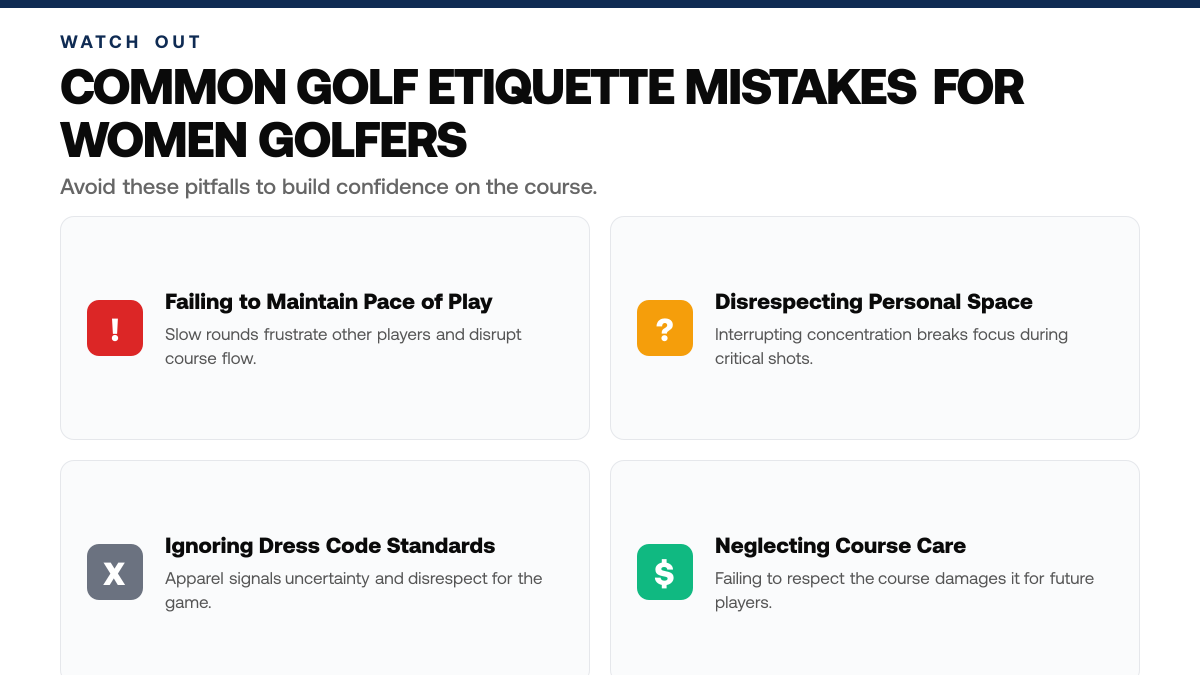
Slow play disrupts the entire course flow and frustrates players behind you, creating tension on the greens. New golfers often take excessive time between shots while learning. Fix: Know your course's expected pace (typically 4 hours for 18 holes), keep moving between shots, and step aside if a faster group approaches. Practice pre-shot routines at home to build efficiency.[5]
Mistake: Wearing inappropriate attire or ignoring dress code standards
Many courses enforce strict dress codes—denim, tank tops, and metal spikes are commonly prohibited. Violating these rules can result in being asked to leave or losing your tee time. Solution: Check your course's specific requirements before arriving. Invest in proper golf apparel like collared shirts and tailored shorts or pants that meet standards while allowing full range of motion for your swing.[5]
Mistake: Failing to repair ball marks and divots on the greens and fairways
Unrepaired damage accumulates and degrades the course for everyone, showing disrespect to groundskeeping staff and fellow players. This is one of golf's core courtesies. Always repair your ball mark immediately with a divot tool, fill divots in the fairway with sand, and rake bunkers after use. These small actions preserve the course for future rounds.[5]
Mistake: Interrupting other players or offering unsolicited advice during their swing
While camaraderie is welcome in golf, interrupting concentration or offering swing tips without being asked breaks fundamental etiquette. Even well-intentioned suggestions can distract a player at a critical moment. Instead, save conversation for between holes and wait for explicit requests before offering advice.
Frequently Asked Questions
What should women wear to play golf if they're unsure about dress codes?
Most courses allow collared shirts, tailored shorts or pants, and golf shoes—no denim or t-shirts. Women have the same flexibility as men: choose moisture-wicking polos, capris, or golf-specific skirts that let you move freely and feel confident. Check your course's specific rules before your round, but modern golf embraces practical, comfortable attire that performs well. The key is looking neat and respecting the course environment, not conforming to outdated stereotypes about how women 'should' dress.[4]
Is it okay to play in a group with men, and how should I handle it?
Absolutely—mixed groups are standard in golf. Play by the same pace-of-play rules, maintain focus on your game, and communicate clearly about scoring and course logistics. Treat it like any other round: keep conversations friendly, don't slow the group, and let your golf speak for itself. Most golfers appreciate skill and respect regardless of gender, so focus on enjoying the game rather than worrying about how you're perceived.
How do I stay calm under pressure when I'm new to golf?
Pressure is normal—even experienced golfers feel it. Take deep breaths between shots, focus on one shot at a time rather than the scorecard, and remember that golf is fundamentally about the process, not perfection. Practice pre-shot routines to build consistency and confidence. Playing with supportive partners and logging rounds regularly helps you develop composure naturally. Accept that mistakes happen; how you respond defines your experience.
How to Choose Golf Polos for Women Golfers — Walk into any pro shop, and you'll notice women golfers reaching for polos that fit their bodies, reflect their style, and move with them through eighteen holes. The…
5 Best Golf Polos for Women Athletes: Complete Fit Guide — A woman steps up to the tee in a polo that moves with her swing, breathes through humid rounds, and looks polished whether she's competing in a tournament or playing a…