How to Transition Your Golf Wardrobe Between Seasons
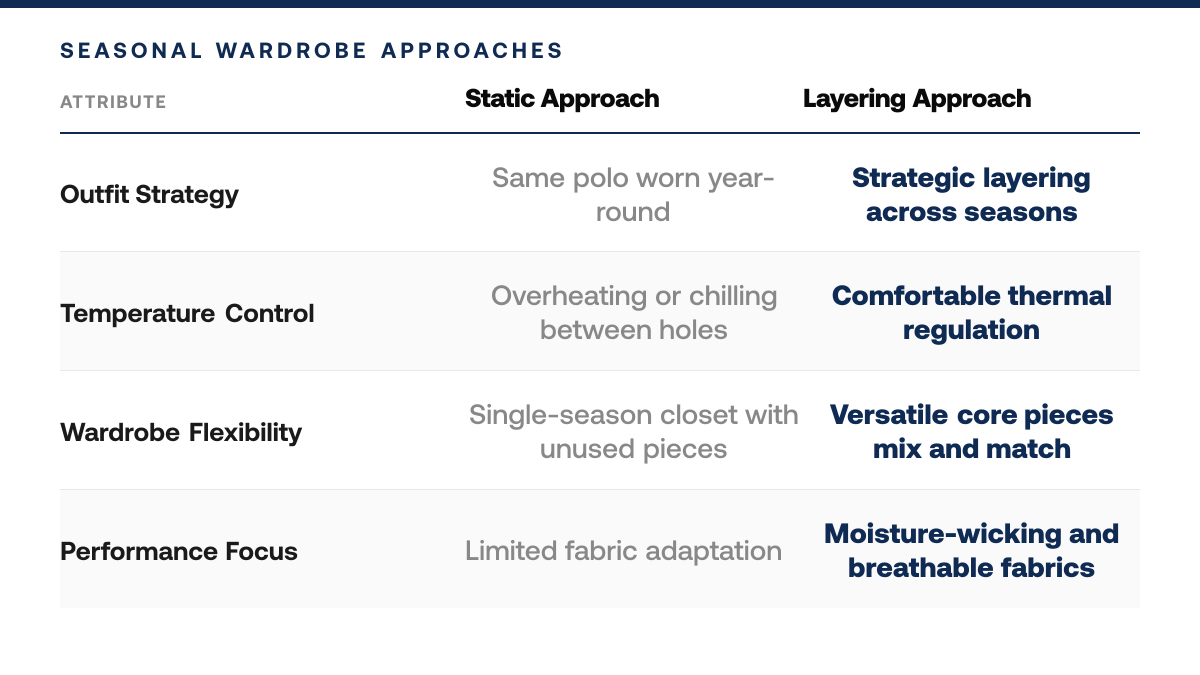
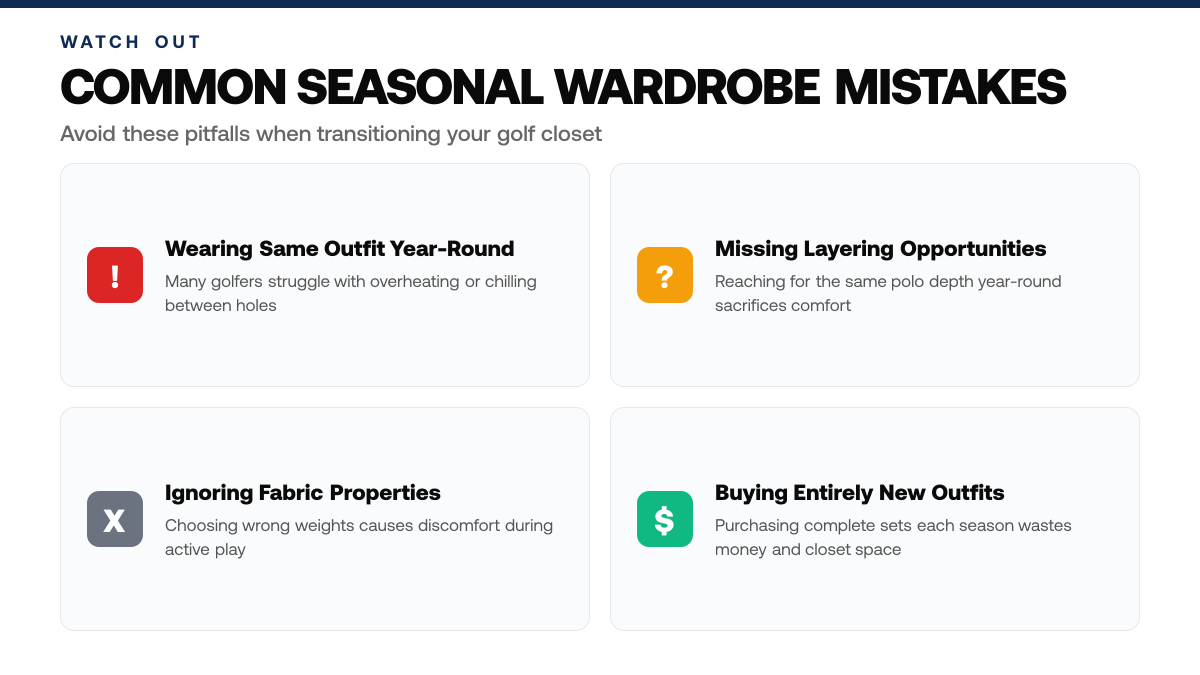
Stepping onto the course in spring feels different than teeing off in autumn—the air temperature shifts, humidity rises and falls, and wind patterns change. Yet many golfers wear the same outfit year-round, struggling with either overheating or chilling between holes. The reality is that seasonal transitions demand more than just swapping one polo for another; they require a thoughtful approach to how you layer and coordinate your apparel.
Seasonal wardrobe transitions are about maintaining both comfort and style as weather conditions evolve. Golf layering is a core technique for adapting to temperature swings without sacrificing performance or aesthetics. According to Golf Gentry's layering guide, strategic combinations of base layers, mid-layers, and outer shells allow you to adjust your silhouette and thermal regulation throughout the round.
This article covers how to plan your seasonal golf wardrobe transitions, which layering pieces work best for each season, and how to build a flexible closet that keeps you comfortable and looking sharp whether you're playing in spring warmth, summer heat, autumn coolness, or winter chill. Most golfers reach for the same polo depth year-round, missing the chance to layer comfort into seasonal swaps without sacrificing style — Haven Golf Company's Airflex™ material adapts to temperature shifts and humidity while keeping themed collections aligned with your identity across every season.
TL;DR
Assess your current golf wardrobe inventory to identify versatile pieces that work across seasons and climates.
Invest in quality base layers and mid-layers that can be mixed and matched to adapt to temperature changes throughout the year.
Rotate seasonal pieces strategically—store off-season items and prioritize layering-friendly apparel that transitions smoothly between spring, summer, fall, and winter golf.[4]
Understanding Seasonal Golf Wardrobe Transitions
What Is Seasonal Wardrobe Transitioning?
Seasonal wardrobe transitioning is the practice of strategically swapping or layering apparel as temperature and weather conditions shift throughout the year. For golfers, this means moving beyond a single-season closet to build a flexible collection that performs across spring warmth, summer heat, fall cooling, and winter chill. The goal is to maintain comfort, mobility, and style on the course regardless of the season. Rather than buying entirely new outfits each quarter, transitional dressing focuses on identifying core pieces—like versatile polos and base layers—that anchor multiple seasonal looks, then adding complementary items that extend their usability.[1]
Why Fabric Properties Matter for Year-Round Performance
Understanding fabric weight, breathability, and moisture-wicking properties is essential for selecting apparel that performs across seasonal temperature ranges. Lighter, breathable fabrics work best in warm months, while heavier knits and layering pieces provide insulation when temperatures drop. Moisture-wicking technology—which pulls sweat away from skin—becomes critical during active play in any season, preventing discomfort and maintaining focus on your game. Additionally, fabric stretch and recovery properties ensure your apparel moves with you through your golf swing without binding or restricting motion. By choosing polos and base layers engineered with these properties, you ensure each piece earns its place in a transitional wardrobe, adapting to multiple seasons rather than sitting unused for months.[1][4]
Building a Transitional Wardrobe Strategy
Transitional wardrobe planning involves identifying core pieces that work in multiple seasons and building complementary layers around them. Start by selecting neutral-colored, high-performance polos in breathable fabrics that suit spring through fall wear. Then add lightweight jackets, cardigans, or pullovers for layering during cooler months, and consider moisture-wicking base layers for winter rounds. This approach reduces overall closet volume while maximizing outfit combinations. By investing in quality foundational pieces first, you create a system where seasonal transitions feel natural rather than requiring a complete shopping overhaul every few months. A well-planned strategy also means knowing which pieces transition best—such as quarter-zip pullovers that work as both standalone pieces in moderate weather and mid-layers under jackets in winter.[1]
Performance fabrics and multi-season versatility are the top buying drivers shaping golf apparel purchases in 2026.[4]
Layering strategies enable golfers to extend the wearability of existing pieces across multiple seasons without replacing entire wardrobes.
Golf fashion trends in 2026 emphasize functional design that bridges seasonal transitions and supports year-round play.[4]
Step-by-Step Process
1. Audit Your Current Golf Collection
Review every piece in your golf wardrobe and categorize by season and condition. Identify which polos, vests, and layering pieces you wear most, which ones need replacing, and which gaps exist in your rotation. Note fabrics, weights, and colors that work well for you across different temperatures. This baseline assessment prevents duplicate purchases and reveals exactly what you need to acquire for smoother seasonal transitions. Pay special attention to how individual pieces perform in your typical climate—a fabric that works in humid conditions may feel uncomfortable in dry autumn weather.
2. Invest in Foundational Layering Pieces
Build your wardrobe around versatile base layers, mid-layer vests, and outer shells that work across multiple seasons. Prioritize quality fabrics that regulate moisture and temperature effectively. Haven Golf Company designs for this from day one rather than patching it in later. These core pieces form the backbone of your seasonal rotation and allow you to adapt outfits to fluctuating weather without needing entirely separate wardrobes for spring, summer, fall, and winter play.[5]
3. Master Proper Layering Sequencing
Understand the correct order for layering: start with a moisture-wicking base layer against your skin, add a mid-layer (such as a lightweight vest) for insulation, and finish with an outer shell for wind and water protection. This sequence ensures optimal comfort and mobility as temperatures rise and fall throughout your round. Proper layering prevents overheating in mild weather while maintaining warmth when conditions cool. The key is ensuring each layer can move independently with your body, which means avoiding overly tight fits that restrict your golf swing.[5]
4. Rotate Pieces Seasonally and Store Strategically
As seasons change, swap out heavy outer layers for lighter alternatives and transition base layers based on temperature ranges. Store off-season items in a cool, dry place to preserve fabric integrity and color. Maintain a flexible core of year-round pieces that bridge seasonal gaps, allowing you to dress confidently whether you're playing in spring warmth or autumn chill without needing a complete wardrobe overhaul. Consider rotating your pieces monthly rather than seasonally in climates with variable weather patterns.
How This Works in Practice
Example 1: The Spring Refresh
Picture a golfer who spent winter in heavy layers and now faces warming temperatures in March and April. She reaches for a lightweight polo in a neutral cream or soft gray—pieces that anchor her spring wardrobe—and pairs them with a sleeveless vest in a complementary tone. As the season progresses and afternoons grow warmer, she swaps the vest for a breathable windbreaker on cooler mornings, then removes it by mid-round. By May, that same polo works solo under a branded lightweight jacket for early-morning rounds. The neutral base means each layering combination looks intentional, and she's rotating just three core pieces across eight weeks of seasonal transition. She's maximizing value by styling the same polos and vests in different combinations rather than buying an entirely new wardrobe.
Example 2: The Fall Transition
Consider a golfer who faces the opposite challenge in September and October—temperatures dropping, but not yet requiring winter gear. He pulls out the same polos and vests from spring, this time layering them differently. A polo that worked alone in June now pairs with a lightweight vest for morning rounds, then a structured golf jacket over both for afternoon play when the wind picks up. His branded vest, worn sleeveless in summer, becomes a mid-layer under a heavier jacket by late October. Because his core pieces are in versatile neutrals with subtle branding, they transition seamlessly across seasons without clashing. He's not buying new pieces; he's rediscovering the depth in his existing collection by changing how he combines them.
Why Layering Wins Across Seasons
Both examples share a core principle: a small wardrobe of quality, neutral polos and vests becomes a large wardrobe through intentional layering. By choosing pieces that work in multiple combinations—rather than season-specific outfits—you reduce the need to buy new items each quarter and ensure every piece earns its place in your bag.
Pre-Transition Golf Wardrobe Checklist
Inventory your current moisture-wicking polos and assess coverage across temperature ranges before seasonal shifts.
Add layering vests to your collection to bridge temperature gaps during spring and fall transitions.
Acquire lightweight jackets suitable for cool mornings and unpredictable weather conditions.
Stock weather-appropriate accessories—gloves, hats, and neck warmers—for early and late season play.
Test your complete seasonal outfit combinations on the course before committing to regular rotation.
Evaluate color palettes to ensure pieces coordinate across layered combinations without visual clashing.
Common Mistakes to Avoid
Mistake: Over-investing in single-season pieces without considering off-season storage or versatility
Buying heavy winter polos or lightweight summer-only shirts creates dead inventory when seasons change. Instead, prioritize layering-friendly base pieces—long-sleeve performance polos, lightweight cardigans, and quarter-zips—that work across multiple seasons. This approach maximizes wear-per-piece and reduces the need to replace your entire wardrobe twice yearly.[2]
Mistake: Neglecting fabric quality and performance properties when selecting seasonal pieces
Cheap synthetic blends that don't breathe in summer or lack insulation in winter force you to buy replacements constantly. Invest in high-quality fabrics with moisture-wicking, stretch, and durability. Better materials maintain their shape, color, and function through multiple seasons, delivering better value and performance on the course.[2]
Mistake: Failing to plan layering combinations in advance before transitioning seasons
Without a deliberate layering strategy, you'll end up with pieces that don't coordinate or fit together properly—leaving gaps in your rotation. Map out how each item layers with others: which polos pair with which cardigans, jackets, or base layers. This planning ensures every combination works functionally and stylistically, making transitions smooth and your wardrobe cohesive.[2]
Frequently Asked Questions
How should I care for performance golf polos between seasons?
Wash performance polos in cool water on a gentle cycle, then air-dry to preserve fabric integrity and color. Avoid high heat and harsh detergents, which degrade moisture-wicking materials. Modern golf apparel fabrics benefit from minimal agitation—fold rather than hang-dry when possible to prevent stretching. Proper care extends the life of your pieces and keeps them game-ready across multiple seasons.[3]
What's the best way to store golf clothes during off-season months?
Store polos in a cool, dry place away from direct sunlight to prevent fading and material breakdown. Use breathable storage containers rather than plastic bags, which trap moisture and encourage mildew. Fold items loosely and avoid heavy stacking. Clean all pieces before storage so stains don't set over time. Proper storage protects your investment and ensures your wardrobe is fresh and ready when the season returns.[3]
When should I start layering for cooler-weather golf?
Begin layering when temperatures drop below 60°F, starting with a lightweight base layer under your polo. As conditions cool further, add a vest or lightweight jacket that complements your color palette. Layering allows flexibility—you can shed pieces as you warm up during play. Modern golf fabrics work well in stacked looks, so choose neutral or coordinating colors to maintain style while staying comfortable.[3][4]
Is Adidas Golf Worth It in 2026? An Honest Review — Walk into any golf course pro shop today and you'll notice a shift in what serious golfers are wearing. Performance polos from major athletic brands now compete…
Best Callaway Apparel Alternatives [2026] — If you've been shopping for golf polos and keep circling back to Callaway, you're not alone, the brand has built a solid reputation for moisture-wicking fabrics and…