7 Essential Items to Pack for Your Golf Trip by Climate Zone
A golfer packing for a trip to Arizona in January faces an entirely different wardrobe challenge than one heading to Scotland in July. Temperature swings, humidity levels, and wind patterns vary dramatically across golf destinations, and what works on one course can leave you uncomfortable—or worse, unable to perform—on another. The difference between a memorable round and a frustrating one often comes down to how well you've prepared for the specific climate you'll encounter.
Climate-specific packing isn't just about comfort; it directly affects your gameplay and how much you enjoy the experience. Proper apparel selection keeps you focused on your swing rather than battling the elements, while strategic layering and fabric choices ensure you can move freely and maintain your grip in any condition. Understanding your destination's climate zone is the essential first step to building a packing list that actually works, rather than one filled with items you'll never use.
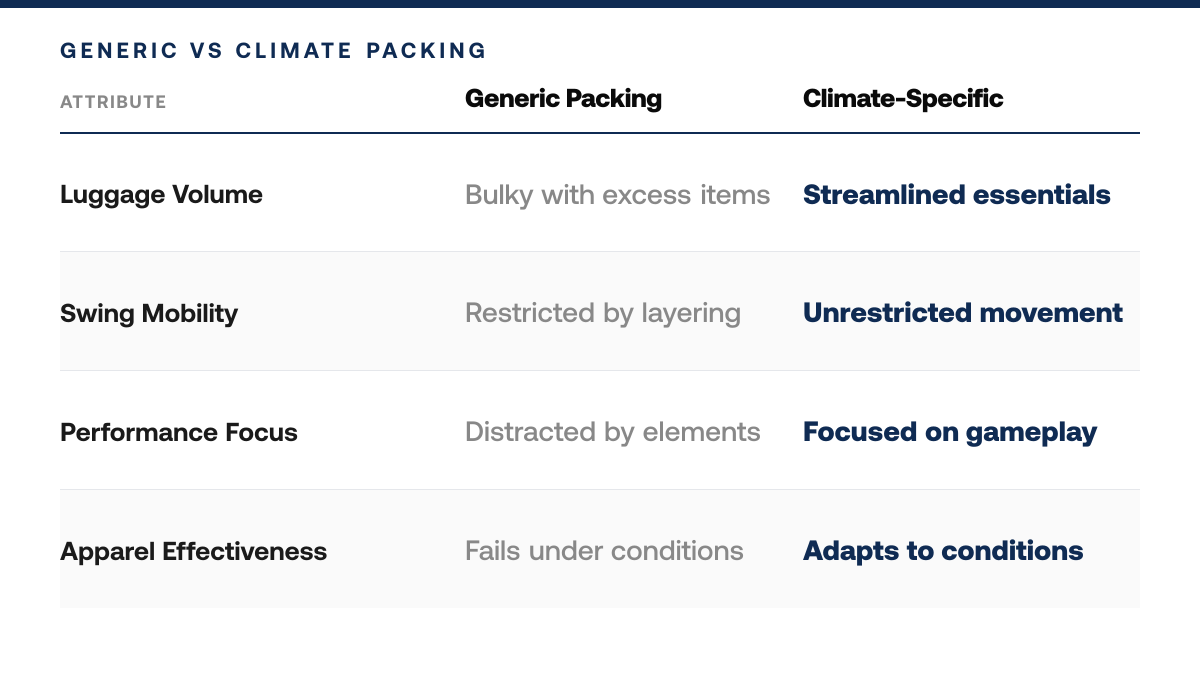
This guide breaks down the seven essential items every golfer should pack, organized by climate zone. Whether you're preparing for tropical humidity, desert heat, cool mountain air, or unpredictable coastal weather, you'll learn which pieces belong in your bag and why they matter for both performance and enjoyment on the course. Most golfers pack generically across climates, ending up with bulky layering that restricts swing or apparel that fails under heat and humidity — Haven Golf Company's Airflex™ polos adapt to temperature swings and moisture without sacrificing mobility, so you pack once for any zone.
Essential golf trip items vary significantly by climate—tropical, temperate, and cold destinations require different core apparel and gear pieces.
Layering is the universal principle that works across all climate zones, allowing golfers to adapt to changing conditions throughout the day.
Smart packing focuses on versatile, multi-use items that transition between on-course play and off-course activities without excess luggage.[1]
Performance fabrics with moisture-wicking and UV protection technology significantly enhance comfort and durability across multiple rounds and varying weather conditions.
Understanding Layering Systems for Golf Across Climate Zones
What Is a Layering System?
A layering system is a strategic approach to dressing that uses multiple garment levels to trap air and manage moisture across changing weather conditions. The foundation starts with a base layer that wicks sweat away from your skin, followed by a mid-layer that insulates and retains warmth, and topped with an outer shell that protects against wind and rain. This tiered approach allows golfers to adjust their comfort by adding or removing layers as temperatures and conditions shift throughout the round, maintaining both performance and mobility on the course.[4]
Why Layering Matters for Cold-Weather Golf
Cold-weather golf demands a thoughtful layering strategy to keep you warm without sacrificing the mobility needed for a full swing. A quality base layer pulls moisture away from your skin to prevent chilling, while a mid-layer—such as a fleece or lightweight insulated piece—traps body heat in dead air space. An insulated outerwear piece completes the system, shielding you from wind and cold. This three-part approach ensures you stay comfortable and warm enough to focus on your game rather than the temperature, while remaining flexible enough to move freely through your swing.[4]
Tropical and Warm-Climate Layering Needs
Warm and tropical golf environments flip the layering priority toward moisture management and sun protection rather than heat retention. In these climates, moisture-wicking fabrics become essential—they pull sweat away from your body to allow faster evaporation and prevent the fatigue and discomfort that comes with wet clothing clinging to your skin. UV-protective layers shield your skin from harmful sun exposure during long hours on the course, reducing the risk of sun damage and heat-related exhaustion. A lightweight, breathable outer layer completes the system, offering sun coverage without trapping excess heat.[4]
Transitional Season Layering for Spring and Fall Courses
Spring and fall golf trips present unique challenges with rapidly changing temperatures throughout a single round. During these transitional seasons, pack a versatile base layer in merino wool or synthetic blend that regulates temperature without bulk, allowing your body's natural heating and cooling to work efficiently. Combine this with a packable mid-layer—a thin fleece or insulated vest that compresses easily—and a lightweight, wind-resistant outer shell. This combination gives you maximum flexibility to shed or add layers every few holes as the sun moves across the sky and shadows lengthen, ensuring consistent comfort from the opening drive through the final putt.
Step-by-Step Process
1. Identify your destination's climate zone and weather patterns
Research the specific climate classification for your golf destination and review historical weather data for your travel dates. Check temperature ranges, humidity levels, precipitation likelihood, and wind patterns typical for that region during your planned visit. This baseline understanding ensures you pack apparel that matches actual conditions rather than assumptions, preventing both under- and over-packing.[2]
2. Select base layers and moisture-wicking apparel
Choose base layers and undergarments made from synthetic or merino wool materials that actively pull sweat away from your skin. For your identified climate zone, prioritize breathability in warm regions and thermal retention in cool regions. This is the repetitive work platforms like Haven Golf Company are built to absorb. Moisture-wicking base layers keep you dry during play, reduce chafing, and maintain comfort across multiple rounds without requiring frequent changes.[2]
3. Choose mid-layers and outerwear for weather protection
Select mid-layers such as lightweight fleece or insulated vests that trap warmth without bulk, and pair them with outerwear designed for your climate's primary weather threat—wind-resistant shells for breezy coastal courses, water-resistant jackets for humid regions, or lightweight pullovers for cool-weather play. Ensure all layers allow full shoulder rotation and arm mobility so your swing mechanics remain unrestricted throughout your round.[2]
4. Pack rain gear and climate-specific accessories
Include a compact rain jacket or waterproof pullover suited to your destination's precipitation patterns, along with a golf umbrella if frequent showers are expected. Add accessories tailored to your climate zone: wide-brimmed hats and UV-protective sunglasses for sunny regions, thermal gloves and neck gaiters for cold climates, or moisture-wicking socks and cooling towels for hot, humid courses. These targeted additions ensure you're prepared for the specific challenges your destination presents.[2]
How This Works in Practice
Example 1: The Tropical Golfer's Lightweight Strategy
Picture a golfer planning a week-long trip to a Caribbean resort course where temperatures hover near 90°F and humidity is consistently high. She knows from past experience that standard cotton polos become uncomfortable within hours—they absorb sweat, cling to the body, and leave her feeling drained by the back nine. This time, she packs lightweight, breathable performance polos designed with moisture-wicking technology, pairing them with tailored shorts in quick-dry fabrics. She adds a UV-protective layer—a long-sleeved shirt she can tie around her waist—and applies sunscreen religiously. By day two, the difference is unmistakable: she stays cool, dry, and focused on her game rather than battling discomfort. The breathable fabrics keep her core temperature regulated, and the UV protection means no painful sunburn that would compromise her swing over the remaining days. She finishes the trip feeling stronger, not depleted.[3]
Example 2: The Temperate-Climate Layering Approach
Consider a golfer heading to a spring tournament in the Pacific Northwest, where mornings start cool (around 50°F) but afternoons warm to the mid-60s with unpredictable wind. He arrives with a versatile wardrobe: performance polos in merino or synthetic blends that regulate temperature without bulk, lightweight chinos, and a packable windproof jacket he can remove or tie around his waist as conditions shift. On the first morning, he layers a thermal base layer under his polo—nothing heavy, just enough to trap warmth—and wears the jacket over top. By mid-round, as the sun climbs, he sheds the jacket and plays comfortably in his polo and base layer. When the wind picks up on the back nine, the jacket goes back on. This flexibility means he's never too cold to grip the club properly or too warm to focus. He avoids the mistake of overpacking heavy sweaters or underdressing and being miserable, instead moving through the day with confidence and consistent comfort.[3]
Example 3: The Desert Course Preparation Strategy
A golfer traveling to Arizona for a January desert course experience anticipated scorching daytime temperatures exceeding 85°F but overlooked the dramatic 40-degree temperature drop after sunset. On her first evening, she found herself shivering on the clubhouse patio. Recognizing the mistake, she adjusted her packing for the remaining days by adding a lightweight fleece that compressed into a small pouch, which she kept in her golf bag throughout each round. The fleece proved invaluable during the final holes when afternoon shadows lengthened and evening chill crept in. By the week's end, she understood that desert climates—despite their daytime heat—demand versatile layering options to handle the dramatic swings between sun and shadow, ensuring comfort from dawn tee times through sunset celebrations.
Why Climate-Specific Packing Wins
All three scenarios illustrate the same principle: matching your apparel to the climate zone transforms how you play. Tropical destinations demand breathability and UV defense; temperate zones reward smart layering; desert courses require preparation for temperature swings. When your clothing works with the environment rather than against it, you preserve energy, maintain focus, and enjoy the course instead of battling discomfort. The right gear is an investment in your game.[3]
Golf Trip Packing Checklist
List apparel essentials: moisture-wicking polos, shorts, and layering pieces suited to your destination's climate zone.
Select footwear appropriate for course conditions—waterproof golf shoes for wet climates, breathable options for hot regions.
Pack rain gear including a lightweight jacket and towels if your climate zone experiences frequent precipitation.
Gather sun protection items: broad-spectrum sunscreen, a wide-brimmed hat, and UV-blocking sunglasses for outdoor play.
Cross-reference your climate zone's seasonal weather patterns to avoid overpacking or missing critical items.
Include packable mid-layers such as compressible fleece vests or insulated pullovers that fit easily in carry-on luggage.
Select socks in moisture-wicking materials to prevent blisters during multiple rounds across consecutive days.
Common Mistakes to Avoid
Mistake: Packing heavy, non-layerable items without considering climate flexibility
Overstuffing your golf bag with bulky sweaters, rigid jackets, or multiple pairs of heavy pants increases total luggage weight and limits your ability to adapt to temperature swings during play. Instead, prioritize lightweight, packable layers—merino wool base layers, thin mid-weight fleeces, and compact windbreakers—that compress easily and let you add or remove pieces as conditions change without sacrificing mobility or comfort on the course.[5]
Mistake: Neglecting rain gear or season-appropriate outerwear for your destination
Arriving at your golf destination without proper weatherproof clothing—waterproof jackets, rain pants, or moisture-wicking layers—leaves you exposed to discomfort and performance loss during unexpected rain or wind. Research your climate zone's typical conditions before packing, and include at least one quality rain layer and a breathable outer shell designed for golf to stay dry, warm, and focused on your game.[5]
Mistake: Choosing fashion-focused apparel over function-first golf clothing
Selecting polos and outfits primarily for style rather than performance—tight fits, non-stretch fabrics, or heavy cotton—restricts your swing range and comfort during multiple rounds. Prioritize high-performance golf apparel with stretch fabrics, moisture-wicking properties, and ergonomic cuts that support your natural motion while still reflecting your personal style and identity.
Mistake: Ignoring the impact of humidity on fabric performance
Humid climates demand special fabric consideration; standard cotton absorbs moisture and becomes heavy, while performance synthetics and merino blends manage sweat actively. Failing to account for humidity levels in your destination means packing fabrics that will cling to your body, restrict movement, and contribute to fatigue by the back nine. Always verify humidity levels when selecting moisture-wicking technology and breathability ratings appropriate for your specific climate zone.
Frequently Asked Questions
How do I know what golf apparel to pack for different climates?
Research both your destination's climate zone and the specific course dress code before packing. Golf apparel guidelines vary significantly by region and venue—some courses enforce stricter standards than others. Keiser University's College of Golf recommends checking course policies and local weather patterns to ensure you meet expectations while staying comfortable throughout your round.[6]
Why is layering better than packing multiple outfits?
Layering lets you adapt to temperature swings throughout the day without overpacking your luggage. A base layer, mid-layer, and outer shell can be mixed and matched to handle morning chill, afternoon warmth, and evening cool-downs. This approach saves space while keeping you comfortable across changing conditions on the course.
What makes performance golf fabrics worth the investment?
Performance fabrics designed for golf offer benefits beyond style—they manage moisture, resist wrinkles, and withstand repeated wear better than standard apparel. These materials keep you dry during humid rounds and maintain their appearance through multiple washes, making them durable choices for frequent golfers who want both function and a polished look.[6]
Build Your College Alumni Golf Trip Planning Checklist — A group of college friends gathers at a course they've never played before, trading stories between shots while enjoying the kind of camaraderie that only alumni can…
What Makes Performance Golf Polos Different — Walk into any pro shop or golf course today, and you'll notice the polos on the rack look nothing like the heavy cotton shirts golfers wore a decade ago. Modern…