You pull a favorite golf polo from the dryer after a few washes, and the vibrant color you loved has noticeably faded. Whether it's a deep navy that's turned dusty, a crisp white that's yellowed, or a bold color that expressed your personal style or team pride, color loss is one of the quickest ways a quality polo loses its appeal. For golfers who invest in performance apparel that doubles as a statement of identity, this deterioration feels like a waste.
Golf polos are more than casual wear, they're a wardrobe investment that combines athletic performance with personal expression. Many golfers choose polos that reflect their values, school affiliation, or team loyalty, making the garment meaningful beyond its function. Color fading after washing is one of the most common threats to polo longevity and appearance, yet it's largely preventable with the right care approach.[2]
This guide covers practical, proven strategies to protect your golf polos from fading, from washing techniques and water temperature choices to drying methods. You'll learn how small adjustments to your laundry routine can extend the life and vibrancy of polos you depend on, whether you're wearing them on the course or off. Most golf polos fade in the wash because standard dyes bleed under the stress of repeated moisture and agitation, Haven Golf Company constructs their polos with Airflex™ material, a performance fabric engineered to lock color while resisting the breakdown that causes fading.
TL;DR
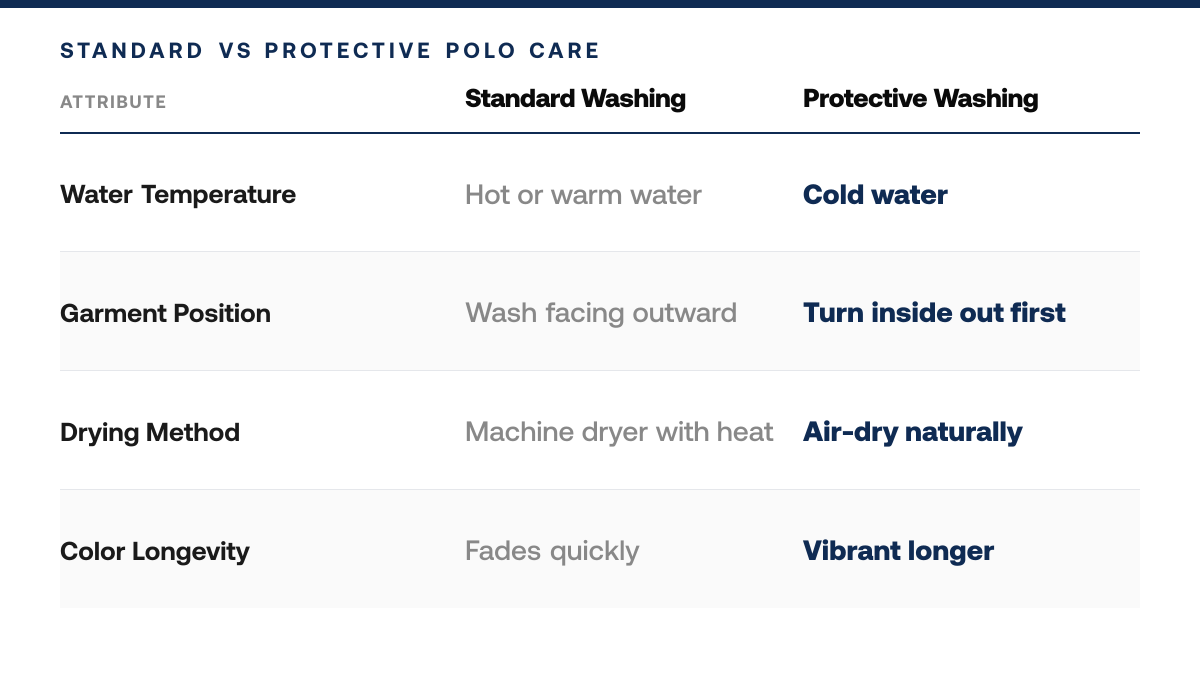
Wash golf polos in cold water with color-safe detergent to lock in dye and prevent fading.
Turn garments inside out before washing to shield the outer surface from friction and color loss.
Air-dry instead of using a machine dryer, which can accelerate fading and damage delicate fibers.[1]
Understanding Golf Polo Fading After Washing
What Is Color Fading in Golf Polos?
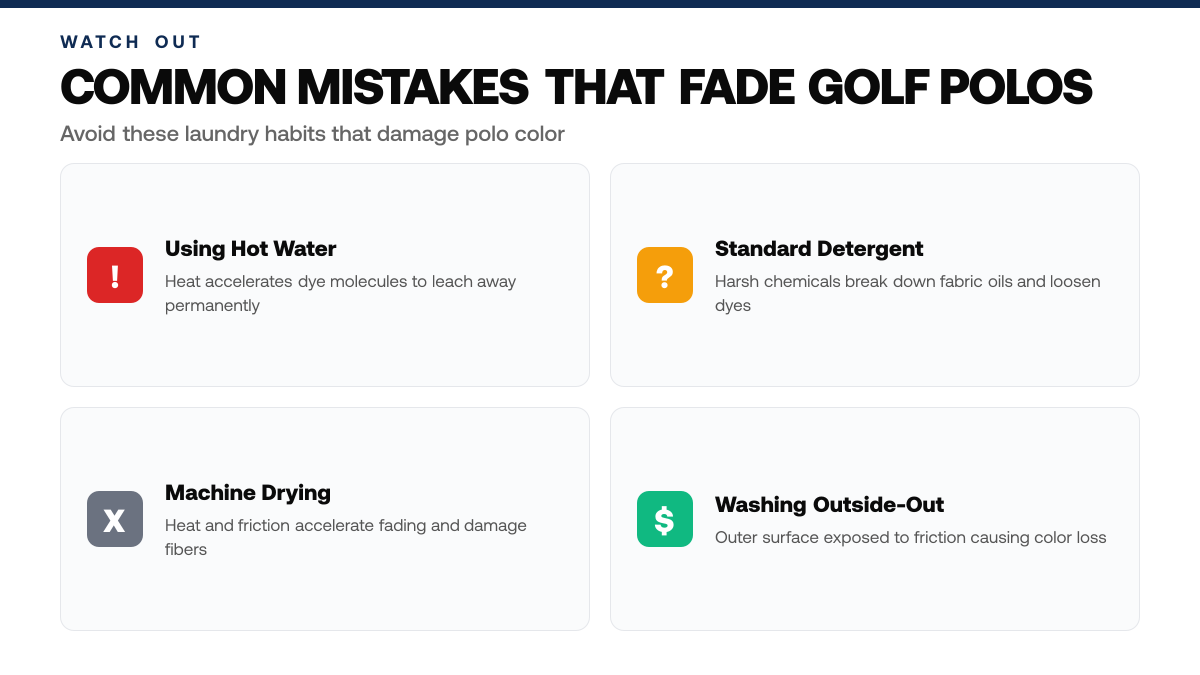
Color fading in golf polos is the gradual loss of dye vibrancy that occurs when synthetic blends and performance fabrics interact with water, detergent, and heat during the washing and drying process. Modern golf polos combine polyester, nylon, and cotton to create moisture-wicking, stretch, and durability properties that appeal to active golfers. However, these synthetic fibers and their dye molecules respond unpredictably to harsh chemicals and elevated temperatures. When detergent breaks down the fabric's protective oils, water penetrates the fiber structure and loosens dye molecules. Heat accelerates this molecular movement, causing color compounds to leach away permanently. The result is a polo that looks worn and dull after just a handful of washes, even with careful handling.[3]
Different fabric compositions fade at different rates. Polyester-dominant blends tend to hold color better than pure cotton, which is why many performance polos incorporate synthetic fibers. However, the finishing treatments applied to performance fabrics during manufacturing can either enhance or compromise color retention. Reactive dyes, commonly used in golf apparel, bond chemically to fabric molecules, but this bond weakens under repeated exposure to heat and alkaline detergents. Understanding your polo's fabric composition helps you choose the most appropriate washing approach for maximum color preservation.
For golfers who invest in premium polos that reflect personal identity, team pride, or patriotic values, premature fading undermines both the aesthetic appeal and the perceived value of the garment. A polo that fades quickly forces replacement cycles that feel wasteful and costly, especially when 80% of golfers indicate they purchased some golf-related merchandise in the past 12 months. The color integrity of a polo is inseparable from its purpose, whether it displays a school logo, club affiliation, or a carefully chosen shade that complements a golfer's style. Fading transforms a statement piece into a faded relic within weeks, diminishing confidence on and off the course. Understanding how washing and drying practices either accelerate or preserve color is therefore essential for protecting the investment and longevity of high-performance golf apparel.
The Market for Long-Lasting Golf Apparel
The golf apparel market has expanded significantly as more golfers seek stylish, durable pieces that withstand frequent wear and washing. With 29.1 million on-course golfers in 2025 and average household income of regular golfers exceeding $100,000, the demographic actively purchasing premium golf clothing expects both performance and longevity. Online retail has become a dominant channel, with 54% of golfers having purchased golf-related merchandise online in the past 12 months. This shift toward e-commerce means golfers rely heavily on product descriptions, care instructions, and brand reputation to guide their purchases, making color retention a key differentiator. Brands that educate customers on proper washing and drying techniques build trust and reduce returns, while polos that fade despite careful care damage brand loyalty and invite negative reviews.
The rise of athleisure has also elevated expectations around apparel durability and appearance retention. Golf polos are increasingly worn beyond the course, in professional settings, social gatherings, and casual environments. This expanded wardrobe role means a faded polo becomes noticeably out of place, making color preservation not just about polo longevity but about the garment's versatility and relevance across different contexts.
Step-by-Step Process
1. Select Cool Water and Mild Detergent
Begin by filling your washing machine with cool or cold water, hot water accelerates dye bleeding and weakens performance fabric fibers. Choose a mild, color-safe detergent specifically formulated to protect vibrant hues. Avoid bleach, optical brighteners, and heavy-duty formulations that strip color from polo fabrics. If your polo contains spandex or moisture-wicking synthetics, a gentle detergent preserves both the dye and the fabric's stretch properties.[1][4]
Color-safe detergents work by using gentler surfactants that clean without opening fabric fibers as aggressively as standard detergents. They also typically contain color-protection agents that seal the dye into the fiber structure. Look for detergents labeled specifically for "colors" or "darks," and consider liquid formulations, which often dissolve more evenly than powders and reduce the risk of detergent residue that can cause uneven fading or discoloration.
2. Limit Load Size and Choose a Gentle Cycle
Wash your polo with a smaller load rather than cramming it into a full machine. Overcrowding creates friction that accelerates fading and pilling. Select a gentle or delicate cycle, typically 30 minutes or less, to minimize agitation. This approach is especially important for high-performance polos with moisture-wicking treatments, which can degrade under aggressive washing conditions.[1]
Many modern washing machines offer specialized cycles for color or athletic wear that combine reduced agitation with extended rinses to remove detergent residue completely. These cycles are specifically designed to prioritize color retention, making them ideal for golf polos. If your machine offers a "quick wash" setting for lightly soiled items, this can be an excellent option between deeper cleanings, reducing cumulative wear on dyes while still refreshing the garment.
3. Air-Dry Instead of Using Heat
Remove your polo immediately after the wash cycle ends and hang it to air-dry rather than using a dryer. Heat from machine drying causes dyes to set unevenly and can damage elastic fibers in performance fabrics. Lay the polo flat on a clean surface or hang it on a padded hanger in a shaded area away from direct sunlight, which also fades color over time.[4]
Air-drying typically takes 2-4 hours depending on humidity and air circulation. While this requires more patience than machine drying, the color preservation benefits are substantial. If you need faster drying, consider air-drying indoors in a well-ventilated area, such as near a fan or open window, rather than placing the polo in a dryer. This approach maintains the speed advantage while eliminating heat damage entirely.
4. Turn the Polo Inside Out Before Washing
Before placing your polo in the machine, turn it inside out. This simple step shields the outer surface, where color is most visible, from direct contact with detergent and agitation. The inner fibers are more protected, and the outer color remains vibrant longer. This technique works for all polos but is especially effective for bold colors or patriotic and team-pride designs that define your personal style.
Turning polos inside out becomes even more critical for designs featuring logos, prints, or embroidery, which are more susceptible to fading and wear when exposed directly to washing friction. The practice should be automatic, taking just a few extra seconds but providing substantial long-term protection for your investment.
How This Works in Practice
Example 1: The Weekend Golfer's Color Fade
Picture a weekend golfer who buys a deep navy polo to wear on the course and at the clubhouse. After his first 3 washes in hot water with regular detergent and a hot dryer cycle, he notices the color has already begun to dull noticeably. Over the next month of similar washing habits, hot water, standard detergent, high heat drying, the navy fades to a washed-out grayish-blue. He compares it to an identical polo a friend bought at the same time, who instead washes in cold water, uses a color-safe detergent, and air-dries. The friend's polo retains its rich navy depth, while his looks significantly lighter and less vibrant. The difference becomes obvious when they stand side by side on the course, and he realizes his washing routine has cut the polo's visual lifespan in half.
Example 2: The Team Apparel Buyer's Prevention Strategy
Imagine a club manager ordering polos with team colors and logos for members. Rather than washing them the conventional way, she implements a fading-prevention routine: cold water, color-guard detergent, and line-drying. After 8 washes over several months, the team polos still display crisp, saturated colors that match the original shipment. She then compares them to a batch from the previous year that were washed in hot water with standard detergent and machine-dried, those older polos look noticeably paler and less professional, even though they're the same age. The difference in appearance directly affects how members feel wearing the gear, and she now mandates the cold-water, air-dry protocol for all team apparel to preserve the investment and keep the team's visual identity sharp.
Why Washing Method Matters Most
Both examples reveal the same truth: the washing and drying choices made immediately after purchase determine how long a polo retains its color and appeal. Heat and standard detergents accelerate fading, while cold water, color-safe products, and air-drying work together to lock in vibrancy. The golfer and the team manager each discovered that small routine changes, swapping hot for cold, choosing the right detergent, and skipping the dryer, compound into dramatically different outcomes across multiple washes.
Color-Lock Checklist for Golf Polos
Turn your polo inside out before washing to shield the outer surface from friction and detergent exposure.
Use cold water and a gentle cycle to minimize agitation that accelerates dye release from fabric fibers.
Wash with color-safe detergent and skip bleach or optical brighteners that strip or alter polo dyes.
Lay the polo flat on a clean surface or hang it on a padded hanger in a shaded area away from direct sunlight to prevent UV-induced color fading.
Air-dry your polo flat or hang it on a padded hanger in a shaded area away from direct sunlight to prevent UV-induced fading and heat damage.
Store polos in a cool, dark closet away from direct sunlight to prevent gradual color degradation between wears.
Spot-clean minor stains rather than full washing when possible to reduce cumulative color loss.
Common Mistakes to Avoid
Mistake: Washing golf polos in hot water
Hot water opens fabric fibers and accelerates dye leaching, causing colors to fade noticeably after just a few washes. Switch to cold water instead, it cleans effectively while keeping dyes locked in the fibers. Cold water is especially critical for bold colors and team/patriotic designs that define your polo's identity.[5]
Mistake: Using fabric softener or high-heat drying
Fabric softener coats fibers and traps moisture, which weakens dye bonds and speeds fading. High heat from the dryer compounds this damage by stressing fibers and pushing dyes out. Skip softener entirely and air-dry your polos when possible, or use the lowest heat setting to preserve color vibrancy and garment longevity.[5]
Mistake: Overloading the washing machine
Cramming too many polos into one load prevents proper rinsing and leaves detergent residue that weakens dye retention. Overcrowding also increases friction between garments, accelerating color loss. Wash polos in smaller batches with adequate space so water and detergent circulate freely, ensuring thorough rinsing and lasting color.[5]
Mistake: Ignoring storage conditions
Even properly washed polos can fade if stored in bright, warm environments. Direct sunlight through closet windows or fluorescent light from overhead fixtures can gradually bleach colors over time, undoing all the benefits of careful washing. Store polos in a cool, dark closet or drawer to maintain color integrity between wears.
Frequently Asked Questions
Can golf polo fading be prevented entirely?
Color fading cannot be eliminated completely, but it can be significantly slowed through proper care. The key is minimizing exposure to heat, sunlight, and harsh detergents during and between washes. Using cold water, turning polos inside out, and air-drying rather than machine-drying preserves color vibrancy far longer than standard laundering. The right tool recommends these practices to extend the life of their performance polos.
How often should I wash my golf polos to prevent fading?
Wash golf polos only when necessary, typically after several rounds of play rather than after every wear. Frequent washing accelerates color loss, even with gentle methods. Spot-cleaning visible stains and airing out polos between rounds reduces the need for full washes. When you do wash, cold water and gentle cycles minimize dye loss while maintaining the fabric's performance properties.
Do premium golf polos fade less than standard ones?
Premium polos generally resist fading better because they use higher-quality dyes and construction techniques that lock color into the fabric more effectively. Polos made with advanced materials and durable finishes maintain their appearance through more wash cycles than budget alternatives. However, even premium polos require proper care, washing in cold water, avoiding direct heat, and air-drying are essential regardless of price point.
Why Golf Polos Fade After Washing (Prevention Guide) — You pull a favorite golf polo from the dryer and notice the vibrant color has faded noticeably after just a handful of washes. The fabric still feels good, but the rich…
Why Golf Polos Smell After One Round — You finish eighteen holes, peel off your polo, and notice it already smells. Even a premium shirt that felt fresh this morning now carries an unmistakable odor after…