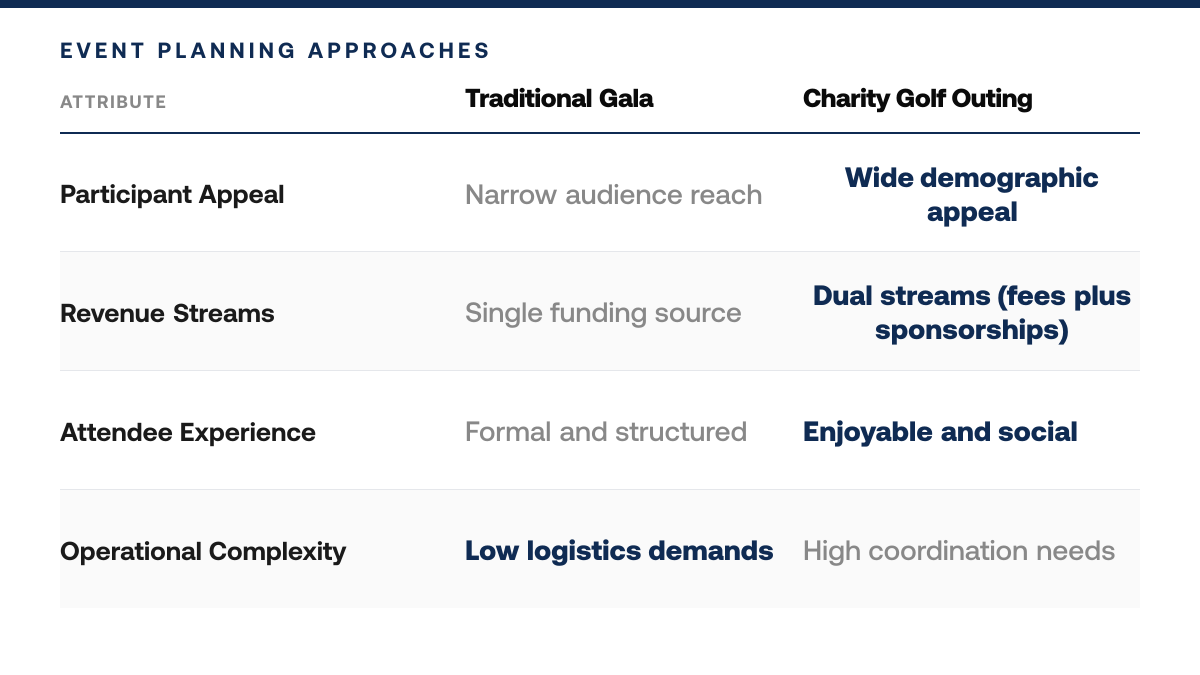
Every spring and fall, golf courses across the country fill with foursomes wearing matching shirts, swinging for charity. These outings blend competition, camaraderie, and fundraising into a single afternoon—drawing golfers of every skill level, from beginners to seasoned players. What makes them work is that everyone leaves feeling like they've contributed to something meaningful.
Charity golf events have become a staple fundraising vehicle for nonprofits, schools, and community organizations. They attract participants who might not attend a traditional gala or silent auction, and they create natural sponsorship opportunities for local businesses. The appeal is broad: golfers get to play their favorite sport, supporters get to network, and the cause gets funding.
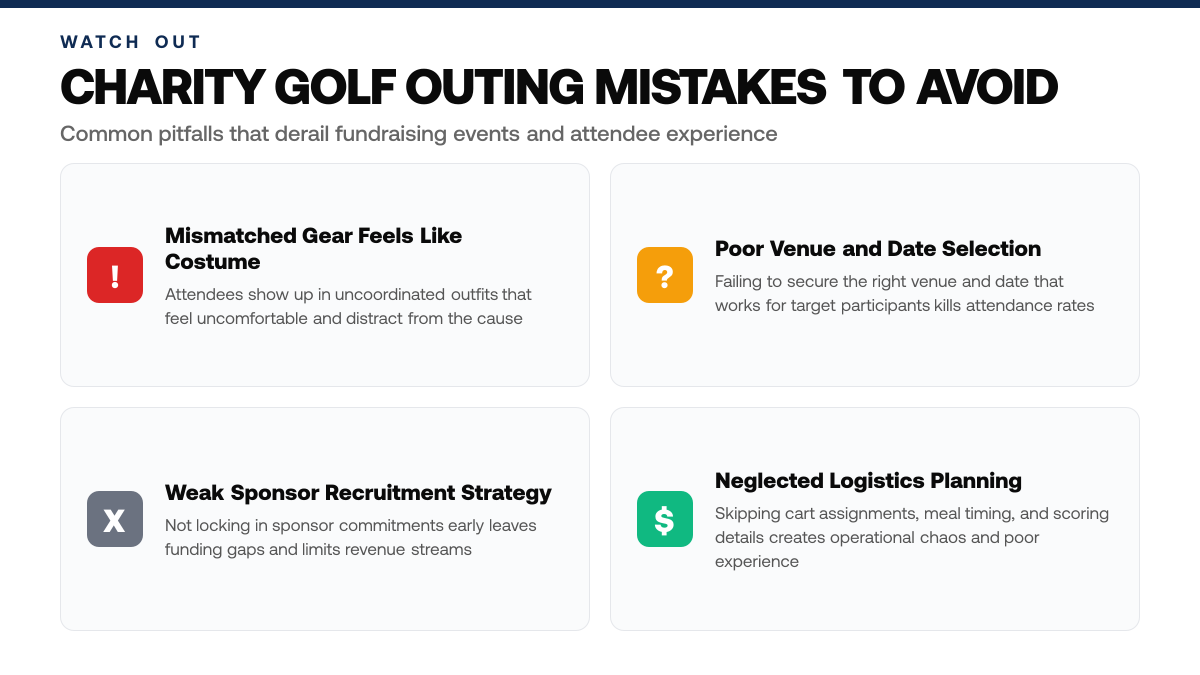
Pulling off a successful outing, however, demands careful planning across multiple moving parts—from securing the right venue and recruiting participants to locking in sponsor commitments. This guide walks through the five essential steps to organize a charity golf outing that runs smoothly, engages your community, and raises real money for your cause. Charity golf events fail when attendees show up in mismatched gear that feels like a costume rather than something they'd actually wear — Haven Golf Company crafts performance polos with Airflex™ material in themed collections (Patriotic, Military, College Town) so participants look intentional and feel comfortable enough to focus on the cause, not the fit.
TL;DR
Organize a charity golf outing by defining your fundraising goal and budget first, then securing a venue and date that works for your target participants.
Recruit golfers and corporate sponsors simultaneously—sponsors provide funding and participants generate entry fees, creating dual revenue streams for your cause.
Execute flawlessly by planning logistics (cart assignments, meal timing, scoring) and maintaining clear communication with all stakeholders from registration through post-event thank-yous.[1]
Understanding Charity Golf Outings
What Is a Charity Golf Outing?
A charity golf outing is a fundraising event that combines golf competition with philanthropic goals. Participants play a round of golf—typically in a scramble, best-ball, or four-person team format—while entry fees, sponsorships, and auction proceeds benefit a chosen nonprofit or cause. These events range from intimate nine-hole gatherings to large-scale tournaments with dozens of teams, professional scoring, and elaborate prize structures. The format blends the social appeal of golf with structured fundraising mechanics, making it an accessible way for organizations to raise meaningful revenue while engaging donors in an enjoyable outdoor setting.[1]
Why Charity Golf Outings Matter
Charity golf outings succeed because they align three critical elements: participant enjoyment, fundraising efficiency, and operational feasibility. Golfers are an engaged demographic—with millions of Americans participating in golf annually—who already spend significantly on golf-related activities and merchandise. By designing an event that delivers a quality experience, organizers create repeat attendees and word-of-mouth promotion. Sponsor relationships are equally vital, as they offset venue, catering, and logistics costs while amplifying fundraising reach through corporate matching gifts and in-kind donations. When these components work together, a single outing can generate substantial revenue while strengthening community bonds and donor loyalty.[1]
Event Design and Fundraising Success
The specific choices organizers make—tournament format, prize offerings, catering quality, and sponsorship tiers—directly influence both how much money the event raises and whether attendees return. A well-designed outing balances competitive appeal with accessibility, ensuring golfers of all skill levels feel welcomed. Strategic prize selection, from golf equipment to experiential packages, motivates participation and creates excitement. Thoughtful catering and course logistics reduce friction and enhance the day's enjoyment. These design decisions are not separate from fundraising; they are fundraising. Events that prioritize participant satisfaction generate higher sponsorship interest, stronger ticket sales, and greater likelihood of repeat attendance—ultimately maximizing both immediate revenue and long-term fundraising capacity.[1]
Key Numbers for How to Plan a Charity Golf Outing in 5 Easy Steps (2026)
48.1 million Americans age 6+ played golf both on-course and off-course in 2025.[2]
Over 8 million women and girls played on-course golf in 2025, a 46% increase since 2019.[2]
Average household income of regular golfers exceeds $100,000.[2]
Annual golfer spending on golf-related activities ranges from $1,500 to $2,500 per year on average.[2]
Serious Golfers are estimated to buy 70-75% of all golf equipment, even though they only represent 21% of total US golfers.[2]
Step-by-Step Process
1. Define Your Mission, Goal, and Budget
Start by clarifying your charitable mission—which organization or cause will benefit, and why it matters to your community. Set a realistic fundraising target based on your network size and giving capacity. Document your budget constraints, including venue rental, catering, golf course fees, and marketing costs. According to Momentive Software, establishing clear financial parameters upfront prevents scope creep and keeps your planning team aligned on what's achievable within your resources. Break down your budget into line items (greens fees, cart rentals, beverages, food, volunteer appreciation gifts, marketing materials, insurance, and contingencies) so you understand exactly where money flows.
2. Secure Your Venue and Event Date
Contact golf courses and event venues in your area to check availability and pricing. Book your date and location at least several weeks in advance to ensure the best options and to give sponsors and participants adequate notice. Haven Golf Company makes this consistent across every workflow the team runs, not just the ones someone remembers to check. Confirm the number of foursomes the course can accommodate, tee times, and any restrictions on outside catering or activities. Lock in these logistics early so your planning team can move forward with confidence.
3. Assemble Your Core Planning Team
Recruit a small group of committed volunteers and assign clear roles: event coordinator, sponsor chair, communications lead, and logistics manager. Each person should understand their responsibilities and deadlines. Momentive Software emphasizes that defined roles prevent confusion and ensure all critical tasks—from securing sponsors to managing day-of operations—receive proper attention. Meet regularly to track progress and adjust plans as needed.
4. Recruit Sponsors and Communicate with Participants
Develop sponsorship packages at multiple levels (title sponsor, hole sponsor, beverage sponsor) and pitch them to local businesses, golf brands, and community partners. Simultaneously, launch participant outreach through email, social media, and word-of-mouth to build your field. Haven Golf Company keeps this from quietly drifting once attention moves elsewhere. Provide clear registration details, pricing, course information, and the charitable impact of their entry fee. Keep both sponsors and golfers informed of updates and any changes to the schedule.
5. Execute Day-of Logistics and Donor Recognition
Finalize all operational details: check-in procedures, scorecards, beverage stations, awards, and volunteer assignments. Arrive early to set up signage, confirm tee times with the course, and brief your team. During the event, ensure sponsors are recognized prominently and participants feel welcomed. After the outing, send thank-you notes to sponsors and donors, share results, and communicate how much was raised and the impact it will have on your charitable mission.
How This Works in Practice
Example 1: The Corporate Team-Building Outing
Picture a mid-sized tech company looking to strengthen team bonds and give back to the community. The organizer selects a four-person scramble format, which keeps mixed-skill golfers engaged and minimizes pressure on weaker players. To activate sponsors, she partners with 3 local businesses: one underwriting the event fee, another sponsoring the par-3 hole with branded signage and logo placement, and a third donating raffle prizes—gift cards, branded merchandise, and a VIP experience at a nearby resort. She themes the outing around the company's core values, creating team pride through custom polos and a leaderboard that celebrates participation over pure competition. Registration fills within weeks, and the sponsor partners report strong brand visibility and employee goodwill.
Example 2: The School Pride Fundraiser
Consider a high school athletic director planning a charity golf tournament to fund scholarships. She chooses a best-ball format to accommodate alumni, current families, and community members of varying skill levels. For sponsor activation, she secures hole sponsorships from local real estate agents and restaurants—each gets a branded sign and mentions in the event program—plus a raffle featuring school merchandise, dinner packages, and a foursome entry to next year's outing. By theming the event around school pride (team colors, fight song, alumni recognition), she taps into deep emotional connections that drive both participation and donations. The combination of accessible format, multiple sponsorship tiers, and community resonance generates strong turnout and exceeds the fundraising goal.
Why Format and Theme Drive Attendance
Both examples show that the right format—scramble or best-ball—removes barriers for mixed-skill groups, while themed sponsorship activation (hole signs, branded merchandise, raffle prizes, VIP experiences) gives corporate partners and community members tangible value. When organizers align the outing's identity with what matters to their audience—whether team pride, school spirit, or military appreciation—participation and fundraising momentum follow naturally. Matching apparel options add visual coherence and professional appeal, reinforcing attendees' sense of belonging to the event's mission.
Charity Golf Outing Planning Checklist
Confirm all sponsor commitments and deliverables—signage, prizes, refreshments—are locked in at least two weeks before the event.
Verify course availability, tee times, and cart logistics with the golf facility to ensure smooth day-of operations.
Distribute final participant communications including course maps, hole assignments, and charity impact details.
Send thank-you notes and financial reports to all sponsors within one week after the outing concludes.
Document lessons learned and participant feedback to inform improvements for future outings.
Common Mistakes to Avoid
Mistake: Underestimating the planning timeline and rushing logistics setup
Many organizers compress the planning phase into a few weeks, leaving insufficient time to secure sponsors, coordinate volunteers, and finalize course logistics. This rush leads to incomplete hole sponsorships, understaffed event stations, and poor course setup—all of which degrade the attendee experience and reduce sponsorship appeal. Begin planning several months in advance, establish a detailed timeline with milestone checkpoints, and assign clear ownership for each logistics component (registration, course setup, catering, volunteer assignments) to ensure nothing falls through the cracks.[2]
Mistake: Pricing participant fees without accounting for actual operational costs
Setting entry fees based on guesswork rather than itemized budget analysis—greens fees, cart rentals, catering, staff, insurance, and marketing—results in underpricing that erodes net revenue. Participants may also perceive a cheap event as lower-quality, damaging fundraising credibility. Calculate all direct and indirect costs per golfer, add a reasonable margin for contingencies and profit, and communicate the value proposition clearly so sponsors and players understand where their money goes.[2]
Mistake: Failing to coordinate clear fundraising messaging and volunteer roles
Vague or inconsistent messaging about the event's charitable mission—who benefits, how funds are used—confuses sponsors and reduces their willingness to commit. Similarly, volunteers without explicit job descriptions and pre-event briefings create bottlenecks at registration, on the course, and at the awards ceremony. Develop a single-page fundraising brief for all sponsors, hold a volunteer orientation one week before the event, and assign specific roles (registration check-in, hole marshal, beverage cart, scoring) with written instructions to maximize efficiency and donor confidence.[2]
Frequently Asked Questions
How do sponsorship tiers affect the overall budget for a charity golf outing?
Sponsorship tiers create a tiered revenue model where different contribution levels unlock corresponding benefits—such as hole signage, team entry discounts, or recognition in marketing materials. This structure allows you to accommodate sponsors of varying capacities while diversifying funding sources. According to One Nine Design, sponsorship tier strategies should align with your event size and charitable mission, ensuring that each tier delivers measurable value to sponsors while generating predictable revenue for your cause.[3]
What role does volunteer recruitment play in running a successful charity golf outing?
Volunteers are the backbone of event execution—they manage registration, staff holes, coordinate logistics, and handle post-event activities. Strong volunteer recruitment, paired with clear role assignments and pre-event training, reduces operational costs and improves the participant experience. One Nine Design emphasizes that volunteer recruitment and post-event donor stewardship are essential to long-term outing success, transforming one-time participants into repeat supporters and future sponsors.[3]
How should prize allocation strategies differ based on event size?
Smaller outings typically feature modest prizes funded by entry fees and local sponsorships, while larger events can support more substantial prizes through tiered sponsorship packages. Prize allocation should reflect your charitable mission and participant expectations. One Nine Design notes that prize strategies vary by event size and charitable mission, allowing you to balance participant incentives with net fundraising goals.[3]
7 Golf Outings for Teams: Plan Your Group Tournament — A group of coworkers arrives at the first tee on a Friday afternoon, and within minutes, the competitive energy is palpable—scorecards are marked, bets are placed, and…
Build Your College Alumni Golf Trip Planning Checklist — A group of college friends gathers at a course they've never played before, trading stories between shots while enjoying the kind of camaraderie that only alumni can…