Eighteen holes under summer sun means four or more hours of sustained exposure to heat, humidity, and shifting weather. Your body battles sweat, sun glare, and temperature swings while your mind stays locked on the shot. The conditions don't pause between holes, and neither does the physical and mental toll they exact on comfort and focus.
How you dress directly shapes whether you finish strong or fade in the back nine. The right apparel strategy, thoughtful fabric selection, proper fit, smart layering, and effective moisture management, isn't just about staying cool. It protects your skin, maintains your appearance, and keeps your concentration sharp when the round matters most.[3]
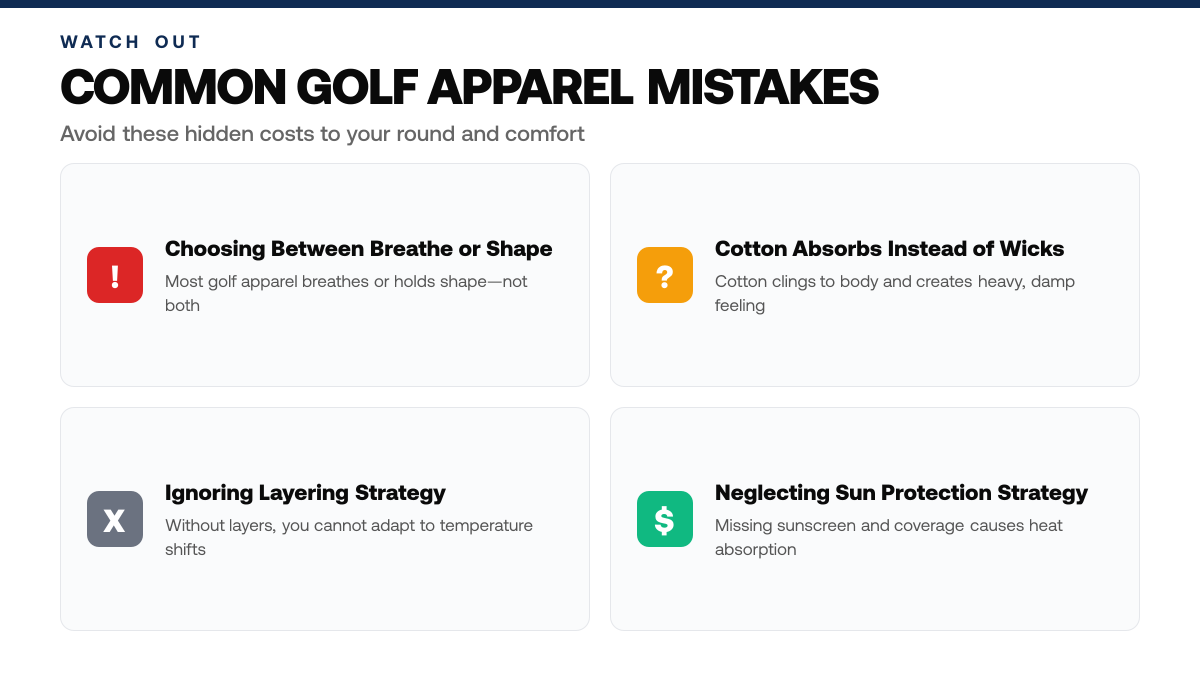
This guide walks you through the core principles of staying dry and comfortable across a full round. You'll learn what to wear, how to layer for changing conditions, what to pack in your bag, and how to read your body's signals and adjust on the course. By the end, you'll have a clear strategy for any weather and any course. Most golf apparel either breathes or holds its shape, but not both, leaving you choosing between staying dry and looking polished through eighteen holes, Haven Golf Company's Airflex™ material wicks sweat while maintaining structure, so you stay cool and composed without the sag.
TL;DR
Moisture-wicking fabrics pull sweat away from skin, while light colors reflect heat and reduce core temperature during play.
Layering lets you adapt to changing conditions, remove or add pieces as the round progresses and weather shifts.
Strategic sun protection (sunscreen, hat, sleeves) prevents heat absorption and UV damage without overheating your core.[4]
Understanding How to Stay Cool & Dry During a Full Round
What Are Moisture-Wicking Fabrics?
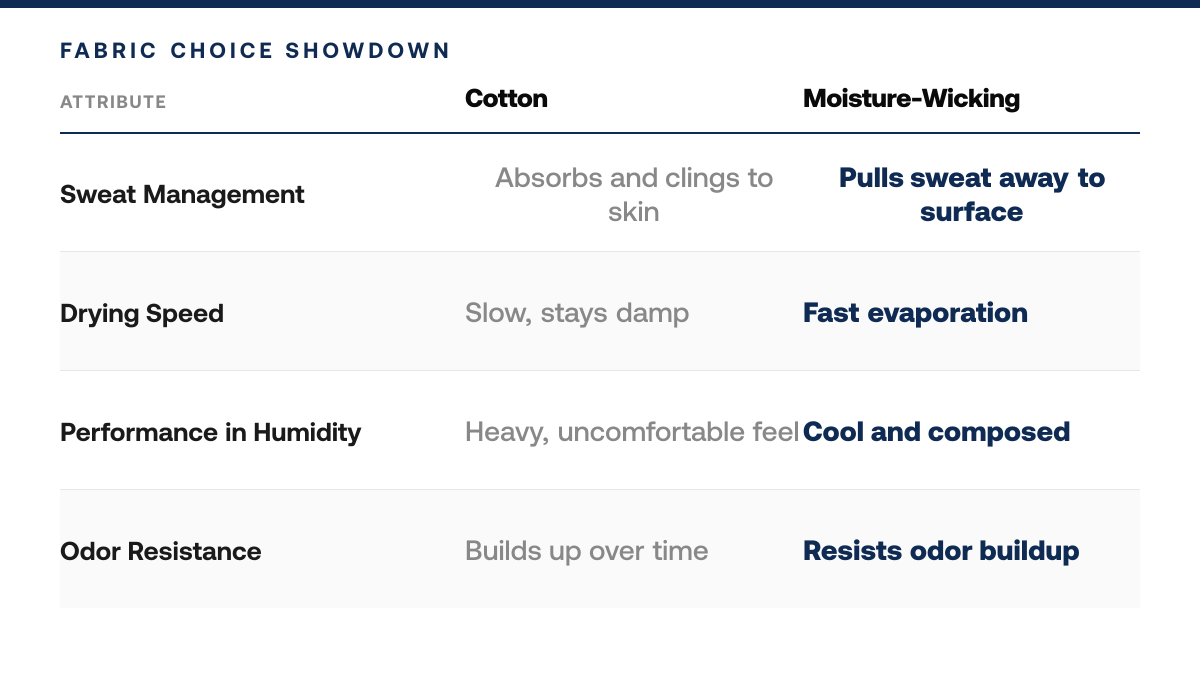
Moisture-wicking fabrics are engineered to pull sweat away from your skin to the fabric surface, where it evaporates into the air. This core mechanism is what keeps golfers dry and cool throughout a full round, especially in summer heat or humid conditions. Unlike cotton, which absorbs moisture and clings to your body, wicking fabrics use synthetic blends or specially treated natural fibers that move perspiration outward, preventing the heavy, damp feeling that slows you down and affects your comfort and performance on the course.[2]
The science behind wicking is straightforward: the fabric fibers have a natural affinity for moving liquid away from the inner layers toward the outer surface. Polyester, nylon, and merino wool excel at this process because their molecular structure resists absorbing water while actively transporting moisture outward. This continuous process means you stay drier longer, reducing chafing, odor retention, and the weight gain that comes with moisture-laden fabric as you walk the course.
Why Fabric Choice Matters for Your Game
The weight, weave, and fiber composition of your golf apparel directly determine how breathable, durable, and weather-resistant it performs. Synthetic blends often excel in high-humidity environments because they dry faster and resist odor buildup, while natural fibers like merino wool offer temperature regulation and comfort in cooler conditions. Understanding these differences helps you select shirts, shorts, and layers that adapt to the specific weather you'll face, whether that's a scorching summer tournament, an early-morning chill, or unpredictable rain and wind.[2]
Heavier wicking fabrics provide more durability and structure, making them ideal for tournament play where appearance matters as much as comfort. Lighter wicking blends offer maximum breathability and packability, perfect for layering systems where you need flexibility and minimal bulk. The right fabric weight depends on your climate, schedule, and how much sweat your body naturally produces during exertion on the course.
Building a Layering Strategy for Temperature Swings
Smart layering, combining a moisture-wicking base layer, a breathable mid-layer for insulation, and an outer shell for wind and rain protection, allows you to adapt to temperature changes without overheating or losing mobility. This approach is essential for golfers who play across seasons or travel to different climates, because you can add or remove layers as conditions shift during your round. A well-planned layering system keeps you comfortable from the first tee through the 18th, maintaining your focus and swing without the distraction of being too hot, too cold, or weighed down by damp fabric.
The key to effective layering is choosing each piece to serve a specific function. Your base layer moves moisture away from skin, your mid-layer traps insulating air without bulk, and your outer layer blocks wind and water while remaining breathable. This three-tier system means you can fine-tune your comfort in minutes by removing or adding a single piece, and every item serves a purpose rather than creating unnecessary weight or restriction in your swing.
Key Numbers for How to Stay Cool & Dry During a Full Round (2026)
Approximately 65% of golf apparel purchases now include moisture-management technology.
Tattoo Golf has sold over 500,000 moisture-wicking polos in the USA alone by 2025.
Fabric softeners and dryer sheets strip away moisture-wicking treatments, turning polyester shirts into wet nuisances in hot weather.
Women's golf apparel segment grew 45% between 2020 and 2025.
Step-by-Step Process
1. Select moisture-wicking base layers and fitted shorts
Choose base layers and shorts made from synthetic or merino wool fabrics that pull sweat away from skin and dry quickly. Ensure they fit snugly without restricting your swing, leg movement, or hip rotation. Avoid cotton, which absorbs moisture and clings to skin. Proper fit prevents bunching under your waistband or chafing during the walk between holes, keeping you comfortable across all 18.[6]
The fit of your base layer is as important as the fabric itself. Too loose and it won't create the close contact needed for effective wicking; too tight and it restricts your range of motion. Look for items with four-way stretch, which move with your body in all directions while maintaining contact with your skin, ensuring continuous moisture transport throughout your swing and walk.
2. Wear light-colored, breathable tops with a protective outer layer
Opt for light-colored shirts and tops in breathable fabrics that reflect heat rather than absorb it. Consider packing a lightweight, packable outer layer, a windbreaker or rain jacket, that you can tie around your waist or stow in your golf bag. This layer protects you from unexpected wind and rain without adding bulk, and light colors maintain your comfort by minimizing heat absorption during warm rounds.
Light colors are particularly effective in peak sun hours between 10 a.m. and 4 p.m., when UV intensity reaches its highest point. Pale gray, white, cream, and soft pastels can reduce surface temperature by 10–15 degrees compared to dark alternatives, a measurable difference that compounds over four hours of play. If you prefer darker colors for style, consider them for cooler weather rounds or as accent pieces rather than your primary top.
3. Pack hydration, sun protection, and backup layers in your bag
Bring a full water bottle or hydration system, a wide-brimmed hat or visor, and broad-spectrum sunscreen (SPF 30+) in your golf bag before you tee off. Include a lightweight backup layer, a long-sleeve shirt or fleece, for temperature drops or extended sun exposure. Organize these items so they're accessible without rummaging, allowing you to stay hydrated and protected without slowing your pace of play.
Water bottle capacity matters more than golfers often realize. An 18-ounce bottle requires refilling every 4–6 holes, disrupting your rhythm; a 32-ounce bottle can sustain you through the front or back nine with a single fill. Many golfers benefit from carrying two smaller bottles rather than one large one, providing flexibility in water access at different points on the course.
4. Monitor comfort every 4–5 holes and adjust as conditions change
Check in with yourself around every fourth or fifth hole: assess your sweat level, skin exposure to sun, and overall temperature comfort. If you're overheating, remove a layer or increase hydration. If conditions shift, clouds clear, wind picks up, or temperature drops, add the backup layer or adjust your hat positioning. This regular rhythm prevents discomfort from building and lets you respond proactively to weather changes before they affect your game.
Pay attention to subtle signals your body sends during play. Increased sweat doesn't always mean you need to remove clothing; sometimes it indicates dehydration. Chilling despite warm air might signal you need a layer or more sun protection. The golfers who stay most comfortable are those who develop awareness of these signals and respond quickly, rather than waiting until discomfort becomes a distraction.
How This Works in Practice
Example 1: The Summer Tournament Player
Picture a golfer preparing for a midsummer club championship, 18 holes in heat and humidity, with course officials and spectators watching throughout the round. She knows sweat will be relentless, so she chooses a moisture-wicking polo in white or pale gray to reflect heat and keep sweat from darkening her shirt visibly. She pairs it with light-colored shorts that won't absorb or trap moisture, and adds a breathable hat with a sweat-wicking band to keep perspiration off her face and forehead. As she moves through the front nine, the wicking fabric pulls moisture away from her skin, keeping her dry and comfortable despite the humidity. By the turn, she's not battling soggy fabric or chafing, she's focused on her game. The light colors and breathable construction mean she looks composed and put-together even as the afternoon heat peaks, and she finishes the back nine without the distraction of damp, clinging clothing.[5]
Example 2: The Early-Morning Shoulder-Season Golfer
Consider a golfer teeing off on a cool spring morning when the air is crisp but the sun will warm the course by mid-round. He layers a moisture-wicking base layer, fitted long sleeves that pull sweat away from his skin, under a lightweight pullover vest. The base layer keeps him dry if he perspires during the warm-up, and the vest traps a thin layer of warmth without bulk. By the time he reaches the turn, the sun has climbed and his body temperature has risen. He removes the vest, ties it around his waist, and continues in just the base layer, still protected from sun exposure, still wicking moisture, and now perfectly comfortable as conditions shift. This approach means he never overheats or gets chilled; he simply sheds layers as his body and the weather demand, staying dry and focused throughout the round.
Why Conditions Shape Your Layers
Both scenarios share a core principle: the right apparel adapts to real conditions and your body's response. Moisture-wicking fabric is the foundation, it moves sweat away from your skin in heat and keeps you dry when layered for cool mornings. Color, fit, and the ability to add or remove layers transform apparel from a static choice into a dynamic tool that carries you comfortably through a full round, no matter what the weather brings.
Stay Cool & Dry Checklist
Check the weather forecast and course conditions before your round to select appropriate base and top layers.
Pack a backup layer, hat, sunscreen, and a full water bottle in your golf bag before heading to the course.
Monitor your sweat level and comfort every 4–5 holes and adjust layers or hydration as conditions change.
Reapply sunscreen and sip water consistently throughout the round to maintain sun and heat protection.
Rinse your apparel after the round and hang it to dry, then inspect for damage or wear before storage.
Avoid fabric softener and dryer sheets when washing performance apparel, as these strip away moisture-wicking treatments.
Test new apparel on a practice round before wearing it in tournament conditions to ensure comfort and fit.
Common Mistakes to Avoid
Mistake: Wearing cotton or non-moisture-wicking fabrics during your round
Cotton absorbs sweat and holds it against your skin, trapping moisture that causes chafing, discomfort, and restricted movement as the round progresses. Switch to synthetic or merino wool blends designed for athletic performance, these fabrics pull sweat away from skin and dry quickly, keeping you comfortable and mobile from the first tee through the 18th hole.[1]
Mistake: Over-layering or choosing dark colors that absorb heat
Excessive layers and dark apparel trap body heat and block evaporative cooling, leading to fatigue, reduced focus, and slower decision-making when you need sharp concentration. Opt for lightweight, breathable layers in lighter colors that reflect heat, and remove or adjust layers as conditions change to maintain your core temperature and mental edge.[1]
Mistake: Skipping hydration, sun protection, or backup layers before your round
Neglecting these essentials forces mid-round discomfort and leaves you unable to adapt when weather shifts or sun exposure intensifies. Pack a water bottle, sunscreen, and an extra layer in your bag, these small preparations prevent dehydration, sun damage, and the distraction of being unprepared, letting you stay focused on your game.[1]
Frequently Asked Questions
Why does fabric choice matter more than I thought?
Moisture-wicking fabrics are engineered to move sweat away from your skin and into the outer layers where it can evaporate, this is essential for comfort in heat and humidity, not optional. Standard cotton absorbs sweat and holds it against your body, trapping heat and leaving you uncomfortable and fatigued by the back nine. Wicking materials keep you dry and cool, allowing your body to regulate temperature naturally across a full round.
Does color really affect how hot I feel on the course?
Yes, light colors reflect heat and reduce sun absorption, while dark colors absorb heat and increase your core temperature and fatigue. On a hot summer day, wearing white or pale tones can measurably lower your skin temperature compared to black or navy. This simple choice directly impacts your energy levels and comfort, especially in afternoon rounds when UV exposure peaks.
What makes golf apparel different from regular athletic wear?
Golf apparel is designed with golfer-specific needs in mind, mobility for your swing, moisture management for hours in the heat, durability through repeated wear and washing, and style that meets course dress codes while reflecting your personal identity. The right tool apparel addresses all four, supporting your performance and confidence across a full round without compromise on how you look or feel.
7 Golf Polos That Won't Ride Up During Your Swing — A polo that creeps upward mid-swing kills your rhythm and forces a wardrobe adjustment when you should be focused on your shot. Whether you're playing a casual round…
How to Golf in 100-Degree Heat Without Overheating — Stepping onto the course on a 100-degree day feels different the moment the heat hits your skin. Your body begins working harder before you even reach the first tee, and…