By the back nine on a humid summer day, skin rubbing against damp fabric becomes impossible to ignore. That friction, especially where your collar meets your neck, under your arms, or along your waistband, transforms a pleasant round into a distraction. Chafing during a full day of golf is common enough that many players simply accept it as part of the experience.
Chafing occurs when moisture and sweat combine with repeated friction between skin and fabric, breaking down the protective barrier of your skin. In golf, where you're walking, swinging, and staying in the sun for four or more hours, the conditions are ideal for this discomfort to develop. Understanding what causes chafing and how to prevent it makes a measurable difference in how you feel and perform across eighteen holes.[1]
This article covers the practical steps to stay comfortable all day: choosing the right fabrics, protecting high-friction zones, ensuring proper fit, and managing moisture during your round. You'll also see how these strategies work in real conditions and learn the common mistakes that make chafing worse. Hours in the sun and humidity create friction zones where standard cotton or synthetic blends bunch and trap moisture against skin, turning comfort into a grinding distraction by the back nine. At Haven Golf Company, we've engineered Airflex™ material to wick sweat and move with your swing, eliminating the chafe points that derail focus and ruin your round.
TL;DR
Choose moisture-wicking fabrics that pull sweat away from skin to reduce friction and irritation during long rounds.
Ensure proper fit in all gear, snug but not tight, to minimize bunching and rubbing that causes chafing.
Apply anti-chafing products or protective barriers like balms, powders, or seamless tape to high-friction zones before play.[3]
Reapply protective products and change damp layers mid-round during extended play in heat or humidity.
Understanding Chafing in Golf
What Is Chafing and How Does It Develop?
Chafing is skin irritation caused by repeated friction, moisture, and heat working together during extended physical activity. On the golf course, chafing develops through a three-part mechanism: friction from repetitive movement and fabric rubbing against skin, moisture accumulation from sweat during warm rounds, and body heat that softens and sensitizes the skin surface. This combination breaks down the skin's protective barrier, leading to redness, rawness, and discomfort that can worsen as the round progresses. Understanding this mechanism helps golfers recognize why certain conditions and clothing choices make chafing more likely.[1][3]
Why Chafing Matters for Golfers
For golfers playing a full 18 holes, especially in hot, humid conditions, chafing transforms from a minor annoyance into a genuine performance issue. High-risk zones include the inner thighs, underarms, chest, and waistband areas where fabric bunching occurs with the repetitive motion of the golf swing. Ill-fitting apparel amplifies this problem, as loose or tight clothing creates friction points that intensify over four or more hours on the course. The discomfort can affect your concentration, footwork, and arm positioning during critical shots. Golfers who travel to tournaments or play regularly in summer heat face elevated chafing risk, making prevention a practical concern for comfort, confidence, and focus during the round.[1]
Chafing Risk Across Golf Conditions
Chafing risk varies with environmental and personal factors. Golfers playing in hot, humid conditions experience faster moisture buildup and skin softening, creating ideal conditions for friction damage. Those wearing ill-fitting apparel, whether too loose or too tight, face compounded risk because fabric movement and bunching intensify friction at vulnerable zones. Weekend players and serious golfers alike encounter these challenges, particularly during summer rounds or charity tournaments where extended time on the course and elevated activity levels increase sweat production. Recognizing these risk factors helps golfers make informed choices about apparel fit, fabric selection, and preventive strategies before discomfort affects their game.[3]
Fabric Technology and Material Science
Why Moisture-Wicking Fabrics Matter
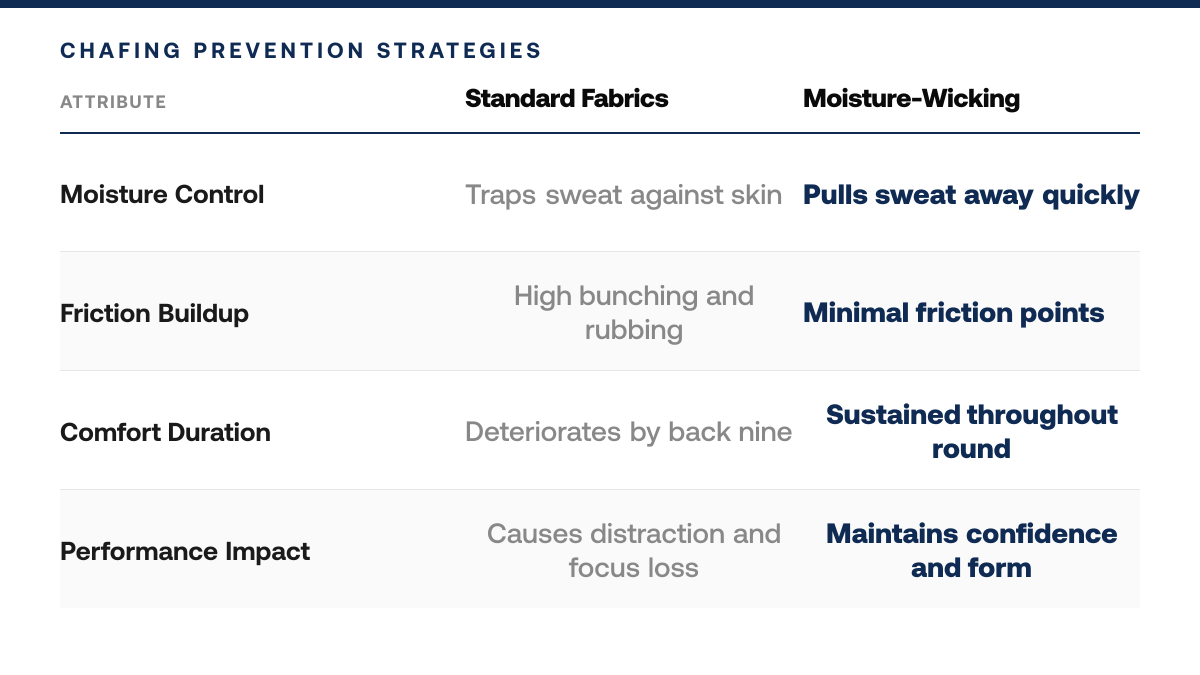
Moisture-wicking technology actively pulls sweat away from your skin and toward the outer surface of the fabric, where it can evaporate quickly. This constant moisture management prevents the damp conditions that create chafing. Polyester blends, nylon, and merino wool excel at wicking because their fiber structure naturally moves moisture away from skin. This is fundamentally different from cotton, which absorbs sweat like a sponge and holds it against your body, amplifying friction and softening skin during your round. Technical fabrics also dry faster when you reapply products or change layers, meaning you stay in a protective, dry state longer.[2]
Seam Construction and Fit Design
Beyond fabric choice, how a garment is constructed matters significantly. Flat-lock seams, which lay flat against your body rather than creating raised ridges, reduce the friction points that develop as your shirt shifts during the swing. Seamless or tagless construction eliminates additional irritation zones. Four-way stretch fabrics move with your body in all directions, preventing bunching at the waistband, underarms, and thighs. Performance golf apparel combines these design features intentionally, creating garments that minimize friction regardless of how your body moves. Standard clothing lacks these engineering details, which is why performance apparel outperforms casual wear across a full round.
Step-by-Step Process
1. Select moisture-wicking performance fabrics
Choose golf apparel made from technical fabrics engineered to pull sweat away from your skin and dry quickly. Look for synthetic blends or merino wool designed for active outdoor wear; these materials manage moisture far better than cotton, which absorbs sweat and stays wet against your body. Check product descriptions and labels to confirm moisture-wicking properties before purchasing. This foundation step prevents the damp skin conditions that lead to chafing during long rounds. Pay special attention to base layers and your primary golf shirt, as these pieces sit closest to your skin.[2]
2. Apply protective barriers to high-friction zones
Before heading to the course, apply anti-chafing balms, moisture-blocking products, or protective barriers to areas prone to friction: typically underarms, inner thighs, collar lines, and anywhere your apparel contacts skin repeatedly. These products create a protective layer that reduces irritation and allows movement without the constant rubbing that causes chafing. Quality-first makers like Haven Golf Company sweat this detail so you don't have to. Apply generously to any zone where you've experienced discomfort in previous rounds. Options include friction-reducing balms, silicone-based body glide, or even powder-based friction reducers depending on your skin type and preference.[2]
3. Verify proper fit for movement and comfort
Ensure your golf shirt, shorts, and undergarments fit snugly enough to prevent bunching and shifting during your swing, but loose enough to allow unrestricted arm movement and comfortable walking across 18 holes. Bunching fabric creates friction points; overly tight apparel restricts your motion and increases chafing risk. Try your outfit on and perform a few practice swings to confirm the fit works for your body and swing mechanics before wearing it on the course. Pay particular attention to how fabric sits at the waistband, whether sleeves stay in place through your backswing, and if shorts or pants ride up during movement.
4. Reapply barriers and change damp layers mid-round
If you're playing a full day in heat or humidity, reapply protective balm or moisture-blocking products at the turn or halfway through your round, especially if you've been sweating heavily. Consider bringing a fresh, dry undershirt or moisture-wicking base layer to change into if your current layer becomes saturated. Sweat accumulation accelerates chafing, so staying dry and refreshed helps you finish strong without discomfort. Many golfers find that a quick refresh halfway through their round makes the difference between finishing comfortable and struggling through the back nine.
How This Works in Practice
Example 1: The Summer Tournament Player
Picture a golfer preparing for a weekend club championship during peak summer heat and humidity. They've played 18 holes before without incident, but a full tournament day—two rounds back-to-back with walking between courses—introduces new friction points: sweat pooling under the arms, shorts riding up during the swing, and raw skin developing by hole 14. This golfer pairs a moisture-wicking performance shirt with fitted shorts that stay in place through the backswing, then adds an anti-chafing balm to high-friction zones before teeing off. By round two, while others are adjusting their clothes and grimacing through discomfort, this player moves freely, stays dry, and focuses entirely on the course. The combination of breathable fabric, snug fit, and protective product transforms what could have been a miserable afternoon into a competitive advantage—one less distraction when every stroke counts.
Example 2: The Multi-Day Golf Trip
Consider a golfer planning a three-day golf trip across different courses and climates: cool morning rounds, afternoon heat, and unpredictable weather. Instead of packing a single outfit, they layer strategically—a moisture-wicking base layer under a looser performance shirt, allowing airflow and sweat management as temperatures rise. They bring fitted shorts for stability and a lightweight outer layer for wind or rain. By day two, when fatigue sets in and skin sensitivity peaks, the layering system and anti-chafing products keep them comfortable across multiple rounds. They're not fighting their clothes; they're adjusting to conditions. This approach, building flexibility through proper base layers and protective gear, means they can play well on day three instead of nursing sore spots and regretting their packing choices.
Example 3: The Humidity Challenge
A golfer playing in high humidity discovers that standard anti-chafing products wash away quickly in heavy sweat. They switch to a silicone-based body glide that resists moisture better and reapply at the turn, then pair it with seamless, flat-seam socks and moisture-wicking shorts with strategic gusset construction. By protecting their most vulnerable zones—inner thighs and underarms—with longer-lasting products and wearing garments specifically designed for sweat management, they complete their round without the raw skin irritation that plagued previous humid-weather rounds.
Why Preparation Prevents Discomfort
All three scenarios share a common thread: chafing isn't inevitable; it's a sign that apparel and protection haven't been matched to the round's demands. Golfers who pair moisture-wicking fabrics with fitted construction and anti-chafing products play the full 18 (or 36) without distraction. Heat, humidity, and extended play are manageable when you've planned ahead.
Pre-Round Chafing Prevention Checklist
Choose moisture-wicking fabrics like polyester or merino blends over cotton for your base layers and golf shirt.
Verify your golf pants and shorts fit snugly at the waist and thighs without bunching or excess fabric that creates friction points.
Apply anti-chafe balm or body glide to high-friction zones—inner thighs, underarms, and collar line—before your round.
Wear seamless or flat-seam socks designed for golf to reduce heel and toe irritation during a full 18 holes.
Pack a moisture-control product or extra dry shirt in your golf bag to refresh damp areas during the back nine.
Test your outfit with practice swings before playing to ensure fit and movement work for your individual swing mechanics.
Confirm all seams are flat or tagless to minimize friction points that accumulate over extended play.
Common Mistakes to Avoid
Mistake: Wearing non-breathable or cotton fabrics during a full round
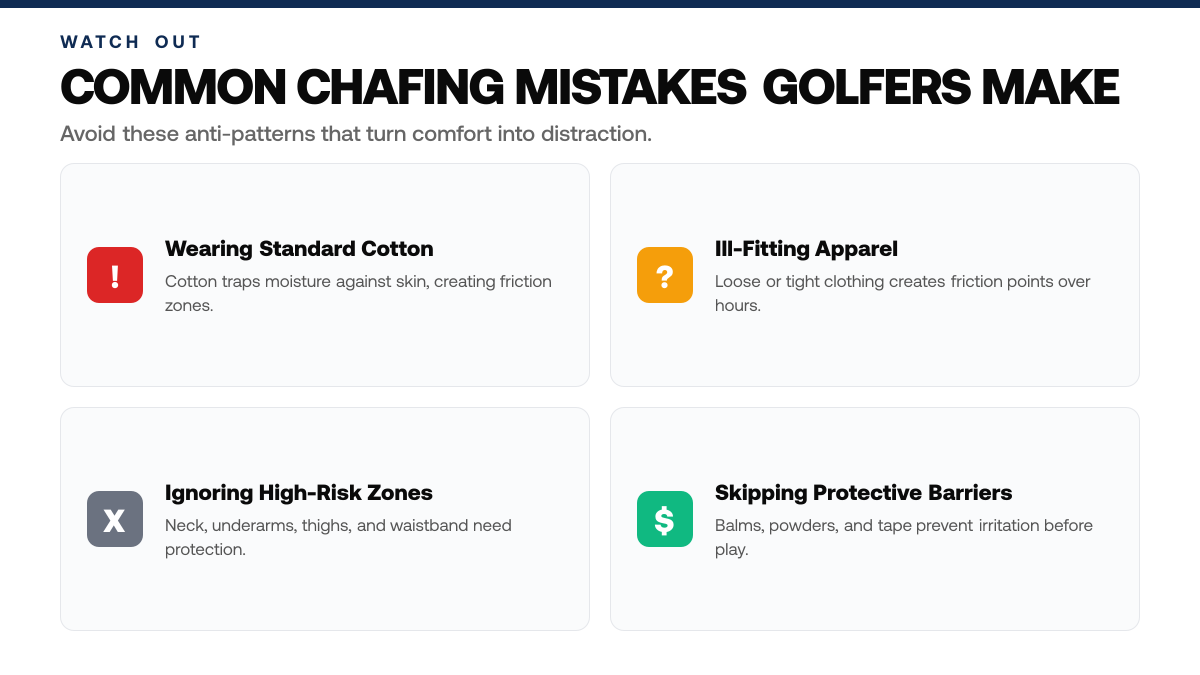
Cotton and non-breathable synthetics trap sweat against your skin, creating a warm, moist environment that accelerates friction and chafing, especially in high-heat or humid conditions common on summer golf courses. Switch to moisture-wicking technical fabrics (polyester blends, merino wool) that pull sweat away from skin and dry quickly, reducing the moisture buildup that fuels chafing.[4]
Mistake: Ignoring fit issues, wearing oversized or undersized apparel
Loose clothing bunches under your arms and at the waist during the swing; tight apparel creates constant friction points. Both scenarios intensify chafing over 18 holes. Choose fitted (not tight) golf wear that moves with your body without excess fabric or compression, and test your swing motion before playing to catch problem zones.
Mistake: Skipping anti-chafing products on high-risk zones
Neglecting to apply barrier creams, body glide, or friction-reducing balms to areas prone to chafing—inner thighs, underarms, collar line—leaves vulnerable skin unprotected during hours on the course. Apply anti-chafing products before your round to any zone where apparel or skin-to-skin contact occurs, and reapply if you're playing in heat or humidity.[4]
Mistake: Not replacing damp base layers during extended play
Sweat-saturated fabrics against your skin accelerate chafing, especially in the final nine holes when fatigue and skin sensitivity peak. Pack an extra dry base layer or undershirt and change into it at the turn if you've been sweating heavily, particularly during tournament rounds or multi-round golf trips.
Frequently Asked Questions
When should I apply anti-chafing products during my golf round?
Apply anti-chafing products before you start playing, targeting high-friction zones like the inner thighs, underarms, and collar line. Pre-round application allows the product to create a protective barrier before repetitive motion and moisture exposure begin. This preventive approach is far more effective than waiting until chafing develops mid-round, when discomfort already affects your swing and concentration.
Does golf-specific apparel really prevent chafing better than regular clothes?
Yes. Performance apparel designed for golf and outdoor activity outperforms casual clothing for chafing prevention because it uses engineered fabrics, strategic seam placement, and moisture-wicking technology. Golf-specific pieces reduce bunching, manage sweat more effectively, and minimize friction during the repetitive motions of your swing and walking the course. Casual wear lacks these features and often retains moisture, increasing chafing risk across a full round.
What fabric properties should I look for to avoid chafing?
Seek moisture-wicking fabrics that pull sweat away from your skin, breathable blends that allow air circulation, and smooth seams that won't dig into sensitive areas. Avoid 100% cotton, which absorbs moisture and clings to skin. Look for four-way stretch materials that move with your body during the swing without bunching or riding up. Flat-lock seams and tagless construction further reduce friction points that commonly cause chafing on longer rounds.
How to Golf in 100-Degree Heat Without Overheating — Stepping onto the course on a 100-degree day feels different the moment the heat hits your skin. Your body begins working harder before you even reach the first tee, and…
How to Prevent Golf Polo Fading After Washing — You pull a favorite golf polo from the dryer after a few washes, and the vibrant color you loved has noticeably faded. Whether it's a deep navy that's turned dusty, a…