How to Choose the Right Golf Hoodie for Every Season
You're standing on the first tee on a cool Saturday morning, and the temperature is dropping. By the turn, the sun will warm the course, but right now you need a layer that keeps you comfortable without bunching under your swing. Most golfers reach for the same piece every time, but golf weather rarely stays the same throughout a round, and the right cold-weather layer depends on what you're trying to accomplish: maximum warmth for casual play, temperature flexibility as conditions shift, or the professional polish that works from the course to the clubhouse.
Choosing the right golf hoodie isn't just about staying warm. It's about understanding how different layering pieces work together and which one matches your playing conditions, course dress code, and swing mechanics. A hoodie prioritizes comfort and warmth, but it's only one option in a layering system that includes quarter-zips and vests, each suited to different temperature ranges and playing scenarios. For golfers who play regularly across seasons and travel to courses with varying weather and culture, this decision shapes whether you stay comfortable and confident through 18 holes.[1] That groundwork is exactly what Golf Hoodies for Every Season builds on.
This article walks you through a step-by-step process for assessing your layering priority, matching temperature conditions to the right piece, considering course dress codes and transition needs, and verifying that your chosen layer won't interfere with your swing mechanics. You'll see how this works in practice through two real golfer scenarios, a weekend player navigating variable weather across travel rounds, and a competitive golfer balancing performance and presentation in tournament play. A checklist and common mistakes section help you avoid the most costly layering choices, so you can build a cold-weather wardrobe that keeps you playing your best. Every piece here comes fromthe full collection.
Haven Golf Company sells performance golf and lifestyle apparel, primarily polos for men and women, crafted with their signature Airflex™ material for maximum comfort and durability.
TL;DR
Choose a hoodie when maximum warmth is the priority and temperatures are consistently cold, prioritizing comfort over formal appearance.[2]
Hoodies work best for casual rounds and practice sessions where dress codes are relaxed and swing freedom isn't compromised.[2]
Hoodies are one of three main cold-weather layering options alongside quarter-zips and vests, each suited to different temperature ranges and playing conditions.[2]
Understanding Golf Hoodies and Seasonal Layering
What Is a Golf Hoodie?
A golf hoodie is a hooded mid-layer or outerwear piece designed to keep golfers comfortable across changing weather conditions. Modern golf hoodies feature performance fabrics like four-way stretch and waterproof properties that allow freedom of movement during the swing while protecting against wind and moisture. Unlike casual hoodies, golf-specific designs balance warmth, breathability, and style, making them suitable for both on-course play and off-course wear. They fit into a layering system where moisture-wicking base layers remove sweat from the body, mid-layers provide warmth without overheating, and breathable, water-resistant outerwear adds protection without trapping heat.[1][3]
Why Golfers Need Proper Layering
Golf weather rarely stays the same throughout a round, so wearing the right layers helps you stay comfortable in every condition. A layering system creates an adaptive approach that responds to the environment, allowing you to focus on your game rather than your outfit. Whether you're playing an early-morning round in cool temperatures, navigating humidity and heat mid-day, or facing rain and wind, the right hoodie prevents overheating while maintaining warmth and protection. This is especially important for golfers who play regularly across seasons and travel to different courses where weather conditions vary significantly.[1]
Golf Hoodies in 2025 and Beyond
In 2025, golf hoodies are increasingly popular among golfers seeking performance and personal expression on the course. Modern designs emphasize high-tech woven fabrics with features like four-way stretch and waterproof properties, allowing golfers to move freely while staying protected. These hoodies range from understated, timeless styles inspired by contemporary street fashion to bold, eye-catching designs that showcase personality. Whether you prioritize moisture-wicking performance, stylish aesthetics, or a combination of both, today's golf hoodies offer options that let you express your unique style while maintaining the comfort and functionality needed for a full round.[3]
Key Numbers for How to Choose the Right Golf Hoodie for Every Season (2026)
45–65°F temperature range is optimal for quarter-zip performance and versatility on the course.[2]
Below 50°F, hoodies deliver maximum warmth when temperatures are consistently cold throughout your round.[2]
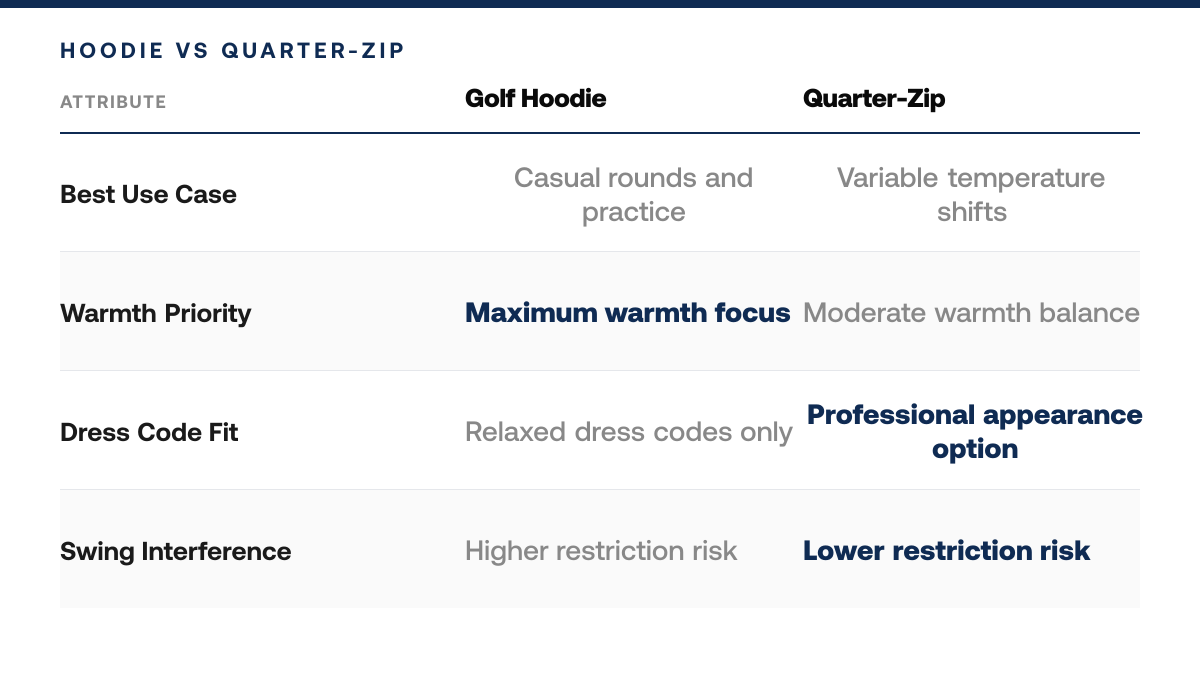
Quarter-zips won't interfere with swing mechanics while providing professional appearance from first tee to clubhouse.[2]
Step-by-Step Process
1. Assess your layering priority
Determine what matters most for your playing conditions: swing freedom, core warmth, or maximum warmth. If you prioritize unrestricted arm movement and swing mechanics, vests are designed to keep your core warm while leaving arms free. If you need versatility across temperature shifts during a round, quarter-zips offer temperature control that adapts as conditions change. If maximum warmth is your goal and you're playing casual rounds in consistently cold conditions below 50°F, a hoodie prioritizes comfort over formal appearance.[2]
2. Match temperature conditions to the right piece
Select your layer based on the forecast and course conditions. Quarter-zips work best in the 45–65°F range and transition smoothly from course to clubhouse without interfering with swing mechanics, making them ideal when dress codes apply. Vests suit variable conditions throughout your round when core coldness is the concern but air temperatures remain moderate. Hoodies deliver maximum warmth for consistently cold rounds and casual play settings where formal appearance is less critical.[2]
3. Consider course dress codes and transition needs
Review your club's dress code before selecting a hoodie style. Quarter-zips maintain a professional appearance that works from the first tee through the 19th hole and transition seamlessly to off-course settings, making them the safer choice at nicer clubs with formal expectations. Hoodies offer a more casual look better suited to practice sessions and relaxed club environments. Vests provide a middle ground for targeted warmth without the formality concerns of a full hoodie, allowing you to layer over other pieces while respecting dress code requirements.[2]
4. Verify wind and swing interference factors
Test your chosen layer for wind protection and swing comfort. Quarter-zips won't interfere with your swing mechanics but may leave arms exposed in windy conditions. Vests eliminate arm restriction entirely, making them ideal if swing freedom is non-negotiable, though they offer less wind protection than a full hoodie. Hoodies provide the most comprehensive warmth and wind coverage but require a fit that doesn't bunch or restrict shoulder rotation during your swing.[2]
How This Works in Practice
Example 1: The Weekend Player Dressing for Variable Weather
Picture a golfer who plays most Saturday mornings and travels to courses across different regions, where dawn temperatures drop but afternoon heat climbs. Before booking a trip, they check the seasonal forecast and course dress code, then plan a layering strategy. They consider a golf hoodie that works as both a standalone piece in cool conditions and a mid-layer under a windbreaker when rain threatens. They would verify that the hoodie's fabric offers the lightweight, high-tech properties needed to pack efficiently without bulk, and they'd look for features like four-way stretch that allow a full swing without restriction or bunching during the round. The choice hinges on whether the hoodie can transition from early-morning wear to being tied around the waist or stowed in a cart pocket as conditions warm, and whether its design, whether understated and timeless or bold and personality-driven, aligns with the course's culture and their own style identity.[3]
Example 2: The Low-Handicap Competitor Balancing Performance and Presentation
Consider a competitive golfer who enters club tournaments and charity events where both performance and appearance matter. They need apparel that won't distract from their game, no chafing during a full 18 holes, no sweat-soaked fabric clinging to their torso, and no hood that catches on their collar during the backswing. They research hoodies that combine moisture-wicking fabrics with technical construction, and they verify that features like waterproof properties protect against unexpected rain without adding weight or restricting movement. They also weigh design choices: a bold, personality-driven pattern might reflect their identity and make them memorable in a tournament field, while an understated, timeless aesthetic keeps the focus on their play. Their decision balances the hoodie's technical capabilities, four-way stretch, breathability, weather resistance, against whether its visual presentation reinforces their competitive image and fits the tournament's dress code expectations.[3]
Why Design Meets Durability
Both golfers prioritize hoodies that deliver on comfort and performance across a full round while reflecting personal style. Whether choosing understated elegance or bold visual impact, the right hoodie bridges technical fabric properties, four-way stretch, waterproof construction, lightweight materials, with a design that feels authentic to the wearer and appropriate to the course and competition. This balance between function and identity is what transforms a hoodie from a casual layer into essential tournament and travel apparel.[3]
Golf Hoodie Selection Checklist
Test the hoodie's moisture-wicking and water-resistant properties by checking the fabric label and material composition for your expected playing conditions.
Verify the fit allows a full golf swing without bunching at the shoulders, sleeves, or torso by performing a practice swing in the garment.
Confirm the hoodie's style and color align with your course dress code before purchasing.
Check sleeve length to ensure it doesn't interfere with your grip or swing mechanics during a full rotation.
Review the hoodie's layering compatibility with your base layers and other seasonal apparel for your climate.
Common Mistakes to Avoid
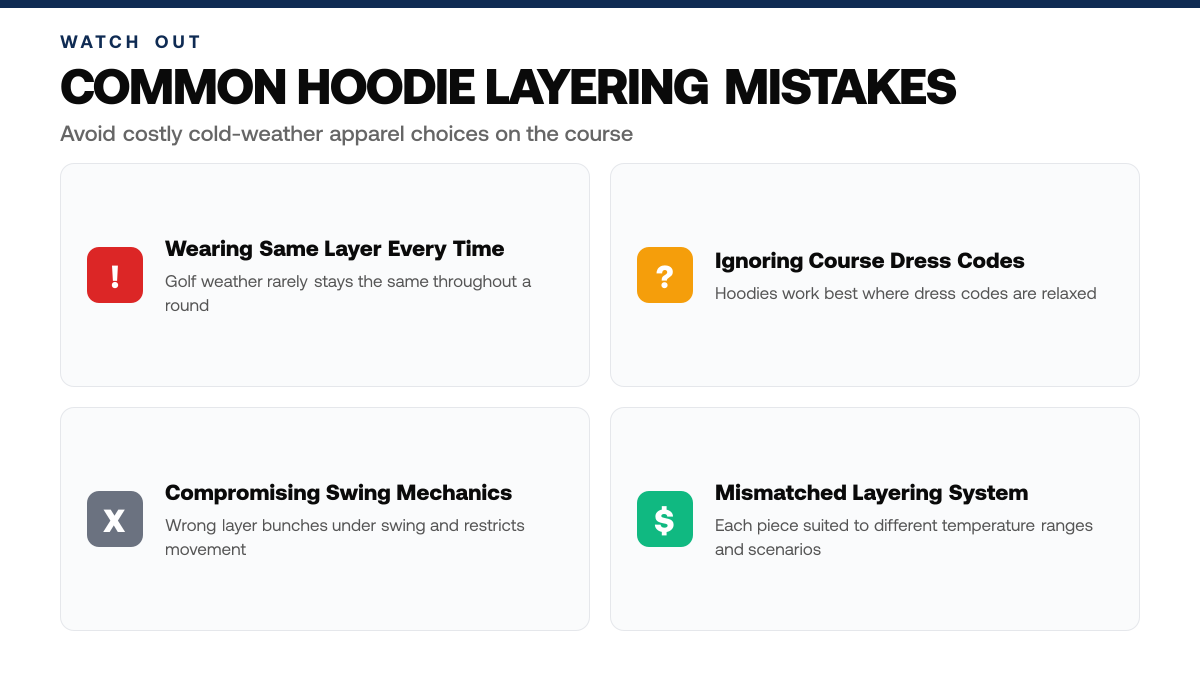
Mistake: Choosing a hoodie for mild 45–65°F temperatures
A hoodie prioritizes maximum warmth and casual comfort, but in mild conditions it sacrifices the temperature adaptability you need as conditions shift throughout your round. A quarter-zip is the better choice for this range because it offers professional versatility, lightweight layering, and temperature control that adjusts as you play, without overheating or restricting your swing mechanics.[2]
Mistake: Prioritizing warmth over swing mechanics when layering
Bulky or restrictive layers that maximize core warmth can interfere with your golf swing, compromising your performance and comfort during the full round. Instead, choose a layering piece that won't restrict arm movement, such as a vest for core warmth with free arms, or a quarter-zip that's lightweight enough to layer without mechanical interference.[2]
Mistake: Using a hoodie as your primary cold-weather golf layer
While hoodies offer maximum warmth and comfort, they're too casual for courses with dress codes and don't transition well from the course to the clubhouse. Reserve hoodies for practice sessions and consistently cold rounds below 50°F where comfort matters more than appearance. For regular play and variable conditions, a quarter-zip or vest provides professional versatility and better all-around performance.[2]
Frequently Asked Questions
What's the difference between a hoodie and a quarter-zip for cold golf rounds?
A hoodie prioritizes maximum warmth and casual comfort, making it ideal for consistently cold rounds below 50°F when you're playing casual or practice sessions. A quarter-zip balances warmth with versatility, it adapts to temperature changes as you play, maintains a professional appearance suitable for club dress codes, and transitions seamlessly from course to clubhouse. Quarter-zips work best in the 45–65°F range and won't interfere with your swing mechanics, while hoodies are less formal and better suited when comfort matters more than appearance.[2]
How should I layer a golf hoodie to stay comfortable throughout my round?
Start with moisture-wicking base layers underneath your hoodie to remove sweat from your body and maintain comfort as conditions change. This layering system responds to the environment, allowing you to focus on your game rather than managing discomfort. Moisture-wicking fabrics are essential because they prevent sweat from building up and cooling your skin, which is especially important during longer rounds or warmer play.[1]
When should I choose a hoodie over a vest or quarter-zip?
Choose a hoodie when maximum warmth is your priority, you're playing casual rounds or practice sessions, temperatures stay consistently cold, and comfort matters more than maintaining a formal appearance. Vests work better if swing mechanics are your top concern but you still need core warmth. Quarter-zips are the better choice when you're playing at clubs with dress codes, dealing with variable conditions throughout your round, or need one piece that works from course to clubhouse.[2]
Golf Hoodies for Every Season: Styles, Fit, and Care Guide — You're standing on the first tee on a cool Saturday morning, and your usual polo feels thin against the wind. By the turn, the sun climbs and you're layering up, then…
How to Choose Golf Polos for Women Golfers — Walk into any pro shop, and you'll notice women golfers reaching for polos that fit their bodies, reflect their style, and move with them through eighteen holes. The…