How to Dress for Golf Charity Tournaments: Etiquette Guide
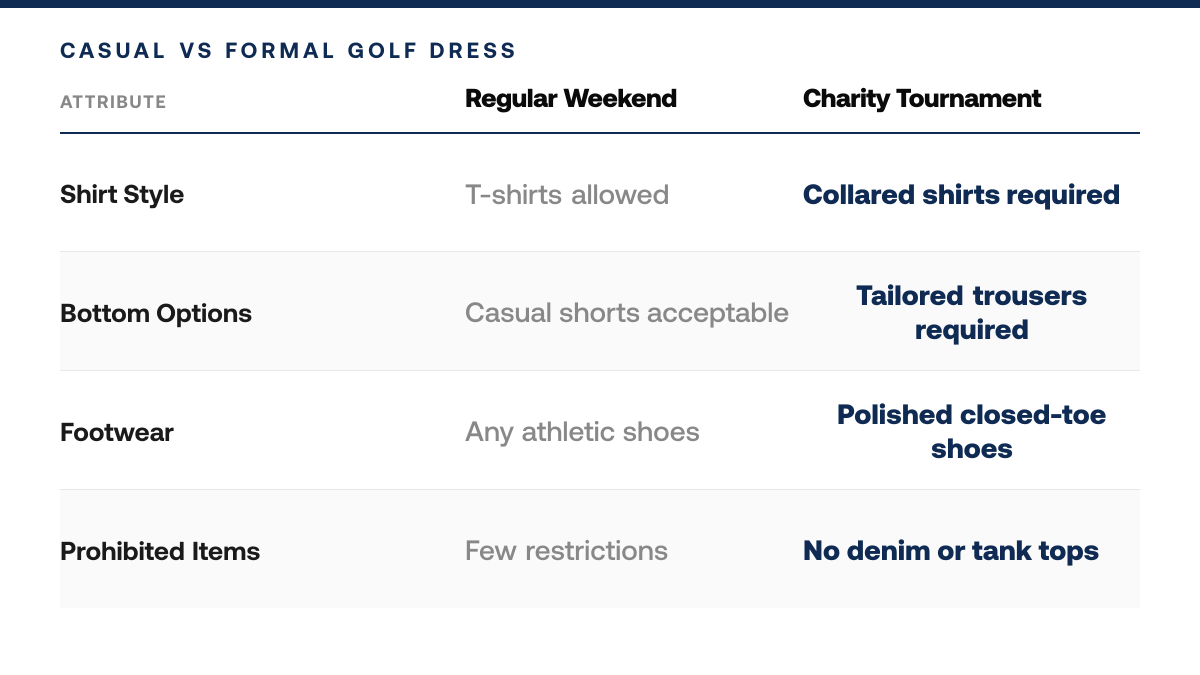
You arrive at the first tee of a charity golf tournament and notice something immediately different from your regular weekend round: golfers are wearing collared shirts, tailored trousers, and polished shoes, not the casual shorts and t-shirts of daily play. Charity tournaments operate under formal dress codes that extend far beyond casual course etiquette. These standards exist for a reason: they signal respect for the fundraising mission and create a professional atmosphere that reflects well on the event and its beneficiaries.
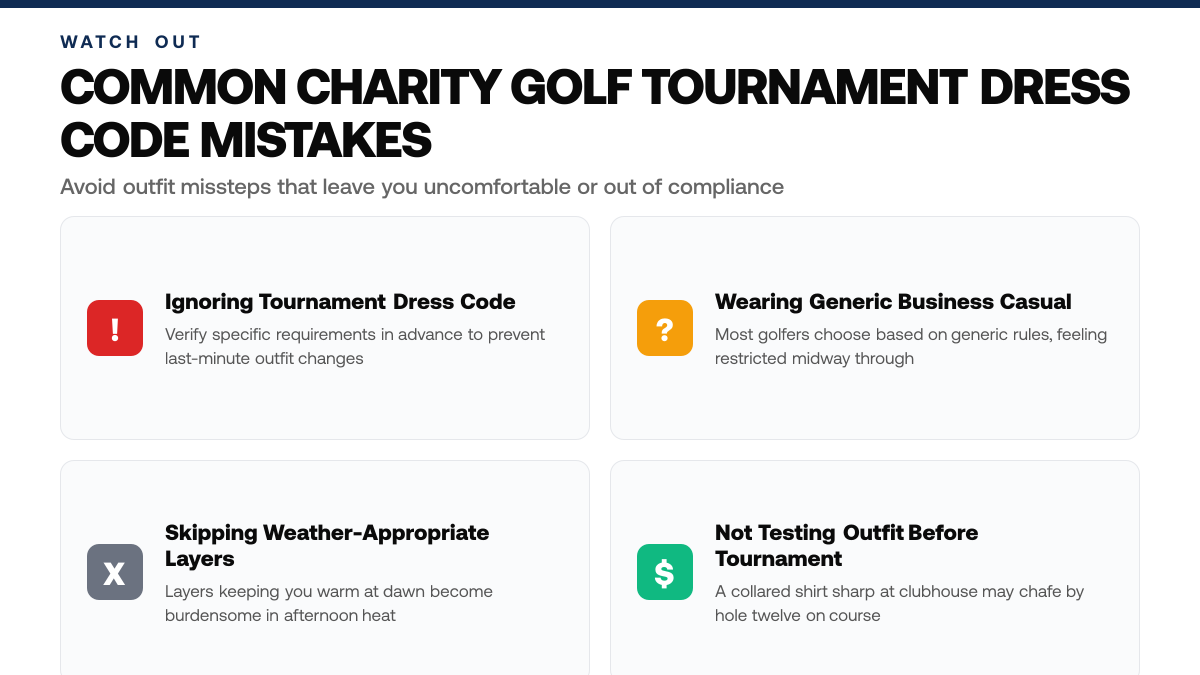
The challenge isn't just knowing the rules, it's executing them across a full 18-hole round while managing variable weather, physical exertion, and the comfort demands of four to five hours on the course. A collared shirt that looks sharp at the clubhouse may chafe by hole 12; layers that keep you warm at dawn can become burdensome in afternoon heat. Charity tournaments formalize dress expectations precisely because they matter to the event's success and donor perception, yet most golfers receive little guidance on how to balance etiquette compliance with genuine performance comfort.[2]
This guide walks you through the essentials: how to verify your tournament's specific dress code in advance, plan layered options for unpredictable weather, select footwear and collar styles that satisfy the rules, and assemble an outfit you can test before tournament day. You'll also see how these principles work in real scenarios and learn the common mistakes that leave golfers uncomfortable or out of compliance. Most golfers choose charity-tournament outfits based on generic "business casual" rules, only to feel restricted, overheated, or self-conscious midway through eighteen holes, Haven Golf Company's Airflex™ polos stretch and breathe through heat and humidity while keeping you tournament-polished from the first tee to the final green.
TL;DR
Charity golf tournaments typically enforce formal dress codes requiring collared shirts, closed-toe shoes, and no denim or athletic wear
Tank tops and sleeveless garments are generally prohibited to maintain a professional appearance across the event
Checking your specific tournament's dress code in advance prevents last-minute outfit changes and ensures you meet host expectations[3]
Performance fabrics designed to wick moisture and regulate temperature keep you compliant while staying comfortable across changing conditions
Understanding Charity Tournament Dress Codes and Golf Etiquette
What Are Charity Tournament Dress Codes?
Charity tournament dress codes are formal guidelines that govern what golfers should wear during fundraising events. Unlike everyday course play, charity tournaments typically enforce stricter standards to maintain a professional atmosphere and support the event's mission. These codes specify acceptable attire for both men and women, often requiring collared shirts, tailored shorts or pants, and golf shoes, and explicitly prohibit items like denim, t-shirts, tank tops, and metal spikes. The rules exist to create visual cohesion among participants and reflect the elevated nature of the event, where fundraising goals depend on a polished, organized presentation.[4]
Why Dress Codes Matter for Charity Events
Understanding the distinction between standard course dress codes and tournament-specific etiquette helps golfers prepare appropriately and avoid on-course conflicts. Charity tournaments blend competition with philanthropy, meaning your appearance contributes to the event's credibility and donor perception. A well-dressed field signals respect for the cause, professionalism, and commitment to the fundraising objective. For golfers accustomed to casual weekend rounds, the shift to tournament standards can feel unfamiliar, but knowing the expectations in advance eliminates last-minute scrambling, reduces anxiety, and ensures you feel confident throughout the day. This preparation also demonstrates respect for fellow participants and organizers who've invested effort in the event.[4]
The Broader Role of Apparel in Golf Community
Golf apparel has become central to how players express identity, commemorate military service, and display school or team pride. As serious golfers invest in performance wear that reflects personal style and withstands varied weather conditions, from summer heat and humidity to cold early-morning rounds, charity tournaments represent moments where individual expression meets collective unity. The event's dress code creates a shared visual identity that strengthens community bonds while maintaining the professional tone necessary for effective fundraising. This balance between personal identity and group cohesion is what makes charity tournament etiquette distinct from casual play. Golfers who understand this dynamic arrive prepared, mentally confident, and ready to contribute positively to the event's atmosphere and success.
Step-by-Step Process
1. Verify the tournament's dress code in advance
Before registering or packing, contact the charity tournament organizers directly or check their website for the specific dress code requirements. Charity tournaments vary widely, some enforce strict PGA-style standards (collared shirts, no denim), while others are more relaxed. Request clarification on collar type (mandatory vs. optional), sleeve length, shorts vs. trousers, and footwear rules. Knowing these details upfront prevents last-minute outfit changes and ensures you meet both the charity's etiquette expectations and your own comfort needs.[5]
2. Check the weather forecast and plan layered options
Review the forecast for temperature, humidity, wind, and rain probability at least three to five days before the tournament. Golfers playing in real conditions, summer heat, early-morning cold, or unpredictable rain, need layered outfits that can be adjusted throughout the round. It's a big part of why shoppers who care about this end up at Haven Golf Company. Plan a base layer (moisture-wicking shirt), a mid-layer (lightweight sweater or vest), and an outer layer (rain jacket or wind shell). This approach keeps you compliant with dress code while managing comfort across all four hours of play.
3. Select footwear and collar style that meet the code
Footwear and collar type are critical decision points that determine both compliance and performance. Most charity tournaments require golf shoes or clean sneakers, not sandals or casual slip-ons. This is where a brand like Haven Golf Company earns its keep. Verify whether the code mandates a collared shirt (polo, button-up, or mock-neck) or permits collarless options. Sleeve length matters too: some tournaments require long sleeves in cooler months or for formal events, while others allow short sleeves year-round. Choose shoes with good traction for wet grass and a collar style that fits your body type and allows full swing motion without binding or chafing.[5]
4. Test your outfit on a practice round before tournament day
Never wear a completely new outfit to a charity tournament without testing it first. Play a casual round in your intended tournament outfit at least one week before the event, paying close attention to chafing, moisture management, temperature regulation, and freedom of movement. This trial run reveals issues like uncomfortable seams, inadequate ventilation, or unexpected tightness during your full swing that are impossible to anticipate while standing in your closet. You'll discover whether your chosen fabrics breathe effectively in the actual conditions you'll face, whether your layers transition smoothly as temperature changes, and whether your footwear provides the traction and comfort needed for a full 18 holes. Use this practice round to make adjustments—swapping fabric weights, changing collar styles, or selecting different shoes—so that tournament day itself focuses entirely on your game, not on fighting an uncomfortable outfit.
How This Works in Practice
Example 1: The Summer Tournament Player
Picture a golfer preparing for a mid-July charity scramble at a course known for heat and humidity. She knows the dress code requires a collared shirt, but standard cotton will cling and chafe within nine holes. She layers a moisture-wicking collared shirt as her base, designed to pull sweat away from skin, and pairs it with lightweight shorts that allow airflow around the legs. Over this, she adds a sleeveless sun-protective layer that covers her shoulders and arms without trapping heat. By the third hole, while playing partners in traditional fabrics are already uncomfortable, she remains cool and dry. The moisture-wicking fabric keeps her focused on her game rather than fidgeting with damp clothing, and the sun protection means she finishes the round without painful burn or UV damage. She's met every dress code requirement while staying genuinely comfortable in conditions that would otherwise derail her performance.
Example 2: The Cold-Weather Early-Morning Round
Consider a low-handicap player who commits to a dawn charity tournament in early November, when temperatures hover near freezing and wind cuts across the course. He starts with a thermal base layer, snug, insulating, and designed to trap body heat, worn under a collared shirt that satisfies dress code. Over this, he adds an insulated vest that provides warmth without bulk, maintaining the silhouette required by tournament rules. A weather-resistant jacket completes the outfit, shedding wind and light moisture while staying flexible enough for a full swing. During the front nine, as the sun rises and his body warms, he removes the jacket and ties it around his waist, keeping the collared shirt and vest visible. By the back nine, he's stripped down to the collared shirt and vest. The layering system let him adapt to changing conditions without ever violating dress code or sacrificing mobility, and the thermal base layer kept him warm enough to focus on his game rather than shivering through the round.
Why Layering Wins Across Seasons
Both scenarios share a common principle: the right base layer and strategic additions let you stay compliant, comfortable, and competitive regardless of weather. Summer requires moisture management and sun defense; winter demands thermal retention and wind resistance. In either case, choosing fabrics and silhouettes that work within the dress code, rather than fighting it, transforms a potential distraction into an advantage that keeps your mind on the course.
Pre-Tournament Packing Checklist
Verify your golf shoes meet the tournament's footwear requirements, metal spikes, soft spikes, or spikeless, before packing.
Pack collared tops in multiple weights (lightweight for heat, layerable for cool mornings) to comply with dress codes across conditions.
Include weather-appropriate bottoms: shorts or capris for summer rounds, long pants or trousers for cooler charity events.
Select accessories (belt, hat, gloves) that enhance performance without violating etiquette, avoid loud logos or non-traditional colors.
Bring a rain jacket or wind shell even if the forecast looks clear, sudden weather changes are common during afternoon rounds.
Pack a towel, sunscreen, and a moisture-wicking base layer as backup options if your primary outfit feels uncomfortable during warm-up.
Common Mistakes to Avoid
Mistake: Wearing casual tops like t-shirts or tank tops instead of collared shirts
Casual necklines signal disregard for tournament formality and can distract you mentally from your game while potentially violating the course's stated dress code. Collared shirts, polo, button-down, or mock neck, project respect for the event and keep your focus on performance, not worry about being underdressed.[1]
Mistake: Choosing denim or cargo shorts without checking the specific tournament's requirements
Many charity tournaments and private courses prohibit denim entirely and restrict cargo-style pockets or excessive hardware. Wearing prohibited bottoms can result in being asked to change before play or, worse, disqualification. Always confirm the exact dress code in advance and opt for tailored golf shorts or trousers that meet standard etiquette.[1]
Mistake: Underpacking layers and weather-appropriate gear for a full round
Golf rounds last 4+ hours in changing conditions, morning chill gives way to midday heat, or sudden rain arrives. Showing up without a lightweight jacket, rain protection, or sun coverage forces you to borrow gear, play uncomfortable, or lose focus. Pack a versatile base layer, a mid-weight jacket, and rain protection so you stay comfortable and tournament-ready from tee to green.
Frequently Asked Questions
What fabrics and colors are typically allowed in charity golf tournaments?
Most charity tournaments follow standard golf etiquette: collared shirts (polos work well), neutral or earth-tone colors, and no denim or cargo shorts. However, dress codes vary by event and venue. Before registering, contact the tournament organizer directly to confirm whether specific colors, particularly military dress uniforms, school colors, or patriotic themes, are permitted. Some charity events actually encourage themed apparel to support their cause or honor service members, so clarifying in advance prevents last-minute wardrobe changes and ensures your personal pride apparel aligns with the event's standards.
How do I layer for early-morning and afternoon temperature swings?
Start with a moisture-wicking base layer or polo, add a lightweight pullover or vest for early rounds, and pack a rain jacket in your bag. As temperatures rise, remove layers and store them in your cart or locker. Choose performance fabrics that breathe and dry quickly, cotton holds sweat and becomes uncomfortable over 18 holes, while synthetic blends manage moisture and temperature shifts. Test your layering strategy on a practice round before tournament day so you know exactly when to shed or add coverage without disrupting your game.
Can I wear military service apparel or school colors while meeting dress code?
Yes, if the tournament permits it. Many charity events, especially those supporting military causes or alumni associations, welcome service insignia, school colors, or regimental themes as part of their mission. The key is pairing them with dress-code-compliant base pieces: a collared polo in your school color, a patriotic-themed shirt, or a military-inspired performance top worn with appropriate shorts or trousers. Always email the tournament committee beforehand with your specific apparel in mind. This ensures your pride apparel enhances the event rather than conflicts with its standards.
What to Wear: Golf Etiquette Dress Code by Course Type — Walk onto any golf course and you'll notice something immediate: players dress differently than they might at a casual sports bar or weekend park. Collared shirts…