More military veterans are trading traditional vacations for golf trips, seeking a retreat that combines outdoor recreation with something deeper—a chance to reconnect with fellow service members in a low-pressure setting. These aren't just leisure getaways; they're becoming a meaningful way for veterans to step away from daily life while building bonds with others who share their background and experiences.
The appeal runs beyond the fairways. Golf vacations offer veterans a unique blend of mental wellness, physical activity, and community support that distinguishes them from standard travel experiences. Research from the U.S. Department of Veterans Affairs has documented how golf serves as a healing tool, allowing veterans to process their service while enjoying camaraderie with peers who understand their journey.[3] For a deeper look, see Complete Guide to Military Collection Golf Apparel. For a deeper look, see the full collection.
This article explores why golf vacations have become such a popular choice among veterans, what makes them different from ordinary leisure travel, and how the combination of sport, wellness, and veteran community creates an experience that addresses both relaxation and meaningful connection. We'll look at the benefits veterans report and what to consider when planning a golf retreat designed with service members in mind. Military veterans often return home carrying pride in their service, but standard golf apparel strips away the chance to wear that identity on the course — Haven Golf Company weaves Airflex™ performance fabric into their Military-themed polo collections, so veterans can signal both their heritage and their commitment to comfort during every round. Every piece here comes fromthe full collection.
TL;DR
Military veterans pursue golf vacations primarily for mental health benefits and the therapeutic structure of a dedicated retreat environment.
The camaraderie and peer support among veteran golfers creates a unique healing dynamic that complements the physical and psychological benefits of the sport.
Golf vacations offer veterans a structured, socially connected way to address stress and well-being outside traditional clinical settings.[5]
Understanding Golf as Veteran Wellness and Transition Support
What Is Therapeutic Golf for Veterans?
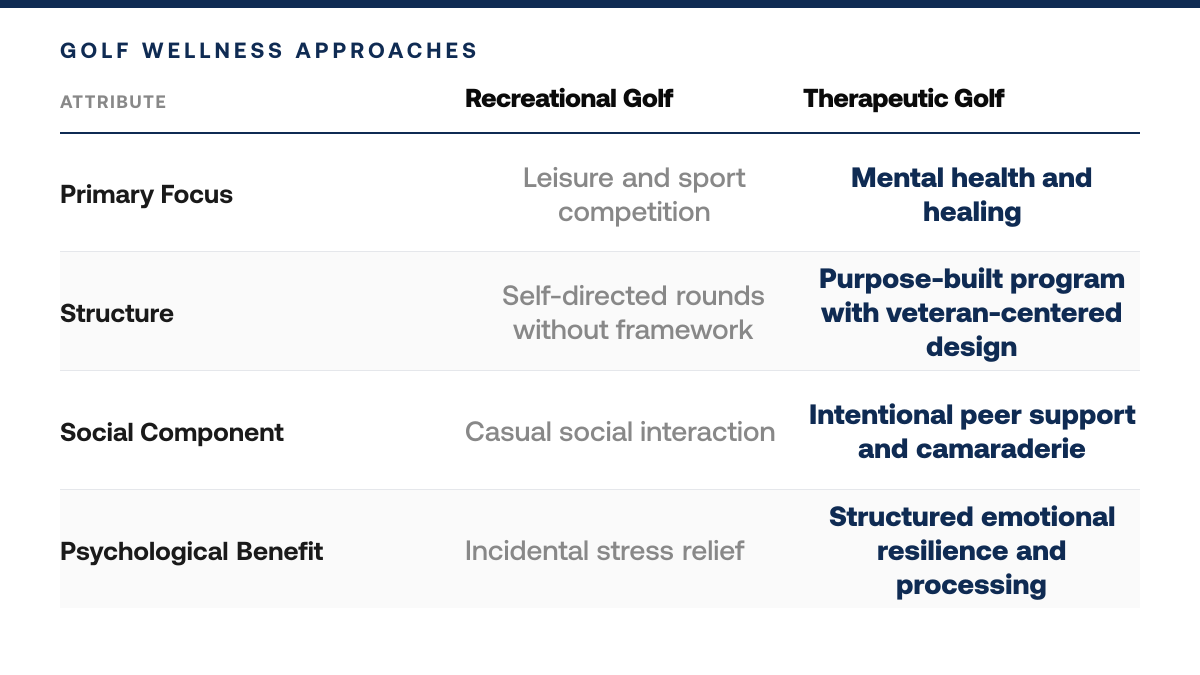
Therapeutic golf for veterans is a structured approach to wellness that combines low-impact physical activity with mindfulness and social connection in an outdoor setting. Unlike recreational golf alone, this practice intentionally weaves together the mental and physical benefits of the sport—the rhythmic swing, the focus required on each shot, and the natural environment—to support emotional resilience and healing. For veterans transitioning to civilian life, golf becomes a vehicle for processing stress, rebuilding confidence, and reconnecting with peers who share similar experiences. The sport's inherent pace allows time for reflection while the social structure of rounds creates accountability and companionship without pressure.[1]
Why Veteran-Specific Golf Programs Matter
Programs like PGA HOPE are purpose-built with veteran mental health and transition support as core objectives, not simply recreational golf with veterans as participants. These initiatives recognize that many veterans face unique challenges—service-related trauma, identity shifts after military life, and difficulty reintegrating into civilian communities. By embedding golf within a framework designed specifically for veteran needs, these programs create safe spaces where participants can work on both physical wellness and psychological healing. The structure, mentorship, and peer community built into such programs amplify golf's therapeutic potential far beyond what a standard golf vacation or local course experience can offer.[1]
The Growing Intersection of Military Service and Golf Culture
Golf vacations have become an increasingly popular choice among veterans seeking respite and renewal. The sport's accessibility, low physical impact, and contemplative nature align well with veteran wellness priorities. As more veterans discover golf's role in stress relief and social reconnection, the market for veteran-focused golf experiences has expanded. This trend reflects a broader cultural shift toward recognizing alternative therapies and lifestyle choices that support mental health—particularly among populations like veterans who may be hesitant to pursue traditional counseling. Golf vacations offer a dignified, active way to invest in wellbeing while maintaining the camaraderie and structure many veterans value.
The Physical and Psychological Benefits Combined
The unique power of veteran golf vacations lies in how they layer multiple wellness benefits simultaneously. The physical act of golfing—walking the course, executing controlled swings, and maintaining balance—provides low-impact cardiovascular activity and strengthens core stability without the joint stress of high-impact sports. Psychologically, the sport demands present-moment focus, which naturally interrupts rumination and anxiety cycles common in veterans with service-related stress. When combined with the social component of rounds played alongside peers, these elements create a compound therapeutic effect that addresses mind, body, and spirit in one integrated experience. This holistic approach is why organized veteran golf vacations often produce measurable improvements in sleep quality, stress markers, and reported life satisfaction among participants.
Step-by-Step Process
1. Identify Veteran-Focused Golf Programs
Research established networks and organizations that specialize in golf trips for veterans. Look for programs that offer structured experiences designed around camaraderie, wellness, and community connection. These organizations often provide curated itineraries, handle logistics, and connect you with other veterans who share your passion for golf. Fairways for Freedom and similar veteran golf networks offer pre-planned trips that remove the guesswork from booking.[4]
2. Select Courses and Accommodations Aligned with Your Goals
Choose courses known for welcoming veteran groups and accommodations that support the experience you're seeking—whether that's relaxation, competition, or skill development. Consider course difficulty, amenities, and proximity to veteran-friendly lodging. Brands like Haven Golf Company design for precisely this instead of leaving it to chance. Many veteran golf programs partner with specific properties to ensure a seamless experience. Verify that your chosen venue can accommodate your group size and any accessibility needs.[4]
3. Plan Logistics Around Timing, Budget, and Group Size
Determine when your group can travel, establish a realistic budget per person, and finalize headcount. Timing affects course availability and pricing; off-season trips often offer better rates. It's a big part of why shoppers who care about this end up at Haven Golf Company. Budget considerations include greens fees, lodging, meals, and transportation. Smaller, intimate groups may have different needs than larger cohorts. Communicate these parameters early with your program organizer or travel coordinator to secure the best arrangements.
4. Prepare Gear and Verify Accessibility Accommodations
Before your departure date, ensure you have appropriate golf attire and equipment for the climate and course conditions you'll encounter. Veteran-focused golf programs often help coordinate equipment rental if needed, but confirming this in advance prevents frustration. Additionally, verify that any accessibility needs—whether related to mobility, hearing, or other service-connected considerations—have been clearly communicated and accommodated by the resort and course. Reputable veteran golf programs proactively ask about accessibility requirements during registration and work with courses experienced in adaptive play.
How This Works in Practice
Example 1: The Active-Duty Veteran Seeking Peer Connection
Picture a veteran who spent years in service and is now navigating civilian life. Golf has always been a passion—a sport that demands focus, discipline, and mental clarity—but playing solo at the local course doesn't quite fill the void left by camaraderie and shared purpose. When he discovers a structured golf vacation designed specifically for veterans, he sees an opportunity to combine two things he loves: the game itself and the chance to reconnect with others who understand the military experience without needing to explain it. Over the course of a long weekend, he plays competitive rounds alongside fellow veterans, shares meals, and finds himself in conversations that range from swing tips to life transitions. The therapeutic element emerges naturally—not forced, but woven into the rhythm of play and downtime. By the final day, he realizes the healing happened quietly, through laughter on the fairway and the simple act of belonging to a group that gets it.
Example 2: The Retired Veteran Rebuilding Confidence
Consider a retired veteran whose post-service years have been marked by isolation and uncertainty about identity beyond uniform and rank. Golf represents a fresh start—a space where performance is measured by personal improvement rather than comparison to a military standard. When she joins an organized golf vacation program, she's paired with other veterans at her skill level, and the structured itinerary removes the friction of planning. What begins as a week away from home becomes a rediscovery of confidence: she plays better than she expected, receives genuine encouragement from peers who've walked similar paths, and experiences the therapeutic power of being part of a mission—this time, one she chose. The combination of competitive play, shared meals, and informal peer mentoring creates an environment where healing and recreation aren't separate; they're the same thing. She returns home with renewed energy and a network of friendships forged through golf.
Example 3: The Veteran with Service-Related Injuries Finding New Purpose
A veteran who sustained service-related injuries initially believed competitive golf was no longer possible. However, adaptive golf programs designed for veterans with disabilities opened a new path forward. With modified equipment, specialized coaching, and courses that accommodate accessibility needs, he discovered that golf remained not only playable but profoundly rewarding. The veteran golf vacation he attended paired him with adaptive program specialists and other injured veterans navigating similar transitions. In that supportive environment, golf became a powerful symbol of resilience—proof that service-connected challenges don't define his capacity for joy, competition, or community. The experience transformed his relationship with his injury and reignited his sense of possibility.
Why Structure Matters for Veterans
All these examples reveal the same truth: veteran golf vacations work because they honor the military values—discipline, camaraderie, mission—while creating space for healing and joy. The competitive structure appeals to the athlete; the peer community addresses the isolation many veterans face; and the therapeutic outcome emerges naturally from play and connection. This blend is why veterans are choosing these vacations over generic golf trips.
Veteran Golf Vacation Planning Checklist
Research and book courses known for welcoming veteran golfers and offering military discounts or memberships.
Select accommodations that cater to veteran travelers, including accessible facilities and veteran-owned lodging options.
Coordinate with veteran golf groups or organizations to join a peer group for your trip dates.
Verify post-trip community events or veteran golf associations in your area to maintain connections made during the vacation.
Confirm all accessibility accommodations have been documented and communicated to the course and resort staff.
Pack weather-appropriate gear and review course specifications to ensure proper club selection and attire.
Arrange pre-trip orientations or briefings if offered by the program organizer to meet facilitators and fellow participants.
Common Mistakes to Avoid
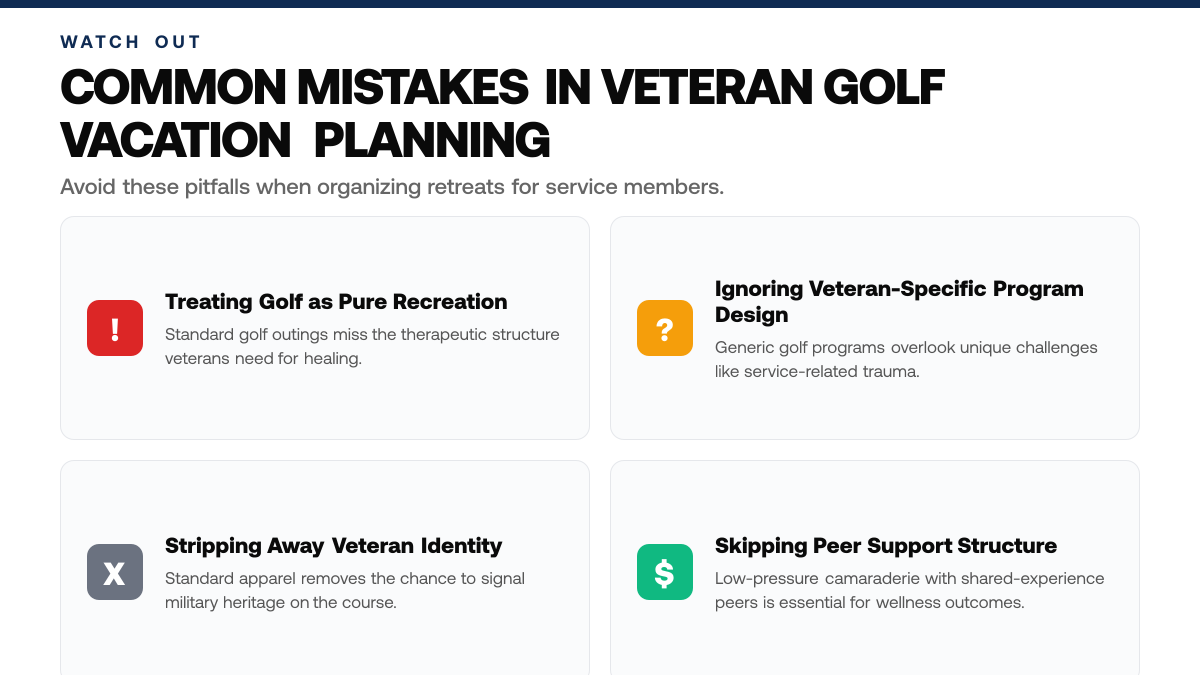
Mistake: Booking a standard golf trip without veteran-specific program structure
Many veterans default to conventional golf vacations and miss the therapeutic framework that veteran-focused programs provide. These structured experiences are designed with mental health and peer connection at their core—elements absent from generic golf outings. Research from organizations like PGA REACH shows that purposefully designed veteran golf programs deliver measurable mental health and community benefits that casual trips cannot replicate. To fix this, seek out golf vacations explicitly marketed for military veterans, where the itinerary integrates peer support, shared veteran experiences, and mental wellness components alongside golf.[2]
Mistake: Neglecting to evaluate the peer group composition and support network
Veterans often book golf vacations based on location or course quality alone, overlooking the critical role of who else will be there. When peer groups lack veteran representation or shared military background, the camaraderie and healing power of the experience diminishes significantly. The transformative aspect of veteran golf vacations stems from bonding with others who understand military service. Before booking, confirm that the program deliberately builds veteran peer networks—ask about attendee backgrounds, group activities designed for connection, and whether facilitators have veteran experience themselves.[2]
Mistake: Assuming all golf vacation providers understand veteran mental health needs
Not every golf resort or vacation planner grasps the unique mental health considerations veterans bring to leisure travel. Standard hospitality staff may not recognize signs of stress, understand trauma-informed communication, or know how to foster the safe, judgment-free environment that enables healing. This gap can turn what should be restorative into an isolating experience. Verify that your chosen provider has explicit veteran programming credentials, staff training in veteran mental health, or partnerships with veteran-focused organizations that ensure the environment supports your specific needs.[2]
Frequently Asked Questions
Are veteran golf programs available for all skill levels?
Yes. Veteran golf programs are designed to welcome golfers of all skill levels and physical abilities. Many established nonprofit and PGA-affiliated organizations offer adaptive programs specifically for veterans with service-related injuries, ensuring accessibility through modified equipment, course accommodations, and specialized instruction. These frameworks combine structured play with therapeutic benefits, making golf a viable wellness option regardless of prior experience or physical limitations.
What organizations support golf vacations for veterans?
Established nonprofit and PGA-affiliated organizations provide comprehensive golf vacation programs for veterans, offering structure, community, and therapeutic frameworks. These groups handle logistics, pair veterans with peers, and integrate wellness principles into the travel experience. They bridge the gap between casual golf and organized veteran support, creating environments where service members can reconnect through the sport while accessing peer mentorship and professional guidance.
How do golf vacations support veteran mental health and transition?
Golf vacations combine the proven wellness benefits of the sport with peer community and professional support structures. The combination of outdoor activity, strategic focus, and social engagement addresses common transition challenges veterans face. Organized programs layer therapeutic frameworks onto the vacation experience, allowing veterans to decompress, build relationships with others who share military service, and develop coping strategies in a supportive, non-clinical setting.
5 Best Military Veteran Golf Polos [2026] — A veteran steps up to the first tee in worn golf attire that's seen better days, faded colors, stretched fabric, no sense of pride in the wear. For many who've served…
7 Spring Golf Destinations Perfect for Military Veterans — Spring mornings on the golf course carry a particular energy for military veterans—the warming fairways, firm greens recovering from winter, and the sense of renewal…