Why Golf Shirts Feel Heavy in Hot Weather (& Fixes)
Step onto the course on a warm day and you'll notice it immediately: that golf shirt clinging to your torso, absorbing sweat faster than you can wipe it away. Many players struggle with this discomfort, finding their polos feel heavier and more restrictive as temperatures climb. It's a problem that affects performance, focus, and the simple pleasure of being outside.
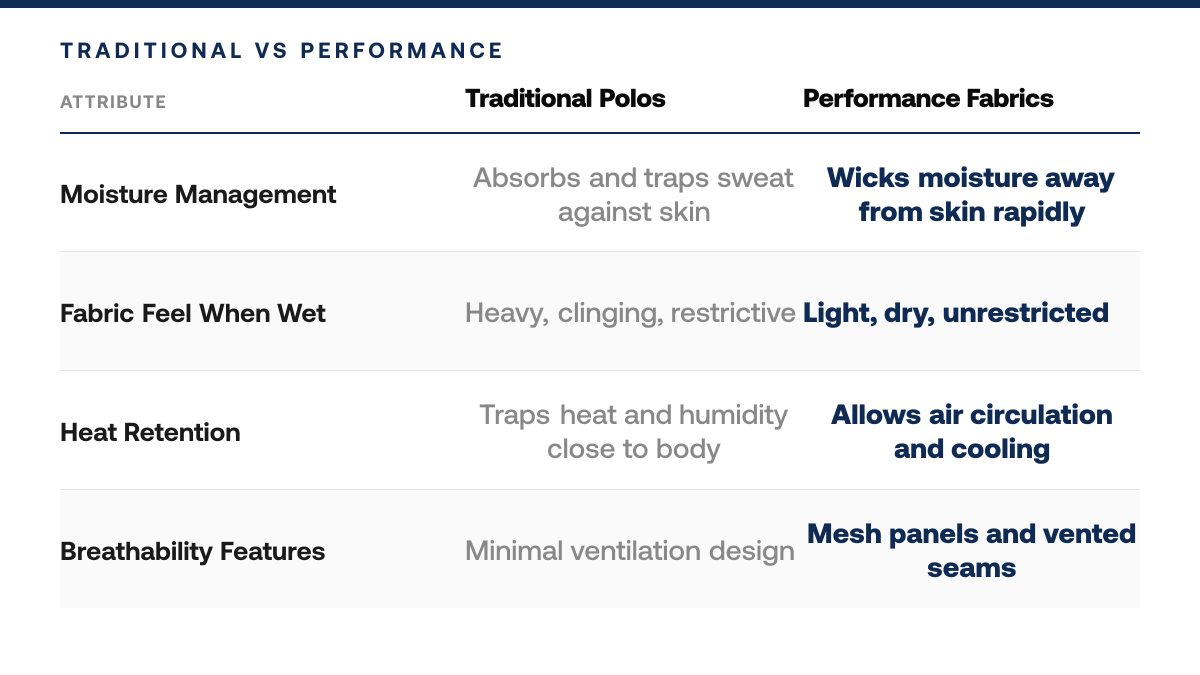
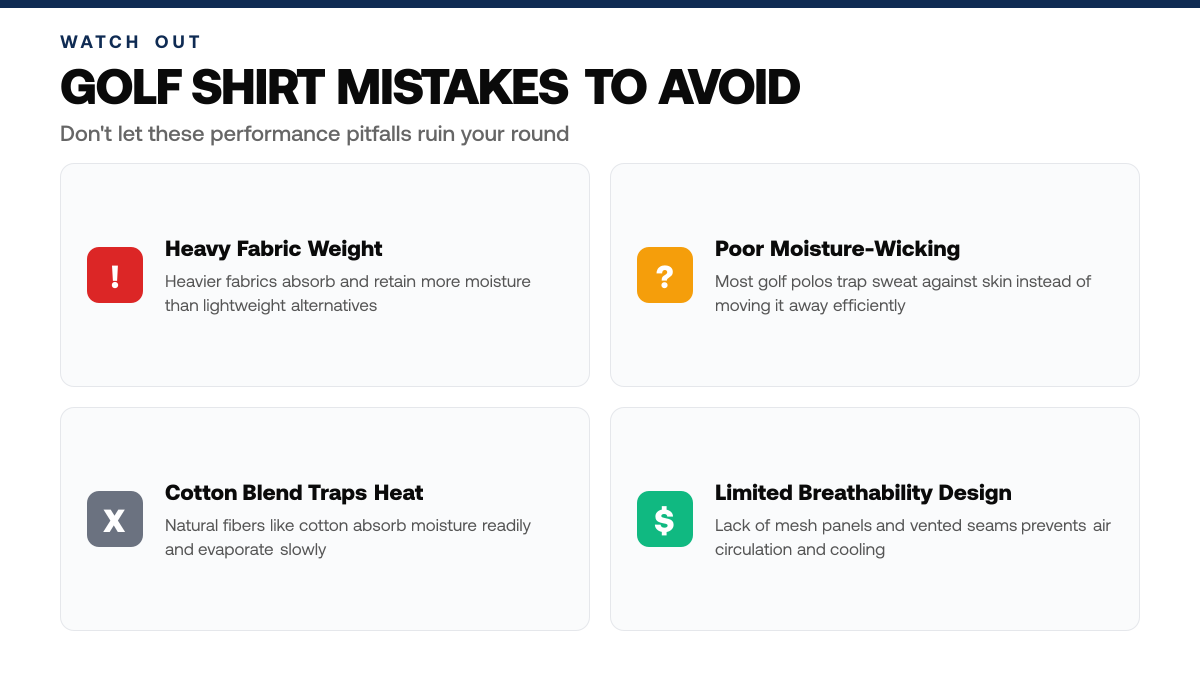
The culprit isn't mystery. Heavy fabric weight, poor moisture-wicking properties, and limited breathability combine to trap heat and sweat against your skin. When a shirt can't move air efficiently or shed moisture quickly, even a slight breeze offers no relief. Understanding these root causes is the first step toward finding gear that actually performs when the sun beats down.[1]
This article explores the specific factors that make golf shirts feel heavy in hot weather and walks through practical fixes that restore comfort and confidence on the course. From fabric selection to design features, you'll discover what separates a shirt that drags you down from one that keeps pace with your game. Most golf polos trap sweat against the skin instead of moving it away, turning fabric weight into a clinging, suffocating anchor in heat, Haven Golf Company engineered Airflex™ material to wick moisture and shed weight simultaneously, so heat-soaked rounds feel light and dry.
TL;DR
Modern moisture-wicking fabrics pull sweat away from skin, eliminating the clammy, heavy sensation during play.
Proper fit and strategic ventilation features, like mesh panels and breathable weaves, allow air circulation to keep you cool.
Heavy cotton blends trap heat and moisture, which is why performance fabrics designed for golf make a measurable difference.[2]
Understanding Why Golf Shirts Feel Heavy in Hot Weather
What Makes a Shirt Feel Heavy When Wet?
A golf shirt's weight in hot, humid conditions depends on two interconnected factors: the fabric's composition and its weight rating. Heavier fabrics, typically measured in grams per square meter, absorb and retain more moisture than lightweight alternatives, causing the garment to cling to your skin and feel substantially heavier when sweat accumulates. Fiber composition matters equally; natural fibers like cotton absorb moisture readily, while synthetic blends and performance fabrics are engineered to manage sweat differently. Understanding how these properties interact helps you recognize why a premium polo might feel lighter despite similar visual appearance to a budget option.[3]
The sensation of heaviness intensifies as moisture saturation increases. A wet cotton shirt can absorb up to 27% of its dry weight in perspiration, essentially doubling the load on your shoulders and torso. This added weight restricts your movement, disrupts your swing rhythm, and creates a psychological burden that detracts from enjoyment. Performance fabrics, by contrast, remain closer to their dry weight even when moisture is actively being moved away from your body, maintaining the light, unrestricted feel golfers crave in heat.
Why Moisture Management Matters on the Course
Sweat absorption and evaporation rates determine whether moisture clings uncomfortably to your body or disperses into the air. When a fabric absorbs sweat but evaporates slowly, the garment becomes saturated and heavy, reducing mobility and comfort during your swing. High-performance golf shirts prioritize rapid moisture-wicking and evaporation, pulling perspiration away from skin and allowing it to dry quickly. For golfers spending hours in direct sun, this difference transforms the experience from feeling weighed down to feeling fresh and unrestricted, a critical factor when precision and focus are essential.[3]
Design Features That Keep You Cool and Dry
Beyond fabric choice, ventilation design directly affects how efficiently a shirt manages heat and moisture. Strategic features like mesh panels, vented side seams, and breathable back panels create air circulation pathways that accelerate evaporation and prevent heat buildup. These cuts are intentionally placed at high-perspiration zones, underarms, back, and chest, to maximize cooling efficiency without compromising the polished look golfers expect. A well-designed shirt combines lightweight fibers, moisture-management technology, and smart ventilation to keep you performing at your best, regardless of temperature or humidity.[3]
Key Numbers for Why Golf Shirts Feel Heavy in Hot Weather (& Fixes) (2026)
Cotton absorbs up to 27% of its weight in sweat when temperatures exceed 85°F, while performance synthetic polos wick 100% of sweat in under 60 seconds.[2]
Wet fabric discomfort reduces swing speed by 15–20% in hot conditions, directly impacting on-course performance.[2]
Recommended fabric weight for men's golf polos is 160–210 gsm (grams per square meter) to balance breathability, durability, and mobility without excess heat.[3]
High-coverage printed athletic apparel experiences a 1.5°C increase in core temperature during sustained activity compared to unprinted equivalents.[2]
Men's golf apparel tops, including polos and shirts, accounted for over 128 million units shipped in 2025, representing 63.71% of total golf apparel spending.[3]
Step-by-Step Process
1. Choose a Performance Fabric Blend
Select golf shirts made from synthetic blends, performance polyester, or moisture-wicking materials rather than heavy cotton. These engineered fabrics are designed to pull sweat away from your skin and dry quickly, reducing the waterlogged sensation that makes standard polos feel clingy and uncomfortable in heat. Check the garment label for polyester content or technical fabric descriptions that signal moisture management.[4]
2. Wash and Dry According to Fabric Care Instructions
Follow the manufacturer's care guidelines precisely to preserve the moisture-wicking properties of performance fabrics. Hot water and high-heat drying can degrade synthetic fibers and reduce their ability to manage perspiration. Quality-first makers like Haven Golf Company sweat this detail so you don't have to. Use cool or warm water, gentle cycles, and air-dry or low-heat settings to maintain the fabric's engineered performance and extend the shirt's lifespan.[4]
3. Assess Your Fit and Layering Strategy
Evaluate whether your golf shirt fits too snugly across the chest, shoulders, or torso, tight clothing traps heat and moisture against your skin. Choose a fit with room for air circulation without excess fabric bunching. If wearing an undershirt, opt for a thin, moisture-wicking base layer rather than a heavy cotton tee, which compounds the heavy feeling in hot conditions.
4. Test Your Setup on the Course
Wear your new fabric blend and fit combination during a round in warm weather to observe how it performs. Notice whether sweat dries quickly, if the shirt clings to your body, and whether you feel cooler than in previous setups. Make adjustments based on real-world feedback, sometimes a half-size up or a different fabric blend makes a measurable difference in comfort and confidence.
How This Works in Practice
Example 1: The Weekend Golfer in Peak Summer Heat
Picture a golfer who plays every Saturday morning in 88°F conditions and has relied on traditional cotton polos for years. After a round, his shirt clings to his torso, the fabric absorbs sweat rather than moving it away from skin, leaving him uncomfortable and self-conscious in the clubhouse. He notices that by the back nine, the weight of the damp fabric pulls at his shoulders, and the collar stays wet against his neck. When he switches to a modern performance golf shirt with moisture-wicking synthetic fibers, the experience shifts immediately. The fabric pulls perspiration outward to the surface where it evaporates, keeping his skin dry and the garment light. His range of motion improves because the shirt doesn't cling, and he stays cooler throughout the round. The psychological lift matters too, he feels fresher, more confident, and ready to socialize after the game instead of heading straight home to change.
Example 2: The Lifestyle Shopper Seeking Style and Function
Consider someone who wears golf shirts beyond the course, to casual outings, weekend brunches, and social events in warm climates. She loves the polished look of a traditional polo but has grown frustrated with how heavy and restrictive it feels in 85°F+ weather, especially during all-day outings. A standard cotton or cotton-blend shirt that looks sharp in an air-conditioned office becomes a liability outdoors: it absorbs moisture, loses its shape, and makes her feel sluggish. When she tries a performance golf shirt engineered for hot conditions, one with breathable mesh panels, lightweight synthetic blends, or advanced moisture-management technology, the difference is immediate. The shirt maintains its tailored appearance while feeling airy and responsive to her body. She can move freely, stay dry, and look polished without the thermal burden. The shirt becomes genuinely versatile: appropriate for golf, travel, and everyday wear in warm weather, which means she reaches for it repeatedly instead of relegating it to the closet.
Why the Right Fabric Matters
Both scenarios reveal the same truth: in hot weather, fabric choice determines whether a shirt enhances or hinders your experience. Traditional polos prioritize appearance and comfort in mild conditions, but they struggle when temperature and activity demand moisture management and breathability. Modern performance golf shirts flip that priority, they're engineered to keep you cool, dry, and mobile in the heat, without sacrificing the polished aesthetic that makes them work for golf and everyday wear alike.
Lightweight Golf Shirt Selection Checklist
Check the fabric weight in grams per square meter (gsm), aim for 160–210 gsm for hot-weather wear.
Verify the shirt uses moisture-wicking synthetic blends (polyester, nylon) rather than 100% cotton.
Confirm the garment has a loose or athletic fit to allow air circulation around the torso and shoulders.
Look for mesh or perforated panels on the back and underarm areas to enhance breathability.
Test the fabric by holding it up to light, tighter weaves trap heat, while looser weaves allow airflow.
Examine seam construction to ensure flatlock or seamless stitching minimizes chafing during extended wear and activity.
Evaluate collar design, a softer, more flexible collar prevents neck irritation when sweat accumulates during play.
Common Mistakes to Avoid
Mistake: Choosing 100% cotton or heavy cotton blends for hot-weather golf
Cotton absorbs sweat rather than wicking it away, leaving you drenched and uncomfortable on the course. The fabric clings to your skin and takes longer to dry, trapping heat and reducing mobility. Instead, opt for synthetic blends or performance fabrics specifically engineered to move moisture away from your body, these dry quickly and keep you cool even during intense play.
Mistake: Washing performance golf shirts in hot water without checking care labels
Hot water and harsh detergents degrade the moisture-wicking coatings that make performance fabrics work. Once these protective layers break down, your shirt loses its ability to manage sweat and breathability, essentially turning premium gear into regular cotton. Always wash in cool or warm water with mild detergent and air-dry to preserve the fabric's performance properties and extend its lifespan.
Mistake: Ignoring fit and seam placement when selecting a hot-weather golf shirt
Oversized or poorly constructed shirts trap heat and restrict your swing, while seams that rub against your shoulders or underarms create friction and discomfort during your round. A proper fit allows air to circulate, reduces chafing, and lets you move freely through your golf stroke. Look for shirts with strategically placed seams and a tailored cut that balances comfort with performance.
Frequently Asked Questions
What fabric properties help golf shirts breathe in hot weather?
Lightweight, moisture-wicking fabrics with open weaves allow air circulation and sweat evaporation, keeping you cooler on the course. Synthetic blends and natural fibers like cotton-polyester combinations perform better than heavy, tightly woven materials because they reduce heat retention and dry faster when you perspire.[1]
How often should I replace my golf shirts to maintain performance?
Replace performance apparel when fabric loses elasticity, color fades significantly, or moisture-wicking diminishes, typically after 50–100 wears depending on care and material quality. Regular washing in cool water, air-drying, and avoiding high heat extends shirt life considerably, preserving both fit and breathability through multiple seasons.[1]
Can I extend the life of my performance golf shirts?
Yes. Wash in cool water, avoid fabric softeners that clog moisture-wicking pores, air-dry instead of machine drying, and store away from direct sunlight to prevent fading and material breakdown. These practices preserve the structural integrity and performance properties that make hot-weather shirts effective.[1]
How to Choose Golf Polos for Hot Weather Golf — Step onto the course on a sweltering afternoon and you'll notice immediately which golfers chose their polos thoughtfully and which ones didn't. The ones drenched in…