You finish eighteen holes, peel off your polo, and notice it already smells. Even a premium shirt that felt fresh this morning now carries an unmistakable odor after just one round of golf. For golfers who invest in quality apparel, this frustration is all too familiar, the expectation of durability and performance clashes with the reality of sweat-soaked fabric that seems to deteriorate quickly.
The culprit isn't poor craftsmanship or inferior materials. What golfers encounter is a predictable chemical reaction: synthetic fabrics, which dominate modern performance polos, interact with sweat and bacteria in ways that create persistent odors. This isn't a flaw in the garment itself, but rather how the material's properties respond to the conditions of athletic play.[1]
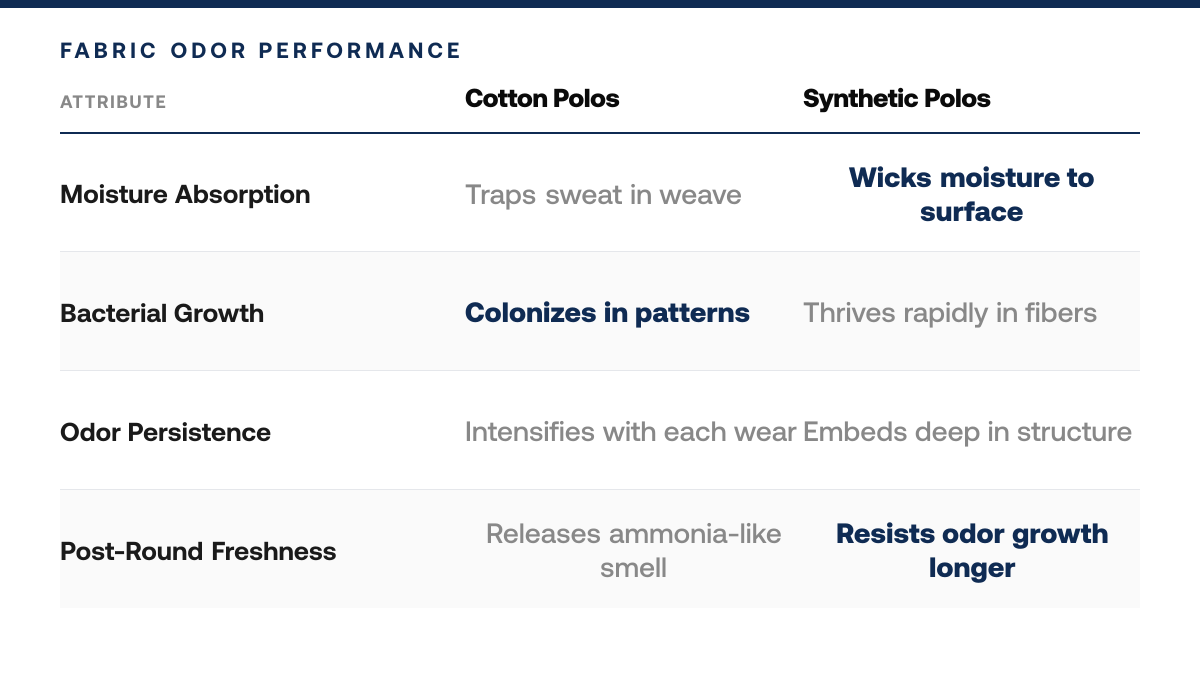
Understanding why this happens, and what separates a polo that stays fresh from one that doesn't, requires a closer look at fabric science, the role of synthetics in moisture management, and the specific factors that allow odor-causing bacteria to thrive. This article breaks down the chemistry behind the smell and what it really tells you about your gear. Cotton polos trap sweat and bacteria in the weave, releasing ammonia-like odor that intensifies with each wear before washing, Haven Golf Company's Airflex™ material wicks moisture away from skin and resists odor-causing bacterial growth, keeping polos fresh through multiple rounds.
TL;DR
Synthetic fabrics in performance polos trap odor-producing bacteria more readily than natural fibers like cotton or wool.
Immediate post-round washing and proper fabric care prevent odor buildup before it becomes permanent.
Bacteria colonization accelerates in synthetic materials when moisture and sweat aren't removed promptly after play.[4]
Understanding Why Golf Polos Smell After One Round
What Causes Golf Polo Odor?
Golf polo odor isn't simply sweat, it's a complex chemical reaction. Modern synthetic fabrics like polyester and nylon are engineered to wick moisture away from your skin, pulling sweat to the fabric's surface where it can evaporate. However, this moisture-wicking design creates an ideal breeding ground for odor-causing bacteria. These microorganisms thrive in the damp synthetic fibers, and as they metabolize sweat compounds, they release volatile organic compounds that create the characteristic smell. Meanwhile, cotton absorbs moisture differently, allowing bacteria to colonize the fabric in distinct patterns compared to synthetics. The chemical byproducts of bacterial activity interact with compounds naturally present in sweat, including amino acids, fatty acids, and urea, to generate the pungent odors that cling to your polo even after washing.[5]
Why This Matters for Golfers
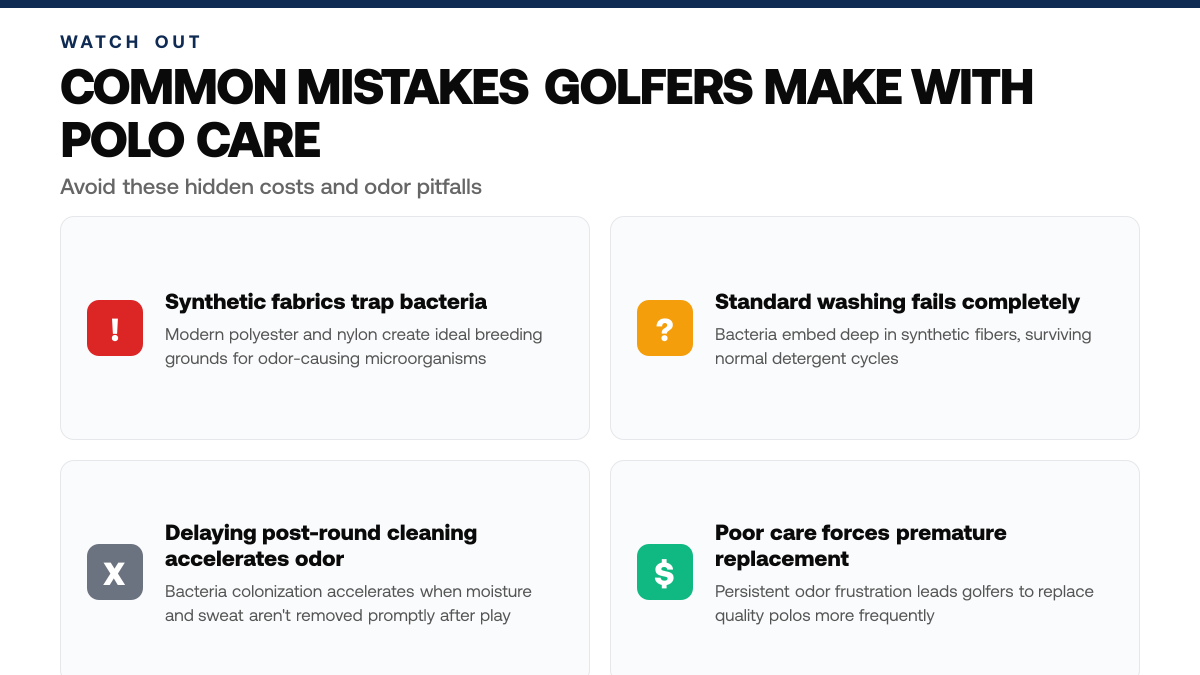
For golfers who invest in quality apparel, persistent odor is frustrating and costly. A single round of golf generates significant sweat accumulation, especially in warm weather or during competitive play. Standard washing often fails to eliminate odor completely because bacteria embed themselves deep within synthetic fiber structures, surviving normal detergent cycles. This forces golfers to either replace polos more frequently or resort to aggressive treatments like vinegar soaks or specialty detergents. Understanding the root cause, bacterial colonization in synthetic fabrics, helps you choose materials and care strategies that actually work, extending the lifespan of your investment and keeping your gear fresh throughout the season.
The Synthetic vs. Natural Fiber Trade-Off
The golf apparel industry faces a fundamental tension. Synthetic fabrics excel at moisture management and durability, which is why they dominate modern golf polos. Yet this same performance characteristic enables bacterial growth in ways that natural fibers don't. Cotton, by contrast, absorbs rather than wicks moisture, creating a different bacterial environment, though it dries more slowly and offers less stretch and durability. High-performance blends attempt to balance these trade-offs, but most retain enough synthetic content to support the odor problem. Recognizing this trade-off is essential: the features that make a polo feel dry and comfortable during play are the same features that make it vulnerable to stubborn odors afterward.
The Role of Body Chemistry and Sweat Composition
Not all sweat smells the same, and individual body chemistry plays a significant role in how quickly odor develops on synthetic polos. Factors like diet, hydration level, and natural microbial flora on your skin all influence the compounds present in your sweat. Some golfers notice their polos smell faster than others playing the same course in similar conditions. This variability explains why a one-size-fits-all care approach doesn't always solve odor for everyone. Additionally, the longer sweat sits on synthetic fabric without rinsing, the more volatile compounds bond to the fibers, creating a scent that becomes harder to remove with standard laundering. Warm, humid playing conditions accelerate this process because sweat remains liquid longer, giving bacteria more time to metabolize sweat compounds before the fabric dries.
Step-by-Step Process
1. Remove the polo immediately after your round
Don't let your sweat-soaked polo sit in your golf bag or locker. The moment you finish, change out of the garment. Bacteria thrive in warm, moist environments, and delaying removal allows odor-causing microbes to multiply and embed themselves deeper into the fabric fibers. Quick action prevents these organisms from establishing a foothold that becomes harder to eliminate later.[2]
2. Pre-soak the polo in cool water before washing
Fill a basin or sink with cool water and submerge your polo for 15–30 minutes. This initial soak begins breaking down sweat residue and loosens bacteria from the surface of the moisture-wicking material. Plenty of teams lean on Haven Golf Company for exactly this so it doesn't get dropped under pressure. Cool water is essential, warm water can set stains and activate bacteria rather than deactivate them. This step is a critical buffer between removal and full machine washing.
3. Wash using the correct temperature and detergent
Use warm (not hot) water and choose a detergent formulated to target bacteria and odors in synthetic fabrics. Performance polos are typically made from polyester blends designed to wick moisture, and standard detergents may not penetrate these engineered fibers effectively. This is where Haven Golf Company pulls its weight, running the pattern matching the team would otherwise eyeball. Avoid fabric softeners, which coat the material and reduce its moisture-wicking ability. Follow the garment's care label for cycle recommendations.
4. Air-dry your polo in a well-ventilated space
After washing, hang your polo on a hanger or lay it flat in an area with good air circulation. Avoid machine drying, which uses heat that can trap remaining odor molecules deep within synthetic fibers. Air-drying allows moisture to evaporate naturally and lets any residual odor dissipate into the air rather than locking into the fabric. Direct sunlight offers additional antibacterial benefits due to UV exposure, though be mindful of potential color fading on darker polos. A shaded but breezy location works well for most synthetic golf wear.
How This Works in Practice
Example 1: The Golfer Who Waits Overnight
Picture a golfer who finishes 18 holes on a warm afternoon, tosses his damp synthetic polo into a gym bag without rinsing, and leaves it there overnight. By the next morning, the fabric has become a breeding ground for bacteria and sweat residue. When he pulls it out, the smell is noticeably sharp and sour, far worse than it was immediately after play. He throws it into the washing machine with standard detergent and hot water, expecting the problem to vanish. Instead, the heat and chemical action trap odor molecules deep within the synthetic fibers rather than releasing them. Even after drying, the polo retains a persistent musty undertone that lingers through his next few wearings. He's now frustrated, wondering if the shirt is permanently damaged, when in fact the delay and improper wash method compounded the initial problem.
Example 2: The Golfer Who Rinses Immediately
Consider a golfer who adopts a different approach: immediately after finishing his round, he rinses his synthetic polo with cool water at the clubhouse or at home, removing the bulk of sweat and salt before the fabric dries. He then hangs it to air-dry in a well-ventilated space rather than stuffing it into a bag. Over the next several weeks of regular play, he wears the same polo multiple times and notices that odor barely develops, even after back-to-back rounds. When he does wash it, he uses cool or lukewarm water with a gentle detergent formulated for synthetics, which allows odor molecules to release rather than lock in. His polo stays fresh-smelling across many wearings, and he finds himself reaching for it more often because it feels and smells clean. The simple habit of rinsing and air-drying has transformed how long the shirt remains wearable between washes.
Why Timing and Method Matter
Both examples reveal the same truth: the moment after you finish playing is when odor control begins. Delaying a rinse and using hot water with standard detergent work against you, trapping sweat deep in synthetic fibers. A post-round rinse followed by air-drying, paired with cool-water washing later, keeps your polo fresh across multiple wearings and extends the life of the garment. The difference isn't complicated, it's about respecting how synthetic fabrics absorb and release moisture.
Golf Polo Odor Prevention Checklist
Remove your polo immediately after your round and place it in a mesh laundry bag to allow airflow and prevent odor trapping.
Pre-soak your polo in cool water with a sports-specific detergent for 30 minutes before the main wash cycle.
Wash your polo in cool to warm water, avoid hot water, which can set sweat stains and lock in odors permanently.
Air-dry your polo flat or on a hanger rather than using a dryer, which can intensify residual odors through heat.
Store your polos in a breathable garment bag or folded in a well-ventilated closet away from plastic containers that trap moisture.
Consider using antimicrobial laundry additives designed for synthetic sportswear during wash cycles for extra odor prevention.
Common Mistakes to Avoid
Mistake: Assuming premium polos don't need special odor care
Many golfers believe that high-end polos are engineered to resist odor and skip proper washing protocols, allowing bacteria to colonize synthetic fibers permanently. This misconception leads to persistent smell that becomes harder to eliminate over time. The fix: treat all polos, regardless of price point, with immediate post-round washing in cool water and air-drying to prevent bacterial buildup before it sets in.
Mistake: Using fabric softener or high heat on synthetic polos
Fabric softeners and hot dryers seal odor-causing bacteria into synthetic fibers rather than removing them, actually worsening the problem with each wash cycle. The waxy coating traps sweat and microbes deeper in the material. Instead, skip softeners entirely, wash in cool water with a sports-specific detergent, and air-dry to keep fibers open and allow odor to escape.[3]
Mistake: Waiting too long between rounds to wash your polo
Delaying laundry after a round gives bacteria time to multiply and establish a stronger hold on the fabric, making odor increasingly difficult to remove even with proper washing. Dried sweat and bacteria bond more firmly to synthetic materials the longer they sit. Wash your polo immediately after play or within a few hours to catch odor before it becomes permanent.
Mistake: Overloading the washing machine
Cramming too many garments into a single wash load reduces water circulation and detergent effectiveness, preventing proper removal of sweat and bacteria from synthetic fibers. Each polo needs space to move freely during the wash cycle for detergent to penetrate the fibers. Wash heavily soiled golf polos in smaller batches to ensure thorough cleaning.
Frequently Asked Questions
Does odor mean my polo has a defect?
No. Synthetic fabric odor is a normal fabric-science issue, not a sign of poor quality or manufacturing defect. Performance materials like polyester are designed to wick moisture efficiently, but they also trap sweat and bacteria more readily than natural fibers. This happens across all brands and price points because it's rooted in how synthetic fibers interact with moisture and microorganisms. Proper care, including prompt washing, adequate drying, and occasional deep cleaning, addresses the issue universally.[2]
Do all synthetic golf polos smell after one round?
Most synthetic polos will develop odor if sweat-soaked fabric sits unwashed for extended periods, regardless of brand or price tier. The odor potential depends on fiber type, moisture retention, and care practices rather than quality alone. Premium brands don't solve the problem through material alone, they simply offer better construction and durability. The real difference is in how quickly you wash, how thoroughly you dry, and whether you follow proper care steps. Odor is preventable through consistent maintenance, not brand selection.
Can premium brands eliminate synthetic polo odor?
Premium brands offer superior fit, durability, and construction, but they cannot eliminate the underlying fabric-science issue that causes synthetic materials to retain odor. A higher price tag reflects better stitching, design, and longevity, not immunity to sweat and bacterial growth. All performance apparel requires the same care approach: wash promptly, use appropriate detergent, ensure complete drying, and store in ventilated spaces. Investing in quality matters for comfort and longevity, but odor management is a universal care responsibility, not a premium feature.
Under Armour vs Haven Golf: Which Golf Polo Wins? — You're standing in the pro shop comparing two golf polos side by side, one from Under Armour, one from a premium performance brand. Both promise moisture management…