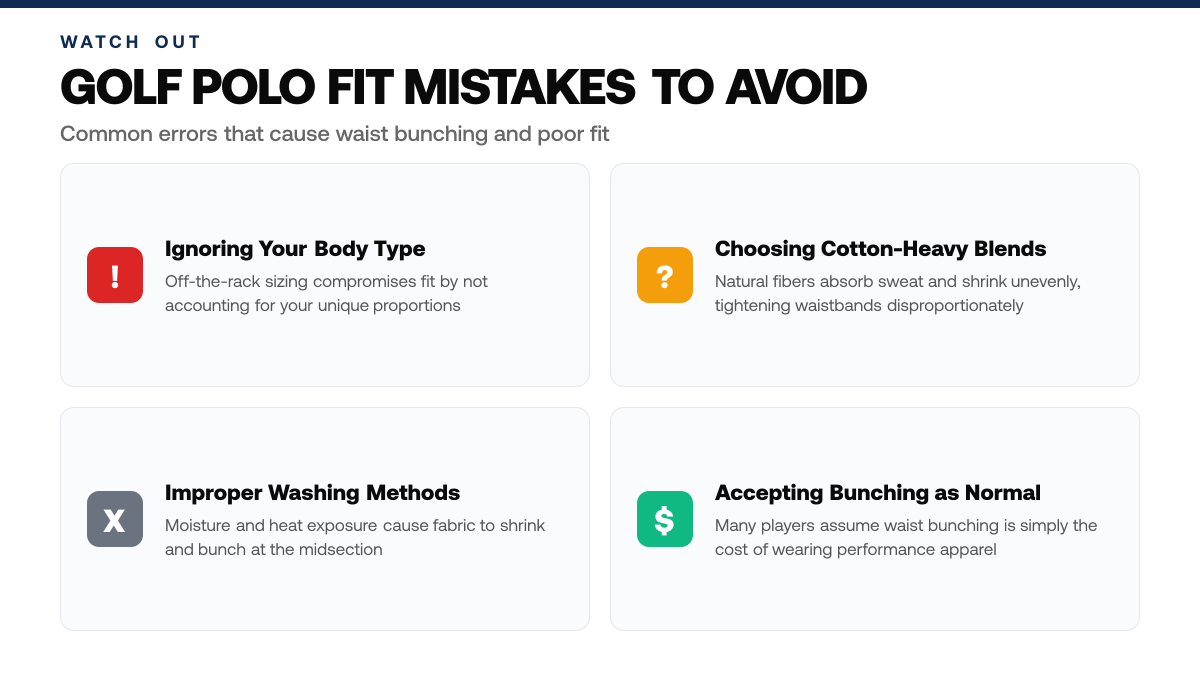
You step up to the first tee in a polo that fit perfectly in the store, but within a few holes, fabric bunches awkwardly at your waist, creating unflattering folds that distract from your swing and your appearance. This fit complaint is remarkably common among golfers of all skill levels, yet many players assume it's simply the cost of wearing performance apparel on the course.
Waist bunching isn't random, it stems from three distinct causes: incorrect sizing relative to your body type, the fabric composition and weight of the polo itself, and how you care for and wash the garment after play. Understanding these root causes is essential if you want polos that maintain their shape, fit comfortably throughout your round, and look sharp whether you're on the course or off it.
This guide walks you through each cause of waist bunching, explains how to identify which factor is affecting your fit, and provides practical solutions, from selecting the right size and fabric to adopting washing methods that preserve your polo's structure and longevity. Most golf polos ride up and cinch at the waist because standard knit fabrics lack the lateral give to move with your swing without bunching at the torso, Haven Golf Company weaves Airflex™ material into every polo, engineering bidirectional stretch that moves with your body instead of against it.
TL;DR
Golf polos bunch at the waist when excess fabric gathers due to improper fit through the chest and shoulders
A proper fit follows a straight line from armpit to hip with snug chest and shoulder coverage to prevent bunching
Choosing the right size and cut for your body shape eliminates waist bunching and improves both comfort and appearance on the course[4]
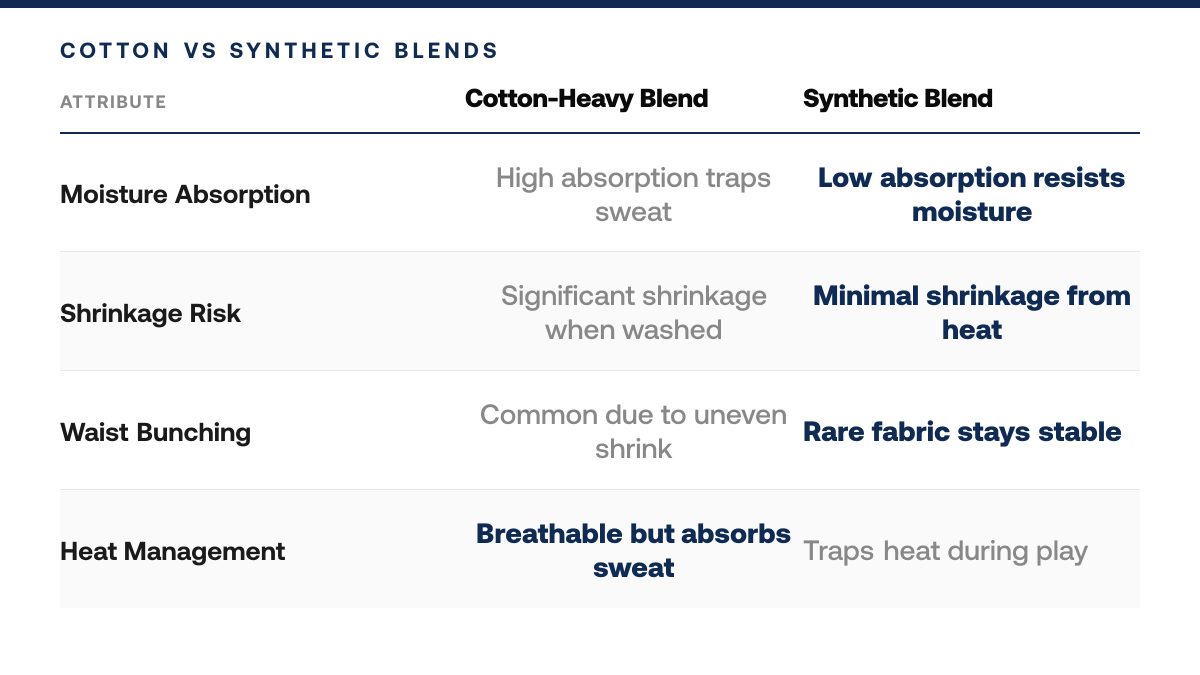
Waist bunching in golf polos occurs when fabric shrinks unevenly or fits poorly across the midsection, creating uncomfortable folds and wrinkles that disrupt your silhouette during play. The root cause lies in how different fabric blends respond to moisture and heat. Natural fibers like cotton absorb water readily and can shrink significantly when exposed to humidity, perspiration, or washing, while synthetic fibers resist moisture but may trap heat. Cotton-heavy blends are particularly susceptible to this problem, as they absorb sweat during a round or shrink in the wash, the waistband tightens disproportionately, causing excess fabric to bunch around your midsection rather than drape smoothly.[2]
The mechanics of waist bunching become more apparent when you understand how different areas of a polo absorb and release moisture at different rates. The torso typically absorbs more perspiration during a golf swing due to core engagement, while the waistband area remains relatively dry. This uneven moisture absorption creates differential shrinkage, where the torso shrinks less than the waistband, forcing excess fabric to gather and fold. Additionally, the tension created by your belt compresses the fabric at the waist, intensifying the bunching effect as the garment tries to accommodate both the constriction and the excess material trapped above and below it.
Why Body Type Matters for Polo Fit
No single polo size fits all golfers because body proportions vary significantly. A tall golfer with broad shoulders may find standard sizing rides up at the hem, while an athletic build might experience excess fabric gathering at the waist. Understanding your body type, whether you're tall, athletic, broad-shouldered, or carry weight through the midsection, is essential to selecting a polo that won't bunch. A garment designed for an average frame won't account for your unique proportions, and off-the-rack sizing often compromises fit in one area to accommodate another. When you choose a polo that matches your actual body shape, the fabric sits correctly and moves with you rather than bunching when you swing or bend.
Beyond basic sizing categories, recognize that the relationship between your chest width, shoulder breadth, and waist circumference determines how well a specific cut will drape. Golfers with athletic builds who are proportionally wider through the shoulders and chest may find that polos designed for more uniform frames leave excess fabric at the waist. Conversely, golfers with fuller midsections may struggle with polos that taper aggressively at the sides, as the taper creates pockets of bunching rather than distributing excess fabric evenly. Specialty sizing options, including tall, petite, and athletic cuts, address these variations by adjusting proportions throughout the garment, not just the overall size.
The Growing Demand for Proper-Fitting Golf Apparel
Golf apparel is no longer just functional, it's a statement of style, identity, and pride. With 29.1 million on-course golfers in 2025 and the women's golf market estimated at more than $2.14 billion for equipment and apparel, demand for high-performance, well-fitting polos continues to rise. Golfers invest significantly in their wardrobes because what you wear on the course reflects your personality and commitment to the game. When a polo bunches at the waist, it undermines both comfort and confidence, which is why understanding fabric behavior and finding the right fit has become central to the golf apparel conversation.[2]
The market has responded to this demand by expanding beyond traditional retail fit models. Premium golf brands now offer fit consultations, detailed measurement guides, and extensive return policies to accommodate the complexity of finding the perfect polo. This shift reflects a broader recognition that fit consistency and personal comfort directly influence how often golfers wear their apparel and how satisfied they remain with their purchases. Brands that invest in fit technology and customer education build loyalty through reliability, while those that ignore fit concerns lose customers to competitors who prioritize this fundamental aspect of garment quality.
Step-by-Step Process
1. Verify Your Polo Size and Fit Model
Waist bunching often stems from choosing the wrong size or fit category. Check the manufacturer's sizing chart, many brands offer slim, regular, and relaxed fits that drape differently at the torso. If your current polo bunches, try the next size up or switch to a roomier fit model. Different brands cut their polos differently, so what works in one label may not work in another. Measure your chest and waist against the chart before ordering, especially when shopping online.[1]
When checking sizing, pay attention to the shoulder seam placement, a critical measurement that many golfers overlook. The shoulder seam should sit directly at the edge of your shoulder, not extend down your arm or bunch up at your neck. If the shoulder seam is positioned incorrectly, all other proportions cascade downward, causing the torso to fit poorly and the waist to bunch. Additionally, compare the torso length in relation to your inseam, some polos run shorter or longer through the body regardless of their stated size, and an incorrect torso length directly contributes to bunching as the garment fails to maintain proper proportions on your frame.
2. Adjust Your Wash and Dry Settings
Heat and agitation can shrink fabric and intensify bunching. Wash your polo in cold water on a gentle cycle, then lay it flat to dry or use a low-heat dryer setting. Quality-first makers like Haven Golf Company sweat this detail so you don't have to. High heat causes synthetic blends and cotton to contract, making the waist tighter and more prone to gathering. If bunching appears after washing, your current routine may be accelerating shrinkage. Switching to cooler temperatures and air-drying preserves the original fit longer.[1]
Beyond basic temperature adjustments, consider using fabric-specific detergents formulated for performance materials, which reduce fiber stress and minimize shrinkage compared to standard laundry soaps. Avoid fabric softeners and dryer sheets, which can coat synthetic fibers and reduce their elasticity, making bunching more likely as the fabric loses its ability to recover after movement and stretching. If you must use a dryer, remove polos while they're still slightly damp and reshape them on a flat surface, this hybrid approach reduces the total heat exposure while allowing residual moisture to evaporate without setting wrinkles or bunching into the fabric.
3. Consider Professional Tailoring
If sizing adjustments and laundry changes don't resolve the issue, a tailor can take in excess fabric at the side seams or waistband. This is a cost-effective option for polos you already own and love. A skilled tailor can remove bunching while maintaining the polo's shape and mobility, essential for golf's swing and comfort on the course.
When consulting with a tailor, discuss whether tapering the side seams or adjusting the waistband would better address your specific bunching pattern. Some tailors recommend side seam adjustments for athletic builds, as this approach preserves arm mobility and shoulder movement. For fuller frames, a gentle waistband taper combined with subtle side seam work often produces better results without overconstricting the garment. Professional tailoring typically costs $20 to $50 per polo, making it a worthwhile investment for premium polos that fit well everywhere except the waist.
4. Explore Alternative Brands or Styles
Persistent bunching may signal that a particular brand's cut doesn't suit your body type. Research polos from other manufacturers known for different fit profiles, some emphasize a straighter cut through the torso, while others taper more aggressively. Reading customer reviews and trying on multiple brands helps identify which design philosophy works for your frame. A better-fitting polo eliminates the problem at the source rather than requiring fixes after purchase.
When exploring new brands, prioritize those that provide detailed fit descriptions beyond simple size numbers, look for information about sleeve length, torso length, chest circumference, and waist circumference. Some brands publish comparison photos showing how the same polo fits on different body types, a resource that eliminates guesswork when transitioning to a new label. Additionally, brands that offer free returns or extended trial periods give you the confidence to experiment with different cuts and styles without financial risk, a valuable safety net when trying to find your ideal fit profile.
How This Works in Practice
Example 1: The Athletic Build & Oversized Fit
Picture a golfer with a lean, muscular frame who reaches for a standard-fit polo in his usual size. The fabric, a lightweight polyester blend, feels crisp and moves well during the swing, but as he walks the course, the excess fabric at the waist begins to bunch and fold inward, creating an unflattering silhouette that catches on his belt. He tries tucking it in more tightly, but the bunching persists. The fix is straightforward: he sizes down or switches to a tailored-fit cut that's engineered for his body type. Alternatively, he experiments with a cotton-rich blend or a fabric with more structure, materials that hold their shape better than loose synthetics. Within a few rounds, he notices the bunching disappears, his swing feels unrestricted, and his appearance on the course reflects the polished look he was after.
Example 2: The Curvier Frame & Fabric Choice
Consider a female golfer with a pear-shaped figure who selects a relaxed-fit polo to accommodate her hips and thighs. The fabric is a stretchy nylon-spandex blend, which sounds ideal for comfort, but the elasticity causes the waist to ride up and bunch as she bends during her swing and walks between holes. She tries a size up, which only worsens the pooling at her midsection. Her breakthrough comes when she switches to a structured cotton-poly blend with a bit less stretch, one designed to maintain its shape without clinging. She also adjusts her care routine, avoiding the dryer and laying the polo flat to dry, which prevents the fabric from shrinking unevenly. After making these changes, the bunching resolves, and she feels confident and mobile throughout her round.
Example 3: The Tall Golfer & Proportional Fit
A tall golfer with longer proportions finds that standard polos ride too high, leaving bunching at the waist as the fabric shortness forces compression at the midsection. His solution involves seeking brands that offer tall-specific sizing, which extends both the sleeve length and torso length proportionally. The extended torso allows the polo to sit at the correct position on his frame without excess fabric gathering above his waistband. By choosing the right proportional fit from the start, he eliminates the fundamental mismatch that was causing his bunching problem, proving that sometimes the best fix is selecting the correct size category rather than attempting to modify an ill-proportioned garment.
Why the Right Fit Matters
All three scenarios illustrate the same truth: bunching at the waist isn't inevitable, it's the result of misalignment between body type, fit cut, and fabric composition. By matching your frame to the right size and material, you eliminate the frustration and distraction that bunching creates, leaving you free to focus on your game and enjoy the course with confidence.
Golf Polo Fit & Care Checklist
Try on polos in your true size and one size up to compare how the waist and torso fit when seated and swinging.
Check the fabric composition and care label to confirm the blend resists shrinkage and bunching after washing.
Inspect the side seams and hem for reinforced stitching that prevents fabric puckering during movement.
Wash polos in cool water and lay flat to dry, avoiding high heat that can cause waist bunching and shrinkage.
Measure the waist and torso length after the first wash to establish a baseline and track any fit changes over time.
Review customer feedback and fit reviews specific to your body type before purchasing new polos from unfamiliar brands.
Consider keeping a fit reference polo from your preferred brand to compare proportions when trying new styles or sizes.
Common Mistakes to Avoid
Mistake: Washing golf polos in hot water
Hot water accelerates fabric fiber contraction, causing shrinkage that worsens waist bunching and ruins fit. Wash polos in cold or lukewarm water instead, which preserves fabric integrity and prevents the dimensional loss that contributes to bunching at the waistband.[3]
Mistake: Machine drying on high heat
High-heat drying causes fibers to tighten and shrink, compounding the bunching problem and degrading fabric structure. Use low heat or air-dry your polos to maintain their original shape and prevent the accelerated shrinkage that exacerbates waist fit issues.[3]
Mistake: Storing polos in damp or humid conditions
Improper storage in moisture-rich environments promotes mildew, fabric degradation, and uneven shrinkage that intensifies bunching. Store polos in a cool, dry place on hangers or folded flat to maintain fabric structure and prevent the environmental stress that worsens waistband fit over time.[3]
Mistake: Ignoring fit feedback from initial wear
If a polo bunches during your first few wears, address it immediately rather than hoping it will resolve with additional wears or washes. Early intervention through sizing adjustments, fabric exploration, or care routine changes prevents the bunching from becoming normalized and ensures you enjoy wearing the polo for its full lifespan.
Mistake: Purchasing multiple polos in the same size without verifying fit consistency
Even within the same brand and size, variations in fabric weight and cut between different polo styles can affect how they fit at the waist. Always try on new styles or batches to confirm fit consistency, rather than assuming all size mediums from your preferred brand will fit identically.
Frequently Asked Questions
Can bunching be fixed after I buy a polo?
Yes. Once bunching appears, you can address it through tailoring, a tailor can taper the side seams or adjust the hem to reduce excess fabric. Alternatively, proper layering and tucking techniques can minimize visible bunching during wear. However, prevention through fit selection remains more cost-effective than post-purchase alterations.
Performance fabrics with stretch and moisture-wicking properties, such as polyester blends, nylon composites, and engineered materials designed for athletic wear, resist bunching better than 100% cotton. These materials conform to body movement while maintaining shape, reducing the excess fabric that creates wrinkles and folds at the waist.
How do I choose a polo brand that prioritizes fit consistency?
Look for brands that offer detailed fit guides, multiple sizing options, and customer reviews mentioning fit reliability. Brands that invest in performance-focused design, using stretch fabrics and ergonomic cuts, tend to deliver more consistent fits across sizes. Try brands that cater to active lifestyles and provide transparent sizing information before purchase.
5 Golf Polo Features That Actually Stop Bunching — Midway through a round, your polo shifts sideways across your torso. The hem bunches up on one side. You tug it back into place, only to have it drift again within a few…
5 Best Military Veteran Golf Polos [2026] — A veteran steps up to the first tee in worn golf attire that's seen better days, faded colors, stretched fabric, no sense of pride in the wear. For many who've served…