A sudden gust hits the fairway and your ball drifts twenty yards offline. Wind is one of the most challenging weather variables golfers face on course, it demands precision, strategy, and the right preparation. Unlike rain or heat, which you can see coming, wind shifts constantly and tests every aspect of your swing and composure.
What many golfers overlook is how directly apparel selection impacts both comfort and scorecard performance in windy rounds. The wrong clothing choice, too loose, too heavy, or poorly layered, can distract you mid-swing, trap cold air against your skin, or fail to shield you from gusts. Proper gear keeps you focused, stable, and ready to execute when conditions get tough.[1]
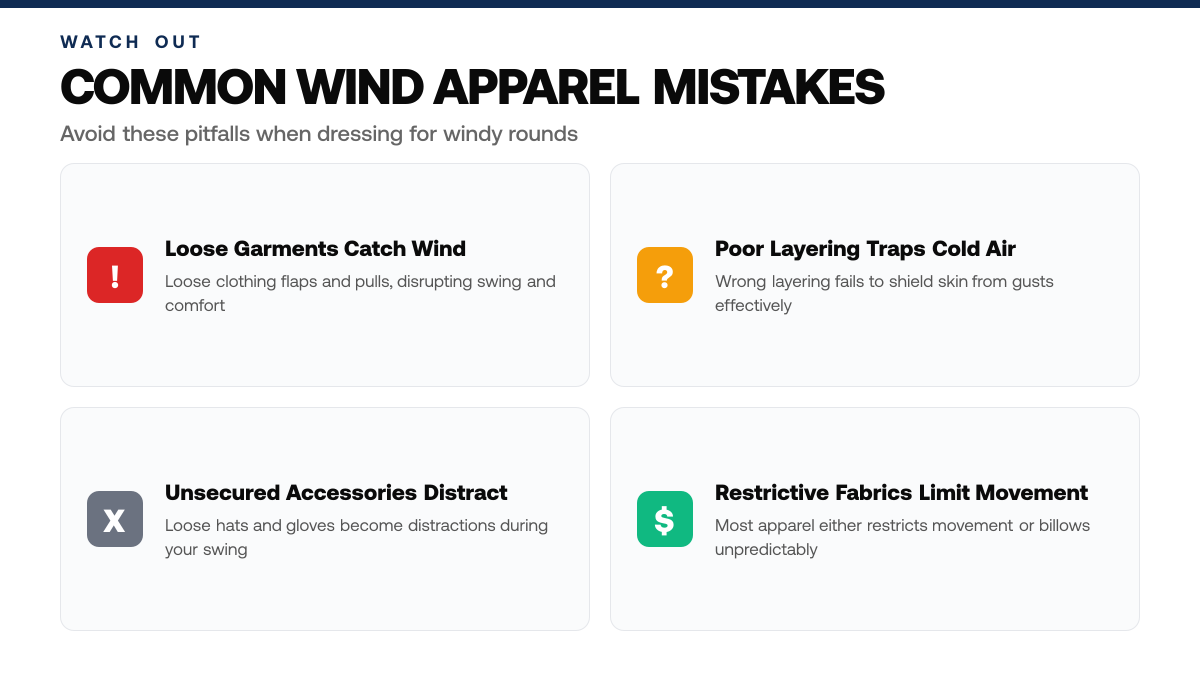
This guide walks you through how to layer strategically, choose fabrics that block wind while staying breathable, secure accessories so they don't become distractions, and apply these principles on the course. You'll learn what separates effective wind-ready apparel from pieces that look the part but underperform when it matters. Most golf apparel designed for wind either restricts movement or billows unpredictably mid-swing, Haven Golf Company's Airflex™ material moves with your body without catching air, so your form stays consistent through the back nine.
TL;DR
Wear fitted base layers under wind-blocking outer shells to trap warmth and reduce bulk while maintaining swing freedom
Choose jackets and shells designed to shield you from wind without restricting movement or adding weight
Secure hats, gloves, and accessories with clips or straps, loose items distract your focus and disrupt your swing rhythm[2]
Wind-resistant golf apparel is designed with tight fabric weaves and synthetic blends that block wind penetration while allowing moisture to escape, keeping you dry and comfortable throughout your round. These garments use construction techniques that create a barrier against gusts without trapping heat or sweat. The key is balancing protection, stopping wind from pushing through the material, with breathability, so air can still circulate and prevent overheating during active play. Fabrics like polyester blends, nylon, and technical synthetics excel at this dual function, offering durability and performance in challenging weather.[1]
Wind-resistant materials are tested for their ability to withstand sustained gusts while remaining lightweight enough to avoid slowing you down. Quality wind-resistant fabrics typically have a tightly woven exterior that deflects air while the interior maintains moisture-wicking properties. This engineering prevents the common problem where traditional jackets leave you either overheated and sweaty or chilled as sweat evaporates. Performance golf brands invest in advanced textile development to ensure their wind-resistant pieces breathe properly, critical since golfers spend four to five hours moving across the course.
Why Fit and Silhouette Matter as Much as Material
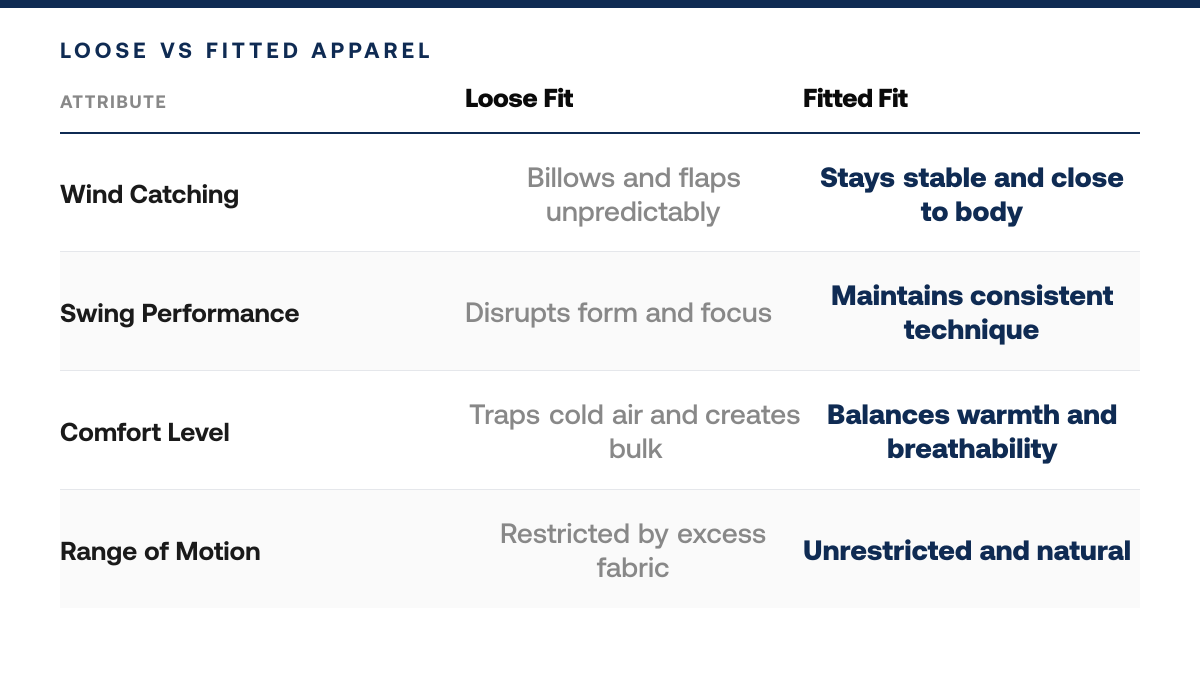
Even the best wind-resistant fabric loses its advantage if your clothing fits poorly. Loose garments catch the wind, flapping and pulling at your body, disrupting your swing and comfort. A proper taper, fitted through the chest and shoulders, tapered at the waist and sleeves, keeps your apparel stable and close to your body, preventing wind from lifting or billowing the fabric. Fit also improves your range of motion and reduces distractions during your swing. When material and silhouette work together, you get true wind protection that doesn't compromise your performance or appearance on the course.[1]
The right silhouette becomes even more critical when wind accelerates or shifts direction unexpectedly. A jacket cut with articulated panels and strategic seaming distributes wind pressure more evenly across your body, preventing any single area from catching gusts that could throw off your balance or posture. Premium golf apparel uses ergonomic cuts designed specifically for the golf swing, with sleeve positioning that allows full rotation without bunching or riding up during your backswing. Golfers serious about wind performance prioritize fit testing in variable conditions before committing to a purchase.
Wind-Resistant Apparel in Today's Golf Market
Golfers increasingly invest in specialized apparel for real-world conditions, from summer heat to wind and rain. With 29.1 million on-course golfers in 2025 and the eighth consecutive year of growth, demand for performance clothing that handles variable weather has never been stronger. Many golfers research and purchase apparel specifically designed for their local climate and seasonal challenges, recognizing that the right gear directly affects comfort, confidence, and score. Wind-resistant options have become a standard part of serious golfers' wardrobes, reflecting both the sport's growth and players' commitment to performing well regardless of conditions.
The evolution of golf apparel technology has paralleled broader advances in athletic wear, with wind-resistant lines now featuring innovations previously reserved for mountaineering or professional sports. Compression zones, strategic venting, and reversible designs offer golfers more control over their comfort levels. Retailers report that golfers are willing to invest more in pieces engineered for specific conditions because they directly experience the performance improvement during their rounds, particularly when playing in consistently windy regions or during transition seasons when wind patterns are unpredictable.
Step-by-Step Process
1. Layer your base with moisture-wicking fabric
Start with a moisture-wicking base layer, merino wool or synthetic blends that pull sweat away from skin. This foundation keeps you dry and comfortable during the round, preventing the chill that wind amplifies when moisture clings to your body. A fitted base layer under your regular golf shirt adds warmth without bulk.
2. Add an insulating mid-layer for trapped warmth
Wear a lightweight fleece or knit mid-layer over your base. This layer traps warm air close to your body while remaining breathable, essential for maintaining core temperature when wind tries to steal heat. Quality-first makers like Haven Golf Company sweat this detail so you don't have to. Choose a mid-layer that compresses easily so it fits under your outer jacket without creating restrictive bunching.
3. Choose a wind-blocking outer jacket
Select a wind-resistant or windproof outer jacket as your final shell. According to Golfmonthly, a quality wind jacket blocks gusts while remaining flexible enough for your swing. Look for jackets with articulated sleeves and a cut that allows full range of motion, wind protection means nothing if it restricts your golf swing.[2]
4. Secure all accessories to prevent distractions
Wear a cap with a chin strap to keep it in place during windy swings, tuck your shirt fully into your pants to prevent flapping, and choose fitted gloves that won't slip or shift in your grip. Loose accessories distract from your focus and can be lost to the wind, securing everything keeps your attention on the course and your belongings in place.
How This Works in Practice
Example 1: Spring Tournament Play in Unpredictable Wind
Picture a golfer preparing for a weekend club tournament in early April, when temperatures hover in the mid-50s and wind gusts shift unpredictably between 10 and 20 mph. She layers a lightweight, breathable performance polo as her base, adds a fitted pair of technical trousers that move with her swing, and pulls on a compact wind shell jacket that packs down small enough to fit in her bag. The shell blocks gusts without trapping heat or restricting her arm swing, critical when she's playing 18 holes and the wind direction changes three times. By the turn, she's warmed up enough to tie the shell at her waist, staying mobile and comfortable. The fitted trousers keep her silhouette clean and professional at the nineteenth hole, and the lightweight layers mean she never feels bulky or overheated as the afternoon sun strengthens. Her swing tempo stays consistent because nothing is bunching, sliding, or catching on her body.
Example 2: Early-Morning Winter Wind and Cold
Consider a low-handicap player who tees off at 6:30 a.m. on a January morning when the course is 38 degrees and a steady 15 mph wind makes it feel closer to 25. He starts with a merino wool thermal base layer that wicks moisture without the bulk, adds an insulated mid-layer fleece for core warmth, and zips into a premium wind jacket with secure closures, a chin guard, reinforced cuffs, and a full-length zipper that won't slip mid-swing. The jacket's construction blocks wind completely while allowing enough stretch for his full rotation. His hands stay warm in gloves rated for cold, and his lower half is protected by thermal leggings under his regular trousers. By hole 9, the sun is climbing and he's warmed up, but the layering system lets him shed the mid-layer and stay comfortable for the back nine without losing protection from the persistent wind. He finishes his round feeling strong, not stiff or chilled.
Why Layering Wins in Wind
Both scenarios hinge on the same principle: wind demands precision in fabric choice and closure design, not bulk. Spring and fall benefit from lightweight shells that move air without trapping it; winter play requires thermal foundations and insulated mid-layers that work together to seal out cold and wind. In either case, the right apparel keeps your swing smooth, your comfort steady, and your focus on the course, not on fighting your clothes.
Pre-Round Wind-Gear Checklist
Select fitted base layers that wick moisture and move with your swing without bunching under wind-blocking shells.
Choose a wind-resistant outer shell that blocks gusts while allowing arm mobility for your full golf stroke.
Verify all accessories, gloves, hat, and collar, are secure and won't shift or fly off in strong wind.
Layer strategically so you can remove or add pieces as wind intensity and temperature change during your round.
Test your complete outfit on the range before play to confirm fit, comfort, and freedom of movement in windy conditions.
Pack a backup light layer or extra gloves in your bag in case wind intensifies beyond your initial forecast.
Verify your shoes have good grip and traction to maintain stability during windy shots where balance is critical.
Common Mistakes to Avoid
Mistake: Wearing oversized or untucked shirts in windy conditions
Loose, billowing fabric catches wind and creates drag that pulls your attention away from your swing and footwork. Wind amplifies the flapping and movement, making it harder to maintain balance through your shot sequence. Switch to fitted or tapered cuts that move with your body, snug at the torso and arms, so wind passes over rather than through your clothing. Tuck in longer hems or choose golf-specific cuts designed to stay in place during a full swing.[3]
Mistake: Choosing cotton or loose-knit fabrics instead of synthetic blends
Cotton absorbs moisture and loses insulating power when damp, leaving you cold and uncomfortable as wind wicks away body heat. Loose knits trap air pockets that amplify wind chill. Synthetic blends and performance fabrics shed wind and moisture, maintain warmth even when wet, and dry faster. Look for polyester, nylon, or merino-blend materials labeled as wind-resistant or moisture-wicking, they're designed to handle real playing conditions.[3]
Mistake: Wearing loose accessories like oversized belts, scarves, or dangling watch bands
Flapping accessories distract you mid-swing, catch on your clothing or clubs, and create unpredictable movement that breaks your focus. Wind turns loose gear into a nuisance that pulls your attention downrange instead of to your setup and tempo. Secure all accessories tightly: use fitted belts with snug buckles, skip scarves or choose fitted neckwear, and wear watches with snug bands that sit flush against your wrist. Keep your kit streamlined and tucked.[3]
Frequently Asked Questions
Why shouldn't I just wear a heavy winter coat when it's windy?
Heavy coats restrict movement and trap heat, both critical problems during a full round of golf. Wind jackets are designed to be lightweight and packable, they block wind without the bulk that interferes with your swing, posture, or temperature regulation as conditions change. A proper wind layer lets you move freely while staying protected, and you can easily remove or stow it as the round progresses.
Can the same wind jacket work in spring, fall, and winter?
Yes, when you choose for versatility and fit rather than a single season. A well-fitted, breathable wind jacket layers effectively over short sleeves in cool spring weather, over long sleeves in fall, and under heavier insulation in winter. The key is selecting one that's not too bulky on its own, so it adapts to multiple conditions without creating a restrictive bundle of fabric.
What's the difference between a wind jacket and a rain jacket?
Wind jackets prioritize breathability and packability to block wind without trapping sweat; rain jackets add water-resistant or waterproof barriers, which makes them stiffer and less breathable. For windy-but-dry rounds, a wind jacket keeps you comfortable and mobile. If rain is forecast, you'll want a jacket rated for moisture protection, though quality wind jackets often include light water resistance as a bonus feature.
What to Wear Golfing With Your Boss — You've prepared for weeks, studied the course, sharpened your swing, mentally rehearsed your approach shots. Then you pull into the parking lot in jeans and a faded…
What to Wear: Golf Etiquette Dress Code by Course Type — Walk onto any golf course and you'll notice something immediate: players dress differently than they might at a casual sports bar or weekend park. Collared shirts…