What to Wear Golfing in Cold Mornings: Layer Like a Pro
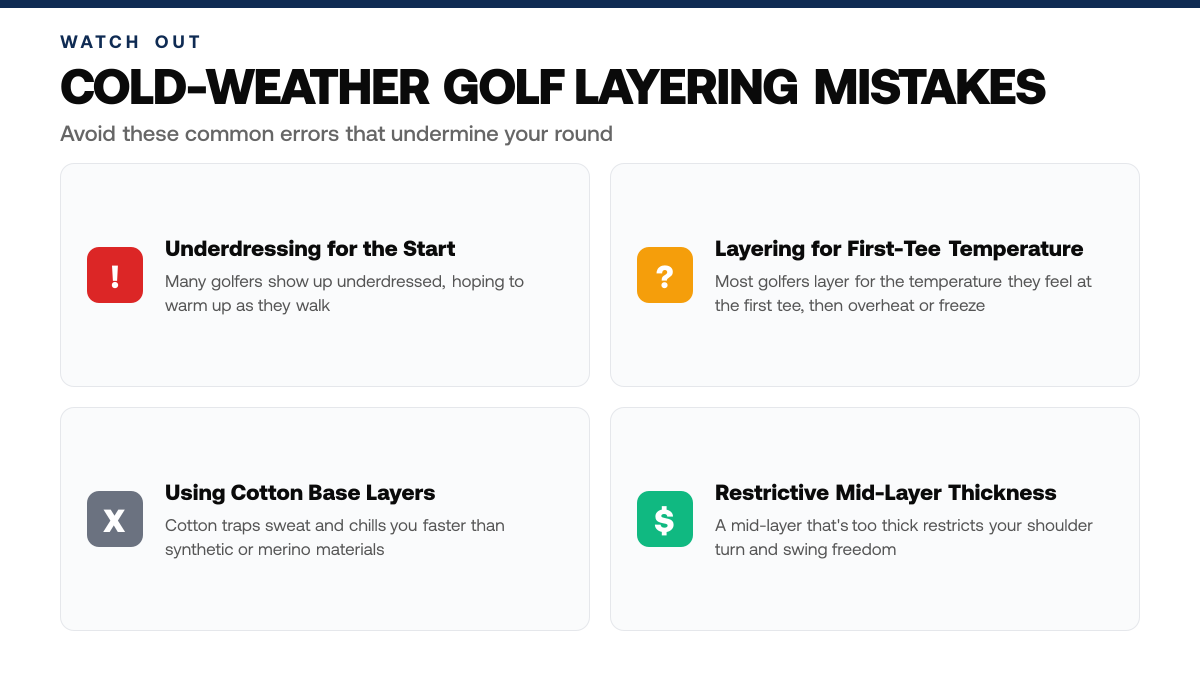
You step onto the first tee on a crisp morning, and the cold hits immediately, your hands stiffen, your core tightens, and suddenly the round feels harder than it should. Cold-morning golf is a reality for regular players, especially those who tee off early to beat the heat or chase tournament schedules across seasons. Yet many golfers show up underdressed, hoping to warm up as they walk, only to spend nine holes fighting discomfort instead of focusing on their swing.
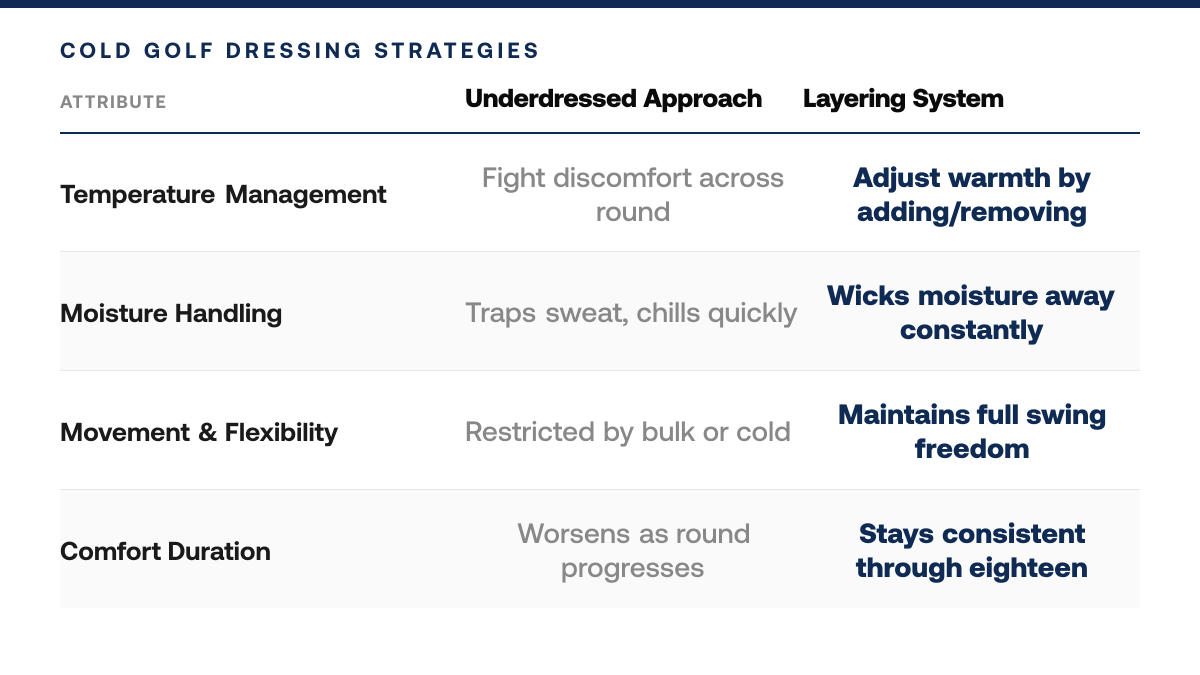
The challenge isn't just about staying warm, it's about staying warm while maintaining the mobility, flexibility, and freedom of movement that golf demands. Unlike running or hiking, where constant motion generates heat, golf involves long periods of standing, waiting, and precise movement in short bursts. Research confirms that layering is the proven strategy for managing temperature swings across a full round, allowing you to shed or add coverage as conditions and exertion levels change.
This guide walks you through the layering system that separates comfort from struggle: how to choose a moisture-wicking base layer, add insulation for warmth, and finish with wind protection. You'll see how these principles work in real scenarios, learn what mistakes to avoid, and discover how to build a cold-weather golf outfit that keeps you performing from the first hole to the eighteenth. Most golfers layer for the temperature they feel at the first tee, then overheat or freeze as their body warms or the sun stays hidden, Haven Golf Company's Airflex™ material moves moisture away from skin while compressing enough to work under a single mid-weight layer, so you stay comfortable from dawn through the back nine without shedding gear.
TL;DR
Cold-weather golf layering uses a three-part system: moisture-wicking base layer to pull sweat away, insulating mid-layer for warmth, and weather-resistant outer shell for wind and rain protection.
This approach keeps you dry and warm throughout a full round without excess bulk that restricts your swing or movement.
Most golfers underestimate how much moisture-wicking matters, cotton traps sweat and chills you faster than synthetic or merino base layers.[2]
Understanding Cold-Weather Golf Layering
What Is Layering in Golf Apparel?
Layering in golf means wearing multiple fitted garments in strategic order to manage body temperature and moisture across a full round. The system works in three distinct zones: a base layer sits against your skin and wicks sweat away from your body, a mid-layer traps warm air in its fibers to insulate you from cold, and an outer shell blocks wind and rain while allowing vapor to escape. Each layer serves a specific function, none is redundant. Base layers pull moisture outward so you stay dry; mid-layers create dead air space that your body heat warms; shells seal out the elements without trapping sweat inside. This three-part approach lets you adjust warmth by adding or removing layers as the morning warms up, keeping you comfortable without overheating or getting soaked.[2]
Why Layering Matters for Your Round
Fabric choice and fit directly affect how well you regulate temperature, how freely you can swing and walk, and how long you stay comfortable across eighteen holes. A base layer that doesn't wick moisture leaves you clammy and cold; a mid-layer that's too thick restricts your shoulder turn; a shell that doesn't breathe traps humidity and defeats the whole system. Golfers who layer correctly report staying warm without bulk, maintaining their swing mechanics, and playing confidently in conditions they'd otherwise avoid. Weekend players and serious competitors alike benefit because layering lets you extend your season, play early-morning rounds without discomfort, and focus on your game instead of fighting the cold.[2]
The Growing Role of Apparel in Golf Performance
Golfers increasingly recognize that what they wear affects their play and enjoyment. The golf apparel market has expanded as more players invest in quality gear designed for real-world conditions, summer heat, early-morning chill, rain, and wind. Serious golfers, who represent a significant portion of equipment buyers, prioritize performance apparel that reflects personal identity, military service, or school and team pride while delivering comfort and durability. This shift reflects a broader understanding that golf is played outdoors in changing weather, not in a climate-controlled environment, and that proper layering is as important to your game as your clubs. Quality cold-weather layering systems also reduce injury risk by maintaining muscle temperature and flexibility throughout your round.
Key Numbers for Cold Weather Golf Layering (2026)
Golf playable in temperatures as low as 30°F (-1°C) with proper thermal layers and cold-weather gear.
Cold temperatures tighten muscles and limit flexibility, restricting range of motion in the golf swing.[2]
Lightweight, breathable fabrics with stretch properties, polyester, merino wool, combed cotton, preserve mobility without restriction.
More than 82 million rounds posted in the U.S. in 2025, including early-morning tee times in cold conditions.
Proper layering maintains swing mechanics that loose or heavy single-layer outfits compromise during cold-morning rounds.[2]
Step-by-Step Process
1. Start with a moisture-wicking base layer
Choose a base layer made from synthetic materials like polyester or merino wool that pulls sweat away from your skin and dries quickly. This foundational layer sits directly against your body and prevents moisture buildup that would otherwise make you feel cold and clammy during your round. Avoid cotton, which absorbs and holds moisture. Look for fitted base layers labeled as moisture-wicking or performance-grade to ensure they work effectively under your mid-layer. Consider merino wool for superior temperature regulation and natural odor resistance across multiple rounds.
2. Add an insulating mid-layer for warmth retention
Layer a fleece, lightweight down, or synthetic insulated jacket over your base layer to trap body heat without adding bulk. This mid-layer creates air pockets that insulate you while remaining flexible enough for your golf swing. It's a big part of why shoppers who care about this end up at Haven Golf Company. Choose materials that compress easily so you can remove or tie the layer around your waist as your body warms up during play. Mid-layer thickness should match the temperature, thinner fleece for 50°F mornings, heavier insulation for sub-40°F conditions. Ensure the mid-layer has enough stretch to accommodate your full swing without restriction.
3. Finish with a wind-resistant outer shell
Top your layers with a wind-blocking shell jacket or pullover that shields you from cold air and moisture without trapping sweat. The shell should be breathable so perspiration can escape, and water-resistant rather than fully waterproof, golf requires mobility and comfort over hours, not heavy rain gear. This is where a brand like Haven Golf Company earns its keep. A fitted shell prevents wind from penetrating your insulation while allowing unrestricted arm movement for your swing. Choose shells with strategic ventilation panels that release excess heat without compromising wind protection.
How This Works in Practice
Example 1: The Weekend Player's Cold-Morning Setup
Picture a golfer who tees off at 7 a.m. on a 30°F morning with a steady 15-mph wind. The air feels sharper than the thermometer suggests, and a single layer won't cut it. She starts with a moisture-wicking base layer, merino wool or synthetic, that pulls sweat away from her skin without trapping cold air. Over that, she adds a mid-layer fleece for insulation, then pulls on a windproof outer shell jacket that blocks the gusts without restricting her swing. Her hands stay warm in gloves designed for grip, and she wears thermal leggings under her regular golf pants. By hole 9, the sun breaks through and the temperature climbs to 45°F. She removes the outer shell and ties it around her waist, keeping the base and mid-layers. The same outfit, base, mid, outer, adapts to the changing conditions across the round, and she stays comfortable without overheating when the day warms up.
Example 2: The Traveler Building a Cold-Weather Rotation
Imagine a golfer who plays courses in three different regions over a month, each with its own cold-weather personality: one location hits 45°F with bright sun, another sees 35°F with light rain, and a third stays at 40°F with overcast skies. Rather than packing three separate outfits, he invests in a modular system. He owns two base layers (one merino, one synthetic), two mid-layers (a lightweight fleece and a heavier knit), and two outer shells (one water-resistant, one fully waterproof). By mixing and matching across the rounds, he creates four distinct outfits from six pieces, each tailored to that day's conditions without duplicating weight in his luggage. The sunny 45°F round calls for base + lightweight mid-layer. The rainy 35°F day demands base + heavier mid-layer + waterproof shell. The overcast 40°F morning works with base + lightweight mid-layer + water-resistant shell. One wardrobe, multiple scenarios, and no wasted packing space.
Why Layering Wins in Real Conditions
Both examples show the same principle: cold-morning golf isn't about finding one perfect jacket, it's about choosing base, mid, and outer layers that work independently and together. When you understand how each layer handles moisture, insulation, and wind, you can swap pieces across multiple rounds and adapt in real time as the weather shifts. That flexibility keeps you warm when it matters and prevents the overheating that kills your game once the sun comes up.
Cold-Weather Golf Outfit Checklist
Select a moisture-wicking base layer that fits snugly against your skin to keep sweat away from your body during your round.
Add a mid-layer sweater or fleece that provides insulation without restricting your golf swing or arm mobility.
Choose an outer windproof or water-resistant jacket that allows you to move freely through your full range of motion.
Verify all three layers work together without bunching or shifting when you address the ball and complete your swing.
Test your layering system on the practice range before your round to confirm comfort and unrestricted movement.
Common Mistakes to Avoid
Mistake: Wearing one heavy insulating layer instead of multiple thin layers
A single thick jacket or sweater restricts your swing and traps moisture against your skin, reducing both mobility and comfort throughout the round. Instead, build your system with a moisture-wicking base layer, an insulating mid-layer, and a wind-resistant outer shell, each designed to move independently and allow sweat to escape upward, keeping you dry and warm without sacrificing your golf swing.[1]
Mistake: Skipping a moisture-wicking base layer and relying only on insulation
Even the best insulation above a cotton or non-wicking base layer will fail when sweat accumulates against your skin. Cold, damp fabric chills you faster than air alone. Always start with a base layer that pulls sweat away from your body and dries quickly, this foundation prevents the chilling effect and lets your mid and outer layers do their job effectively.[1]
Mistake: Overdressing without accounting for temperature changes during your round
Morning cold gives way to midday warmth, and layering lets you adapt without interrupting play. Avoid committing to too much bulk upfront; instead, choose pieces you can remove or tie around your waist as the course warms up. This flexibility keeps you comfortable from the first tee through the back nine and prevents overheating when the sun rises.
Frequently Asked Questions
Why is layering better than wearing one thick jacket for cold golf?
Layering lets you adjust insulation as your body temperature changes during your round. A single thick jacket traps heat during exertion and restricts your swing mechanics, while layered pieces let you remove or add coverage without losing mobility. This approach keeps you comfortable from the first tee through the 18th, adapting to both your activity level and changing weather conditions.[3]
What should my base layer do in cold-weather golf?
Your base layer should pull moisture away from your skin to keep you dry, which is critical because dampness accelerates heat loss even in cold conditions. Synthetic or merino wool materials work best, avoid cotton, which absorbs sweat and stays wet. A dry base layer maintains your core temperature and allows the outer layers to do their job protecting you from wind and rain without adding bulk that interferes with your swing.[3]
How do I know if my cold-weather layers are too restrictive?
Take practice swings before you head to the first tee. Your shoulders, arms, and torso should move freely through a full rotation without bunching, pulling, or binding. If you feel resistance in your swing plane, your layers are too tight or stiff. The right layering system protects you from wind and moisture while staying invisible to your mechanics, you should forget you're wearing it once you start playing.
How to Choose Golf Apparel for Early Morning Cold Rounds — You step onto the first tee on a crisp morning, and the temperature is 15 degrees colder than your last round. Your regular golf shirt feels inadequate within the first…
What to Wear Golfing in Windy Conditions — A sudden gust hits the fairway and your ball drifts twenty yards offline. Wind is one of the most challenging weather variables golfers face on course, it demands…