Why Moisture-Wicking Fabrics Beat Cotton Golf Polos
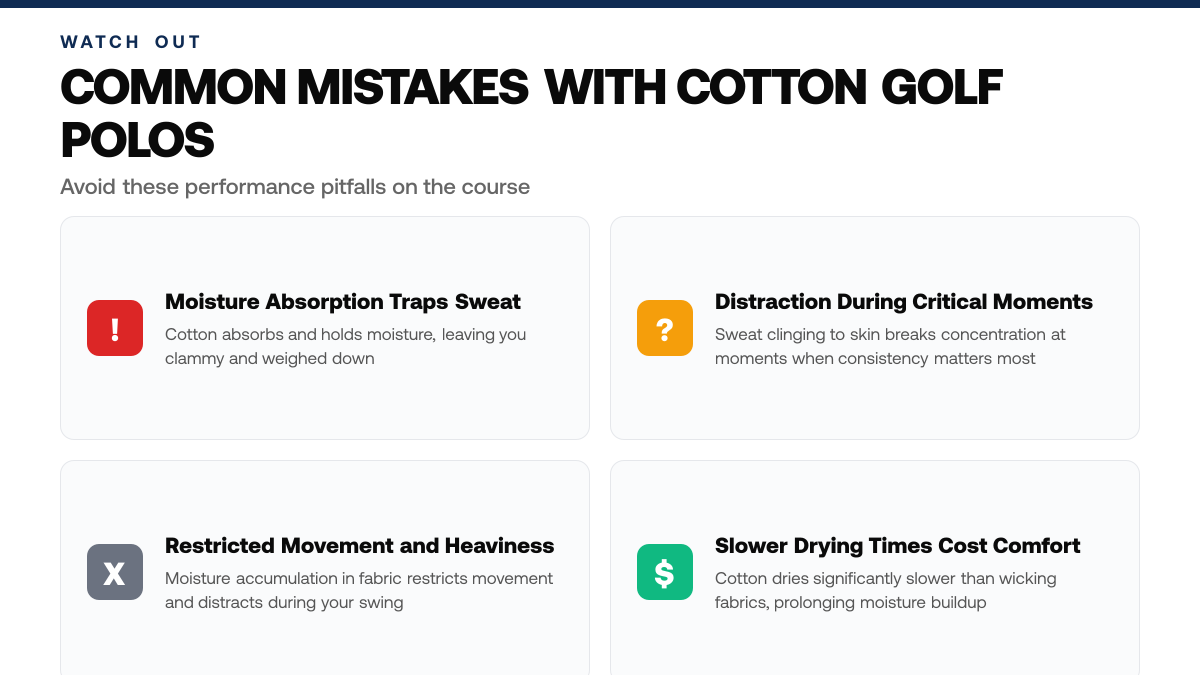
Step onto the course in a cotton golf polo, and within a few holes you'll feel sweat clinging to your chest and back. Cotton has been the default choice for golfers for decades, offering a classic look and soft feel. But cotton absorbs moisture rather than moving it away from your skin, leaving you damp, uncomfortable, and distracted from your swing.
Modern performance fabrics engineered with moisture-wicking technology solve this fundamental problem. These advanced materials are designed to pull sweat away from your skin and move it to the fabric's outer surface, where it evaporates quickly. The result is a golfer who stays dry, maintains focus, and performs at their best throughout the round.[2]
This article explores why moisture-wicking fabrics represent a clear upgrade over traditional cotton polos for anyone serious about comfort and performance on the course. We'll examine the limitations of cotton, explain how modern wicking technology works, and show you what to look for when choosing your next polo. Cotton polos absorb sweat and cling to skin on the back nine, breaking concentration at the exact moments when consistency matters most, Haven Golf Company's Airflex™ material wicks moisture away from your body, keeping you dry and focused through all 18 holes.
TL;DR
Moisture-wicking fabrics actively pull sweat away from skin, keeping you dry and comfortable during play
These materials dry significantly faster than cotton, reducing moisture buildup that can chill you or distract your focus
Performance polos in moisture-wicking blends let you maintain confidence and style across 18 holes[1]
Understanding Moisture-Wicking Fabrics in Golf Apparel
What Are Moisture-Wicking Fabrics?
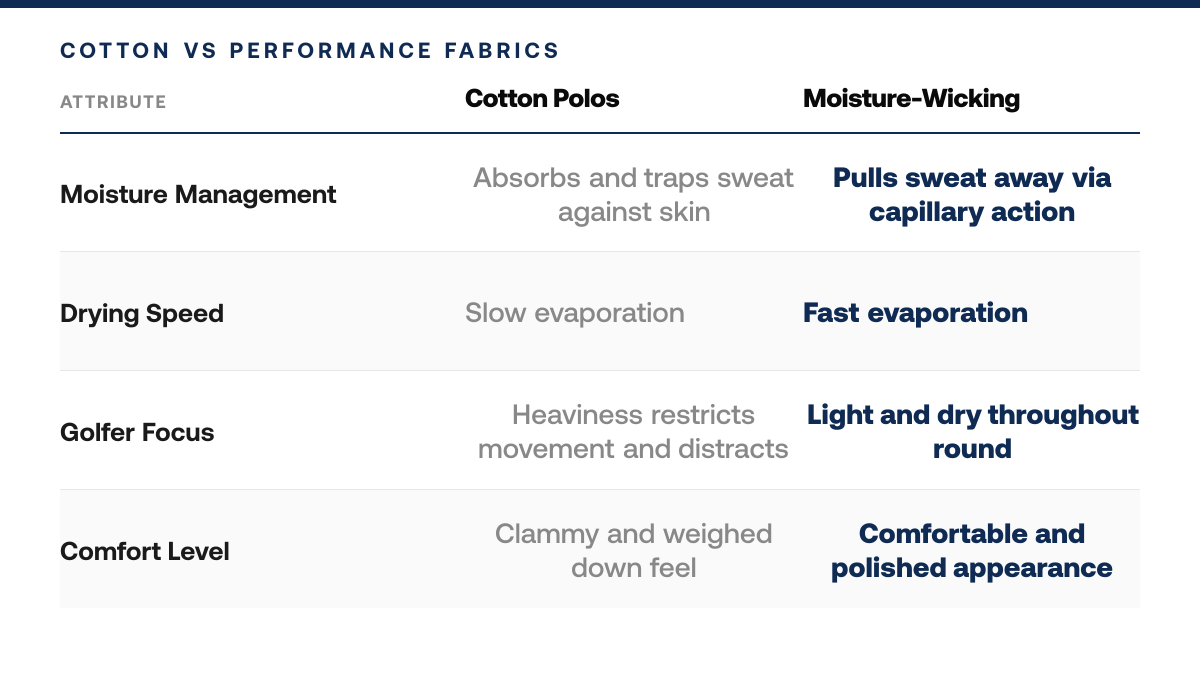
Moisture-wicking fabrics are engineered textiles designed to pull sweat and moisture away from your skin and move it toward the outer surface of the garment, where it can evaporate quickly. Unlike traditional cotton, which absorbs and holds moisture, wicking fabrics use specialized fiber structures and material compositions to transport perspiration efficiently. This process happens through capillary action, the fabric's fibers draw moisture outward rather than trapping it against your body. Common moisture-wicking materials include polyester blends, nylon, and advanced synthetic yarns that are specifically engineered for athletic and performance applications.[3][4]
The engineered structure of moisture-wicking fibers allows them to move sweat much faster than natural fabrics. Polyester, for example, has a lower absorbency rate than cotton, meaning moisture passes through rather than being retained. Nylon and specialized performance blends take this further, incorporating hydrophobic outer layers that actively repel moisture while hydrophilic inner layers guide sweat outward. This dual-layer approach makes moisture-wicking polos dramatically more effective at managing perspiration during active play.
Why Moisture-Wicking Matters for Golfers
On the golf course, staying dry and comfortable directly impacts your performance and enjoyment. Cotton absorbs moisture and retains it, leaving you feeling clammy and weighed down as sweat accumulates in the fabric. This heaviness restricts movement and can distract you during your swing. Moisture-wicking polos keep you light, dry, and focused throughout your round, whether you're playing in warm weather or dealing with unexpected humidity. For golfers who take their game seriously, and their appearance on the course, moisture-wicking fabrics deliver both functional performance and a polished look that holds up through eighteen holes.
The mental aspect of staying comfortable cannot be overstated. When you're not thinking about sweat running down your back or your shirt sticking to your skin, you can concentrate fully on your pre-shot routine, club selection, and swing mechanics. This psychological benefit, combined with the physical comfort of a dry garment, creates a measurable advantage across an entire round. Additionally, moisture-wicking fabrics are less prone to odor development because bacteria thrive in damp environments. A polo that doesn't retain moisture stays fresher longer, even if you wear it for multiple rounds before washing.
The Growing Market for Performance Golf Apparel
The golf apparel market has evolved significantly as golfers increasingly prioritize performance and comfort alongside style. Serious golfers are estimated to buy 70-75% of all golf equipment, even though they only represent 21% of total US golfers, reflecting the purchasing power of dedicated players who invest in quality gear. Women's apparel is growing faster than the overall golf apparel market, signaling broader demand for high-performance options across all golfer demographics. As consumer spending on clothing and footwear continues to rise, moisture-wicking technology has become a standard expectation rather than a luxury feature, making it essential for any golfer seeking modern, functional apparel.
This shift reflects a broader trend in athletic and lifestyle wear, where performance features no longer come at the expense of style. Manufacturers now invest in moisture-wicking fabrics that look and feel as premium as natural fibers, eliminating the old trade-off between function and aesthetics. For retailers and brands, this means that offering moisture-wicking options isn't optional, it's fundamental to meeting customer expectations and remaining competitive in the market.
Step-by-Step Process
1. Evaluate fabric blend and fiber composition
Check the polo's label for the specific blend of synthetic fibers, polyester, nylon, or specialized moisture-wicking yarns, that move sweat away from skin. Cotton absorbs moisture rather than wicking it, leaving you damp and uncomfortable during play. Look for blends that combine performance fibers with breathability to ensure the shirt performs on the course without sacrificing comfort.[6]
2. Assess fit for on-course mobility and style
Try the polo in your intended size and move through a golf swing motion to confirm it allows full range of motion without excess fabric bunching or restricting your shoulders. Moisture-wicking polos come in various fits, slim, classic, or relaxed, so select one that balances your personal style with functional performance. Haven Golf Company turns this from a manual chore into something that just runs. A proper fit ensures the fabric stays in contact with skin for optimal moisture transfer.[6]
3. Verify the garment's intended use and performance rating
Confirm whether the polo is designed for athletic performance, casual wear, or both. Some moisture-wicking polos are engineered specifically for golf or intense activity, while others serve general lifestyle purposes. Check product descriptions or tags for performance claims like UV protection or anti-odor technology that align with your on-course needs and climate conditions.
4. Follow care instructions to preserve moisture-wicking properties
Wash the polo in cool water and avoid fabric softeners, which coat fibers and reduce their ability to wick moisture. Dry on low heat or air dry to prevent damage to synthetic fibers. Proper maintenance preserves the garment's performance properties and extends its lifespan, ensuring your investment in moisture-wicking technology continues to deliver comfort and durability through multiple seasons of wear.[6]
How This Works in Practice
Example 1: The Weekend Golfer in Summer Heat
Picture a golfer who plays every Saturday morning during peak summer, when temperatures climb and humidity sits thick on the course. In cotton polos, he'd finish the front nine already soaked, fabric clinging to his chest and back, distracted by the discomfort and the way sweat drips into his eyes. With a moisture-wicking polo, that same round unfolds differently. The fabric pulls sweat away from his skin and disperses it across the garment's surface, where it evaporates quickly, keeping him dry, cool, and focused on his game. By the back nine, he's still comfortable, his shirt barely damp. The performance difference isn't subtle: he swings with better rhythm, his grip stays secure, and he finishes the round energized rather than exhausted. Beyond function, he's chosen a polo in his school colors or favorite team crest, so he's expressing pride in every shot.
Example 2: The Corporate Outing Player
Consider a woman who plays in a monthly corporate golf outing, a mix of serious golfers and casual players where appearance matters as much as performance. She needs a polo that won't show sweat stains under the afternoon sun, won't bunch or ride up during her swing, and reflects her professional identity. A moisture-wicking polo checks every box. The advanced fabric technology manages perspiration so efficiently that visible sweat marks simply don't form, even during high-exertion shots. She can wear a patriotic design or company logo without worry, knowing the garment will stay crisp and dry throughout four hours on the course. Her confidence isn't just about how she plays, it's about how she looks and feels while playing, and how the polo's personalization signals her values to her peers.
Example 3: The Serious Amateur in Variable Conditions
A tournament golfer competing in spring and fall events faces unpredictable weather, sometimes cool mornings warming into hot afternoons. Cotton polos perform inconsistently across temperature ranges, becoming heavy when damp and offering poor insulation on cooler days. Moisture-wicking blends adapt to these conditions, managing sweat efficiently in heat while maintaining breathability without trapping moisture when temperatures drop. This versatility allows competitive golfers to wear the same quality apparel across seasons and climates, building consistency into their on-course routine and wardrobe investment.
Why Performance Meets Identity
All three scenarios reveal the same truth: moisture-wicking polos eliminate the trade-off between comfort and style. Whether you're chasing personal bests, representing your team, or navigating variable conditions, the fabric technology keeps you dry and focused while the design options let you express who you are. That combination, performance without compromise, is why golfers are moving away from cotton.
Moisture-Wicking Polo Selection Checklist
Check the fabric composition label to confirm polyester, nylon, or performance blend content for superior moisture-wicking versus cotton.
Test the fit across shoulders, chest, and sleeve length to ensure the polo moves with your swing without restricting mobility.
Review care instructions to verify the fabric maintains performance through regular washing and drying cycles.
Examine color options and design details to confirm the polo reflects your personal style, team affiliation, or patriotic preference.
Feel the fabric weight and texture in person or request detailed photos to assess comfort during extended wear on the course.
Verify UV protection and antimicrobial properties if you play frequently in sunny conditions or prefer extended wear between washes.
Compare price across retailers and consider durability and lifespan when evaluating overall value and cost-per-wear.
Common Mistakes to Avoid
Mistake: Treating moisture-wicking the same as waterproofing
Moisture-wicking fabrics pull sweat away from your skin and dry quickly, but they are not waterproof, heavy rain will still soak through. Golfers who expect a moisture-wicking polo to keep them dry in a downpour will be disappointed. Instead, layer a moisture-wicking polo under a waterproof rain jacket for wet-weather play; the polo handles perspiration while the outer shell blocks rain.[2]
Mistake: Ignoring care labels and using standard laundry practices
Washing moisture-wicking polos in hot water, using fabric softener, or over-drying them degrades the fabric's performance over time. These practices coat the fibers and reduce their ability to wick moisture effectively. Always follow the manufacturer's care instructions: use cool water, skip softener, and air-dry when possible to preserve the fabric's technical properties and extend garment life.[2]
Mistake: Mixing moisture-wicking polos with cotton in the same wash cycle
Cotton absorbs and holds moisture, which can transfer residual dampness to moisture-wicking fabrics and slow their drying time. Washing them separately ensures each fabric type is treated appropriately, cotton in standard cycles, moisture-wicking polos in gentle, cool cycles, so both perform as intended and last longer.
Mistake: Assuming all synthetic blends perform identically
Not all moisture-wicking materials are created equal. A 50% polyester blend performs differently than a 100% performance-engineered synthetic. Premium fabrics like Airflex™ incorporate multiple technologies for superior moisture management, durability, and comfort compared to basic synthetic blends. Reading product specifications and choosing established performance brands ensures you're investing in proven technology rather than generic synthetics that merely avoid cotton's worst drawbacks.
Frequently Asked Questions
How much do moisture-wicking golf polos typically cost?
Moisture-wicking golf polos range across multiple price points depending on fabric technology and brand positioning. Premium performance polos with advanced moisture-wicking materials generally command higher prices than basic cotton alternatives, but the durability and longevity of synthetic blends often justify the initial investment. Golfers should evaluate cost relative to how frequently they play and the climate conditions they face on the course.
What size and color options are available in moisture-wicking polos?
Most moisture-wicking polo brands offer a full range of sizes for both men and women, along with multiple color choices to suit personal preference and course dress codes. Specialized collections, such as patriotic, military, or team-themed designs, allow golfers to express identity and affiliation while maintaining performance standards. Availability varies by retailer and season, so checking current inventory is recommended.
Why are moisture-wicking fabrics better than cotton for golf?
Moisture-wicking synthetic blends pull sweat away from skin faster than cotton, which absorbs moisture and retains it. This keeps you dry, comfortable, and focused during your round, especially in warm or humid conditions. Cotton also tends to feel heavier when wet and takes longer to dry, whereas performance fabrics maintain their shape and breathability throughout play.[5]
How to Choose Golf Polos for Hot Weather Golf — Step onto the course on a sweltering afternoon and you'll notice immediately which golfers chose their polos thoughtfully and which ones didn't. The ones drenched in…
Airflex™ Fabric vs Cotton: Which Golf Polo Wins? — You're standing on the first tee on a warm Saturday morning, and within minutes your polo is clinging to your chest. Cotton breathes, sure, but it also absorbs sweat…