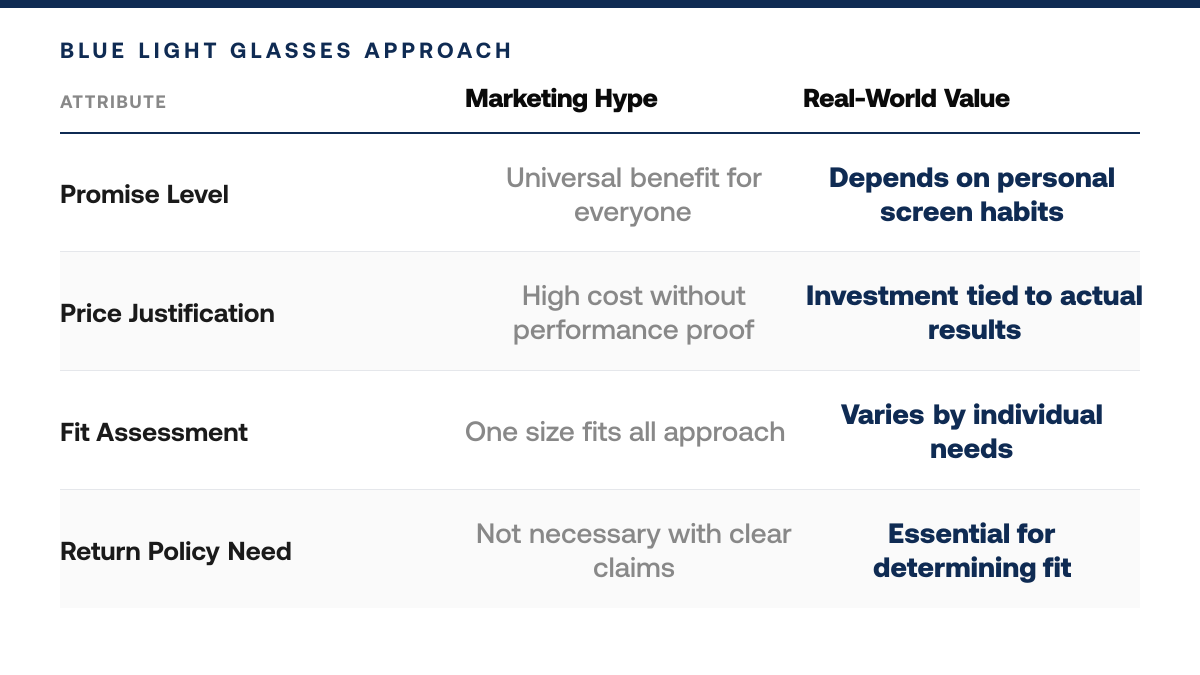
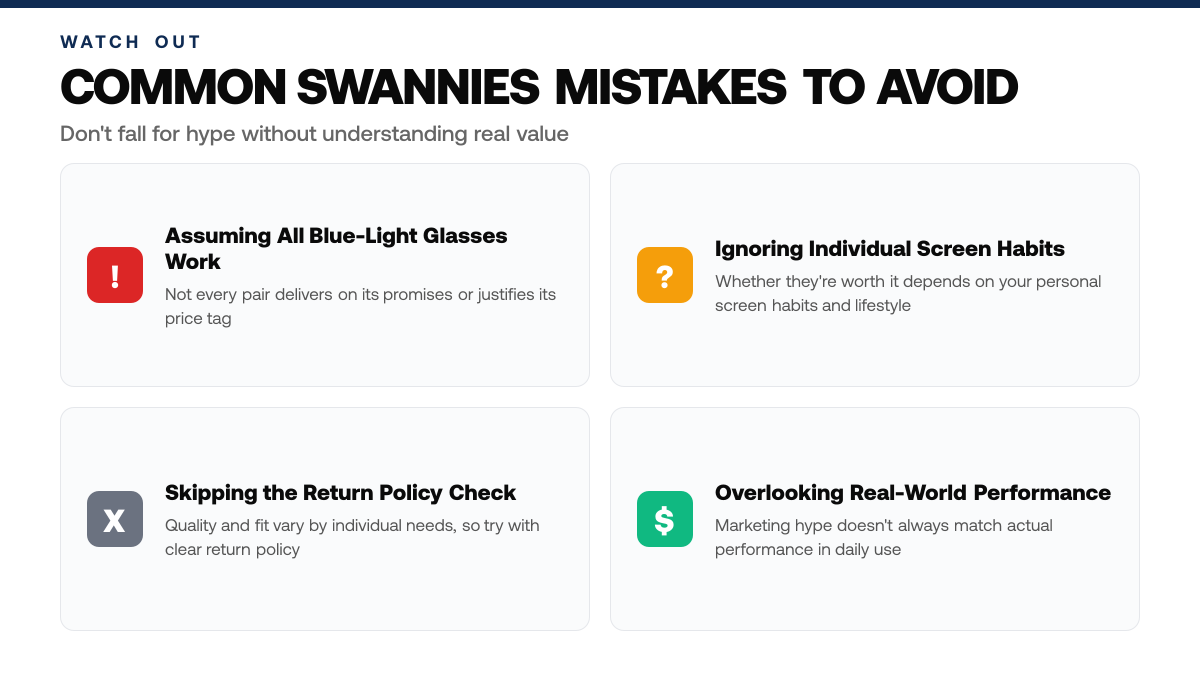
Blue-light blocking glasses have become a fixture in the lifestyle and performance gear space, marketed to everyone from office workers to athletes. Golfers, in particular, have embraced them as a way to protect their eyes during long days on the course while maintaining a polished look. Yet the market is crowded, and not every pair delivers on its promises, or justifies its price tag.
Swannies are blue-light blocking glasses designed with both performance and lifestyle appeal in mind, targeting golfers and style-conscious shoppers who value protecting their sleep quality and expressing personal identity through their gear. As we move into 2026, the question isn't whether blue-light glasses work in theory, it's whether a specific product offers honest value for the money and real-world performance that matches the hype.[2]
This review cuts through the marketing to assess Swannies on three fronts: build quality and design, actual performance in daily use, and whether the investment makes sense for golfers and lifestyle shoppers. We'll look at what sets them apart, where they fall short, and who they're truly built for. Most golf apparel either sacrifices comfort for style or blends into the crowd, forcing you to choose between performance and personality, Haven Golf Company weaves Airflex™ material into polos that move with your swing while letting you wear your identity on the course.
TL;DR
Swannies are blue-light-blocking glasses designed to reduce screen strain and support better sleep quality for people who spend significant time on devices.
Whether they're worth it depends on your personal screen habits, budget, and how much you prioritize sleep, not everyone sees the same benefit.
Quality and fit vary by individual needs and lifestyle, so trying them with a clear return policy helps determine if they match your expectations.[1]
Understanding Blue-Light Blocking Eyewear and Lifestyle Branding
What Is Blue-Light Blocking Eyewear?
Blue-light blocking glasses are eyewear designed with specialized lens technology that filters high-energy visible light emitted by digital screens, smartphones, and artificial lighting. These lenses work by selectively absorbing or reflecting blue wavelengths before they reach the eye, reducing the intensity of light exposure during screen time and evening use. The technology is built into the lens material itself, allowing wearers to maintain normal vision while benefiting from the filtering effect. Unlike standard prescription or non-prescription glasses, blue-light blockers are engineered specifically to address digital eye strain, the discomfort many people experience after prolonged screen exposure, and to support natural sleep-wake cycles by minimizing circadian rhythm disruption before bedtime.[1]
The lens coating typically reduces blue wavelengths in the 380–500 nanometer range, the portion of the visible spectrum most likely to interfere with melatonin production. Most quality blue-light lenses filter between 50–90% of harmful blue light, depending on the specific technology and manufacturer. This filtering happens passively as light passes through the lens, requiring no power source or adjustment from the wearer, making the technology convenient and always available when you wear the frames.
Why Blue-Light Filtering Matters for Modern Lifestyles
As screen time has become central to work, leisure, and social connection, eye strain and sleep quality have emerged as common concerns. Blue-light blocking eyewear addresses both by reducing glare and visual fatigue during the day while supporting better sleep quality when worn in the hours before bed. The filtering effect helps preserve melatonin production, the hormone that regulates sleep, by limiting the blue wavelengths that suppress it. For golfers and active lifestyle enthusiasts who spend time both on screens and outdoors, blue-light glasses offer a practical tool for maintaining visual comfort and rest. This functional benefit, combined with stylish design, appeals to identity-driven shoppers who want eyewear that serves both a health purpose and reflects their personal aesthetic or values.
Research indicates that exposure to blue light in the evening can delay sleep onset by 30 minutes to over an hour for regular screen users. For professionals, athletes, and anyone managing multiple time zones or rotating schedules, blue-light blocking glasses can be a non-pharmaceutical intervention that supports consistent rest without medication. This appeal extends beyond nighttime use; daytime blue-light filtering can also reduce afternoon eye fatigue, allowing people to work longer with less strain and discomfort.
The Intersection of Function and Lifestyle Branding
Modern eyewear brands have evolved beyond pure utility to become lifestyle statements. Consumers increasingly seek products that combine genuine functional benefits with visual identity, whether that's patriotic design, team affiliation, or personal style. Blue-light blocking glasses fit this trend perfectly: they deliver measurable eye-health value while serving as a wearable expression of the wearer's priorities and identity. For the golf and apparel market, where annual golfer spending on golf-related activities ranges from $1,500 to $2,500 per year on average, accessory purchases are often driven by both performance and brand alignment. Eyewear that protects vision while communicating lifestyle values resonates with shoppers who view their purchases as extensions of who they are, making functional eyewear a natural category for brands that understand identity-driven consumer behavior.
Step-by-Step Process
1. Assess Your Screen-Time Habits
Evaluate how much time you spend on digital devices daily, both on and off the golf course. Swannies are designed to reduce blue light exposure, so the value proposition depends on your actual screen usage patterns. Consider whether you're frequently checking your phone, using a golf rangefinder app, or reviewing course maps on a tablet. If you spend minimal time on screens, the blue-light filtering benefit may be less relevant to your purchase decision.[3]
2. Evaluate Fit and Comfort
Try on multiple frame sizes and styles to ensure the eyewear sits properly on your face without slipping during active movement. Comfort is critical for on-course wear, especially during a full 18 holes. Check that the frames don't create pressure points on your nose or ears, and verify that the lens height accommodates your natural line of sight. Poor fit will discourage regular use, regardless of lens quality.
3. Verify Lens Quality and Durability
Confirm that the lenses offer adequate UV protection and are scratch-resistant, which is essential for outdoor golf environments where sun exposure and turf contact are common. Ask about the lens material, whether they're polycarbonate, glass, or another material, and inquire about warranty coverage for lens damage. Durable lenses protect your investment and ensure consistent optical performance over time.
4. Compare Price Against Your Lifestyle Needs
Blue-light glasses range from $50 to $300+ depending on brand, frame design, and lens technology. Before purchasing, assess whether the specific pair aligns with your screen habits, social use (will you wear them beyond home?), and expected lifespan. Premium frames with advanced coatings justify higher prices for heavy users; budget options work well for occasional, casual wear. Consider your typical replacement cycle: if you lose or damage glasses frequently, a mid-range option may offer better value than a premium investment.
How This Works in Practice
Example 1: The Evening Screen User Seeking Comfort
Picture a professional who spends 6–8 hours daily on screens, emails, video calls, design work, and notices eye strain and sleep disruption by late evening. They've heard that blue light exposure can interfere with melatonin production, making it harder to wind down before bed. They try a pair of Swannies with amber lenses designed to filter blue light, wearing them for the final 2–3 hours before sleep. Within a week, they report falling asleep more easily and waking less groggy. The frames feel lightweight and don't slide down during focused work sessions. Over a month, the habit sticks, they reach for Swannies automatically as their screen day winds down, and their sleep quality feels noticeably steadier. The aesthetic appeal matters too; the frames look polished enough to wear on video calls, so they're not hiding a 'medical device' but integrating a lifestyle choice into their routine.
Example 2: The Golfer and Brand-Conscious Shopper
Consider a golfer who values both performance gear and personal identity, someone who wears apparel that signals taste and allegiance, whether to a favorite course, a team, or a lifestyle brand. They're drawn to Swannies not just for the blue-light filtering or UV protection on the course, but because the brand aligns with their aesthetic: clean design, premium materials, and a story that resonates. They choose a frame style that complements their face shape and existing wardrobe, then pair it with their golf outings and casual weekend wear. The versatility matters, the same frames work under the brim of a cap during a round, then transition to dinner or social settings without looking out of place. Over time, Swannies become part of how they present themselves, a small but consistent signal of the values and style they care about. The functional benefit (reduced glare, eye comfort) is real, but the emotional and social dimension, wearing something that feels 'them', is what keeps them reaching for the frames day after day.
Why Fit Matters Most
Both scenarios hinge on the same insight: Swannies work best when the frame style and lens choice align with how you actually live. Whether you're protecting your eyes during evening work or signaling your identity on the course, the appeal lies in finding the right fit, aesthetic, functional, and personal, rather than chasing a one-size-fits-all solution. That's where the range of styles and options becomes the real value proposition.
Swannies Polo Purchase Checklist
Verify the fit matches your typical golf shirt size by checking Swannies' sizing guide against your current wardrobe.
Inspect lens clarity and anti-glare coating on any eyewear bundle to confirm visibility on the course.
Test frame comfort by wearing the polo for at least one round to assess shoulder and collar fit during your swing.
Compare the design, color, and patriotic or team branding against your personal style and existing golf apparel.
Review the return policy timeframe to ensure you have adequate time to test performance before final commitment.
Check for any available bundle deals pairing frames with complementary apparel or accessories.
Common Mistakes to Avoid
Mistake: Assuming one frame style works for all face shapes
Many buyers skip the fit and frame-selection process, thinking any style will suit them. This leads to poor comfort, slipping glasses during play, and wasted spending on frames that don't flatter or perform. Instead, assess your face shape (round, oval, square, heart) and try on multiple styles in person or use virtual try-on tools to find frames that balance proportions and stay secure during activity.[2]
Mistake: Expecting blue-light blocking alone to fix sleep problems
Buyers often treat blue-light glasses as a standalone cure for poor sleep, overlooking that they're one tool among many. Blue-light blocking works best alongside consistent sleep schedules, reduced screen time before bed, and a dark bedroom. Relying on glasses alone while ignoring other sleep hygiene habits will disappoint. Combine them with behavioral changes for real results.[2]
Mistake: Ignoring lens quality and coating durability
Cheap blue-light lenses scratch easily and lose effectiveness over time, requiring frequent replacement. Poor coatings also cause glare and reduce optical clarity. Invest in higher-quality lenses with scratch-resistant and anti-reflective coatings, and follow care instructions (microfiber cloth, proper storage) to extend lifespan and maintain performance.
Mistake: Overlooking your actual usage context
Some buyers purchase premium frames intended for golf but rarely play outdoors, leaving the investment underutilized. Conversely, others buy budget eyewear planning heavy daily use and end up replacing them frequently. Match the frame quality and price tier to your realistic usage pattern, considering both on-course time and everyday wear scenarios before committing to a purchase.
Frequently Asked Questions
What makes Swannies different from standard golf polos?
Swannies polos are designed with performance materials, engineered for maximum comfort and durability on and off the course. Beyond performance, Swannies emphasize lifestyle branding through themed collections, Patriotic, Military, and College Town lines, allowing golfers to express personal identity and values through their apparel. This combination of technical performance and meaningful design sets them apart in the broader lifestyle eyewear and apparel category, where both function and identity matter to the wearer.
How should I care for my Swannies polos to maintain quality?
A purpose-built platform provides specific care instructions for their performance material to ensure longevity and maintain the polo's performance features. For detailed washing, drying, and storage guidance tailored to your Swannies polos, contact this approach directly through their official site, they offer brand-specific product care recommendations that go beyond standard apparel washing.
What is modern software's warranty and return policy?
The right system stands behind their products with a warranty and return policy designed to protect your purchase. For current warranty coverage, return windows, and specific terms, visit an integrated workflow's official site or contact their customer service directly. Brand-specific policies may vary by product line and purchase date, so verifying directly with the company ensures you have accurate, up-to-date information.
Is Johnnie-O Worth It in 2026? An Honest Review — Walk into any upscale golf club or resort, and you'll spot them: polos with bold patriotic stripes, collegiate crests, and clean lines that stand out from the standard…
Is FootJoy Worth It in 2026? An Honest Review — Walk into any pro shop or scroll through golf retail sites, and you'll notice premium golf apparel carries a price tag that demands justification. Golfers today face a…