A grass stain on a colored polo can ruin an otherwise perfect round or match. Unlike dirt or sweat, grass leaves behind stubborn marks that seem to set deeper with every wash. The culprit is chlorophyll and organic compounds in grass that bond directly to fabric fibers, making casual stain removal ineffective and frustrating for golfers and active players who wear colored polos regularly.
Treating grass stains on colored garments requires a fundamentally different approach than handling the same stains on white fabrics. Standard bleach-based methods that work on whites can fade or damage the dye in colored polos, leaving you with a stain-free shirt that no longer matches your original color or team pride. Understanding the right technique protects both the fabric and the garment's appearance.[2]
This guide walks through proven stain-removal strategies designed specifically for colored polos, from pre-treatment steps to washing methods that eliminate grass marks without compromising color integrity. You'll learn which household ingredients work best, how to avoid common mistakes, and when professional cleaning becomes the safer choice for premium garments. Most grass stains set deeper into cotton fibers than the wash cycle can reach, leaving a faint green shadow even after treatment, Haven Golf Company's Airflex™ material resists grass pigment absorption in the first place, so stains rinse clean before they can bond to the fabric.
TL;DR
Treat grass stains immediately with an enzyme-based pre-treatment to break down organic matter before washing.
Wash the stained polo in cool water to prevent the stain from setting into the fabric fibers.
Air-dry the garment rather than using heat, which can permanently lock in any remaining stain residue.[1]
Understanding Grass Stains on Colored Polos
What Are Grass Stains and Why They're Tough to Remove
Grass stains are among the most stubborn marks on fabric because they contain chlorophyll, the pigment that gives grass its green color, along with plant proteins and oils. These compounds bond tightly to fiber surfaces, making simple washing ineffective. Unlike water-soluble stains, grass marks require either enzymatic action to break down the proteins or targeted chemical treatment to lift the pigment from the fabric. The composition of grass stains means that standard detergent alone rarely succeeds, which is why understanding the science behind removal is essential for anyone who spends time on the golf course or in outdoor settings where colored polos are worn.[3]
Timing Makes All the Difference in Stain Removal Success
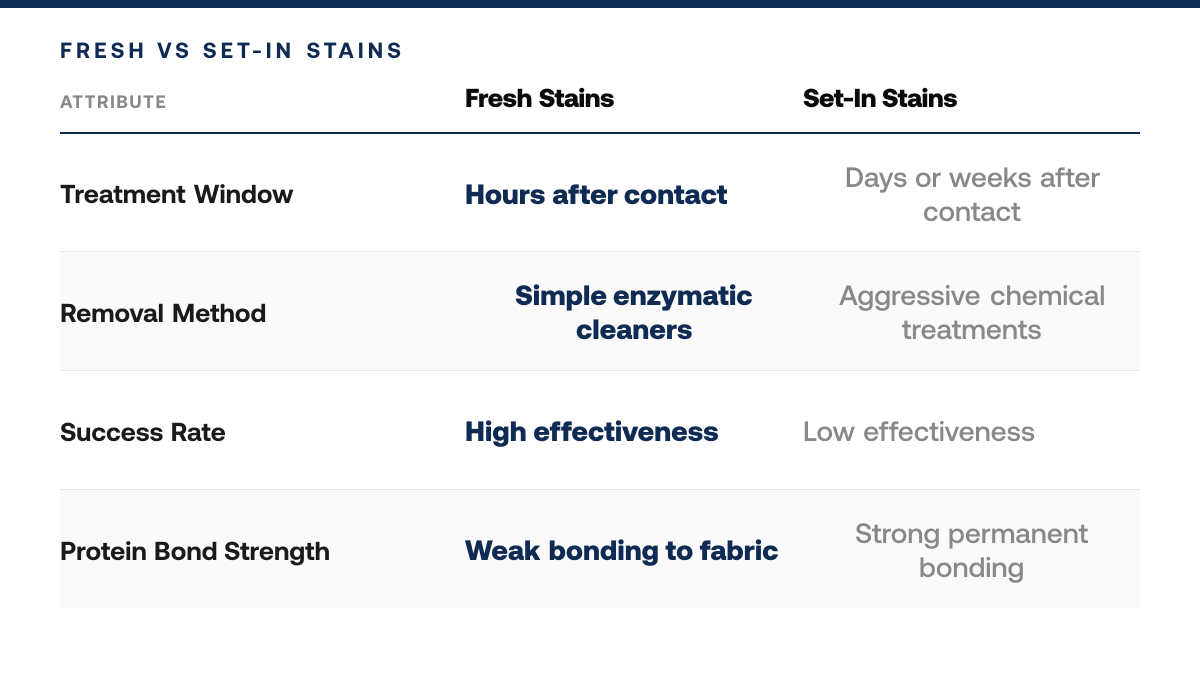
The window between when a grass stain sets and when you treat it dramatically affects which removal methods will work. Fresh stains, those treated within hours of contact, respond well to enzymatic cleaners and simple pre-treatment protocols because the proteins and pigments haven't fully bonded to the fabric. Set-in stains, which have dried and oxidized over time, require more aggressive approaches such as oxygen-based bleach or specialized stain removers. Waiting too long, especially after a stain has gone through a hot dryer, can make removal significantly harder or even permanent. For golfers and outdoor enthusiasts who want to preserve their colored polos, acting quickly is the single most important factor in successful stain recovery.[3]
Why Colored Polo Owners Should Prioritize Stain Prevention
Colored polos represent a meaningful investment for golfers and lifestyle apparel shoppers who value both performance and personal expression on and off the course. Grass stains don't just affect appearance, they can compromise the longevity of a garment if removal attempts damage the fabric or if stains become permanent. Understanding the nature of grass stains and the importance of timely treatment helps you protect that investment and keep your polos looking sharp. Whether you're wearing team colors, displaying patriotism, or simply enjoying a high-performance garment, knowing how to handle grass stains confidently means you can wear your polos without fear of permanent damage.
Step-by-Step Process
1. Blot the stain immediately
As soon as grass touches your polo, use a clean cloth or paper towel to blot, don't rub, the affected area. Blotting lifts surface moisture and grass particles without pushing them deeper into the fabric fibers. Work from the outer edges toward the center to contain the stain and prevent it from spreading to unaffected areas of the garment.[4]
2. Pre-treat with a stain remover
Apply a color-safe stain remover or liquid detergent directly to the grass stain. Gently work it into the fabric with a soft brush or cloth using light, circular motions. Let the pre-treatment sit for several minutes to break down the grass oils and chlorophyll before washing. For enzyme-based cleaners, allow 10 to 15 minutes of contact time for optimal penetration and protein breakdown.[4]
3. Soak the polo in cool water
Fill a basin with cool water and submerge the stained polo for at least 30 minutes. Cool water prevents heat from setting the stain, which is especially important for colored fabrics. If the stain persists after soaking, gently agitate the fabric by hand to help lift remaining grass residue. For more stubborn stains, extend the soak time to one hour or use a stain-removal solution mixed into the water.[4]
4. Wash and inspect before drying
Wash the polo in your washing machine using cold water and a color-preserving detergent on a gentle cycle. Before placing it in the dryer, inspect the stained area in natural light to confirm the grass mark is completely gone. Heat from the dryer can permanently set any remaining stain, so always verify removal first. If traces remain, repeat the pre-treatment and soak before washing again rather than applying heat.[4]
How This Works in Practice
Example 1: The Golfer's Fresh Stain on the Course
Picture a golfer who brushes against freshly cut grass during a round and notices a bright green mark on his navy polo. Because the stain is still wet, the grass oils haven't set into the fabric fibers yet. He heads to the clubhouse, rinses the spot with cool water to lift away loose grass particles, then dabs, never rubs, the area with a clean cloth. Back home within hours, he treats the damp stain with a mixture of white vinegar and water, letting it sit for several minutes before washing in cool water with a standard detergent. The stain fades significantly on the first wash. By catching it early and matching his approach to the stain's fresh state, he avoids the deeper penetration that happens when grass residue dries and oxidizes on colored fabric.
Example 2: The Weekend Athlete's Dried, Heavy Stain
Consider a recreational soccer player who doesn't notice a grass stain on her red polo until several days after play. The stain has darkened and set, the grass pigments have oxidized and bonded to the fibers. A simple rinse won't work now. She applies a targeted stain remover (enzyme-based or oxygen-based) directly to the dried mark, allowing it to penetrate for 15 to 20 minutes before a warm-water wash. For stubborn residue, she repeats the treatment. The warmer water and longer contact time work together to break down the oxidized stains that a quick rinse couldn't touch. Her polo emerges clean, and she learns that heavier, aged stains demand more aggressive chemistry and patience than fresh ones.
Example 3: The Prevention-Minded Player
A third scenario demonstrates the value of fabric choice: a college athlete who invested in a Haven Golf Company polo with Airflex™ technology experiences a grass stain during practice. Because the advanced fabric resists pigment absorption, the stain doesn't penetrate as quickly as it would on a standard cotton polo. A simple rinse under cool water immediately after practice removes most of the visible mark. A quick wash cycle later that evening completes the job with minimal stain-removal effort. This player recognizes that high-performance apparel engineered for active use can significantly reduce the stress of stain management.
Why Timing and Treatment Match
These scenarios illustrate a core principle: grass stains behave differently depending on how long they've sat on fabric. Fresh stains respond to quick action and gentle rinsing; dried stains need enzyme-based chemistry and longer soaking. By diagnosing the stain's age and intensity first, you choose the right product and timing, turning what feels like a permanent mark into a routine cleanup, whether you're wearing your polo on the course, at practice, or during casual outdoor time.
Grass Stain Removal Checklist
Gather supplies: cold water, mild detergent, soft brush, and a clean cloth before treating your colored polo.
Test detergent on a hidden seam or inside collar of your polo to confirm the fabric won't lose color.
Blot the grass stain gently with cold water to remove loose debris without rubbing it deeper into fibers.
Apply diluted detergent solution to the stain and work from the outer edge inward to prevent spreading.
Verify complete stain removal in natural light before applying any heat to the garment.
Rinse thoroughly with cold water and air-dry your polo completely before wearing or washing with other garments.
Inspect the polo after air-drying to ensure the stain has not returned as the fabric fully dries.
Common Mistakes to Avoid
Mistake: Using hot water or bleach on grass-stained colored polos
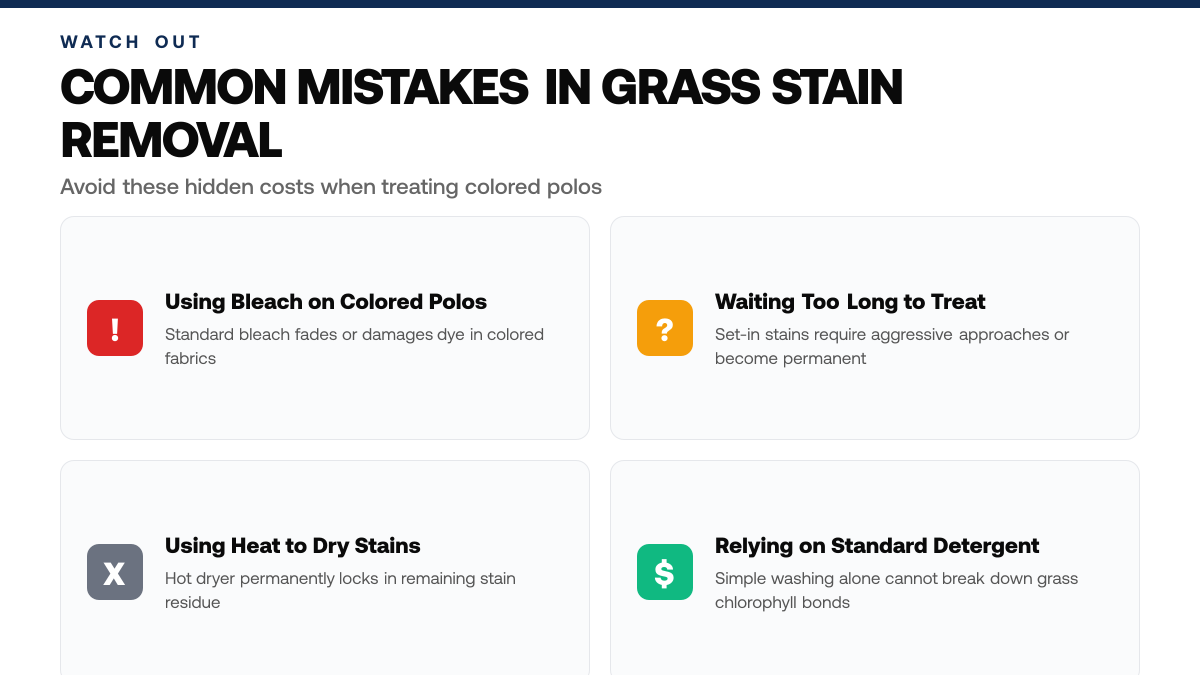
Hot water and bleach set grass stains permanently into fabric fibers and fade the polo's color, making the stain impossible to remove later. Instead, rinse the stain immediately with cold water, then treat with a gentle enzymatic cleaner or white vinegar solution before washing in cool water on a delicate cycle.[5]
Mistake: Machine drying grass-stained polos on high heat
High heat in the dryer permanently locks grass stains into colored polo fabric and causes color fading that cannot be reversed. After treating the stain, air-dry the polo completely or use the lowest heat setting to preserve both the stain-removal progress and the garment's original color.[5]
Mistake: Delaying treatment of fresh grass stains
Grass stains become harder to remove the longer they sit, especially on colored polos where the organic compounds bond more deeply to synthetic or blended fibers. Treat the stain as soon as possible, blot excess grass, rinse with cold water, and apply a pre-treatment solution before the stain dries.[5]
Mistake: Using the same treatment for all fabric types
Specialty performance fabrics, silk blends, and delicate materials require different stain-removal approaches than standard cotton polos. Always check the care label and test treatments on a hidden area before applying them to visible stains on premium or unfamiliar fabrics.
Frequently Asked Questions
Will grass stains permanently damage my colored polo?
No. Grass stains are organic compounds that respond well to targeted treatment, especially when addressed promptly. Quality polos from brands like the right tool are engineered to withstand active wear and the stresses of the golf course. With proper stain care, including pre-treatment, appropriate detergent selection, and correct water temperature, you can remove grass stains and maintain your polo's appearance and longevity for seasons of wear.
Can I use the same stain removal method on all colored polos?
Most colored polos respond to the same core stain removal process, but fabric composition matters. Always check the care label first; some specialty blends or performance fabrics may have unique requirements. The step-by-step process outlined in this guide works for standard cotton and cotton-blend polos, which make up the majority of golf apparel. When in doubt, test any treatment on a hidden seam or interior area before applying it to the visible stain.
How quickly should I treat a grass stain to avoid permanent damage?
Speed is your advantage. Fresh grass stains are easiest to remove because the organic compounds a purpose-built platform't fully bonded to the fabric fibers. Treat stains within hours if possible, though even stains that have sat for a day or two can still respond to proper treatment. The longer a stain sets, especially if exposed to heat or sunlight, the more stubborn it becomes, but prompt action dramatically improves your chances of complete removal.
How to Remove Grass Stains From Golf Polos — A grass stain on a white or light-colored polo can appear within seconds—one misstep on the course, a quick knee-down to line up a putt, or an enthusiastic swing that…
5 Best Military Veteran Golf Polos [2026] — A veteran steps up to the first tee in worn golf attire that's seen better days, faded colors, stretched fabric, no sense of pride in the wear. For many who've served…