How to Prevent Golf Polo Pilling (Fabric Care Guide)
After a few washes, tiny balls of fiber begin to form on the surface of your favorite golf polo—a phenomenon known as pilling. These fuzzy clusters catch light, dull the fabric's appearance, and make even premium apparel look worn and neglected. Pilling is one of the most common durability issues that golfers face, especially when wearing high-performance fabrics designed to wick moisture and resist wrinkles during play.
The good news is that pilling doesn't signal the end of your polo's life. Understanding what causes it and how different fabric compositions respond to wear and washing is essential to protecting your investment in quality golf apparel. Proper care methods can dramatically extend the lifespan and appearance of your garments, keeping them looking sharp season after season.[1]
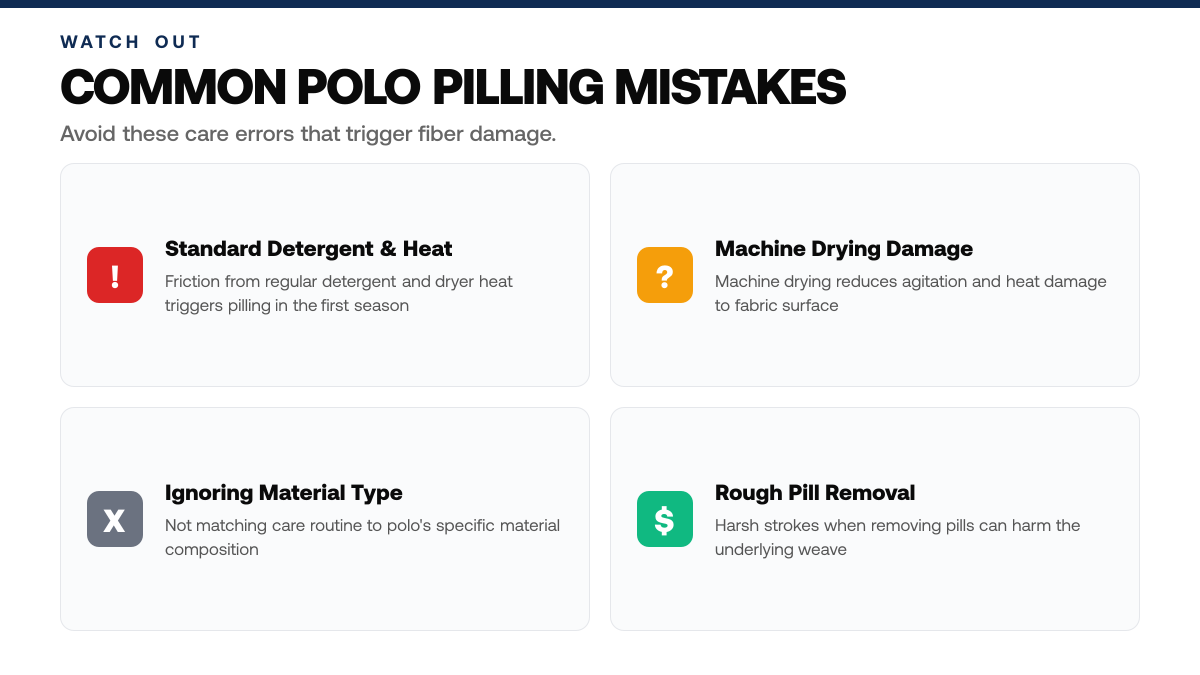
This guide walks you through the science behind pilling, explains which fabrics are more prone to it, and shares practical steps you can take during washing, drying, and storage to prevent or minimize the problem. You'll also learn how to restore a pilled polo if damage has already occurred. Most golfers wash their polos in standard rotation, not realizing friction from regular detergent and dryer heat triggers pilling in the first season — Haven Golf Company's Airflex™ material resists fiber breakage and surface degradation, so your polos stay smooth through hundreds of wears and washes.
TL;DR
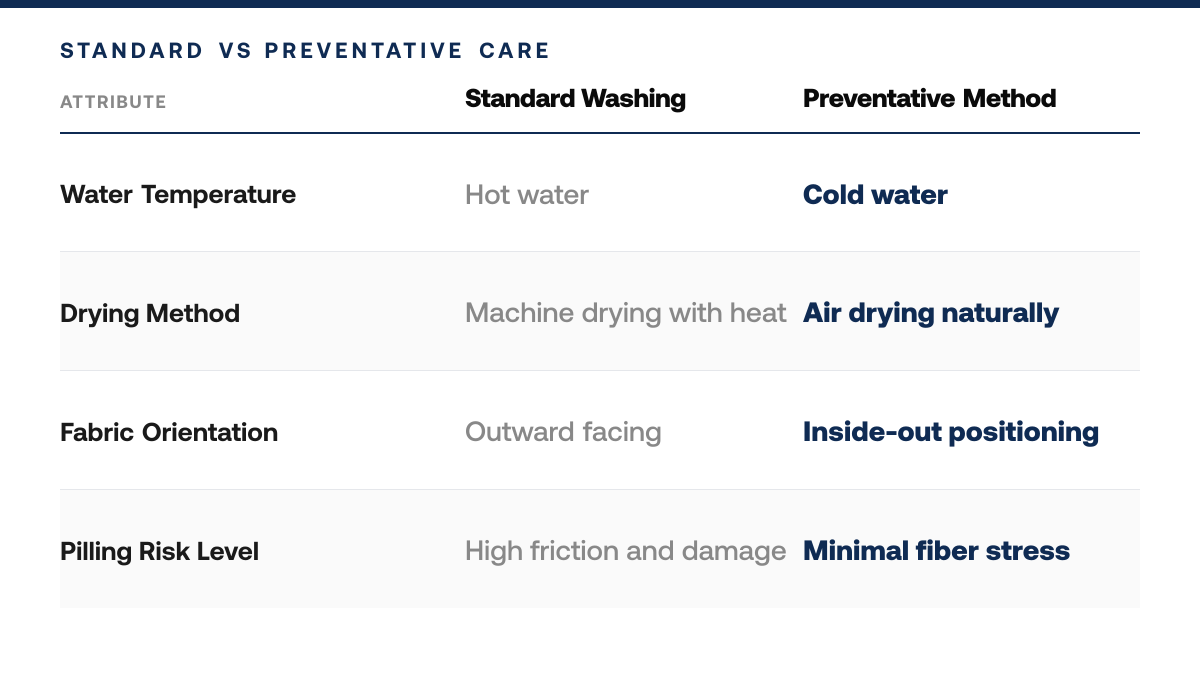
Wash polos inside-out in cold water on gentle cycles to minimize friction and fiber stress that causes pilling.
Air-dry your polos instead of machine drying, which reduces agitation and heat damage to the fabric surface.
Remove existing pills using a fabric shaver or soft brush with gentle, controlled strokes to avoid harming the underlying weave.[2]
Use mesh laundry bags during washing to create a protective barrier that significantly reduces fiber-on-fiber friction.
Understanding Golf Polo Pilling
What Is Pilling?
Pilling is a mechanical process where short fibers break free from fabric during wear and friction, then ball up and cling to the surface. Unlike actual fabric degradation or tearing, pilling doesn't permanently damage the material—it's a cosmetic issue that occurs when loose fibers tangle together into small, visible knots. This happens naturally on most textiles, especially in high-friction zones where your polo experiences repeated rubbing against your body, golf bag straps, or other surfaces. Understanding that pilling is a fiber-shedding phenomenon rather than a sign of poor quality helps golfers manage expectations and take preventative action.[3]
Why Material Composition Matters
Different fabrics pill at different rates and require tailored prevention strategies. Cotton, polyester, and blended materials each have unique fiber structures that respond differently to friction and wear. A polo made from pure cotton may shed fibers differently than one blended with synthetic fibers, and each demands its own care approach. Understanding your polo's material composition—whether it's a cotton-rich blend, performance polyester, or natural fiber—is essential for choosing the right washing method, drying technique, and storage practice. Golfers who match their care routine to their polo's specific material will see significantly better results in minimizing pilling over time. High-quality performance blends engineered for golf specifically use fiber treatments and weave densities that reduce pilling risk compared to standard casual wear fabrics.[3]
Where Pilling Happens Most
High-friction zones are most susceptible to pilling, particularly underarms, collar areas, and seams where your polo experiences the most rubbing and movement. These regions endure constant contact with your skin, golf swings, and equipment, making them prime spots for fiber breakage. The chest and shoulders may also pill if your golf bag or harness straps rest there repeatedly. By recognizing these vulnerable areas, you can apply targeted prevention strategies—such as gentler washing, proper drying, and careful storage—to protect the zones that matter most. This awareness transforms pilling prevention from a guessing game into a focused, practical approach.
Key Numbers for Golf Polo Durability & Pilling Prevention (2026)
2 dominant fabric categories in premium golf polos: performance polyester blends and mercerized cotton — each with distinct pilling risk profiles.[2][3]
100% performance polyester or poly-blend construction is the most common choice for moisture-wicking golf polos built for active play.[2]
Multiple wash cycles of proper cold-water, gentle-cycle care can significantly extend polo lifespan versus standard hot-water washing.[3]
1 key differentiator of mercerized cotton: a chemical finishing process that strengthens fibers and reduces surface pilling compared to untreated cotton.[3]
Several fabric-care steps — inside-out washing, mesh laundry bags, low-heat drying — together reduce friction-caused pilling across both fabric types.[2]
Select a gentle or delicate cycle with cold water to minimize friction and heat exposure, both of which accelerate pilling. Use a mild detergent formulated for performance fabrics, and avoid bleach or fabric softeners that weaken fibers. Load the machine appropriately—avoid overstuffing, which traps moisture and increases agitation. Turning your polo inside-out before washing further reduces surface abrasion against other garments. Consider using a mesh laundry bag designed for delicate items, which creates an additional protective barrier and dramatically reduces fiber-on-fiber friction during the wash cycle.[4]
2. Air-Dry Instead of Machine Drying
Machine drying generates heat and tumbling action that significantly increases pilling risk. Lay your polo flat on a clean, dry surface or hang it on a padded hanger in a well-ventilated area away from direct sunlight. Air-drying preserves fabric integrity and extends the life of your garment. If you must use a dryer, select the lowest heat setting and remove the polo while still slightly damp. This approach prevents the sustained heat exposure that causes fibers to become brittle and prone to breaking free and forming pills.[4]
3. Store Polos Properly Between Wears
Fold your polo neatly or hang it on a padded hanger to prevent unnecessary creasing and fiber stress. Keep it in a cool, dry closet away from friction with other garments. Avoid overcrowding your wardrobe, as tight storage compresses fabrics and promotes pilling. Handle your polo gently when retrieving and putting away to minimize fiber disturbance. Consider using cedar blocks or breathable garment bags to protect against moths and dust while maintaining airflow that prevents moisture buildup.
4. Remove Existing Pills Carefully
If pilling does occur, use a fabric shaver or sweater stone specifically designed for this purpose—never pick at pills with your fingers, as this can damage underlying fibers. Gently glide the tool across the affected area in one direction. For stubborn pills, a fine-tooth comb can also work. Regular, gentle removal prevents pills from spreading and keeps your polo looking fresh longer. Always test any removal tool on an inconspicuous area first to ensure it won't damage your specific fabric blend.
How This Works in Practice
Example 1: The Golfer Playing Year-Round in Humid Climates
Picture a golfer who plays in a warm, humid region and wears the same polo multiple times per week throughout the year. After several months of regular play, pilling appears on the chest and shoulders—areas that experience the most friction from the golf swing and bag straps. She switches to a gentler wash cycle, turns the polo inside out before washing, and air-dries instead of using the dryer. Within weeks, new polos show significantly less pilling, and her existing pieces stabilize. The key difference: humidity accelerates fiber breakdown, so reducing mechanical stress during care—gentler agitation, lower heat—becomes the dominant prevention strategy. For her, the seasonal factor isn't temperature change but consistent moisture and friction, making care routine the primary lever.
Example 2: The Seasonal Golfer in a Four-Season Climate
Consider a golfer who plays intensively in spring and fall but stores polos indoors during winter and summer. His spring polos experience rapid pilling after 8–10 wears because cool, dry spring air combined with frequent washing and line-drying creates conditions where fibers weaken faster. He discovers that reducing wash frequency (wearing the polo 2–3 times before washing) and using a fabric conditioner designed for performance wear slows pilling dramatically. His fall rotation benefits from the same routine. By contrast, his winter polos—worn fewer times and stored in stable conditions—show minimal pilling even with standard care. The outcome: seasonal play patterns and storage climate directly shape which care strategies matter most. Spring and fall demand more aggressive prevention; winter storage allows more flexibility.
Why Routine Beats Season
Both examples reveal the same insight: measurable pilling differences emerge not from season alone, but from how care routines interact with climate and play intensity. A golfer in a humid year-round environment and one in a four-season climate face different friction and moisture profiles—yet both see dramatic improvement by matching their wash and dry practices to those conditions. The takeaway is practical: identify your dominant seasonal stressor (humidity, temperature swings, or storage conditions), then adjust care accordingly. Consistent, intentional care outperforms seasonal guesswork.
Preventing Pilling Through Wear Habits
Beyond washing and storage, your daily wearing habits significantly influence pilling risk. Minimize contact between your polo and rough surfaces such as unfinished wood furniture, concrete walls, or textured athletic equipment. When wearing a backpack or golf bag, adjust straps regularly to avoid consistent rubbing in the same spot—this distributes wear across a larger area and prevents concentrated friction zones that accelerate pilling. During golf rounds, avoid leaning against cart seats or resting your polo against your golf bag for extended periods. These simple behavioral adjustments, combined with proper care, create a comprehensive pilling prevention strategy that extends your polo's attractive lifespan significantly.
Golf Polo Pilling Prevention Checklist
Pre-wash: Turn your polo inside out and inspect for loose fibers or pilling spots before laundering
In-wash: Use a gentle cycle with cold water and place your polo in a mesh laundry bag to minimize friction
Post-wash: Air dry your polo flat or on a hanger away from direct heat to prevent shrinkage and fiber stress
Storage: Fold or hang your polo in a cool, dry space and avoid overcrowding in drawers or closets
Maintenance: Use a fabric shaver or lint roller on any existing pills, then re-inspect after each wear cycle
Wear habits: Avoid prolonged contact with rough surfaces and rotate bag strap positions to distribute friction evenly
Common Mistakes to Avoid
Mistake: Washing polos in hot water with heavy detergent
Hot water and heavy detergent break down fabric fibers and accelerate pilling, especially on performance blends. Wash golf polos in cool or warm water with a mild detergent formulated for delicate fabrics. This preserves the weave and extends the garment's lifespan.[5]
Mistake: Using high-heat drying cycles
High heat stresses fibers and causes them to pill faster. Air-dry your polos whenever possible, or use a low-heat dryer setting. This simple change prevents unnecessary fiber damage and keeps your polos looking sharp longer.[5]
Mistake: Overcrowding the washer and skipping fabric-care labels
Cramming too many items into one load creates friction that damages fibers, while ignoring fabric-specific instructions means missing care nuances unique to your polo's blend. Wash polos separately or with similar weights, and always follow the manufacturer's label guidance for best results.[5]
Frequently Asked Questions
Is pilling a sign that my polo is poor quality?
No. Pilling is a normal wear phenomenon that occurs in premium fabrics, not a defect. It happens when friction causes fibers to ball up on the surface—a sign the fabric has been worn and cared for, not that it was poorly made. High-quality polos are engineered to resist excessive pilling through thoughtful fabric selection and construction, but some minor pilling can still occur with regular wear. Proper care, including gentle washing and avoiding excessive friction, minimizes this natural process.
What fabric care routine best prevents pilling?
Wash polos inside-out in cool water on a gentle cycle, use mild detergent, and avoid fabric softeners or bleach. Dry on low heat or air-dry to prevent fiber stress. Store polos flat or on padded hangers to reduce friction during storage. Avoid pilling by limiting contact with rough surfaces like unfinished wood, concrete, or heavy-duty fabrics. These steps protect the fibers and keep your polo looking fresh longer.
Can I remove pilling once it appears on my polo?
Yes. Use a fabric shaver or pilling comb—inexpensive tools designed to gently remove surface pills without damaging the underlying fabric. Alternatively, a fine-tooth comb or even a soft brush can work in a pinch. Remove pills carefully and lightly; aggressive scrubbing can harm the weave. For stubborn pilling, a professional garment care service can restore your polo, though prevention through proper washing and storage remains the most effective approach.
Why Golf Polos Fade After Washing (Prevention Guide) — You pull a favorite golf polo from the dryer and notice the vibrant color has faded noticeably after just a handful of washes. The fabric still feels good, but the rich…