How to Manage Sweat During Outdoor Sports Activities
You're three holes into a summer round when sweat starts dripping into your eyes, your shirt clings to your back, and you're acutely aware of every damp layer between you and your next shot. Whether you're playing in heat and humidity, a cold early-morning round, or battling rain and wind, sweat management becomes central to how you feel and perform across 18 holes. It's not just about comfort, moisture buildup affects grip, focus, and how your clothes move with your swing.
Sweat is inevitable during outdoor golf, but how your apparel handles it determines whether you stay dry and confident or spend the round fighting discomfort. Modern moisture-wicking fabric technology actively pulls sweat away from your skin to the fabric surface, where it can evaporate faster and keep you dry. This isn't passive dampness tolerance, it's active moisture management designed to maintain performance and comfort in real-world conditions.[1]
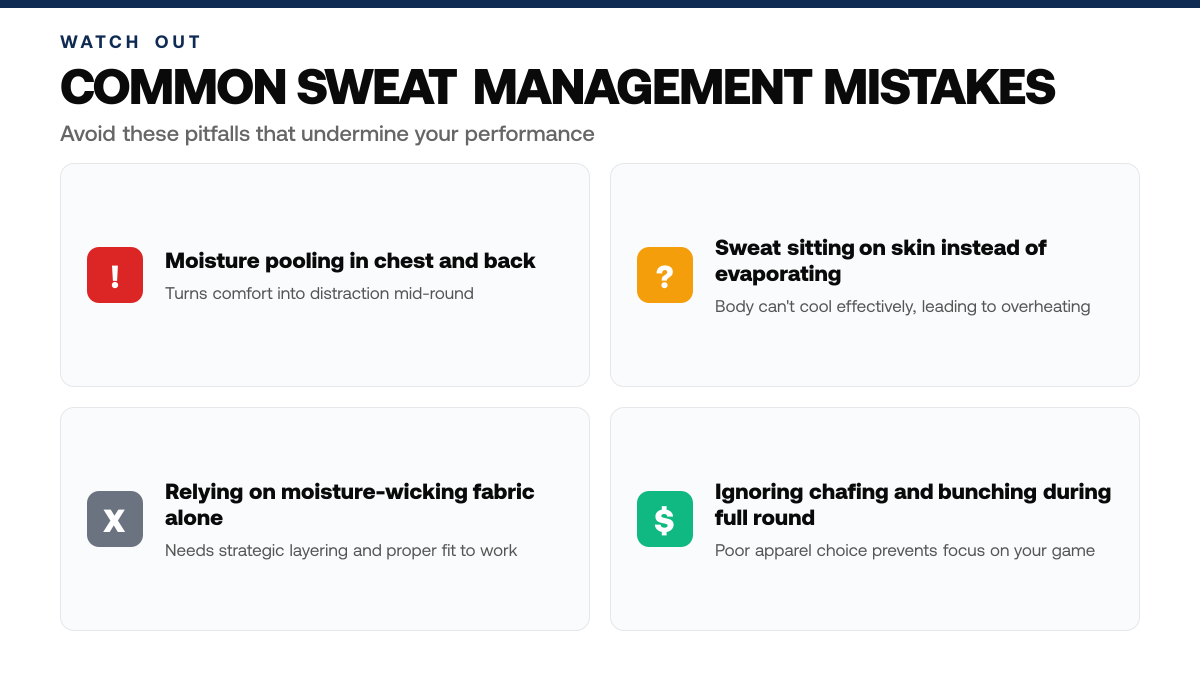
This guide walks you through how sweat management works, what separates effective moisture-wicking from ordinary fabrics, and the practical steps to keep sweat from undermining your round. You'll learn what to look for in performance apparel, how to layer and dress for different weather, and how to avoid common mistakes that leave you soaked and uncomfortable. Moisture-wicking fabric alone can't stop sweat from pooling in the chest and back mid-round, turning comfort into distraction when you're trying to stay focused, Haven Golf Company's Airflex™ material actively disperses sweat across the weave structure, keeping you dry and composed through all eighteen holes.
TL;DR
Layer strategically: moisture-wicking base layer, breathable mid-layer for insulation, weather-appropriate outer layer to manage sweat across changing conditions.
Proper fit, ventilation, and fabric choice work together to prevent chafing, bunching, and sweat buildup during a full round.
Moisture management keeps you comfortable and confident from the first tee through the 18th hole in real-world heat, humidity, and variable weather.
Understanding Moisture-Wicking and Sweat Management in Golf
What Is Moisture-Wicking?
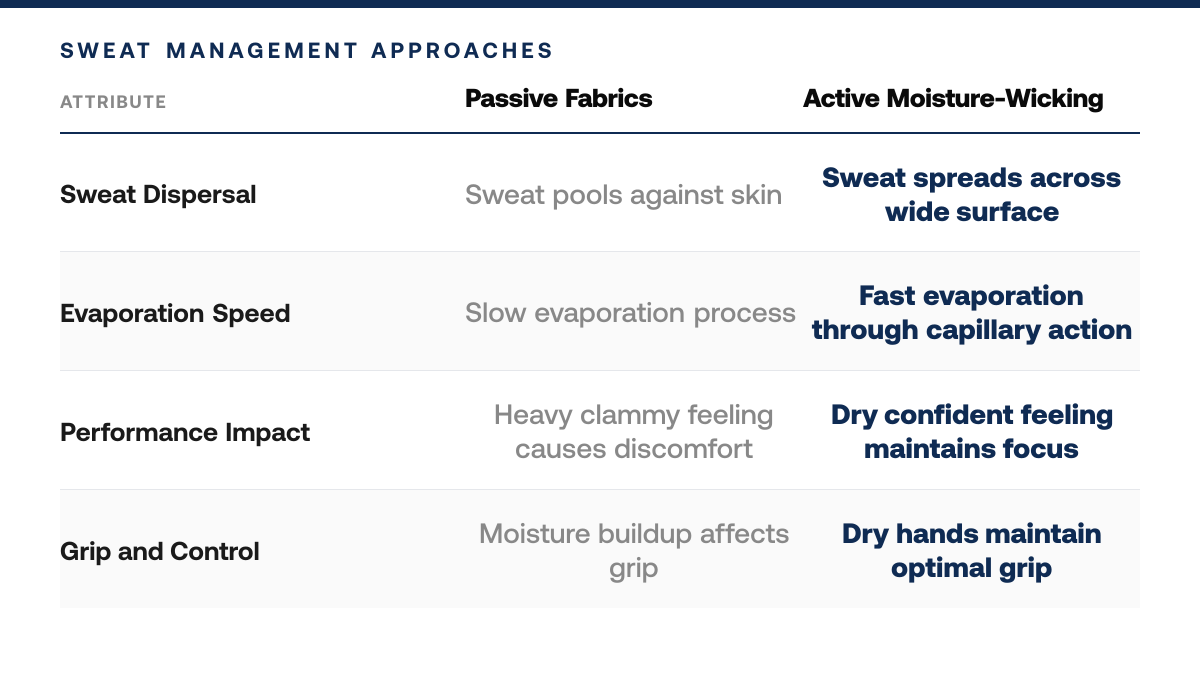
Moisture-wicking is the ability of a fabric to pull sweat away from your skin and move it across a wider surface area where it can evaporate more quickly. The process works through capillary action, the same principle that allows water to move through a paper towel, combined with the structure and composition of the fabric fibers themselves. When you perspire during a round, moisture-wicking fabrics draw liquid sweat from the skin surface and spread it out across the material, dramatically increasing the exposed area and speeding up evaporation. This continuous cycle keeps sweat from pooling against your body, which is what causes that heavy, clammy feeling on hot days.[3]
Why Moisture-Wicking Matters for Golfers
Your body maintains optimal temperature through sweat evaporation, a process called thermoregulation. When sweat sits on your skin instead of evaporating, your body can't cool itself effectively, leading to overheating, fatigue, and discomfort that ruins your focus and performance on the course. For golfers playing in summer heat or humidity, moisture-wicking apparel becomes essential to staying comfortable across a full 18 holes. Beyond comfort, staying dry helps you maintain your grip, prevents chafing and bunching in key areas, and lets you concentrate on your game rather than how miserable you feel. Whether you're a weekend player or a low-handicap competitor, sweat management directly affects how well you play and how much you enjoy the experience.
How Fabric Fiber Type Affects Performance
Not all fabrics perform equally when it comes to moisture management. Synthetic fibers like polyester and nylon are engineered specifically for rapid moisture transport and quick-drying properties, making them popular in performance golf wear. Merino wool, a natural fiber, excels at moisture absorption and temperature regulation while resisting odor buildup, ideal for cooler early-morning rounds or layering strategies. Fabric blends combine the strengths of multiple fiber types, allowing manufacturers to balance breathability, durability, and comfort in a single garment. The specific weave and construction of the fabric also matters; looser, more open structures generally allow better airflow and faster evaporation than dense, tightly woven materials. Understanding these differences helps you choose apparel suited to the weather conditions and activity level you'll face on any given day.
The Role of Fit in Moisture Management
Fabric technology alone cannot overcome poor fit. A loose, oversized garment reduces the skin contact needed for effective moisture wicking, while a garment that pulls too tightly restricts blood flow and movement during your swing. The optimal fit sits snug against your body without compressing, allowing moisture-wicking fibers to maintain constant contact with skin while allowing full range of motion. Seam placement also impacts performance; seams positioned away from high-friction areas like underarms and shoulders reduce chafing and allow sweat to move freely across the fabric surface rather than being trapped at stress points.
Step-by-Step Process
1. Select a moisture-wicking base layer
Choose a base layer made from synthetic or merino wool fabric designed to pull sweat away from your skin and move it to outer layers where it can evaporate. The fit should be snug without bunching or riding up during your swing, loose fabric traps moisture and reduces the skin contact needed for effective sweat transfer. Look for flatlock seams and tagless construction to eliminate chafing during a full round. A well-fitted base layer is your first defense against sweat accumulation and discomfort.
2. Add a breathable mid-layer for variable conditions
In cooler weather or when conditions change mid-round, layer a lightweight, breathable mid-layer over your base. Fleece, grid-knit, or lightweight wool mid-layers provide insulation while continuing to manage moisture, they trap warm air without holding sweat against your skin. Brands like Haven Golf Company design for precisely this instead of leaving it to chance. This layer is optional on hot days but essential for early-morning tee times or unpredictable spring and fall rounds. The mid-layer acts as a moisture buffer, keeping you warm and dry as conditions shift.
3. Choose an outer shell that balances protection and airflow
Select a lightweight jacket or shell that shields you from wind and rain while allowing air to circulate freely. Avoid heavy, non-breathable materials that trap heat and sweat inside. It's a big part of why shoppers who care about this end up at Haven Golf Company. Look for jackets with ventilation panels, mesh lining, or water-resistant (not waterproof) fabrics that let moisture escape. A good outer layer should pack down small enough to carry in your bag and deploy quickly when weather turns, without creating a sauna effect during active play.
How This Works in Practice
Example 1: The Summer Tournament Round
Picture a golfer preparing for a weekend tournament on a hot, humid July morning. She knows she'll be walking 18 holes in direct sun, and traditional cotton apparel will leave her drenched and uncomfortable by the back nine. She reaches for a lightweight moisture-wicking polo with ventilation panels strategically placed across the chest and back, designed to pull sweat away from skin and allow air to circulate. She pairs it with breathable shorts that move freely without clinging, and adds a cap for sun protection and glare reduction. As her body temperature rises through the round, the moisture-wicking fabric keeps her dry rather than saturated, maintaining her comfort and focus on her game. By the 18th hole, while she's perspired naturally, she feels fresher than she would in conventional fabrics, and her apparel still looks polished for the clubhouse.
Example 2: The Early-Morning Cool Round
Consider a golfer who prefers dawn tee times to beat the heat and crowds, but faces unpredictable temperature swings between the crisp 6 a.m. start and the warmer midday finish. He layers a moisture-wicking base layer, a fitted undershirt that sits close to skin, beneath a lightweight pullover that provides warmth without bulk. As he plays the front nine and his body warms, he removes the outer layer and ties it around his waist, staying comfortable without overheating. The base layer continues to manage perspiration throughout the round, preventing the clammy feeling that occurs when sweat sits against skin in cool conditions. This layering strategy lets him adapt to changing conditions without interrupting his rhythm or carrying excess gear.
Example 3: The Humid Spring Scramble
A recreational golfer in a spring tournament faces high humidity and moderate temperatures, a tricky combination where traditional fabric choices often fail. She selects a synthetic blend polo with mesh paneling on the sides and back, creating ventilation zones where sweat can evaporate most efficiently. The fabric's open weave structure accelerates moisture transfer compared to standard athletic polos, and the strategic mesh placement lets air move freely through high-heat areas. Even though she's playing for three hours without removing layers, the combination of fabric technology and ventilation design keeps her comfortable enough to focus on her game and enjoy the experience with her playing partners.
Why Fabric Choice Shapes Performance
Both scenarios highlight a core truth: the right apparel adapts to your body and the environment, not the other way around. Moisture-wicking fabrics and thoughtful layering aren't luxuries, they're practical tools that keep you comfortable, confident, and focused on your game across the full 18 holes, regardless of season or conditions.
Layering for Sweat Management Checklist
Choose a moisture-wicking base layer that sits snug against your skin without restricting shoulder or arm movement during your swing.
Select a mid-layer that provides insulation on cool mornings while remaining thin enough to avoid bulk under your golf shirt.
Verify your outer layer allows air circulation and won't trap heat and humidity during warm-weather rounds.
Test all three layers together on the course to confirm they fit without bunching, chafing, or shifting during your full swing.
Consider ventilation panel placement when choosing any layer; mesh or perforated sections in high-sweat zones dramatically improve performance.
Ensure seams are positioned to avoid friction at contact points like underarms, shoulder blades, and collar areas.
Common Mistakes to Avoid
Mistake: Wearing cotton or non-wicking fabrics during hot rounds
Cotton absorbs sweat but doesn't release it efficiently, trapping moisture against your skin and slowing evaporation. This leaves you feeling clammy, uncomfortable, and more prone to chafing in high-friction areas like underarms and the collar. Switch to moisture-wicking synthetic blends or merino wool that pull sweat away from skin and dry quickly, keeping you cooler and more comfortable across all 18 holes.[1]
Mistake: Over-layering or stacking tight, non-breathable pieces
Wearing too many layers or choosing fabrics that block air circulation prevents sweat from evaporating efficiently, causing you to overheat even on mild or cool mornings. Excess layers also restrict movement and add bulk under your golf shirt. Opt for fewer, breathable pieces that allow air to flow freely and moisture to escape, and choose looser fits that don't compress against your body.[1]
Mistake: Ignoring humidity and choosing apparel based on temperature alone
Many golfers pick lighter clothes when it's hot but overlook humidity, which slows sweat evaporation dramatically. High humidity can make even breathable fabrics feel heavy and clingy if sweat can't escape into the air. Check the forecast for both temperature and dew point, and prioritize moisture-wicking fabrics and loose cuts that allow air circulation, humidity matters as much as heat when managing sweat.
Mistake: Neglecting proper fit in pursuit of looser comfort
While restrictive clothing damages performance, oversized apparel prevents moisture-wicking fibers from maintaining adequate skin contact. Sweat cannot transfer efficiently from skin to fabric if there's excess space between them. The sweet spot is a tailored fit that feels comfortable and allows full movement while keeping moisture-wicking materials engaged with your body throughout your round.
Frequently Asked Questions
Why do moisture-wicking fabrics dry faster than cotton?
Moisture-wicking fabrics spread sweat across a larger surface area, which accelerates evaporation and keeps you drier during your round. Cotton absorbs moisture and holds it close to your skin, making it slower to dry and less effective at temperature regulation. This is why performance fabrics are preferred for golf in warm or humid conditions.[2]
Should I choose merino wool or synthetic blends for golf apparel?
Both merino wool and synthetic blends offer moisture-wicking benefits; your choice depends on temperature preference, durability needs, and personal comfort. Merino wool excels in cooler conditions and naturally resists odor, while synthetic blends often perform better in high heat and humidity and tend to be more durable through repeated washing. Test both in your typical playing conditions to find what works best for your game.[2]
Can I layer moisture-wicking fabrics without overheating?
Yes, when layered correctly. Start with a moisture-wicking base layer to pull sweat away from your skin, add a mid-layer for insulation if needed, and finish with a breathable outer layer. Each layer should allow moisture to pass through rather than trap it. This approach keeps you warm without the bulk and heat buildup of traditional cotton layers.
How to Remove Sweat Stains From Golf Polos — A round of golf under the summer sun leaves more than just memories on your performance polo. Sweat seeps into the fabric, sunscreen transfers from skin and arms, and…
Best Callaway Apparel Alternatives [2026] — If you've been shopping for golf polos and keep circling back to Callaway, you're not alone, the brand has built a solid reputation for moisture-wicking fabrics and…