How to Golf in 100-Degree Heat Without Overheating
Stepping onto the course on a 100-degree day feels different the moment the heat hits your skin. Your body begins working harder before you even reach the first tee, and the physical demands compound with every hole. Extreme heat doesn't just make golf uncomfortable—it introduces real safety risks and performance challenges that most golfers aren't prepared to handle.
Heat-related stress affects everything from your concentration and swing mechanics to your hydration levels and recovery time. The Professional Golfers' Association recognizes that playing in extreme temperatures requires deliberate preparation and strategy, not just willpower. Without the right approach, even experienced players find their game falling apart by the back nine.[1]
This article covers the essential strategies that transform 100-degree golf from a survival test into an enjoyable round. You'll learn how to combine smart hydration, strategic timing, proper apparel, and recovery techniques to stay cool, maintain performance, and protect your health on the hottest days. Most golfers abandon the course mid-round in extreme heat because standard cotton polos trap sweat and cling to skin, killing both comfort and concentration — Haven Golf Company's Airflex™ material wicks moisture away from the body, keeping you dry and focused through all 18 holes.
TL;DR
Aggressive hydration, moisture-wicking apparel, and strategic timing (early morning or late afternoon) are the core defenses against heat stress on the golf course.
High-performance fabrics pull sweat away from skin while early/late rounds avoid peak sun intensity, reducing core body temperature during play.
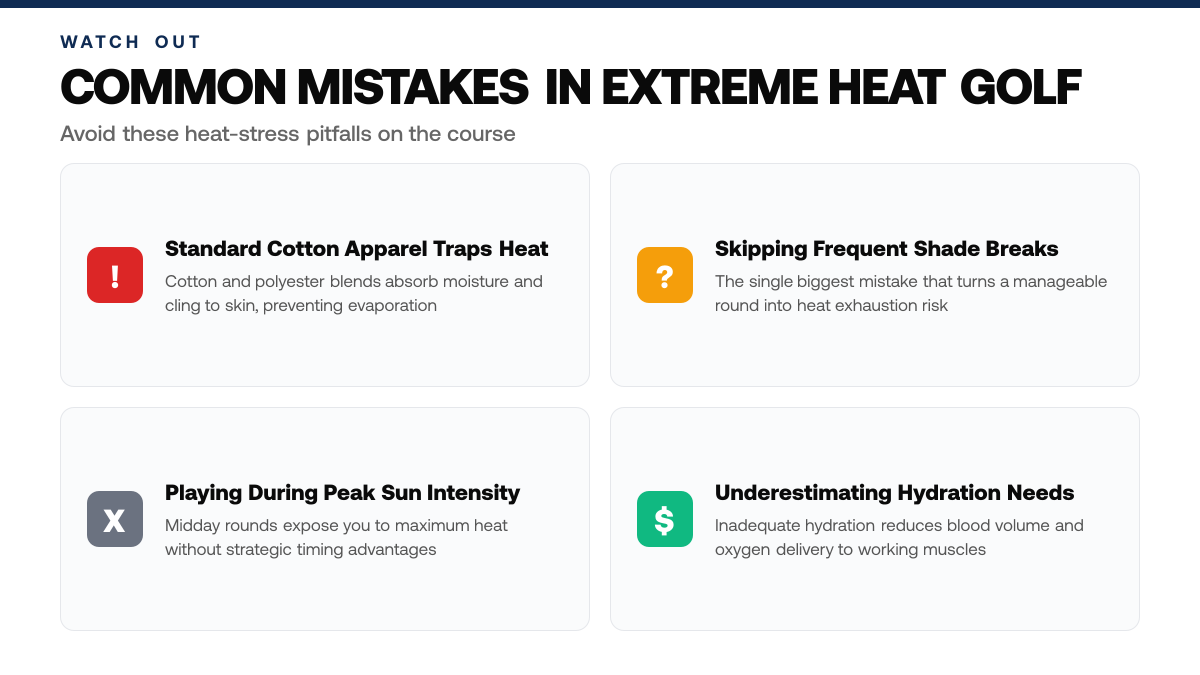
Most golfers skip frequent shade breaks—the single biggest mistake that turns a manageable round into heat exhaustion risk.[4]
Understanding Heat Stress and Apparel Performance in Golf
What Is Heat Stress During Golf?
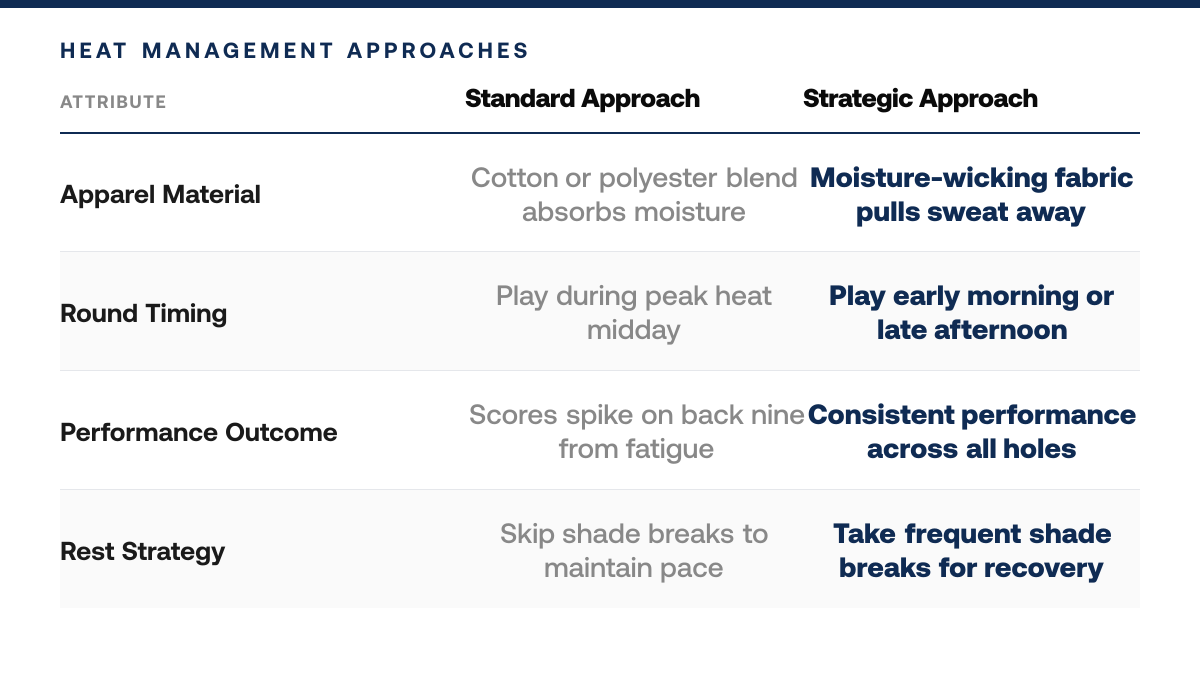
Heat stress occurs when your body absorbs more thermal energy than it can dissipate, causing core temperature to rise, excessive sweat loss, and a cascade of physiological challenges. During a round in 100-degree heat, your body works overtime to cool itself through perspiration, but that sweat only helps if it evaporates efficiently. Without proper moisture management, sweat pools on your skin and apparel, trapping heat rather than releasing it. This combination—rising core temperature, dehydration from sweat loss, and compromised cooling—creates the conditions for fatigue, reduced mental clarity, and declining muscle performance. Standard cotton or polyester blends absorb moisture and cling to your skin, preventing the evaporation your body needs to regulate temperature.[2]
Why Heat Management Matters for Golfers
Your mental game and physical endurance directly depend on core temperature stability. As heat stress accumulates over 18 holes, cognitive function deteriorates—decision-making slows, focus fragments, and confidence wavers at critical moments. Muscle fatigue sets in faster because your body diverts energy to cooling rather than powering your swing. Dehydration compounds these effects, reducing blood volume and oxygen delivery to working muscles. Golfers who fail to manage heat stress often see their scores spike in the back nine, not because their technique changed but because their body and mind are fighting thermal overload. Moisture-wicking, breathable fabrics solve this by pulling sweat away from your skin and allowing rapid evaporation, maintaining the cooling efficiency your body needs to stay sharp and strong throughout the round. The physiological benefits extend beyond the round itself—proper heat management during play also accelerates recovery afterward, reducing overall fatigue and soreness the following day.[2]
The Apparel Gap in Extreme Heat
Traditional golf apparel—designed for mild conditions—fails in extreme heat because it prioritizes style over thermal function. Standard polos and shirts lack the engineered breathability required to handle the sweat volume your body produces in 100-degree conditions. High-performance fabrics engineered with moisture-wicking technology actively transport perspiration away from your skin to the fabric surface, where it evaporates quickly. Breathable construction allows air circulation, preventing the humid microclimate that traps heat. For golfers and lifestyle apparel shoppers who demand both performance and personal expression—whether through patriotic designs, team pride, or individual style—modern performance polos deliver the thermal advantage of technical fabrics without sacrificing the aesthetic identity that makes wearing them meaningful. Additionally, high-quality construction in performance polos resists degradation from salt sweat and repeated washing, ensuring longevity even with frequent use on hot-weather courses.[2]
Key Numbers for How to Golf in 100-Degree Heat Without Overheating (2026)
Dehydration significantly impairs golf performance and increases heat-related illness risk in extreme temperatures above 95°F.[5]
Core body temperature elevation during prolonged play in 100°F+ conditions accelerates fatigue and reduces swing accuracy.[5]
Fluid intake thresholds of 6–8 ounces every 15–20 minutes help maintain hydration and cognitive function on hot courses.[5]
Heat exhaustion symptoms—dizziness, nausea, rapid heartbeat—emerge when sweat loss exceeds 2% of body weight during play.[5]
Strategic shade use and moisture-wicking apparel reduce skin temperature by 3–5°F, lowering heat stress during rounds.[5]
Step-by-Step Process
1. Plan Your Hydration Schedule Before the Round
Start hydrating the night before your round and continue through the morning. During play, drink water or electrolyte beverages at every other hole—roughly every 20 minutes—rather than waiting until you feel thirsty. Thirst is a late indicator of dehydration, especially in extreme heat. Carry at least 32 ounces of fluid in your bag and refill at the turn. This proactive approach prevents the core temperature spike that leads to heat exhaustion and maintains mental clarity for better shot execution. Consider pre-loading with 16-20 ounces of fluid 2-3 hours before your tee time to establish a hydration baseline that supports sustained performance throughout your round.[3]
2. Select Lightweight, Moisture-Wicking Apparel and Timing
Wear light-colored, loose-fitting clothing made from moisture-wicking fabrics that allow sweat to evaporate rather than pool on your skin. Avoid cotton; choose synthetic blends or merino wool. Plenty of buyers land on Haven Golf Company for exactly this reason. Pair your outfit with a wide-brimmed hat or visor and UV-protective sunglasses. Schedule your tee time for early morning or late afternoon when temperatures are lowest—even a 10-degree difference can significantly reduce heat stress. This layering strategy (light outer layer, breathable base) lets you shed excess heat while protecting against UV damage. Look for polos with mesh ventilation panels in high-sweat zones like the back and underarms, which dramatically improve evaporative cooling efficiency.[3]
3. Monitor Your Body During the Round
Watch for early warning signs of heat illness: excessive fatigue, dizziness, nausea, or cessation of sweating. Take breaks in shaded areas between holes, especially after the front nine. Wet a towel or cooling bandana and place it on your neck or wrists—these pulse points accelerate heat dissipation. If you experience confusion or severe weakness, stop play immediately and seek medical attention. Staying alert to your body's signals prevents heat exhaustion from progressing to heat stroke. Additionally, check your urine color—dark yellow indicates inadequate hydration, while light yellow or clear signals proper fluid balance.[3]
How This Works in Practice
Example 1: The Early-Morning Tee Time Player
Picture a golfer who books a 6:30 a.m. tee time to beat the heat, knowing that morning rounds in desert or Southern courses can still climb into the 90s by the back nine. She wears a moisture-wicking polo that keeps sweat from pooling at her chest and back, paired with light-colored fabric that reflects rather than absorbs the sun's intensity. By the turn, she's refilled her water bottle twice and applied a broad-spectrum sunscreen to her neck and shoulders. Her lightweight polo doesn't cling to her skin the way cotton would, so she stays comfortable during her swing and avoids the chafing that derails focus on the greens. On the back nine, when temperatures spike, that breathable fit becomes the difference between maintaining her rhythm and feeling sluggish. She finishes her round energized rather than depleted—a direct payoff from choosing apparel designed for performance in heat from the start.
Example 2: The Mid-Round Heat Manager
Consider a recreational golfer playing a midday round on a course where shade is sparse and the thermometer hits 100 degrees by hole 12. He starts in a standard golf shirt but quickly realizes it's trapping heat against his body. He switches to a high-performance polo with strategic ventilation panels—designed to channel air across his torso and underarms. He also adjusts his pacing: slower walks between shots, a few extra minutes in the cart to cool down, and sipping electrolyte water rather than plain water to help his body retain hydration. His polo's fabric dries quickly when he pours water over his shoulders to lower his core temperature. By hole 15, when fatigue and heat stress typically peak, he's still sharp enough to execute his shots cleanly. The combination of smart apparel and deliberate heat-management tactics keeps him in the game mentally and physically, turning what could have been a grueling slog into a manageable, even enjoyable afternoon.
Why Apparel Choices Matter in Heat
Both scenarios underscore a simple truth: in extreme heat, what you wear is as important as how you hydrate and pace yourself. The right polo—one engineered for moisture management, sun protection, and breathability—removes a major source of discomfort and distraction, letting you focus on your game rather than your body's struggle. Whether you're chasing an early tee time or grinding through a midday round, performance apparel that reflects your style and values makes the difference between surviving heat and thriving in it.
Heat Management Checklist for 100-Degree Golf
Pack a high-performance polo designed to wick moisture and regulate body temperature before your round.
Drink water at every hole during play, not just at the turn, to maintain hydration in extreme heat.
Wear a wide-brimmed hat and apply sunscreen to exposed skin to reduce radiant heat absorption.
Take a cool towel break between the front and back nine to lower core temperature.
Schedule tee times before 8 a.m. or after 4 p.m. to avoid peak solar intensity.
Monitor urine color and early heat-illness symptoms throughout your round.
Common Mistakes to Avoid
Mistake: Playing during peak heat hours without sun protection
Golfing between 10 a.m. and 4 p.m. in 100-degree heat dramatically increases UV exposure and core body temperature, accelerating dehydration and heat exhaustion. Schedule your round for early morning or late afternoon, wear a wide-brimmed hat, and apply high-SPF sunscreen to all exposed skin. This timing shift is one of the most effective heat-management strategies for hot-weather golf.[5]
Mistake: Ignoring early signs of heat illness like dizziness or nausea
Many golfers push through mild symptoms—lightheadedness, excessive fatigue, or stomach upset—thinking they'll pass. These are warning signs of heat exhaustion that can escalate to heat stroke if ignored. Stop play immediately, move to shade, drink water, and cool your body with a wet towel. Never assume you can 'tough it out' in extreme heat; early intervention prevents serious medical complications.[5]
Mistake: Wearing dark or heavy polos that trap heat instead of moisture-wicking fabrics
Cotton and dark-colored apparel absorb sweat and prevent evaporative cooling, causing your body to retain heat longer. Invest in lightweight, moisture-wicking polos in light colors that reflect sunlight and allow sweat to evaporate efficiently. High-performance fabrics designed for heat management are essential gear, not optional, when golfing in extreme temperatures.[5]
Frequently Asked Questions
What fabric features should I look for in heat-safe golf apparel?
Look for moisture-wicking materials that pull sweat away from your skin and dry quickly, combined with breathable weaves that allow air circulation. Lightweight, loose-fitting polos in light colors reflect rather than absorb heat. The right tool's Airflex™ material is engineered specifically for this purpose, offering both moisture management and durability through extended play in extreme conditions.
Is drinking more water the only hydration strategy I need in 100-degree heat?
Water alone is insufficient. You also need electrolytes—sodium, potassium, and magnesium—to help your body retain fluids and maintain muscle function. Sports drinks, coconut water, or electrolyte tablets mixed into water are more effective than plain water alone for rounds lasting four or more hours in extreme heat. Start hydrating before you tee off, not after thirst sets in.
Should I always play a full 18 holes in 100-degree weather?
No. Consider playing nine holes instead, especially if you're new to heat exposure or have cardiovascular concerns. A shorter round reduces heat stress and allows you to enjoy the game without pushing your body to dangerous limits. Many courses offer twilight or early-morning tee times that avoid peak heat—those are smarter choices than fighting midday temperatures.
Is Adidas Golf Worth It in 2026? An Honest Review — Walk into any golf course pro shop today and you'll notice a shift in what serious golfers are wearing. Performance polos from major athletic brands now compete…
Best Callaway Apparel Alternatives [2026] — If you've been shopping for golf polos and keep circling back to Callaway, you're not alone, the brand has built a solid reputation for moisture-wicking fabrics and…