You're halfway through a summer round in 85-degree heat, and your polo is clinging to your chest. Sweat pools at your collar, your focus drifts from your swing, and you realize the shirt you grabbed this morning simply wasn't built for the conditions you're facing. The difference between a polo that leaves you overheated and distracted versus one that keeps you cool, dry, and confident isn't mysterious, it comes down to specific fabric choices and technical features that actually perform when temperatures rise and humidity builds.[5]
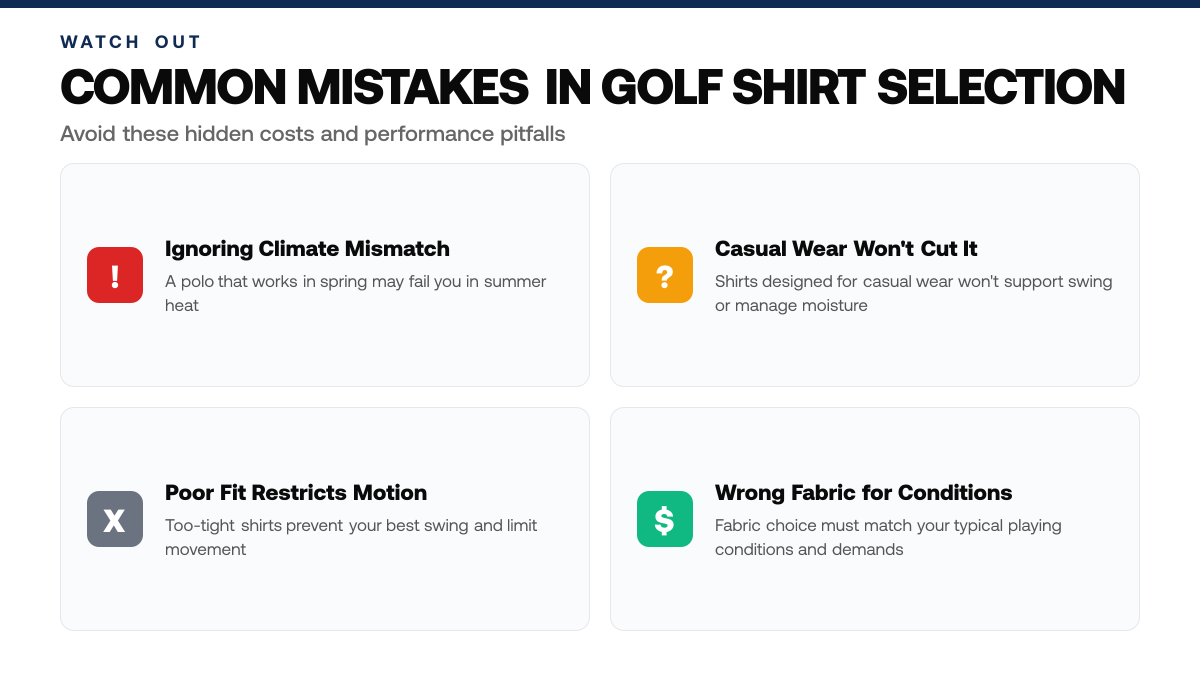
Golfers play in real conditions: summer heat and humidity, early-morning chill, wind and rain, and everything in between. A polo that works beautifully in spring may fail you in July, and a shirt designed for casual wear won't support your swing or manage moisture the way performance apparel does. Whether you're a weekend player, a low handicap competitor, or someone building a wardrobe for club and charity tournaments, choosing the right shirt for your climate means the difference between distraction and focus across a full 18 holes.
This article walks you through how to evaluate performance golf shirts by climate, starting with the three core functions every quality polo should deliver. You'll learn what fabric compositions and technical features matter most for hot weather, humidity, and variable conditions; understand why fit and breathability directly impact your comfort and swing mechanics; and follow a step-by-step process to test and select shirts that actually perform in your typical playing conditions. Two worked examples show how different golfers apply this framework to their own climate and tournament schedule, and a checklist helps you verify the key features before you commit.[5]
Haven Golf Company sells performance golf and lifestyle apparel, primarily polos for men and women, crafted with their signature Airflex™ material for maximum comfort and durability.
TL;DR
Choose polyester for moisture-wicking and spandex for four-way stretch in performance golf polos across climates.[4]
UV-protective fabrics shield skin during long rounds in sun-heavy conditions; polyester blends dominate hot, humid play.[4]
Match fabric composition to your typical playing conditions, maximum flexibility needs differ from maximum durability needs.[4]
Understanding Performance Golf Shirts by Climate
What Are Performance Golf Shirts?
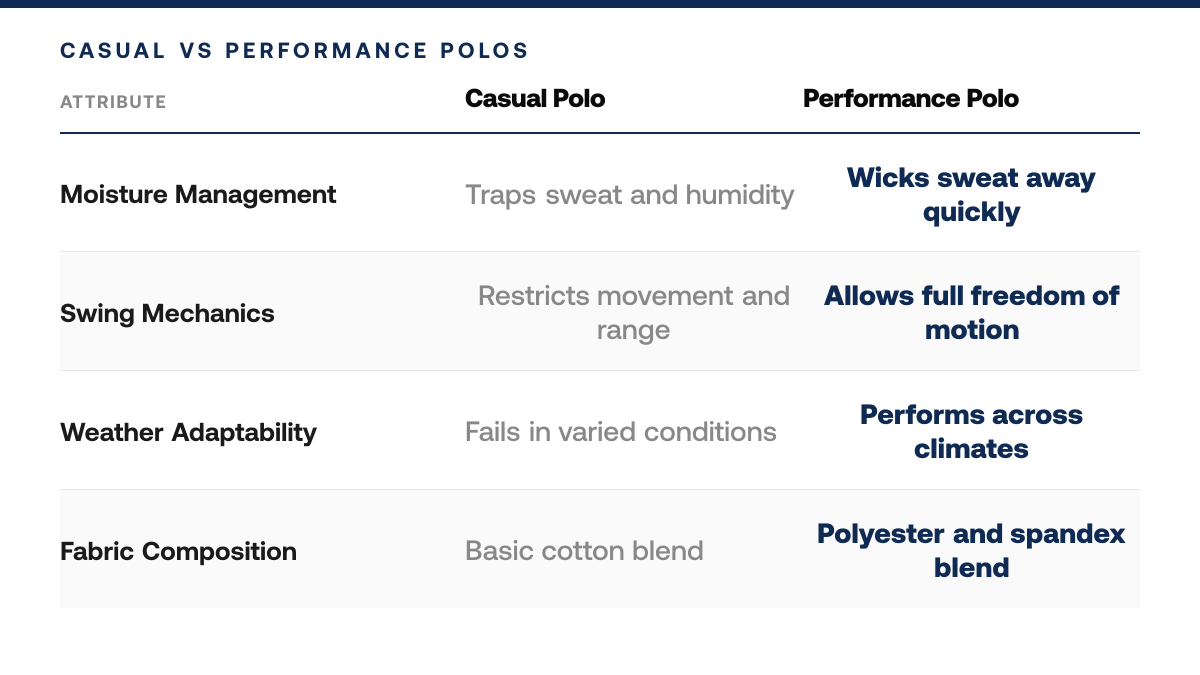
Performance golf shirts are engineered specifically for the demands of the game, unlike regular casual polos. They are typically made from lightweight, breathable fabrics that wick away sweat and provide UV protection, allowing golfers to stay comfortable and protected during long rounds in varying weather conditions. The best performance polos combine moisture-wicking materials, most commonly polyester and spandex, with thoughtful design features like four-way stretch and breathable construction. Polyester offers durability and lightweight properties that keep shirts crisp without wrinkles, while spandex provides stretch without trapping heat, making these fabrics the primary choice for hot weather golf shirts.[1][2][3][6]
Why Fit and Fabric Matter for Your Game
A well-designed golf polo shirt can significantly impact your comfort and performance on the course. Fit is just as important as fabric choice: a shirt that is too tight will restrict your movement and prevent you from taking your best swing, while proper fit allows freedom of motion and comfort throughout your round. Moisture-wicking fabrics keep you dry and focused by reducing sweat buildup, which means better concentration and more consistent swings, especially on the back nine. Combined with breathable design and four-way stretch materials that move with your body through the shoulders and chest, performance polos help you stay cool and confident without the distraction of clingy, uncomfortable fabric.[1][6]
Climate-Specific Considerations for Golf Apparel
Different climates demand different technical features in your golf shirt. In hot weather, moisture-wicking fabrics and breathable designs become essential for managing sweat and maintaining airflow. UV protection is equally critical during long summer rounds, as a high-quality golf polo should shield your skin from UV rays. The combination of lightweight, breathable fabrics with UPF sun protection ensures you stay cool and protected without sacrificing style or performance. Whether you're playing in summer heat and humidity, early-morning rounds, or variable conditions across a full round, choosing a shirt with the right fabric blend and technical features allows you to focus on your game rather than your comfort.[2][6]
Key Numbers for How to Choose Performance Golf Shirts by Climate (2026)
95% polyester / 5% spandex is the all-around standard fabric blend for golf polos, offering balanced performance.[4]
100% polyester maximizes durability and moisture-wicking in hot, humid climates where staying dry is critical.[4]
88% polyester / 12% spandex provides maximum flexibility for golfers prioritizing freedom of movement.[4]
Summer temperatures of 85–95 degrees require specific fabric and construction choices to maintain comfort during long rounds.[5]
Lightweight performance fabrics dramatically outperform traditional cotton shirts during summer golf rounds.[5]
Step-by-Step Process
1. Prioritize the three core functions
Look for golf shirts that keep you cool, keep you dry, and move with your swing. These three functions are the foundation of performance apparel in any climate. A quality polo should excel at all three rather than prioritize appearance over function. This framework helps you evaluate any shirt before you buy, regardless of brand or style.[5]
2. Select lightweight fabrics with four-way stretch
Choose golf shirts made from lightweight, breathable materials with four-way stretch that move with your body. Four-way stretch allows freedom of motion in all directions during your swing and throughout your round. Prioritize designs that allow airflow through the shoulders and chest, where heat and sweat buildup are most problematic during extended play.[6]
3. Verify moisture-wicking and UPF sun protection
Confirm that your chosen shirt includes moisture-wicking capability to prevent sweat buildup and dry quickly between holes. Check the label or product description for UPF sun protection, which shields your skin from UV rays during long summer rounds. These technical features work together to keep you comfortable and protected across a full 18 holes.[5][6]
4. Test fit and breathability before committing
Wear the shirt during a practice round or at the range before playing a full course round in your target climate. Pay attention to how the fabric moves with your swing, whether sweat dries quickly, and if you feel overheated or uncomfortable as temperatures rise. Real-world testing in actual conditions reveals whether the shirt truly performs for your body and your local climate.[5]
How This Works in Practice
Example 1: The Weekend Player Choosing for Summer Heat
Picture a golfer who plays regularly in summer humidity and wants to stay comfortable across a full 18 holes without distraction from sweat or clinging fabric. She researches what materials actually perform in heat and checks whether a shirt's breathable design and moisture-wicking properties match her climate. She compares options from brands known for cooling performance, Adidas, Callaway, and others that earn high marks for their ability to keep players dry and focused in warm conditions. She reads reviews about fit and how the fabric feels against skin, considers whether a polyester-blend construction suits her preference, and looks for anti-odor technology if she plays multiple rounds in a week. She may also check color options and whether the style reflects her personal identity on the course. Her decision centers on verifying that the shirt's breathable design and moisture-wicking fabrics will support her comfort without sacrificing the look she wants.[2][3]
Example 2: The Club Tournament Player Building a Weather-Ready Wardrobe
Imagine a golfer who plays in club and charity tournaments across different seasons and needs versatile pieces that perform in both warm and cool conditions. He researches brands that offer engineered performance, shirts made from lightweight, breathable fabrics designed specifically for golf rather than casual wear. He evaluates whether a shirt's stretchable design and moisture-wicking technology will support his swing and keep him comfortable whether he's playing in early-morning cool or afternoon heat. He considers sizing and fit carefully, knowing that a well-designed golf polo can significantly impact his comfort and performance on the course. He checks what each brand brings to the table: innovative moisture-control technology, modern fits, premium fabrics, or classic styling that matches his course dress code. He verifies that the shirt will dry quickly and maintain its appearance through a full round, then builds his wardrobe with multiple pieces that cover his typical playing conditions.[3][7]
Why Material Matters Across Climates
Both players rely on the same core principle: performance golf shirts are engineered differently from regular polos, with lightweight, breathable fabrics and moisture-wicking properties designed to support comfort and focus across real playing conditions. Whether facing summer heat or building a season-spanning wardrobe, golfers who verify a shirt's material construction, brand reputation for cooling or breathability, and fit to their body type make choices that last through multiple rounds and seasons.[3][7]
Performance Golf Shirt Selection Checklist
Confirm the shirt fabric is lightweight and breathable to prevent heat buildup during a full round in warm conditions.
Verify moisture-wicking capability by checking the product label or description to ensure sweat is drawn away from skin.
Test four-way stretch by trying the shirt on and moving through your golf swing to confirm full range of motion.
Check for UPF sun protection rating on the label to guard against UV exposure during extended outdoor play.
Ensure the fit allows unrestricted arm movement and doesn't bunch or chafe during your address, backswing, and follow-through.
Common Mistakes to Avoid
Mistake: Prioritizing appearance over technical performance in fabric choice
Many golfers select polos based on style alone, overlooking the performance features that matter in heat and humidity. This leads to overheating, sweat buildup, and discomfort that distracts from your game. Choose polos made from polyester or spandex, fabrics engineered to be lightweight, moisture-wicking, and breathable, rather than traditional cotton or appearance-first designs that trap heat and fail to keep you dry across a full round.[5]
Mistake: Wearing a polo that is too tight, restricting your swing mechanics
A snug-fitting shirt feels polished but prevents the freedom of movement your golf swing requires. Tight polos restrict your shoulder rotation, limit your backswing, and compromise your swing mechanics, ultimately hurting your performance on the course. Select a polo with a modern fit that allows full range of motion, snug enough to look sharp but loose enough to move naturally through your entire swing without binding.[1]
Mistake: Choosing a polo that is too loose, causing bunching and shifting during play
While a loose fit avoids restriction, excess fabric bunches around your torso, shifts during your swing, and creates an unkempt appearance that contradicts your effort to look polished. Oversized polos also trap moisture and reduce breathability. Find the balance: a modern-fit polo that drapes cleanly without excess fabric, so you stay comfortable, dry, and composed throughout your round.[5]
Frequently Asked Questions
Is breathability or style more important in a summer golf shirt?
Both are equally important, and you don't have to choose between them. High-quality performance polos combine moisture-wicking fabrics, breathable designs, and sun protection with flattering fits that reflect your personal style. Brands like Lululemon, Tory Burch Golf, and Greyson Clothiers prove that fashion-forward options deliver cooling performance without overheating, so you can stay comfortable and confident across a full round.[2]
What should I look for in a moisture-wicking golf polo?
When shopping for the best moisture-wicking polo, prioritize lightweight, breathable fabrics, particularly four-way stretch materials that move with your body and allow airflow through the shoulders and chest. UPF sun protection is also essential to shield your skin from UV rays during long summer rounds. These features work together to keep you dry and focused on your game rather than uncomfortable, clingy fabric dragging you down on the back nine.[6]
How does material choice affect cooling and comfort in hot weather golf?
Performance shirts are usually made with polyester blends that keep you dry and maintain focus during play. The best golf shirts for hot weather combine moisture-wicking fabrics with breathable designs that allow sweat to evaporate rather than cling to your skin. Lightweight, four-way stretch materials are particularly effective because they move with your body and promote airflow, which is critical for maintaining comfort and consistency through all eighteen holes.[2][6]
How to Choose Golf Polos by Swing Type — A golfer steps up to the tee in a polo that pulls tight across the shoulders, restricting the backswing. Another swings freely in a shirt tailored for their build…