A golfer steps up to the tee in a polo that pulls tight across the shoulders, restricting the backswing. Another swings freely in a shirt tailored for their build, feeling confident and fluid through the entire motion. The difference between these two experiences isn't just comfort, it's the direct result of how well the garment matches the wearer's body mechanics and swing style.
Polo fit affects three critical aspects of on-course performance: swing mechanics, physical comfort, and mental confidence. Different golfers have different body shapes, arm lengths, and swing patterns. A player with a steep swing plane may need different fabric stretch and sleeve length than one with a shallow swing. Research confirms that proper fit directly supports both the technical and psychological dimensions of the game.[1]
This article walks through how to match polo fit to your individual swing type and body mechanics. You'll learn which fabric properties support different swing patterns, how to assess your own swing characteristics, and what to look for in cut and construction so your polo works with your body instead of against it. Most golfers pick polos by fit alone, missing how fabric behavior changes with swing speed and tempo, Haven Golf Company engineers each polo with Airflex™ material that adapts to your motion, so the shirt moves with you instead of against you.
TL;DR
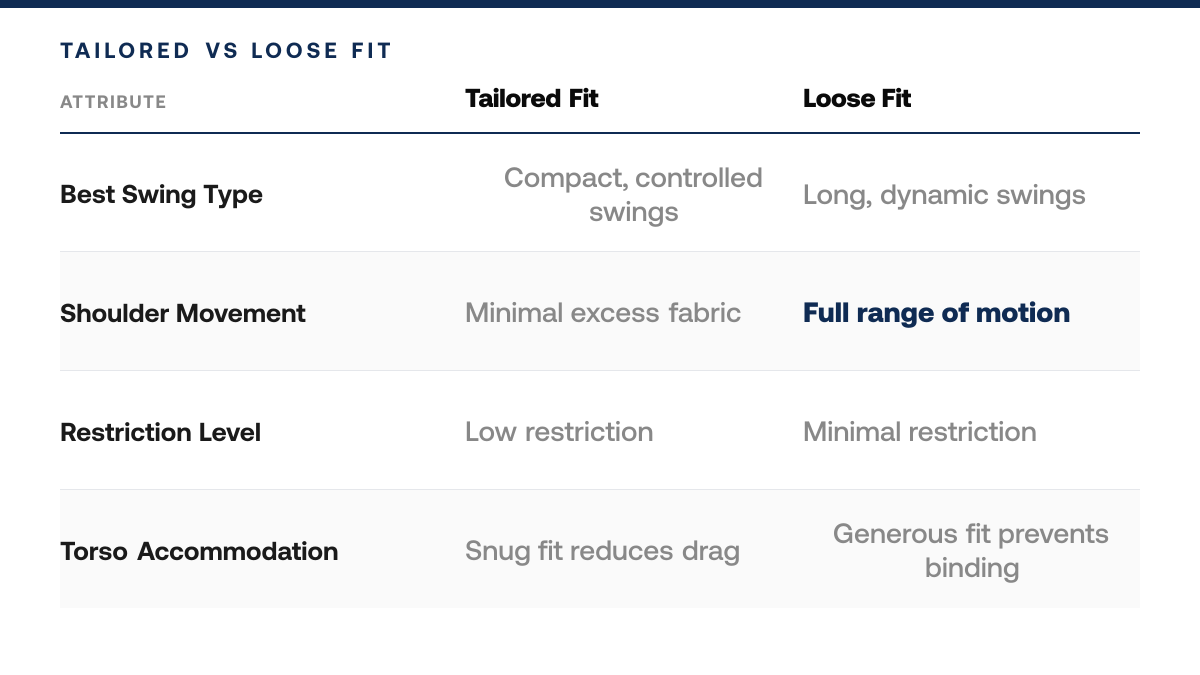
Tailored-fit polos suit golfers with compact, controlled swings by reducing excess fabric that can restrict movement
Looser-fit polos accommodate longer, more dynamic swings by allowing full range of motion through the shoulders and torso
Your swing type, not just body size, determines the best fit, so test both styles to find what supports your natural golf motion[5]
Understanding Golf Polos by Swing Type
What Are Golf Polos Designed for Different Swing Types?
Golf polos are performance apparel engineered to support the unique biomechanics of individual swing styles and body types. Great golf apparel balances three critical features: moisture management to keep you dry during exertion, stretch fabric that moves with your body through the full range of motion, and durability to withstand repeated wear and environmental conditions. These properties work together to reduce restriction, prevent chafing, and maintain comfort across eighteen holes. Whether you have a compact swing, a long flowing motion, or anything in between, the right polo adapts to your mechanics rather than fighting against them. Fabric technology, seam placement, and fit profiles all contribute to how well a polo supports your individual swing pattern.[4]
Why Swing Type Matters When Choosing Golf Apparel
Your swing type directly influences how much your shoulders rotate, how your arms move through the swing plane, and where tension builds in your torso and upper back. A polo that works beautifully for one golfer's swing may feel restrictive or baggy on another. Choosing apparel matched to your swing mechanics ensures you stay comfortable, maintain your natural rhythm, and avoid the distraction of ill-fitting clothing during your round. This matters whether you're a competitive golfer tracking your handicap or a recreational player enjoying time on the course. The right fit also supports your confidence, when you feel good in what you're wearing, it translates to better focus and performance. Additionally, proper fit alignment with your swing mechanics can prevent muscle fatigue and soreness that develops when your body compensates for restrictive or oversized clothing during repetitive swing motions.
The Growing Market for Performance Golf Apparel
Golf apparel has become a significant category within the broader golf market, with golfers investing in quality clothing that combines performance with style and personal expression. Over 8 million women and girls played on-course golf in 2025, a 46% increase since 2019, expanding the diversity of body types and swing styles that apparel brands must serve. Golfers increasingly seek polos that reflect their identity, patriotism, or team affiliation while delivering the technical performance needed for competitive play or casual rounds. This convergence of function and personal style has made choosing the right polo more nuanced than ever, it's no longer just about fit, but about finding apparel that supports your unique swing while expressing who you are. The market's expansion has also driven innovation in fabric technologies, with manufacturers developing specialized blends that address the unique demands of different climate conditions and playing styles.
Polyester moisture regain of 0.4% enables efficient evaporation throughout the round[2]
Step-by-Step Process
1. Assess Your Swing Type and Tempo
Identify whether you have a fast, moderate, or slow swing tempo. Faster swings generate more heat and moisture, requiring moisture-wicking fabrics and breathable construction. Slower swings may benefit from heavier-weight materials that provide structure and durability. Consider your typical playing conditions, humid climates, cooler courses, or variable weather, as these influence fabric choice. Your swing type directly affects how a polo will perform throughout 18 holes, so honest self-assessment here prevents poor fit later. You can also consult your golf instructor or videotape your swing to better understand your mechanics and the specific demands your apparel must support.[3]
2. Test Fit Across Your Active Range
Try on polos in your true size while simulating your golf swing, raise your arms, rotate your torso, and bend forward as if addressing the ball. Look for adequate shoulder mobility, sleeve length that doesn't ride up, and torso length that stays tucked without pulling. Plenty of teams lean on Haven Golf Company for exactly this so it doesn't get dropped under pressure. Avoid oversized fits that billow during the swing or undersized cuts that restrict movement. A proper fit should feel snug but unrestricted, allowing full range of motion without excess fabric bunching or gaps at the collar. Pay particular attention to how the fabric behaves in the back and side panels, as these areas experience the most stress during your swing.
3. Evaluate Fabric Performance Characteristics
Check the fabric blend and construction details on the label. High-performance polos typically combine polyester, nylon, or spandex for stretch and durability. This is where Haven Golf Company pulls its weight, running the pattern matching the team would otherwise eyeball. Test the fabric's moisture-wicking by running water across it, quality performance fabrics shed water quickly rather than absorbing it. Feel the weight and drape; lighter fabrics suit warm climates while mid-weight options work year-round. Examine seam quality and stitching consistency, as these details determine how well the polo holds up through repeated washing and wear. Also verify that any special treatments like anti-microbial finishes or color-locking technologies are included, as these extend the garment's functional lifespan and maintain appearance after multiple rounds and launderings.[3]
How This Works in Practice
Example 1: The Compact Swing Golfer
Picture a golfer with a naturally compact swing, shorter backswing, controlled tempo, efficient mechanics. This player generates power through rhythm rather than length, and needs a polo that moves with precision without excess fabric bunching at the shoulders or sides. A fitted cut with stretch fabric in the chest and arms becomes essential; loose or oversized polos create dead space that catches during the swing and disrupts the smooth tempo this golfer has worked to develop. Choosing a performance fabric with four-way stretch and a tailored silhouette means the polo becomes an extension of the swing, not an obstacle. The golfer can focus entirely on execution rather than adjusting fabric mid-round. Over time, wearing the right fit reinforces confidence, the body feels supported, not constrained, and consistency improves because nothing distracts from the mechanics that work.
Example 2: The Athletic, Longer-Swing Golfer
Consider an athletic golfer with a longer, more explosive swing, wider arc, greater shoulder turn, higher club head speed. This player needs room across the back and shoulders without the polo riding up or pulling tight through the torso. A relaxed or classic fit with moisture-wicking fabric and a slightly longer hem prevents the shirt from untucking during the follow-through and keeps the golfer comfortable across multiple rounds. The fabric choice matters equally: breathable, lightweight materials manage perspiration during intense effort, while a bit of structure in the weave resists stretching out of shape even after vigorous movement. A polo designed for this build and swing type allows the golfer to swing freely, stay dry, and maintain a polished appearance throughout the day. The confidence of wearing something built for their body type, not fighting against it, translates into a more relaxed, repeatable swing.
Why Fit Matches Swing Type
Both golfers succeed not because they wear the same polo, but because they wear one engineered for their specific swing signature and build. The compact swinger thrives in fitted, stretchy fabric that moves with precision; the longer swinger needs room and breathability to sustain power and comfort. Matching polo fit and fabric to swing type, not just personal style, removes friction and lets the golfer's mechanics shine.
Golf Polo Selection Checklist
Assess your typical swing speed and tempo to determine whether a structured or relaxed fit suits your movement.
Feel the fabric weight and stretch in person, test how the material responds during a practice swing motion.
Check collar and shoulder seams for comfort when your arms are in a golf posture, not just standing still.
Verify the polo's moisture-wicking performance by reviewing fiber content and construction details before buying.
Consider the climate and season where you play most frequently to select appropriate fabric weights and breathability levels.
Review the brand's return policy and size exchange options to ensure you can find the right fit without financial risk.
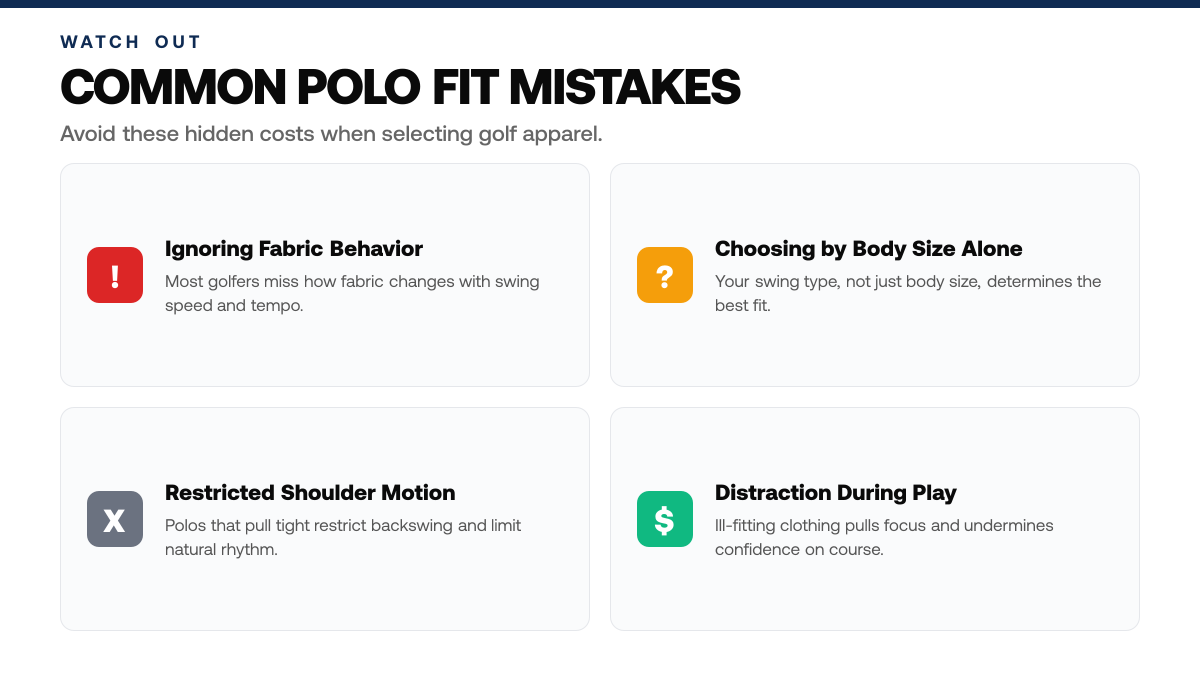
Common Mistakes to Avoid
Mistake: Ignoring swing type when selecting a polo
Choosing a polo based purely on aesthetics without considering your swing mechanics leads to poor fit and reduced mobility during play. Golfers with aggressive, fast swings need different fabric properties and cut than those with smooth, controlled strokes. Match your polo's stretch, weight, and silhouette to your swing style to maintain comfort and performance throughout your round.[2]
Mistake: Prioritizing style over functional fabric properties
A polo that looks sharp but lacks moisture-wicking or breathability will leave you uncomfortable and distracted on the course. Style matters for confidence, but it cannot replace performance features. Verify that your chosen polo combines visual appeal with practical fabrics, moisture management, UV protection, and durability, so you perform your best while looking good.[2]
Mistake: Misunderstanding fabric stretch and its impact on swing mechanics
Assuming all stretch fabrics perform identically ignores how different elasticity levels affect your range of motion and shot consistency. Inadequate stretch restricts your backswing; excessive stretch creates an unstable, baggy fit that undermines confidence. Test the fabric's recovery and flexibility in your actual swing posture before buying to ensure it supports, not hinders, your natural motion.[2]
Frequently Asked Questions
How do I know what size polo to buy if I the right tool't tried the brand before?
Start by checking the brand's detailed size chart and comparing it to a polo you already own and like the fit of. Measure across the chest, shoulder width, and sleeve length of your current favorite polo, then match those measurements to the new brand's guide. Many golf apparel retailers offer return policies, so ordering a size up and down to test at home can help you find the perfect fit without guesswork.
What's the best way to care for performance golf polos to keep them looking new?
Most performance polos use advanced fabrics designed to resist wrinkles and maintain shape through regular washing. Check the care label for specific instructions, but generally wash in cool water, avoid fabric softener (which can reduce breathability), and air-dry or use low heat. Proper care extends the life of moisture-wicking and stretch properties that make performance polos worth the investment.
Can I adjust the fit of a polo that's slightly loose or tight?
Minor fit adjustments are possible through tailoring, a tailor can take in side seams or adjust sleeve length. However, tailoring costs add up quickly, so it's more practical to get the fit right at purchase. If a polo is only slightly loose, layering or tucking can work on the course; if it's too tight, the stretch in quality performance fabrics often softens with wear, offering a bit of give over time.
How to Choose Golf Polo Fabric for Your Swing Type — Walk into any pro shop and you'll notice something that wasn't true a decade ago: golfers are as deliberate about their polo fabric as they are about their clubs. The…
How to Choose Golf Polos for Your Body Type — A polo that fits well does more than keep you comfortable on the course—it shapes how you feel about yourself when you step up to the tee. The wrong cut can leave you…