How to Choose Golf Polo Fabric for Your Swing Type
Walk into any pro shop and you'll notice something that wasn't true a decade ago: golfers are as deliberate about their polo fabric as they are about their clubs. The difference between a synthetic blend that breathes and one that clings matters on the back nine, especially when conditions get humid. Modern golf apparel has evolved to merge performance with personal expression, making fabric choice far more than a comfort detail—it's now central to how players feel and perform on the course.
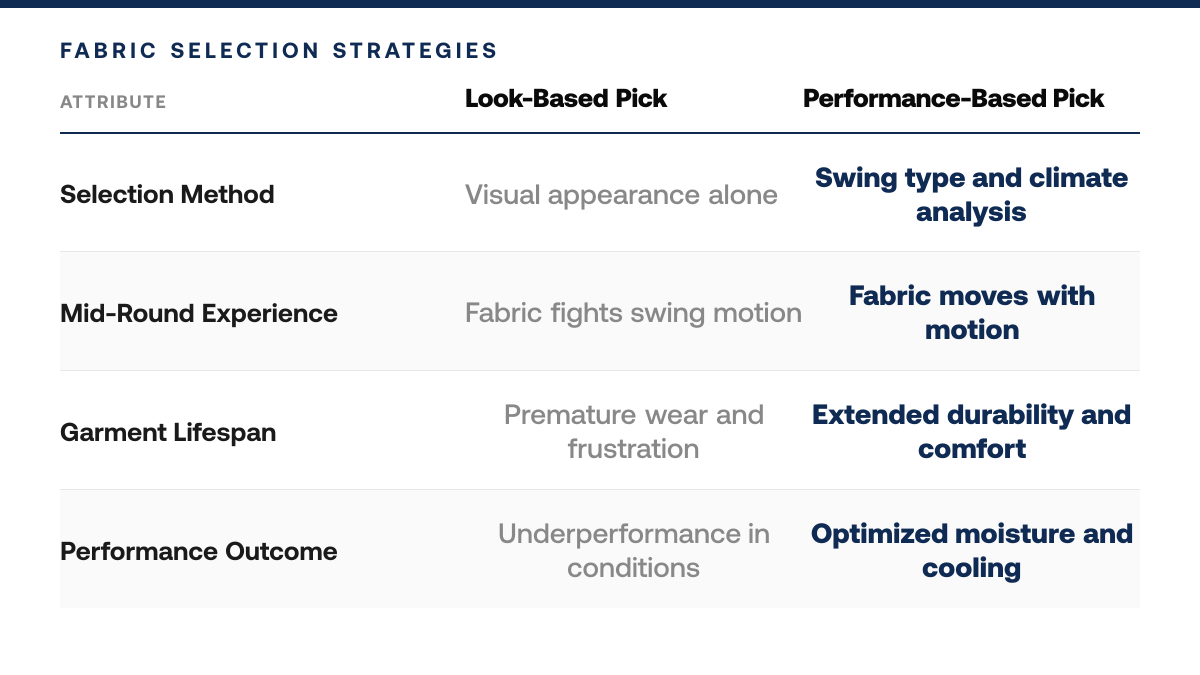
Your swing type, playing frequency, and climate all influence which fabrics will keep you dry, durable, and confident. Contemporary golf wear research shows that the right fabric can enhance moisture management and extend garment lifespan, while the wrong choice leads to frustration and premature wear. This matters because a polo that works for one golfer's swing may underperform for another's, depending on how the fabric responds to movement, temperature, and sweat.
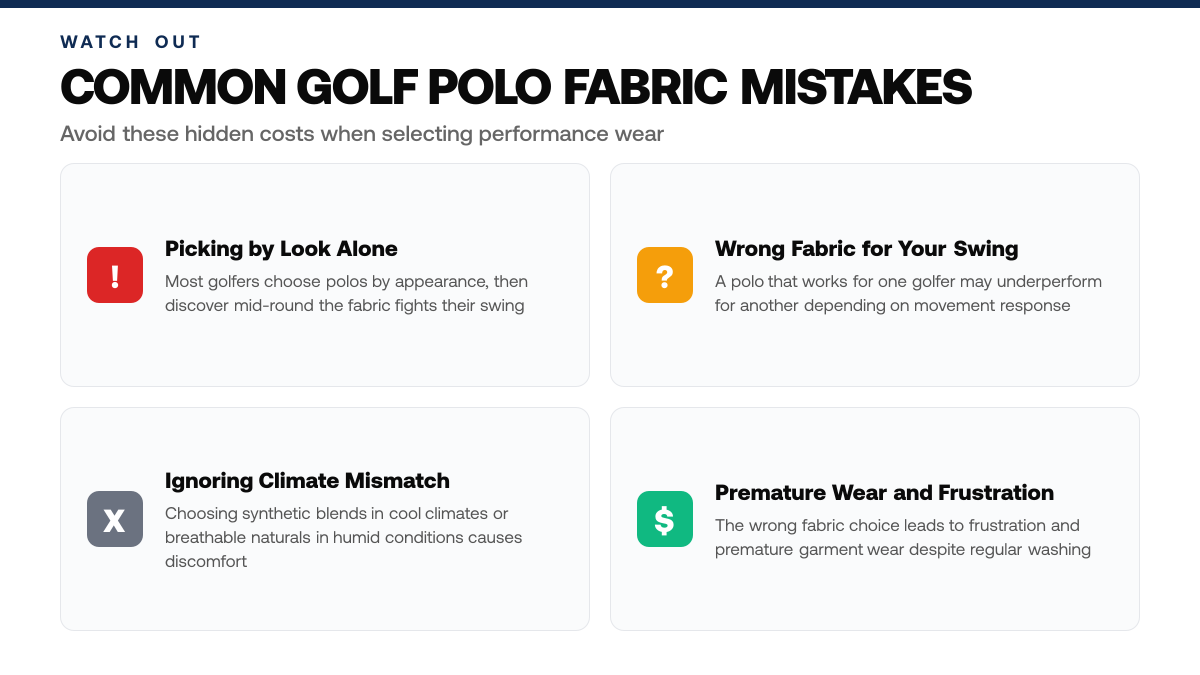
This guide walks you through the key fabric types used in modern golf polos, explains how each responds to different swing mechanics and conditions, and shows you how to match fabric properties to your playing style. Whether you prioritize moisture-wicking, durability, stretch, or a blend of all three, understanding fabric fundamentals will help you select polos that perform as hard as you do. Most golfers pick polos by look alone, then discover mid-round that the fabric fights their swing rather than moves with it — Haven Golf Company engineers their signature Airflex™ material to flex with your motion, so comfort and performance move as one through every stroke.
TL;DR
Select golf apparel fabric based on your swing intensity, climate, and personal style to maximize comfort and performance on the course.
Moisture-wicking synthetic blends excel for high-energy swings, while breathable natural-blend fabrics suit moderate play in temperate conditions.
Match fabric choice to your body's heat output and local weather—the right polo keeps you dry, cool, and confident throughout your round.[2]
Understanding Golf Polo Fabrics and Swing Performance
What Are Performance Fabrics in Golf Clothing?
Performance fabrics are engineered materials designed to enhance comfort and functionality during golf play. These fabrics combine moisture-wicking capability—the ability to pull sweat away from your skin—with breathability to keep you cool during active movement. They also incorporate stretch properties that allow your body to move freely through your swing without restriction, and durability features that withstand repeated washing and the demands of regular play. Common performance fabric compositions include polyester, nylon, cotton blends, and specialized synthetic combinations, each offering different benefits depending on your swing mechanics and the playing conditions you encounter.[1]
Why Fabric Choice Matters for Your Game
The right fabric can significantly impact your comfort and confidence on the course. Golfers with aggressive, high-intensity swings benefit from fabrics with superior moisture management and stretch, while those playing in cooler climates may prioritize breathability and durability over maximum sweat-wicking. Your swing type—whether smooth and controlled or powerful and dynamic—influences how much heat and perspiration your body generates, making fabric selection a personal performance decision. Beyond mechanics, the fabric you choose affects how the polo looks and feels, contributing to the overall experience of wearing apparel that supports both your game and your personal style.[1]
The Broader Market for Golf Apparel
Today's golf apparel market recognizes that performance and style are equally important to golfers and lifestyle shoppers. Whether you're seeking high-performance polos that reflect personal identity, patriotism, or school and team pride, fabric composition plays a central role in meeting those expectations. Manufacturers now offer diverse fabric blends tailored to different playing conditions—from humid summer rounds to cooler seasons—and different swing intensities. This variety means you can find polos that balance moisture-wicking, breathability, stretch, and durability in ways that align with your specific needs, making informed fabric selection an essential part of choosing apparel that works as hard as you do.[1]
Key Numbers for How to Choose Golf Polo Fabric for Your Swing Type (2026)
$1.5+ billion: projected value of the North America golf apparel market by 2033, driven by performance and lifestyle demand.[2]
2025–2033: the forecast period during which golf apparel market growth is tracked across product type and distribution channel.[2]
Multiple fabric categories — cotton, polyester blends, and advanced synthetics — now compete for share in the performance polo segment.[2]
4%+ CAGR: estimated compound annual growth rate for the North American golf apparel market through 2033.[2]
2 primary end-use drivers identified in market research: athletic performance and everyday lifestyle wear for golf polos.[2]
Step-by-Step Process
1. Assess Your Swing Intensity and Playing Style
Consider how aggressively you swing and how often you play. Golfers with faster, more powerful swings generate more body heat and perspiration, while casual players may have different moisture and breathability needs. Your playing frequency—whether you're on the course several times a week or occasionally—affects how much durability and performance you need from your fabric. This self-assessment guides you toward materials that can handle your specific demands without overheating or restricting movement. Additionally, track the types of courses you frequent and their typical conditions; humid resort courses demand different fabric solutions than drier municipal tracks.[3]
2. Test Fit and Mobility in Your Preferred Swing Motion
Try on polo options and perform your actual golf swing—full backswing, downswing, and follow-through—to verify unrestricted arm and shoulder movement. Fabric choice and proper fit work together to ensure comfort throughout your round. This is exactly the kind of detail Haven Golf Company builds its products around. Look for materials that stretch with you rather than against you, and confirm that seams, armholes, and torso panels don't bind or pull during your motion. A polo that fits well on a hanger may restrict movement once you're mid-swing, so this hands-on test is essential.[3]
3. Evaluate Moisture Management Properties
Examine the fabric's ability to wick sweat away from your skin and dry quickly. Synthetic blends and technical fabrics often outperform 100% cotton in moisture management, keeping you dry and comfortable as you move through your round. Check product descriptions and feel samples to understand how the material responds to perspiration. This property becomes more critical if you play in warm climates or during humid seasons, where moisture buildup can lead to chafing and discomfort. Test the fabric by misting it with water to observe how quickly the material dries and releases moisture.
4. Consider Climate and Playing Frequency When Selecting Weight
Match fabric weight and composition to your typical playing conditions. Lightweight, breathable materials suit warm climates and frequent play, while heavier blends may work better in cooler regions or for occasional golfers. Brands like Haven Golf Company design for precisely this instead of leaving it to chance. Think about the seasons you play most and whether you need versatility across multiple weather conditions. A single polo that performs well year-round may require a different fabric choice than one designed for a specific season, so align your selection with your actual playing calendar.
How This Works in Practice
Example 1: The Aggressive Swinger's Performance Choice
Picture a golfer with a fast, powerful swing who plays 2–3 times weekly in warm, humid climates. They've worn traditional cotton polos that absorbed sweat, clung to their body mid-round, and required frequent washing to maintain shape. After switching to a high-performance synthetic blend, they noticed moisture-wicking properties kept them dry through the back nine, while the fabric's elasticity accommodated their full range of motion without bunching at the shoulders. The synthetic material also resisted pilling and color fading—critical for someone who plays frequently and wants their gear to look sharp season after season. For aggressive swingers, these technical fabrics deliver the durability and comfort that match their intensity.[4]
Example 2: The Casual Player's Comfort-First Approach
Consider a golfer who plays once monthly, mostly in temperate weather, and values comfort and style equally. They prefer the soft feel and breathability of a cotton-blend polo that feels like everyday wear rather than specialized athletic gear. While synthetic materials excel at moisture management, this player doesn't generate enough heat or sweat to justify the technical investment—a breathable cotton blend keeps them cool without the slick feel of pure synthetics. They also appreciate that cotton blends soften with washing and develop character over time, fitting a more relaxed lifestyle. For occasional golfers, the right blend balances performance with the casual elegance that makes a polo work both on the course and at the clubhouse.[4]
Why Fabric Matches Your Game
Choosing the right polo fabric isn't about finding the "best" material—it's about matching your swing type, climate, and how often you play. Aggressive swingers benefit from high-performance synthetics that handle intensity and frequent wear, while casual players find breathable cotton blends deliver comfort without unnecessary technical features. Team and club golfers, meanwhile, prioritize durability and appearance because their polos represent both personal identity and group pride. The fabric you choose should reflect how you actually play.[4]
Golf Polo Fabric Selection Checklist
Test moisture-wicking by wearing the polo during a practice round and assessing how quickly sweat dries.
Verify stretch performance by performing your full swing motion in the fitting room to ensure unrestricted movement.
Inspect seams and fabric weight for durability, checking that stitching is tight and material resists pilling.
Confirm fit across shoulders, chest, and arms aligns with your swing type and preferred layering options.
Review care instructions to ensure the polo's maintenance requirements match your lifestyle and washing habits.
Evaluate fabric hand-feel and visual appeal to ensure the polo reflects your personal style and professional appearance.
Common Mistakes to Avoid
Mistake: Prioritizing style over performance metrics
Choosing a polo based purely on color or design without considering how the fabric performs during your swing can lead to restricted movement, excess heat retention, and premature wear. Evaluate breathability, stretch, and moisture-wicking properties alongside aesthetics to ensure the garment supports your game while looking sharp.[5]
Mistake: Ignoring fabric care instructions and blend composition
Overlooking how to properly launder your polo or failing to understand what percentage of synthetic versus natural fibers are in the blend can cause shrinkage, fading, and loss of performance features over time. Always check the care label and choose blends designed for durability—typically cotton-polyester combinations that resist damage and maintain shape through repeated washing.[5]
Mistake: Selecting the wrong size for your swing type
A polo that's too tight restricts your shoulder and arm rotation, while one that's too loose creates excess fabric drag and a sloppy appearance. Match your fit to your swing mechanics: golfers with a full, aggressive swing need room through the chest and shoulders, while those with a compact swing can wear a more tailored cut.[5]
Frequently Asked Questions
How long do high-quality golf polos typically last with proper care?
High-quality golf polos can maintain performance and appearance for multiple seasons when cared for correctly. Fabric longevity depends on fiber composition, weave density, and washing practices. Synthetic blends and performance fabrics resist fading and shrinkage better than natural fibers alone, especially with cold-water washing and air drying. Regular maintenance—avoiding high heat and excessive bleach—extends the lifespan significantly.[4]
What's the best way to wash and dry golf polos to preserve fabric integrity?
Wash golf polos in cold water on a gentle cycle, turning them inside out to protect color and print. Use mild detergent and skip fabric softener, which can break down moisture-wicking properties. Air dry whenever possible rather than machine drying; high heat damages elastic fibers and causes shrinkage. For polos with special finishes or themed graphics, read care labels carefully and follow manufacturer guidance to preserve both fabric and design.[4]
Can a golf polo express personal style and team pride while still performing on the course?
Absolutely. Modern golf apparel merges performance with personal expression—patriotic themes, military tributes, and college town designs let golfers wear their identity while benefiting from moisture-wicking, breathable fabrics. The key is choosing a polo with both functional performance features and design elements that matter to you. This balance ensures your apparel supports your swing and reflects who you are.
How to Choose the Right Golf Polo Fabric for Your Game — Stand on the practice range on a humid afternoon, and you'll notice something immediate: the golfer in a heavy cotton shirt is already uncomfortable, while the player in…
How to Choose Golf Polos for Hot Weather Golf — Step onto the course on a sweltering afternoon and you'll notice immediately which golfers chose their polos thoughtfully and which ones didn't. The ones drenched in…