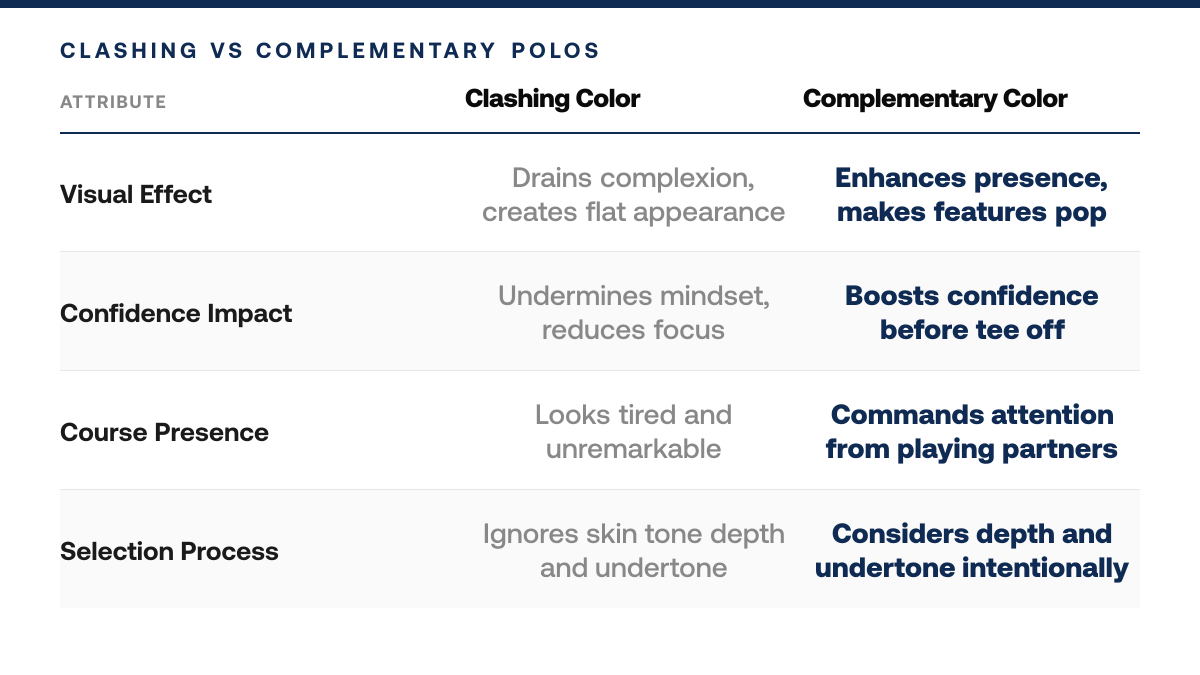
You pull on a polo before your club tournament and notice immediately that something feels off, the color drains your complexion, makes you look tired, and undermines the confidence you need for a full round. The problem isn't the fit or the fabric; it's that the color clashes with your skin tone instead of working with it. Choosing the right polo color is as deliberate as selecting the right club for a shot, and the payoff is just as real.
The color you wear affects more than appearance. Your polo color influences your mindset, sends a message to your playing partners, and can give you an extra shot of confidence before you even tee off. When a polo complements your skin tone, the garment enhances your presence on the course; when it clashes, you spend the round feeling flat or unremarkable instead of focused on your game. Whether you're playing weekend rounds, traveling to tournaments, or building a wardrobe that lasts through summer heat and early-morning chill, understanding how your skin tone interacts with color is essential.[2]
This guide walks you through identifying your skin tone's depth and undertone, then shows you which color families create contrast and make your complexion glow. You'll learn why fair skin requires bold, saturated colors while medium and olive tones offer the most versatility, and how darker complexions benefit from lighter, brighter shades. The article includes a step-by-step process, worked examples of color choices in real tournament and seasonal settings, a practical checklist, and guidance on common mistakes, everything you need to build a polo wardrobe that reflects your identity and keeps you looking sharp across every round.
Haven Golf Company sells performance golf and lifestyle apparel, primarily polos for men and women, crafted with their signature Airflex™ material for maximum comfort and durability.
TL;DR
Skin tone has two dimensions: depth (fair, medium, olive, deep, dark) and undertone (cool, neutral, warm), with depth being the more immediately practical factor for polo selection.[4]
The right polo color creates contrast and prevents a flat, tired appearance, pale colors on fair skin tend to merge with the complexion and produce a low-energy result.[4]
Medium and olive skin tones are the most versatile for polo color selection, responding well to a wide range of colors from earthy neutrals to rich jewel tones.[4]
Skin tone is commonly described in two dimensions: depth (fair, medium, olive, deep, dark) and undertone (cool, neutral, or warm). For polo shirt color selection, depth is the more immediately practical factor. The goal is to choose a color that works with your complexion rather than against it, so the garment enhances your appearance instead of leaving you looking flat or tired. Understanding your skin tone's natural warmth, coolness, or neutrality helps you identify which colors will create contrast and make your features pop on the course.[4]
Why Polo Color Matters for Your Game and Confidence
The color you choose affects more than just appearance. Your polo color can influence your mindset, send a message to your playing partners, and work with your skin tone to give you confidence before you tee off. When a polo's color clashes with your complexion, the mismatch creates a low-energy, unremarkable look that can undermine your presence on the course. By selecting shades that complement your skin tone, you ensure the garment works for you, allowing you to focus on your game rather than worrying about how you look across a full round in summer heat, early-morning chill, or unpredictable weather.[2][4]
How Skin Tone Affects Color Versatility
Not all skin tones offer equal versatility when selecting polo colors. Fair and light skin tones have limited natural contrast, so pale colors like washed-out pastels and light beige tend to merge with your complexion and produce a flat result. Medium and olive skin tones are the most versatile for polo color selection because the natural warmth in olive skin responds well to a wide range of colors, from earthy neutrals to rich jewel tones. Deep and dark skin tones benefit from lighter and brighter shades that create eye-catching contrast and make your complexion glow. Understanding where your skin tone falls helps you build a core polo wardrobe that works across club tournaments, charity events, and travel rounds.[2][4]
Step-by-Step Process
1. Identify your skin tone depth and undertone
Skin tone is described in two dimensions: depth (fair, medium, olive, deep, dark) and undertone (cool, neutral, or warm). For polo color selection, depth is the more immediately practical factor. Determine whether your skin is fair, medium, olive, or dark, and note whether your undertone leans cool (pink or blueish), neutral, or warm. This foundation guides which color families will create contrast and make your complexion appear vibrant rather than flat or washed out.[4]
2. Choose colors with sufficient contrast for fair skin
Fair skin has limited natural contrast, so your polo must provide it. Avoid pale grey, washed-out pastels, and very light beige, these merge with a light complexion and produce a flat, low-energy result. Instead, lean into royal blues and brighter pastels to keep from looking washed out and to ensure your features pop on the course.[2][4]
3. Select earthy or jewel tones for medium and olive skin
Medium and olive skin tones are the most versatile for polo color selection. The natural warmth in olive skin responds well to a wide range of colors, from earthy neutrals to rich jewel tones. Use fabric finish to control color intensity: if your skin tone benefits from a richer, more saturated version of a color, choose a polo with a higher-sheen fabric. If you want a color to sit quietly, choose matte cotton or a wool blend.[4]
4. Opt for lighter and brighter shades for dark skin
Dark or warm skin tones benefit from lighter and brighter polo colors that create maximum contrast and visual impact. Shades like sky blue or cerulean are eye-catching choices that make your complexion glow and ensure you stand out on the course with confidence and style.[2]
How This Works in Practice
Example 1: The Weekend Player Choosing Blue for Confidence
Picture a weekend golfer with a warm skin tone who reaches for a blue polo before a club tournament. She knows blue is a versatile choice, but she's uncertain whether it will complement her complexion or feel like the right fit for the day ahead. She reviews guidance on matching blue to her skin tone and learns that lighter and brighter shades like sky blue or cerulean create eye-catching contrast that makes her complexion glow. She selects a cerulean polo from her collection, checking how it looks in natural light and considering how it makes her feel before she leaves for the course. The choice matters because the color she pulls on can affect her mindset and send a message to her playing partners, giving her an extra shot of confidence before she even tees it up.[2]
Example 2: The Regular Building a Seasonal Wardrobe
Consider a golfer who plays year-round and wants to build an on-course wardrobe that reflects the seasons and enhances her experience. As autumn approaches, she thinks about how the colors she wears can align with the season's mood and the course itself. She explores earthy tones, browns, deep greens, and burnt oranges, that resonate with the season's calmness and reflect maturity. By choosing colors that align with her intended message and the time of year, she strengthens her confidence and on-course presence. She verifies that these seasonal choices not only feel appropriate for the cooler weather and changing landscape but also reinforce her connection to how she wants to show up during those rounds.[1]
Why Color Choices Build Confidence
Both golfers recognize that color selection goes beyond aesthetics. The colors you choose reflect your personality and mood, influence how others perceive you, and directly affect your mindset on the course. Whether you're matching blue to your skin tone for an immediate boost or building a seasonal wardrobe that aligns with your identity, intentional color choices strengthen your confidence and presence throughout a full round.[1][2]
Identify your skin tone depth (light, medium, deep) and undertone (warm, cool, neutral) before browsing polo styles.
Try on polo colors in natural daylight or outdoor conditions to see how they interact with your complexion in real golf settings.
Evaluate how fabric finish, matte, glossy, or textured, affects color saturation and appearance on your skin tone.
Build a core palette of versatile colors (blues, grays, pastels, or neutrals) that perform across seasons and weather conditions.[3]
Verify that your chosen polo colors align with your club or tournament dress code before purchasing multiple shirts.
Common Mistakes to Avoid
Mistake: Choosing polo colors based on trend or habit instead of skin tone compatibility
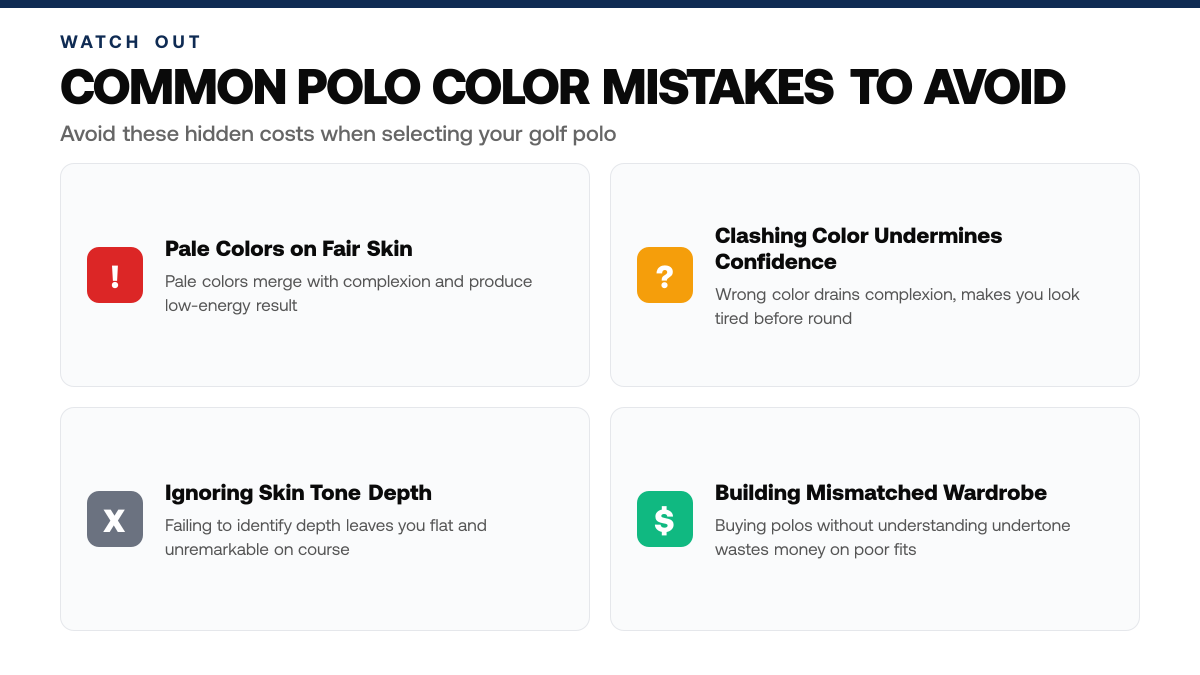
Selecting colors without considering how they interact with your complexion results in a flat, tired, or unremarkable appearance that undermines your presence on the course. Instead, assess your skin tone's depth and undertone first, then choose colors that provide natural contrast, pale shades for deeper skin tones, richer saturated colors for medium and olive complexions, so the garment works with you rather than against you.[4]
Mistake: Pairing pale colors with fair or light skin tones
Fair skin has limited natural contrast, and wearing pale grey, washed-out pastels, or very light beige causes these colors to merge with your complexion, producing a flat, low-energy result. Instead, choose colors with enough depth and saturation to stand out against your skin, navy, jewel tones, or richer neutrals, so the polo creates visual separation and keeps you looking sharp across a full round.[4]
Mistake: Ignoring fabric finish when selecting polo colors
The same color can appear drastically different depending on whether the fabric has a matte or high-sheen finish. A richer, more saturated color needs higher-sheen fabric to display its full depth, while a matte cotton or wool blend will make the same shade sit quietly and muted. Match fabric finish to your desired color intensity, sheen for bold presence, matte for understated elegance, so the shade lands as intended on the course.[4]
Frequently Asked Questions
How does skin tone affect which golf polo colors look best on me?
Your skin tone's undertones determine which colors will make your features pop. If you have fair or cool skin with pink or blueish undertones, royal blues and brighter pastels create contrast and prevent a washed-out appearance. Medium and olive skin tones work well with a wide range of shades. For darker or warm skin tones, lighter and brighter blues like sky blue or cerulean create eye-catching contrast that makes your complexion glow. The key is understanding your undertones and choosing colors that enhance rather than compete with your natural coloring.[2]
Can the color of my golf polo actually affect my mood and performance?
Yes. The colors you choose reflect your personality and mood, and they can influence how your playing partners perceive you. Beyond perception, wearing colors that complement your skin tone and make you feel confident provides a genuine performance advantage before you even tee off. The most important rule is to wear what makes you feel great, that confidence translates into better focus and composure on the course. Color psychology works best when your choice aligns with both your appearance and your personal preference.[1][2]
Should I change my polo colors based on the season or weather?
Seasonal considerations can enhance your golfing experience. During autumn, earthy tones like browns, deep greens, and burnt oranges resonate with the season's natural palette and can ground your game in tranquility. Weather conditions also matter, lighter colors reflect heat during summer rounds, while darker tones work well in cooler months. The underlying principle is choosing colors that align with both the season and your intended mood, creating a cohesive experience that feels right for the conditions you're playing in.[1]
How to Choose Golf Polo Colors That Flatter Your Game — You step onto the first tee in a navy polo, and within minutes you notice how differently your playing partners interact with you compared to last week's round in bright…
How to Choose Golf Polos by Swing Type — A golfer steps up to the tee in a polo that pulls tight across the shoulders, restricting the backswing. Another swings freely in a shirt tailored for their build…