The right apparel choice matters more in humid climates than most golfers realize. Fabric composition, weave structure, and design features directly influence how well your polo manages moisture and heat. Research shows that moisture-wicking and breathable materials make a measurable difference in comfort and performance during rounds in challenging weather.[1]
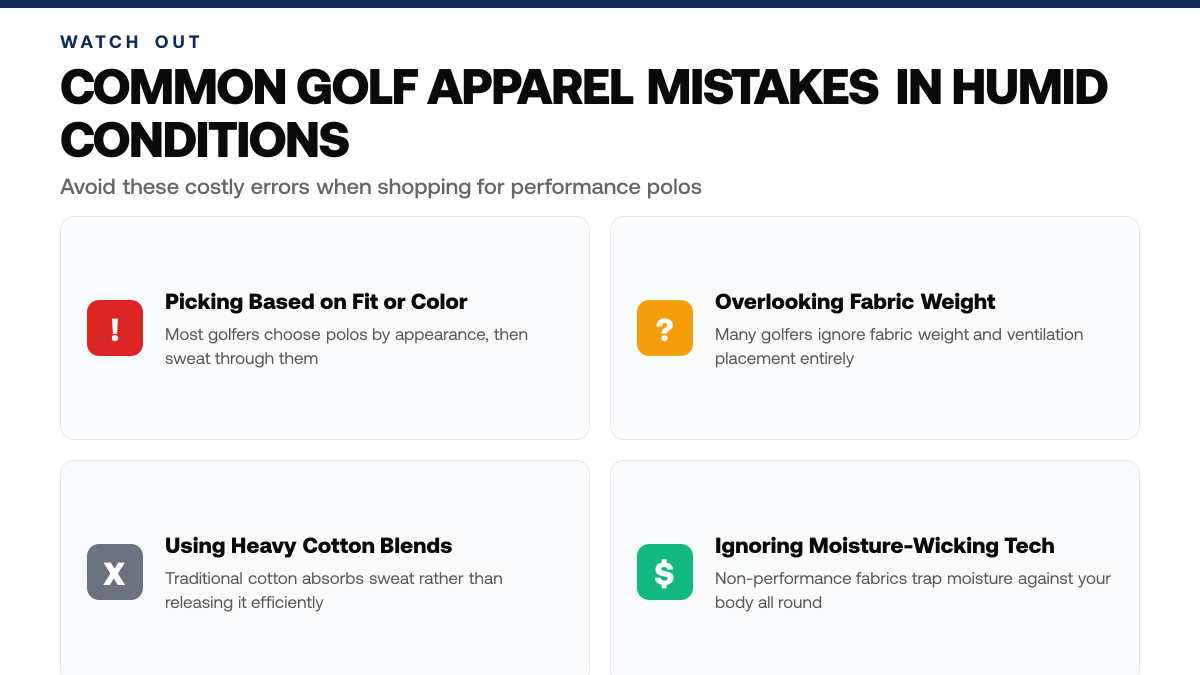
This guide covers how to evaluate golf polos for humid conditions, focusing on the fabric properties and design elements that keep you cool and confident. You'll learn what to look for when shopping and how the right choice transforms your experience on the course, regardless of the weather. Most golfers pick polos based on fit or color, then sweat through them when humidity spikes mid-round because the fabric can't adapt to shifting moisture, Haven Golf Company's Airflex™ material wicks and breathes across humidity swings, keeping you dry from the first tee through the 18th.
TL;DR
High-performance golf polos for humid conditions rely on moisture-wicking synthetic blends and breathable fabric construction to keep you dry and comfortable.
Look for polyester, nylon, and mesh panels that pull sweat away from skin and allow air circulation in hot, wet weather.
Many golfers overlook the importance of fabric weight and ventilation placement, lightweight, strategically-vented polos outperform heavy cotton in humidity.[4]
Understanding How Humidity Affects Golf Apparel Choices
What Is Humidity and How Does It Change Fabric Behavior?
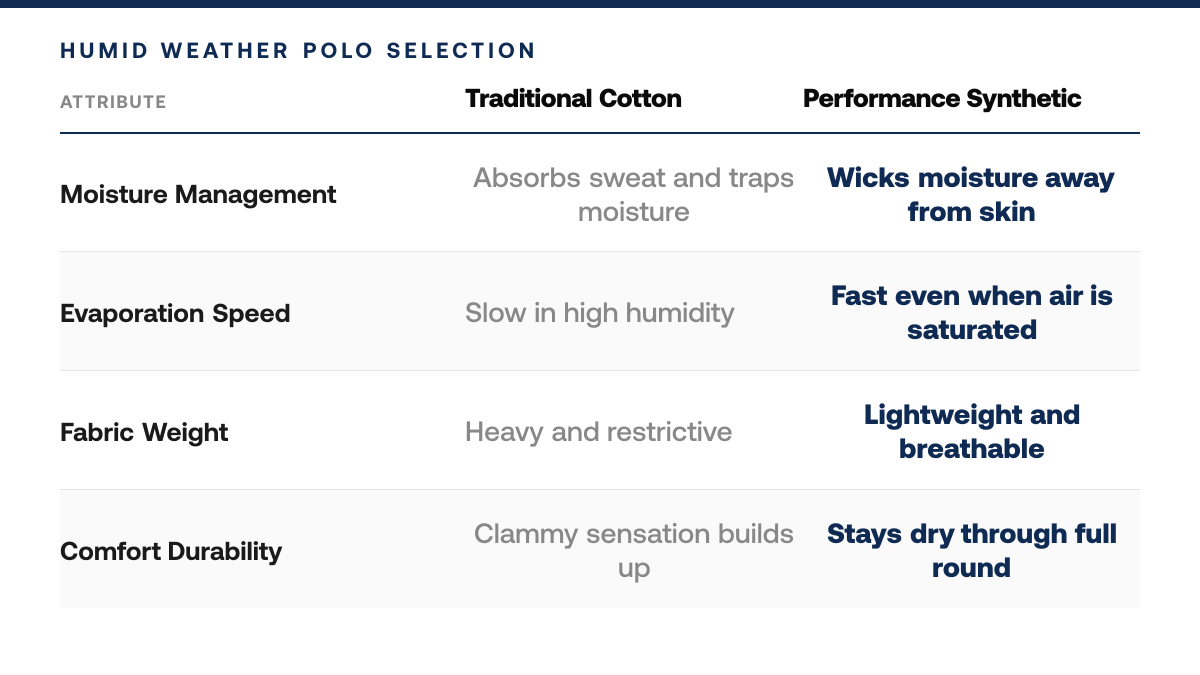
Humidity, the amount of moisture in the air, fundamentally alters how fabrics perform on the golf course. In high-humidity environments, moisture-wicking becomes critical because sweat cannot evaporate as efficiently as it does in dry conditions. When air is already saturated with moisture, traditional cotton and heavy blends absorb perspiration rather than releasing it, leaving you feeling damp and uncomfortable. Performance fabrics engineered with synthetic fibers and advanced weaves are designed to pull moisture away from your skin and allow it to disperse quickly, even when humidity levels are elevated. Understanding this distinction helps you select apparel that actually keeps you dry rather than trapping moisture against your body.
The science behind moisture-wicking involves capillary action, where synthetic fibers pull liquid away from the skin surface and distribute it across a wider fabric area for faster evaporation. This process works even in high-humidity conditions because the fabric creates a pathway for moisture to move laterally and eventually escape, rather than pooling against your body. Additionally, many modern golf fabrics incorporate hydrophobic coatings that repel moisture on the outer surface while remaining breathable, creating a dual-action system that manages both sweat and environmental moisture.
Why Fit, Sleeve Length, and Collar Design Matter in Humid Conditions
Beyond fabric choice, the cut and construction of your golf shirt directly influence ventilation and how confident you feel during play. A looser fit allows air to circulate around your body, promoting evaporation and cooling in humid weather. Shorter sleeves or sleeveless designs expose more skin to air movement, while collar styles that sit away from the neck prevent heat from building up around your shoulders. These design elements work together to maximize airflow and reduce the clammy sensation that humidity can create. When you feel physically comfortable and confident in your apparel, your focus stays on your game rather than on managing sweat or overheating.[3]
Ventilation panels placed strategically along the back and underarms create channels for hot air to escape, further enhancing the cooling effect in high-humidity environments. Some premium golf polos include gusseted underarms, which expand when you raise your arms and expose additional breathable mesh for active cooling during your swing. Collar depth and material also matter; moisture-wicking collars dry faster and resist color transfer from neck sweat, maintaining their appearance and comfort throughout your round.
The Growing Importance of Humidity-Conscious Apparel Selection
As golfers increasingly recognize the link between apparel performance and on-course comfort, selecting humidity-appropriate clothing has become a key part of course preparation. Golfers who play in warm, humid climates understand that investing in the right shirt, one that combines moisture-management fabrics with thoughtful design, makes a measurable difference in how they play and enjoy the game. Whether you're seeking high-performance gear that reflects your personal style or apparel that displays school and team pride, choosing pieces designed for your climate conditions ensures you stay comfortable, confident, and ready to perform your best.
The investment in quality humidity-appropriate apparel pays dividends across an entire season. Golfers reporting consistent use of performance polos in humid climates note improved focus, reduced fatigue from overheating, and greater enjoyment of the game overall. This shift toward climate-conscious purchasing reflects a broader trend in sportswear toward personalized performance, where understanding your specific environmental conditions leads to smarter clothing choices.
Step-by-Step Process
1. Assess fabric composition and weight for humidity conditions
Examine the fiber content on the garment label, look for moisture-wicking synthetics like polyester or nylon blends, which pull sweat away from skin in humid environments. Check the fabric weight (typically measured in grams per square meter or noted as 'lightweight,' 'midweight,' 'heavyweight'). In high humidity, lighter fabrics allow better air circulation and faster drying. Heavier fabrics may trap moisture and feel uncomfortable. Cross-reference the manufacturer's humidity recommendations if available to ensure the weight matches your typical playing conditions.[5]
Look beyond simple fiber percentages; blend ratios matter significantly. A polyester-spandex blend with higher polyester content (typically 88-92%) provides superior moisture-wicking compared to cotton-dominant blends. Spandex or elastane content in the 5-10% range offers stretch and recovery without compromising breathability. Some advanced polos combine multiple synthetic fibers, layering different materials to optimize both moisture management and durability.
2. Evaluate weave structure for breathability and durability
Research the weave pattern, mesh, piqué, or open-knit structures offer superior ventilation compared to tight weaves. Mesh panels in high-sweat zones (underarms, back) are especially valuable in humid climates. Check product descriptions or contact the manufacturer to confirm where breathable sections are placed. A systematic review of weave type ensures the garment will maintain comfort and shape through repeated wear and washing, preventing premature degradation that humidity and moisture can accelerate.[2]
Piqué weave, the most common structure in golf polos, creates raised bumps on the fabric surface that reduce direct contact between cloth and skin, naturally enhancing airflow. Honeycomb weave variants amplify this effect further, creating larger air pockets that trap and move heat away from your body. Jacquard or novelty weaves can combine aesthetic appeal with functional breathability, allowing you to choose polos that look sophisticated while performing in humid conditions.
3. Test fit and range of motion before committing to purchase
If buying in-store, put on the apparel and perform a full golf swing motion, raise your arms overhead, rotate your torso, and bend at the waist. Check that seams don't pull, fabric doesn't bunch, and you have full shoulder and arm freedom. For online purchases, review detailed size charts and customer photos showing fit on real bodies. Verify the return policy allows exchanges if the fit doesn't suit your frame. This hands-on assessment prevents buyer regret and confirms the garment will perform on-course without restriction.
Pay special attention to armhole depth and shoulder seam placement, these construction details significantly impact comfort during the golf swing. Seams that sit too far forward or back can create pulling sensations that distract during critical moments. If possible, wear the polo for at least 15-20 minutes to assess how it feels against your skin and whether any areas begin to chafe or bunch when you move naturally.
4. Verify moisture-management performance through care and durability
Read the care label to confirm the fabric can withstand frequent washing without losing its moisture-wicking properties. Synthetic blends typically retain performance better than natural fibers alone when exposed to repeated sweat and laundering. Check for anti-microbial treatments or odor-control technology, which extend wearability in humid conditions where sweat lingers. Confirm the garment maintains its shape and color after multiple wash cycles, a reliable indicator that it will deliver consistent performance throughout a full season of play.
Request or research pre-purchase wash testing data if available from the manufacturer. Reputable golf apparel brands often publish durability metrics showing how their fabrics perform after 20, 50, or 100 wash cycles, documenting retention of moisture-wicking properties. Understanding these standards helps you make informed decisions about long-term value and investment return.
How This Works in Practice
Example 1: The Casual Player Navigating Summer Heat
Picture a golfer preparing for a tournament in humid, 85°F conditions. They've worn standard cotton polos in the past and found themselves drenched by the back nine, with fabric clinging to their skin and colors fading under sweat. This time, they choose a moisture-wicking polo blend designed for high-humidity play, one that pulls perspiration away from the body and dries quickly. They pair it with a design featuring their club's colors and crest, maintaining that personal pride without compromising performance. As they move through the round, the fabric stays light and breathable, allowing full range of motion through their swing. By the 18th hole, they're comfortable, dry, and still looking sharp. The combination of technical fabric and meaningful design proves that performance and identity aren't trade-offs, they work together.
Example 2: The School Team Member Balancing Style and Function
Imagine a high school golfer who wants to represent their school with pride while competing in spring matches across varying weather. Early-season rounds bring cool mornings and afternoon humidity; later matches occur in full summer heat. Rather than buying separate polos for each condition, they select a versatile performance polo in their school's signature color with an embroidered logo. The fabric's blend handles moisture efficiently in humid conditions while offering enough structure to look polished during cooler play. They feel the connection to their team and school every time they wear it, yet the technical properties keep them focused on their game rather than discomfort. This approach lets them invest in fewer pieces that genuinely perform across their season's range of conditions.
Why Fabric Meets Identity
Both examples show the same principle: the right polo fabric adapts to humidity and play conditions while the design, color, logo, or crest, expresses who you are and what team or school you represent. Performance and personal meaning strengthen each other rather than compete. When you choose apparel that handles moisture and breathability alongside design that reflects your identity, you're not settling on either front; you're amplifying both.
Pre-Purchase Golf Apparel Checklist
Assess the fabric's moisture-wicking capability for your typical humidity level and playing conditions.
Check the collar construction to ensure it maintains shape and comfort in high-humidity environments.
Verify the seam placement and stitching quality to prevent chafing during extended wear in humid weather.
Test the garment's breathability by examining fabric weight and weave density against your climate zone.
Confirm the fit accommodates layering flexibility for temperature and humidity fluctuations during play.
Review care instructions and confirm the fabric retains performance properties after repeated washing.
Check for ventilation panels or mesh inserts in key sweat zones like underarms and back.
Verify the return policy and exchange process in case the fit or performance doesn't meet your expectations.
Common Mistakes to Avoid
Mistake: Choosing golf apparel based on style alone without checking fabric composition
Selecting a polo purely for its look or brand without verifying moisture-wicking and breathable fabric properties means you'll overheat and feel uncomfortable on humid courses. Always review the fiber content and performance specs, synthetic blends and technical fabrics outperform cotton in humidity, keeping you dry and cool throughout your round.[1]
Mistake: Ignoring fit specifications and trying on apparel without considering layering and movement
A polo that looks good on the hanger but restricts shoulder rotation or bunches under arms will sabotage your swing and distract you mid-game. Test the fit by mimicking your golf swing in the fitting room, arms should move freely, and the shirt should skim your body without clinging or pulling.
Mistake: Overlooking care instructions and washing apparel incorrectly after humid-weather wear
Tossing a high-performance golf polo in hot water or the dryer degrades moisture-wicking coatings and elastic fibers, causing premature fading, shrinkage, and loss of breathability. Follow the label's washing guidelines, typically cool water and air dry, to extend the lifespan and maintain the performance features that made the shirt worth buying.[1]
Mistake: Purchasing the same weight and style polo for all seasons regardless of humidity levels
Climate conditions vary dramatically across seasons and regions. A midweight polo that works perfectly in spring may trap excessive heat in humid summer conditions. Build a small rotation of polos in different weights and ventilation levels, allowing you to match your apparel choice to current and forecasted conditions for optimal performance and comfort.
Frequently Asked Questions
How do I know if my golf apparel will hold up through multiple seasons?
Durability depends on fabric quality, construction method, and care practices. Modern golf apparel designed for all-weather performance uses advanced moisture-wicking and breathable materials that maintain integrity across humid, dry, and transitional seasons. Check for reinforced seams, quality thread count, and care labels that specify washing and drying instructions, following these guidelines extends garment life significantly and protects your investment in high-performance pieces.[6]
What's the best way to layer golf apparel in changing humidity?
Layer from moisture-management inward: start with a breathable base layer that wicks sweat away from skin, add a mid-layer for insulation if needed, and finish with an outer layer that shields against wind and light moisture. In high-humidity conditions, avoid heavy cotton; opt for synthetic blends or merino wool that dry quickly. As conditions shift between rounds or seasons, you can remove or add layers without compromising comfort or performance.
How should I care for golf apparel to maintain its performance features?
Proper care preserves moisture-wicking and durability. Wash in cool water with gentle detergent, avoid fabric softeners and bleach, and air-dry or use low heat to prevent damage to technical fibers. Check the manufacturer's care tag for specific guidance, many performance fabrics require special handling. Regular, correct maintenance keeps your apparel functioning as designed across multiple seasons and weather transitions, protecting the durability you paid for.[6]