How to Choose Golf Apparel for Early Morning Cold Rounds
You step onto the first tee on a crisp morning, and the temperature is 15 degrees colder than your last round. Your regular golf shirt feels inadequate within the first few holes, and by the turn you're fighting distraction instead of focusing on your swing. Early morning cold rounds demand an entirely different approach to what you wear than warm-weather play, body temperature, wind chill, and changing course conditions throughout nine or eighteen holes require strategic planning.
The difference isn't just comfort; it's performance. When you're shivering or overheating as conditions shift, your ability to move freely, maintain grip, and concentrate on your game suffers. Layering is the foundational technique for staying comfortable and playing well in cold conditions, allowing you to adjust as your body warms and the day progresses. Understanding how to build and adjust your layers transforms early morning rounds from an endurance test into a genuine advantage.[3]
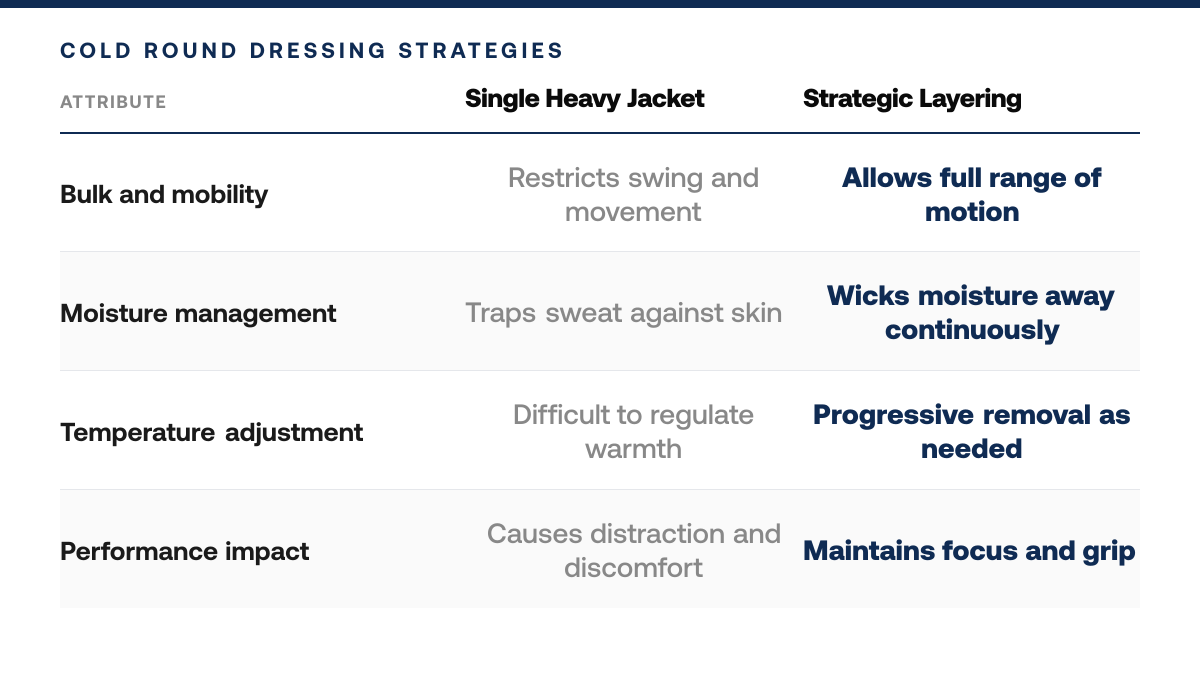
This guide walks you through the core strategy for dressing cold-weather rounds: how to select a moisture-wicking base, add insulation without sacrificing mobility, choose a wind-resistant outer shell, and plan your layer removal as you warm up. You'll also see how this works in real-world conditions and learn the common mistakes that leave golfers either underdressed or overheated. Most golfers layer wrong for cold dawn rounds, adding bulk that restricts the swing and traps sweat against skin as the day warms, but Haven Golf Company's Airflex™ material compresses moisture away while moving with your body, so you stay dry and unrestricted from the first tee through the turn.
TL;DR
Start with a moisture-wicking base layer to keep sweat away from your skin, then add an insulating mid-layer like a sweater or lightweight jacket for warmth.
Top your layers with a wind-resistant outer layer to block cold air and weather, creating a system you can adjust as your body warms during play.
Remove layers progressively as you warm up, don't start overdressed or you'll overheat and become uncomfortable for the entire round.[5]
Layering is a strategic approach to dressing for cold golf rounds that combines multiple lightweight fabric pieces to trap warm air between them while actively wicking moisture away from your skin. The system typically includes a moisture-wicking base layer closest to your body, an insulating mid-layer that holds heat, and a protective outer shell that blocks wind and light precipitation. This method prevents the chilling effect that occurs when sweat cools against your skin during the round and between shots, keeping you comfortable and focused on your game without the bulk and restriction of a single heavy jacket.[4]
Why Cold-Weather Dress Codes Matter on the Course
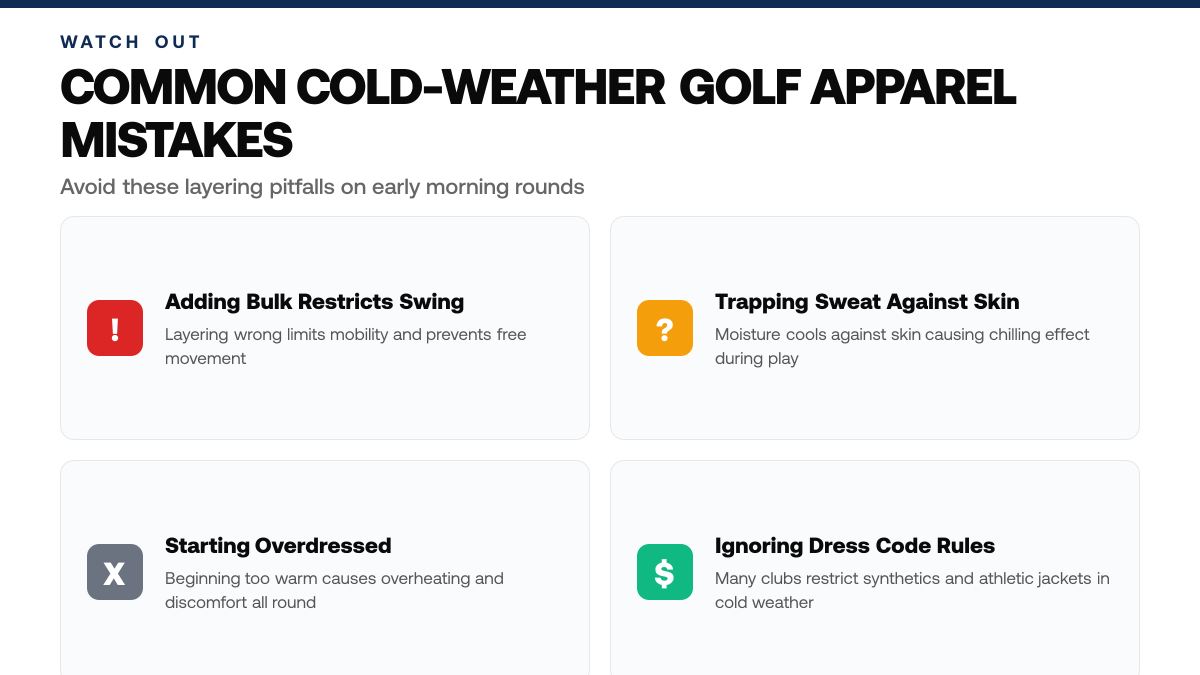
Golf courses maintain dress codes that apply year-round, and cold-weather exceptions are limited. Many clubs restrict certain synthetic materials, require collared shirts, and prohibit athletic-style jackets or hoodies even when temperatures drop. Understanding these rules before you play ensures you stay warm while respecting course etiquette and avoiding embarrassment or being asked to change. This balance between personal comfort and club standards shapes every apparel choice you make, from base layers to outerwear, and is especially important for tournament play or rounds at unfamiliar courses.
Vests and Sleeveless Insulation as Alternatives
When full jackets feel too restrictive or violate dress codes, vests and sleeveless insulating layers offer targeted warmth without compromising your arm swing or range of motion. These mid-layer pieces trap heat around your core, where your body needs it most during a golf swing, while leaving your shoulders and arms free to move naturally. Vests pair well with a long-sleeve base layer and a lightweight windproof shell, giving you flexibility to adjust as your body temperature changes throughout the round.[6]
Key Numbers for Cold-Weather Golf Apparel (2025–2026)
0–9°C conditions warrant merino wool sweater and ultralight down jacket to balance insulation without restricting swing mobility.[1]
Under 35°F: layer with long-sleeve base layer, quarter-zip mid-layer, and clubhouse jacket to manage early-morning temperature drop before sunrise.
Merino wool and synthetic compression fabrics regulate temperature and wick sweat without adding bulk that restricts your golf swing.[1]
Performance materials like GORE-TEX and Storm Bloc® provide wind and water protection while maintaining mobility through your full round.
Thermal accessories (beanie, mittens, neck warmer) make the biggest difference in the first three holes before your body warms up from walking.[1]
Step-by-Step Process
1. Select a moisture-wicking base layer
Start with a snug-fitting base layer in synthetic material or merino wool that pulls sweat away from your skin. The fit matters, avoid anything loose or bunching under your outer layers, as this creates bulk and restricts your swing. A properly fitted base layer keeps you dry and warm without adding visible volume under your golf shirt or jacket. Look for seamless construction and flatlock seams that prevent irritation during repetitive swing motions throughout the round.[2]
2. Add a mid-layer for insulation and mobility
Layer a sweater, fleece, or lightweight insulated jacket over your base layer to trap warmth. Choose a mid-layer that allows full arm movement and shoulder rotation, essential for your golf swing. Haven Golf Company designs for this from day one rather than patching it in later. The mid-layer should compress easily so you can remove it without disrupting your game as your body warms during the round.[2]
3. Wear a wind-resistant outer shell
Top your layers with a wind-resistant or water-resistant shell jacket to block cold air and light precipitation. This outer layer acts as your barrier against the elements while remaining breathable so moisture from exertion can escape. Ensure it fits over your mid-layer without restricting movement or creating excess fabric.
4. Plan layer removal as you warm up
As your body temperature rises during the round, remove layers strategically and store them in your golf bag or cart for easy retrieval if conditions change. This approach prevents overheating mid-round while keeping backup layers accessible. Quality-first makers like Haven Golf Company sweat this detail so you don't have to. Check the weather forecast before your round to anticipate how many layers you'll likely shed and when.
How This Works in Practice
Example 1: The Weekend Player's Early-Tee Layering Strategy
Picture a weekend golfer who regularly tees off at 6:30 a.m. on cool mornings and wants to stay comfortable without looking overdressed on the course. She starts with a fitted merino wool base layer that wicks moisture and regulates temperature, adds a casual-looking performance sweater that meets her club's dress code, and tops it with a lightweight wind-resistant jacket. As the round progresses and the sun climbs, she removes the jacket after nine holes and ties it around her waist, then peels off the sweater by the back nine as genuine warmth arrives. This approach lets her move freely through her swing at every stage, the fitted base and sweater don't bunch or restrict her arms, while the removable layers mean she's never fighting excess fabric or overheating. By the time she reaches the clubhouse, she's shed everything but the base layer and feels as fresh as she did on the first tee.
Example 2: The Low-Handicap Tournament Player's Unrestricted Approach
Consider a competitive golfer preparing for a club championship in early autumn, when dawn temperatures hover near 50 degrees but afternoon heat will climb into the 70s. Rather than wear a traditional puffy jacket that limits shoulder rotation, he chooses a fitted thermal base layer, a lightweight merino wool sweater, and a strategic performance vest that provides core warmth without restricting his swing. The vest's tailored cut sits close to his body and leaves his arms completely free, critical for the smooth, unrestricted motion his low handicap demands. He knows that bulky outerwear can throw off his tempo and feel, so he prioritizes apparel engineered to move with him, not against him. As temperatures rise through the round, the vest comes off easily and stows in his bag, leaving him in just the base and sweater. His swing feels consistent from the first hole to the eighteenth, and he never second-guesses his clothing choices during critical shots.
Why Layering Beats Bulk
Both players succeed because they treat cold-round dressing as a dynamic process, not a static choice. Removable, fitted layers let you adjust to changing conditions and maintain unrestricted movement, whether you're a casual weekend player or a competitive golfer whose swing demands precision. The right combination keeps you warm at dawn and comfortable all the way through the turn. Strategic layering also extends the golf season by several weeks at both ends, letting you play courses that would otherwise feel uncomfortable during shoulder seasons.
Early Morning Cold Round Apparel Checklist
Verify base layer fit by checking that fabric sits snug against skin without bunching under your golf shirt.
Test mid-layer warmth by wearing your chosen sweater or fleece during a practice swing to confirm adequate insulation.
Confirm outer layer wind resistance by checking that your jacket blocks cold air while allowing full arm swing and rotation.
Pack an extra insulating layer in your golf bag in case morning temperatures stay colder than the forecast predicted.
Bring a towel to dry damp layers if conditions turn wet or humid during your round.
Common Mistakes to Avoid
Mistake: Choosing cotton or non-moisture-wicking base layers for early morning rounds
Cotton absorbs sweat and holds moisture against your skin, trapping cold as your body temperature rises during the round. This causes your core to chill even when outer layers feel warm. Switch to synthetic or merino wool base layers that wick moisture away from skin and dry quickly, keeping you warm and comfortable throughout the full 18 holes.[7]
Mistake: Overdressing at the start with too many layers or heavy materials
Starting a cold round bundled in multiple thick layers or heavy sweaters leads to overheating once your body warms up mid-round. You can't easily strip off layers while playing without disrupting your swing or losing focus. Plan layering so you start slightly cool and can remove one light layer if needed, aim for comfort at hole 5 or 6, not hole 1.[7]
Mistake: Selecting jackets or sweaters that restrict arm mobility or bunch under outer layers
Tight or poorly fitted mid-layers bunch under rain jackets or wind shells, creating bulk that restricts your shoulder turn and swing plane. This compromises both comfort and performance. Choose fitted but flexible jackets with stretch fabric and tapered sleeves that layer cleanly without bunching, allowing full range of motion through the swing.[7]
Frequently Asked Questions
Why is merino wool better than cotton for cold golf mornings?
Merino wool and synthetic moisture-wicking fabrics regulate temperature and dry faster than cotton, making them ideal base layers for early morning rounds. Cotton absorbs and holds moisture against your skin, which increases heat loss and prolongs the chill. Merino wool naturally manages sweat while maintaining warmth, keeping you comfortable as your body temperature rises during play.[1]
When should I start removing layers during a cold round?
Start removing layers once your body warms up, typically after a few holes, to prevent overheating and maintain comfort through the full round. Your metabolism increases as you walk and swing, raising core temperature. Removing a layer at the right moment prevents sweat buildup and the discomfort of being overdressed mid-round, allowing you to stay dry and focused.
Are vests or sleeveless layers better for cold mornings than full jackets?
Vests and sleeveless insulating layers are ideal for cold mornings when you want core warmth without restricting your shoulder and arm mobility during the swing. A full jacket can limit your range of motion and create bulk around the torso, while a vest provides targeted warmth where you need it most while leaving your arms free for a full, unrestricted golf swing.[1]
How to Dress for Early Morning Golf Rounds (Step-by-Step) — You arrive at the course before dawn, stepping out into cool air and damp fairways. Your first swing feels stiff in the chill. Two hours later, the sun is climbing fast…
Golf Apparel for Early Morning & Cold Weather Rounds — Step onto the first tee on a crisp morning when the temperature hovers just above freezing, and you immediately feel the difference. Cold weather and early rounds…