You're four holes in on a humid summer day, and your shirt is already plastered to your back. Most golfers know this feeling: visible sweat marks spread across the chest and shoulders, confidence starts to slip, and you're grinding through the remaining holes instead of enjoying them. The physical reality is unavoidable, a typical round involves walking four to six miles and executing roughly 80 to 100 swings over four hours, generating steady, light-to-moderate perspiration that standard athletic wear simply cannot manage.[2]
What separates struggling through the back nine from actually enjoying it is the right moisture-wicking shirt. Unlike regular cotton or basic athletic wear designed for high-intensity activity, golf apparel must address a specific set of demands: managing sweat across an extended period while maintaining a presentable appearance, allowing full rotational range of motion during your swing, and providing sun protection during hours of direct exposure. Moisture-wicking is a measurable fabric behavior where hydrophobic fibers repel water at your skin, then transport that moisture outward to the fabric surface where evaporative cooling takes over.[1][2]
This guide walks you through understanding moisture-wicking technology and why golf demands different fabric engineering than other sports. You'll learn how to choose fabrics and construction features that actually prevent sweat marks, what anti-odor treatments and breathable design contribute to performance, and what common mistakes golfers make when selecting performance apparel. Whether you play weekend rounds in summer heat or travel to courses with shifting conditions, the right polo combines technical capability with refined aesthetics, so you stay dry, comfortable, and confident from the first tee to the last putt.
Haven Golf Company sells performance golf and lifestyle apparel, primarily polos for men and women, crafted with their signature Airflex™ material for maximum comfort and durability.
TL;DR
Moisture-wicking fabrics like polyester and nylon draw sweat away from skin and allow it to evaporate quickly, keeping you dry during your round.[1][2][5]
These hydrophobic fibers work by repelling water at the skin layer, then transporting moisture outward to the fabric surface for evaporative cooling.[1][2][5]
Breathable golf shirts are essential for managing light-to-moderate perspiration across a four-hour round while maintaining a presentable appearance.[1][2][5]
Understanding Moisture-Wicking Technology in Golf Apparel
What Is Moisture-Wicking in Golf Shirts?
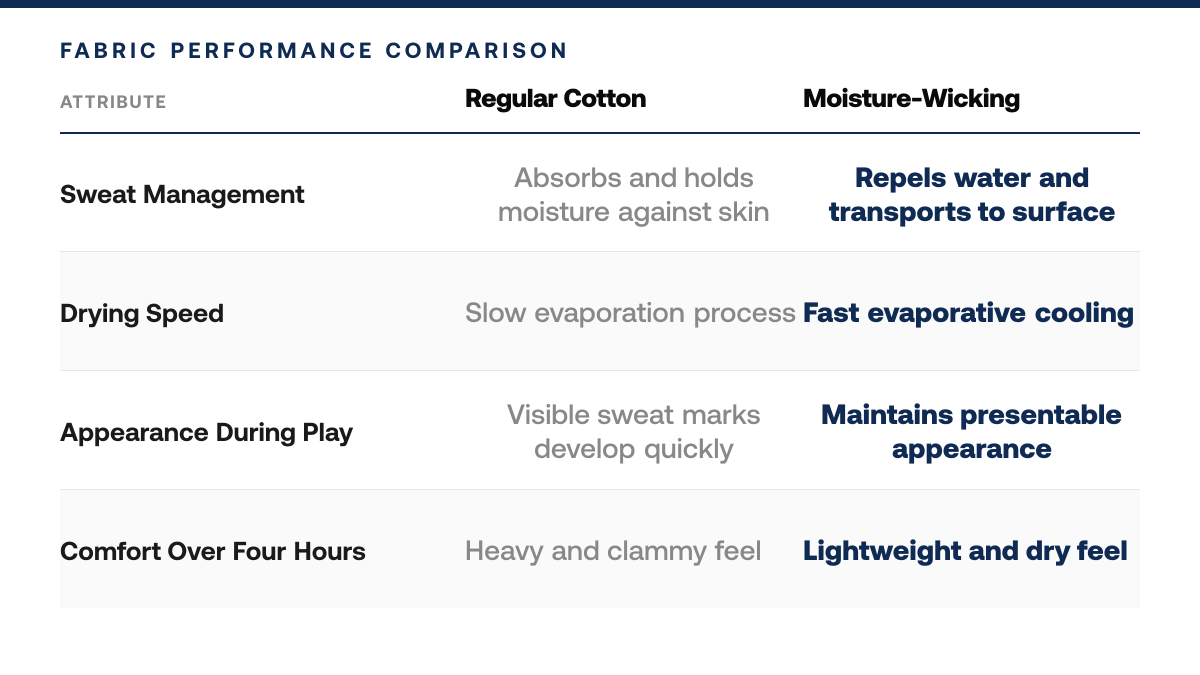
Moisture-wicking is a specific, measurable fabric behavior that keeps golfers dry during play. A moisture-wicking shirt uses hydrophobic fibers that repel water at the skin contact layer, then transport that moisture outward to the fabric's surface where evaporative cooling takes over. This process is fundamentally different from regular cotton or non-technical fabrics, which absorb sweat and hold it against your skin. Modern golf shirts achieve this through materials like polyester and nylon, which are lightweight and quick-drying by nature. The technology works by creating a pathway for sweat to move away from your body rather than pooling on your skin, keeping you more comfortable across a full round.[1]
Why Golf Demands Different Moisture Management Than Other Sports
Golf creates unique clothing demands that set it apart from high-intensity athletic wear. During a typical round, a golfer walks an average of four to six miles, executes roughly 80 to 100 swings, and spends the majority of their time standing or walking, not generating the sustained body heat that a runner or cyclist would produce. This means golf shirts must manage light-to-moderate perspiration across an extended period, allow a full rotational range of motion during the swing, provide sun protection during hours of direct exposure, and maintain a presentable appearance throughout. Basic moisture-wicking fabrics work well during high-intensity activity when body heat accelerates evaporation, but during lower-intensity activity like golf, moisture accumulates more slowly, making the quality of the wicking system more, not less, important.[2]
The Growing Standard for Performance Golf Apparel
Today's golfers increasingly expect technical features beyond simple moisture-wicking. Essential fabric technologies now include anti-odor treatments, four-way stretch for unrestricted movement, and temperature-regulating yarns, increasingly standard features in premium golf brands. Breathable fabrics with tiny pores allow water vapor molecules to escape while stopping raindrops from soaking through, combining comfort with weather protection. Eighty-four percent of golfers now prioritize cooling technology when choosing apparel, reflecting a market shift toward garments engineered for both performance and lifestyle. This growing demand has reshaped how golf clothing is designed, moving away from basic athletic wear toward specialized pieces that address the specific conditions and duration of a four-hour round.[2][3]
Step-by-Step Process
1. Choose fabrics engineered for moisture-wicking and breathability
Select golf shirts made from polyester and nylon, which are lightweight and quick-drying materials designed to draw moisture away from your skin and transport it to the fabric surface where evaporative cooling takes over. Look for garments that explicitly feature four-way stretch construction, which allows unrestricted rotational movement during your swing while maintaining breathability. These technical fabrics work together to manage the light-to-moderate perspiration that accumulates over a four-hour round, keeping sweat from pooling against your body.[1][5]
2. Prioritize anti-odor treatments built into the fiber
Seek golf shirts with anti-odor technology integrated into the fabric itself rather than applied as a surface treatment. This engineered feature becomes increasingly important during lower-intensity activity like golf, where moisture accumulates more slowly than during high-intensity sports. Anti-odor treatments prevent bacterial growth that causes visible sweat stains and odor, helping you maintain a presentable appearance throughout your round even when conditions shift or heat builds.[1][2]
3. Verify breathable construction that allows air circulation
Confirm that your golf shirt has breathable construction with tiny pores that allow water vapor molecules to escape while maintaining fabric integrity. Breathable golf shirts enable air to pass through the material, which accelerates sweat evaporation and keeps your body cool during extended play. This capillary action, the force responsible for moving moisture through the fabric, is what separates performance golf apparel from standard athletic wear optimized for shorter, high-intensity activity.[6]
How This Works in Practice
Example 1: The Weekend Player Choosing for Summer Heat
Picture a weekend golfer preparing for a round during humid summer conditions. They know from past experience that standard cotton polos cling to their back by the turn, affecting both comfort and confidence in how they appear on the course. When selecting a shirt, they check the fabric composition, looking for polyester or synthetic blends rather than pure cotton, since moisture-wicking fabrics like polyester are designed to repel water at the skin and transport moisture outward where evaporative cooling takes over. They also examine the garment's breathability features, understanding that breathable golf shirts allow air to pass through and help sweat evaporate quickly. Before checkout, they verify that the polo offers a refined, on-course aesthetic alongside its technical properties, a shirt that performs under physical demands while maintaining the polished appearance expected at their club. This dual focus on sweat management and visual presentation reflects what modern golf apparel demands: the ability to handle light-to-moderate perspiration across an extended four-hour round while keeping the golfer looking fresh.[1][5][6]
Example 2: The Traveling Golfer Adapting to Variable Conditions
Imagine a golfer who plays courses across different climates and seasons, packing for unpredictable weather shifts, cool mornings that warm into afternoon sun, or sudden rain. Rather than overpacking, they invest in polos made from thermoregulating fabrics designed to adapt and help the body maintain optimal temperature as conditions shift throughout the round. They also consider layering as a strategic tool, adding a lightweight base layer or outer shell without piling on bulk. When reviewing options, they look for pieces that bridge performance and lifestyle, technical enough for 18 holes but refined enough for the clubhouse afterward, so a single garment works both on and off the course. They verify that the fabric can handle the demands of standing and walking across four to six miles without the sustained body heat a runner generates, meaning the moisture-wicking system must work efficiently even during lower-intensity activity. This approach lets them adapt to shifting conditions without overheating or losing the performance edge they need.[2][6][7]
Why Fabric Choice and Layering Matter
Both golfers prioritize the same underlying principle: selecting apparel engineered for golf's specific demands, light-to-moderate perspiration over extended time, full rotational range of motion, and the need to look composed throughout. Whether facing summer heat or variable conditions, the right polo combines moisture-wicking performance with refined aesthetics, while strategic layering and thermoregulating fabrics allow adaptation without compromise. This balance between technical capability and on-course presence is what separates performance golf wear from standard athletic apparel.[2][7]
Stop Sweating Through Your Golf Shirt Checklist
Verify the shirt uses moisture-wicking fibers like polyester that repel water at the skin and transport moisture outward.
Look for breathable construction with tight weaves or special coatings that allow sweat to evaporate quickly.
Confirm the fabric offers four-way stretch to allow full rotational range of motion during your swing.
Check that the shirt has anti-odor treatments integrated into the fabric to prevent bacterial growth and visible sweat stains.
Common Mistakes to Avoid
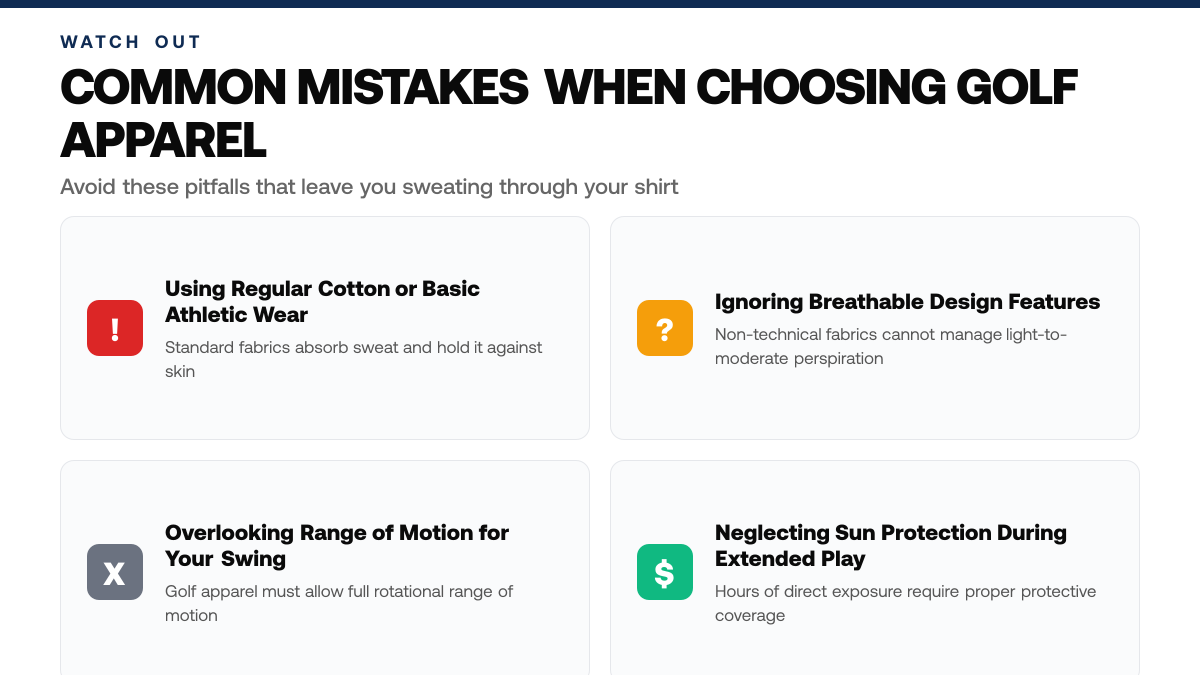
Mistake: Wearing regular cotton or basic athletic wear designed for high-intensity activity
Regular athletic wear is optimized for high-intensity, shorter-duration activity and fails to address golf's unique demands: light-to-moderate perspiration across an extended four-hour round. During lower-intensity activity like golf, moisture accumulates more slowly, making the quality of the wicking system more critical than in high-intensity sports. Choose golf-specific apparel engineered with advanced moisture-wicking technology designed for sustained, moderate sweat management rather than peak-intensity cooling.[2]
Mistake: Ignoring fabric quality and wicking system design in favor of basic moisture-wicking claims
Not all moisture-wicking fabrics perform equally on the course. True moisture-wicking is a specific, measurable behavior where hydrophobic fibers repel water at the skin layer, then transport moisture outward for evaporative cooling. Premium golf apparel combines moisture-wicking with anti-odor treatments, four-way stretch for unrestricted swing motion, and temperature-regulating yarns, increasingly standard features in quality golf brands. Verify that your shirt uses these integrated technologies rather than relying on a single wicking feature.[1][2]
Mistake: Assuming any breathable fabric will prevent visible sweat marks
Visible sweat marks happen when your sweat production exceeds what your clothing can manage. Breathability alone is insufficient; you need a garment engineered to move moisture away from your skin quickly and maintain a presentable appearance throughout your round. Look for shirts with proven capillary-action fabrics and designs that prioritize both evaporative cooling and sweat-stain prevention, not just airflow.[4][6]
Frequently Asked Questions
What fabric technologies actually stop sweat from showing through a golf shirt?
Moisture-wicking fabrics use hydrophobic fibers that repel water at the skin layer and transport moisture outward to the fabric surface, where evaporative cooling takes over. Polyester and nylon are popular choices because they're lightweight and quick-drying. During golf's lower-intensity activity, where you walk four to six miles and execute roughly 80 to 100 swings over four hours, moisture accumulates more slowly than in high-intensity sports, making the quality of the wicking system especially important. Breathable fabrics with tiny pores let water vapor escape while maintaining structure.[1][2][5][6]
Does UPF protection in golf shirts really make a difference?
Yes. UPF protection is achieved through special dyes, coatings, and fiber composition, polyester naturally blocks more UV radiation than cotton, and tighter weaves increase protection. A standard white cotton t-shirt typically provides a UPF rating of around 5. Quality golf apparel engineered with UPF 50+ offers roughly ten times that level of protection, which matters during hours of direct sun exposure on the course.[2]
How should I wash moisture-wicking golf shirts to keep them working?
Proper care preserves performance. Washing and drying techniques matter as much as the initial fabric choice. Moisture-wicking fabrics require specific handling to maintain their hydrophobic properties and quick-dry ability. Following manufacturer care instructions, rather than standard laundry practices, protects the technical coating and fiber structure that makes the shirt perform. Improper washing can degrade the fabric's ability to wick moisture and dry quickly.[1]
Why Golf Polos Bunch at the Waist (& Fixes) — You step up to the first tee in a polo that fit perfectly in the store, but within a few holes, fabric bunches awkwardly at your waist, creating unflattering folds that…
How to Prevent Golf Polo Collar Curling — You've just finished a round, and you notice the collar of your favorite polo has started to curl up at the edges. It's a subtle flaw, but it catches your eye every time…