Midway through a round, your polo shifts sideways across your torso. The hem bunches up on one side. You tug it back into place, only to have it drift again within a few holes. For golfers, fabric movement during play isn't just annoying, it breaks your focus and undermines the polished appearance you started with that morning.
This bunching and shifting problem is widespread among golfers, affecting both comfort and confidence throughout a round. According to Golf Monthly, fit and stability rank among the top priorities golfers consider when selecting performance polos, yet many standard designs fail to address the specific movement patterns that occur during the golf swing and walking the course.[1]
The good news is that five specific design features have been engineered to directly prevent bunching and keep your polo in place from the first tee to the eighteenth green. Understanding what these features are and how they work will help you choose polos that maintain their fit and appearance no matter how many swings you take. Most golf polos ride up and twist at the waist the moment you rotate through your swing, turning a premium shirt into a shapeless nuisance by the back nine, Haven Golf Company weaves Airflex™ material throughout the torso and sleeves, so fabric moves with your body instead of bunching against it.
TL;DR
Anti-bunching polos use strategic seam placement, moisture-wicking fabrics, and tailored construction to keep fabric flat against your body during movement and play.
Proper fit and fabric selection are the two primary factors that eliminate bunching, a well-fitted polo with the right material stays in place without shifting.
Most golfers overlook how seam positioning affects comfort; premium polos engineer seams away from high-friction areas to reduce fabric migration.[2]
Understanding Golf Polo Bunching and Fabric Performance
What Is Bunching in Golf Polos?
Bunching refers to unwanted fabric gathering or puckering that occurs around the torso, underarms, or seams during movement and play. It happens when fabric lacks proper stretch recovery, seams are poorly positioned, or the fit is either too loose or too tight. Rather than moving smoothly with your body, the material bunches up and creates visible folds, which not only looks unflattering but can also interfere with your swing mechanics. Understanding the root causes, whether structural (seam placement, dart positioning) or material-based (inadequate recovery properties), is essential to selecting a polo that performs as well as it looks.[3]
Why Bunching Matters for Golfers
For golfers, bunching is more than a cosmetic issue. Excess fabric movement disrupts your focus, creates discomfort during the swing, and can catch your eye during critical moments on the course. Moisture-wicking technology plays a key role in preventing bunching by moving sweat away from the body rather than allowing fabric to cling to your skin, a primary trigger for bunching. When moisture accumulates, fabric adheres to your torso and creates the pulling and gathering that ruins both comfort and appearance. A polo engineered to manage moisture stays dry, maintains its shape, and moves with you rather than against you.
How Tailored Construction Prevents Bunching
High-performance golf polos use tailored construction techniques to keep fabric stable throughout your swing. Reinforced side seams and strategic dart placement, particularly at the chest and waist, anchor the fabric and prevent it from shifting or bunching during movement. These design elements work together to create a garment that conforms to your body's shape without excess material pooling in problem areas. When seams are positioned correctly and darts are placed with precision, the polo moves as one unified piece with your body, eliminating the micro-movements that cause visible bunching and maintaining a polished appearance from the first tee to the eighteenth green.
Key Numbers for 5 Golf Polo Features That Actually Stop Bunching (2026)
Polyester-cotton blends (65/35 ratio) reduce fabric shifting and improve moisture management during extended play.[3]
Heavier fabric weights (5.5–6.5 oz per square yard) provide structural stability and resist bunching at the torso.[3]
Four-way stretch construction allows unrestricted arm and torso movement without fabric migration.[3]
Reinforced seam construction at shoulder and side panels prevents separation and fabric bunching during swing.[5]
Moisture-wicking finishes maintain fabric tension by reducing sweat absorption that destabilizes fiber alignment.[3]
Step-by-Step Process
1. Evaluate fabric content and blend composition
Check the polo's fabric tag for material makeup, look for moisture-wicking synthetics like polyester or nylon blended with cotton. High-performance fabrics with stretch properties resist bunching better than 100% cotton. Verify the blend percentage; a balanced mix (60/40 or 50/50 synthetic-to-natural) typically offers both breathability and stability during movement. Avoid heavy, loose-weave fabrics that shift easily.[4]
2. Test fit through proper measurement and sizing
Measure your chest, shoulder width, and sleeve length using a soft tape measure against bare skin. Compare these measurements to the polo's size chart rather than relying on standard sizing alone. Try multiple sizes if possible, a snug but not tight fit across the shoulders and chest prevents excess fabric from bunching during your swing. Ensure the hem sits at your hip without excess length that could ride up.
3. Check seam quality and construction details
Inspect the shoulder seams, armholes, and side seams for reinforced stitching and flat construction. Run your fingers along seams to feel for loose threads or uneven tension. High-quality polos use double-stitched or taped seams that hold their shape through repeated motion. Look for gusseted underarms, a triangular fabric insert that reduces stress and bunching in the armpit area during the golf swing.
4. Assess collar and hem stability
Examine the collar for reinforced edges and a structured design that won't curl or bunch at the neckline. Check that the hem is sewn with a tight, consistent stitch and doesn't pucker or wave. A well-constructed polo maintains its form throughout eighteen holes, with no shifting at the collar, sleeves, or waistband. Gently tug the fabric in different directions to confirm seams hold without separating.
How This Works in Practice
Example 1: The Weekend Golfer's Smooth Swing
Picture a golfer who plays twice a week and noticed his regular polos riding up around the midsection during his backswing, forcing him to tug them down between shots. He switched to a Haven Golf Company polo engineered with a contoured fit and moisture-wicking fabric that moves with his torso rather than against it. The design incorporates a slightly longer cut and strategic seaming that anchors the shirt at the hips, preventing the fabric from bunching as he rotates through his swing. Within a few rounds, he stopped adjusting mid-play and could focus entirely on his game. The breathable material also kept him dry during warmer days, so the shirt stayed in place rather than slipping upward as sweat accumulated.
Do / Don't: Preventing Bunching in Golf Polos
Best Practice
Anti-Pattern to Avoid
Choose polos with moisture-wicking fabrics that move sweat away from skin
Allow fabric to cling to wet skin, triggering pulling and gathering
Position seams strategically away from high-friction areas and underarms
Place seams in zones prone to movement and friction during the swing
Use tailored construction with reinforced side seams and precision dart placement
Rely on loose, unstructured fits with poorly positioned darts
Select fabrics with proper stretch recovery that conform to your body shape
Wear polos lacking recovery properties that bunch and wrinkle during play
Example 2: The Casual Player's All-Day Comfort
Consider a golfer who wears polos beyond the course, for casual outings, family gatherings, and social events, and wanted a single shirt that wouldn't bunch whether he was swinging a club or simply walking around. A Haven Golf Company polo with a tailored yet relaxed silhouette and premium fabric blend gave him the structured fit he needed for athletic movement without the rigid feel that restricts everyday wear. The fabric's elasticity allowed the shirt to expand and contract naturally with his body, and the reinforced side seams prevented the common problem of fabric gathering at the waist when he bent or twisted. He found the shirt performed equally well on the course and off, eliminating the need for separate athletic and casual polos.
Why the Right Fit Matters
Both scenarios highlight a core truth: bunching isn't just a cosmetic annoyance, it breaks focus and forces constant adjustment during play. When a polo incorporates all five anti-bunching features, contoured fit, premium fabric, strategic seaming, proper length, and elasticity, the shirt becomes an invisible partner in your swing, not a distraction. The result is confidence on the course and versatility off it.
Anti-Bunching Polo Features Checklist
Assess your typical swing motion and body type to prioritize which anti-bunching features (seam placement, fabric stretch, or hem design) matter most for your comfort.
Try on polos with different shoulder seam positions to confirm the style prevents fabric bunching during your natural golf swing.
Check the side panel construction and stretch percentage to ensure the polo accommodates your torso movement without riding up.
Test the hem length and taper against your typical tucking preference to verify it stays in place throughout a round.
Compare how multiple anti-bunching polos perform during a practice swing or short range session before committing to a full purchase.
Common Mistakes to Avoid
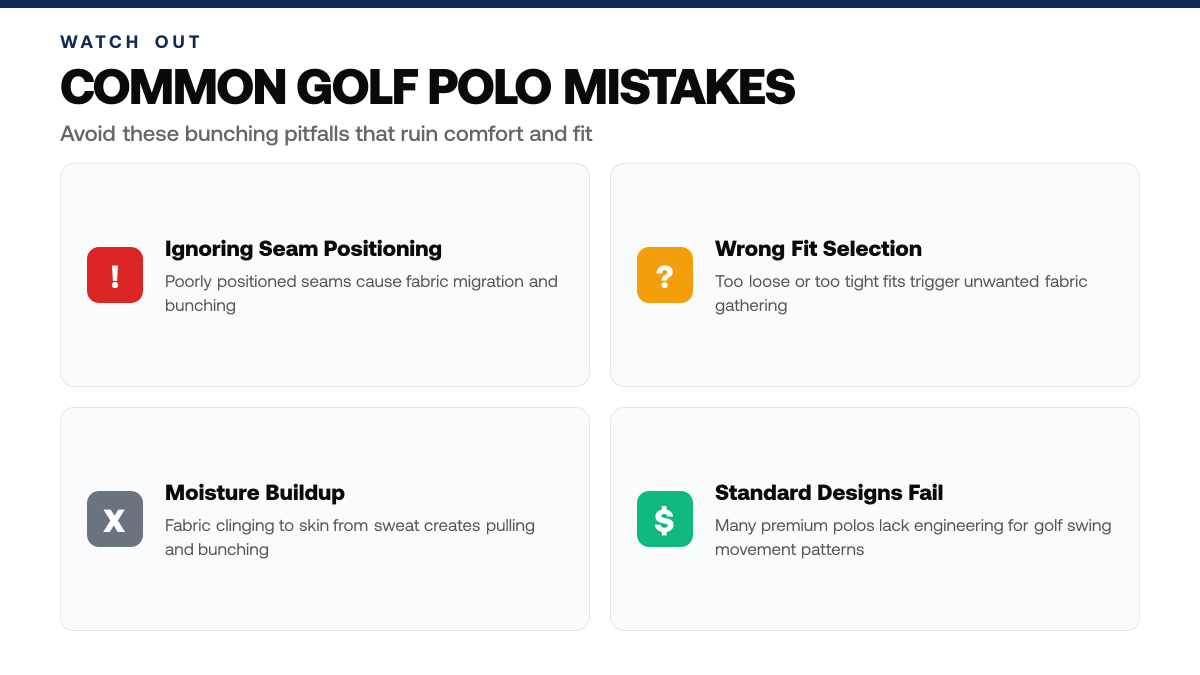
Mistake: Buying polos based on style without checking fabric composition and fit
Selecting a polo solely on appearance, color, brand, or cut, while ignoring fiber content and how it drapes on your body is a primary cause of bunching. Fabrics with poor recovery (like low-quality cotton blends) lose shape during movement and settle unevenly across the torso. Fix: Always check the fiber blend before purchase, prioritize moisture-wicking synthetics or high-quality cotton, and try on or review fit charts to ensure the shirt moves with your body, not against it.[5]
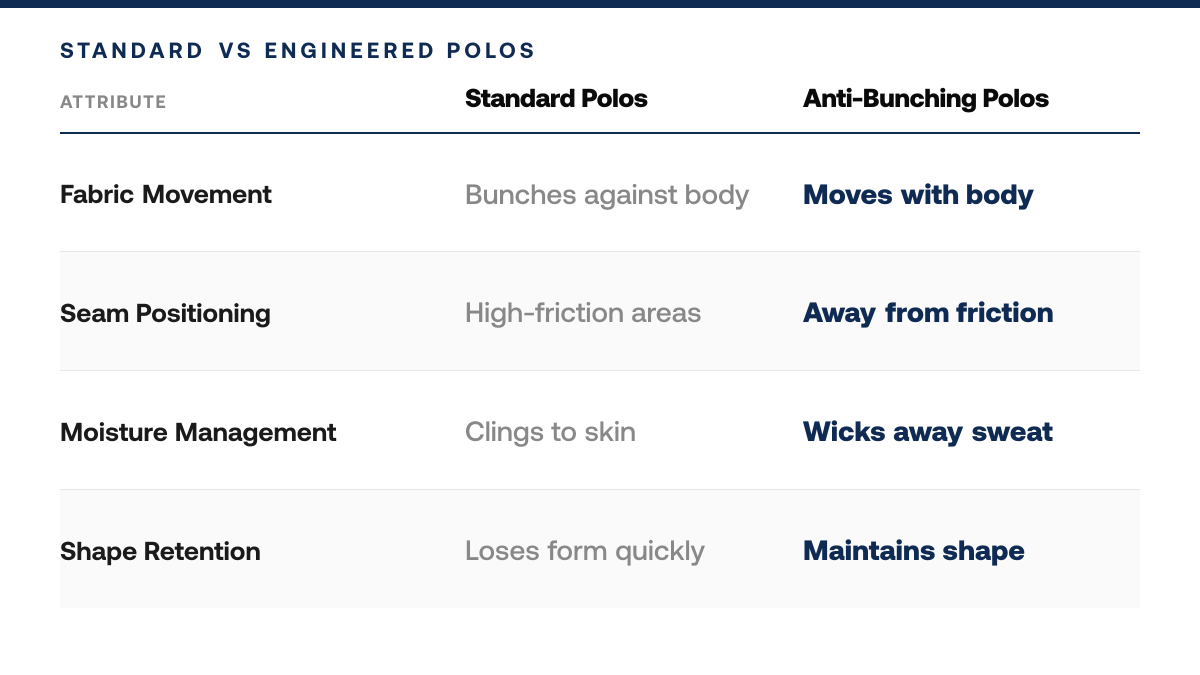
Standard Polos vs Anti-Bunching Performance Polos
Aspect
Standard Design
Anti-Bunching Design
Fabric behavior during swing
Rides up and twists at waist, creating shapeless folds
Moves with your body using engineered materials like Airflex™
Seam positioning
Placed in high-friction areas causing fabric migration
Positioned strategically to reduce friction and shifting
Moisture management
Allows sweat to accumulate, causing fabric to cling and bunch
Wicks moisture away, keeping fabric dry and maintaining shape
Construction approach
Basic fit without structural reinforcement
Tailored with reinforced side seams and precision dart placement
Mistake: Overlooking seam placement and construction quality
Cheap polos often have seams positioned poorly, too close to the armpit or running straight down the center of the chest, which causes fabric to bunch and shift during your swing. Low-quality stitching compounds the problem by allowing seams to separate under stress. Fix: Inspect seam placement before buying; look for reinforced stitching at stress points (shoulders, underarms) and seams that sit slightly toward the back to allow front-panel freedom.[5]
Mistake: Ignoring collar and hem construction details
A polo with a flimsy, unstructured collar or poorly finished hem will curl, wrinkle, and bunch as you move. These details signal overall construction quality and directly affect how the garment sits on your frame throughout a round. Fix: Feel the collar weight and check for reinforced stitching on hems; quality polos have stable collar stays or structured knit collars and secure, flat-locked seams that resist bunching.[5]
Why Fit Precedes Comfort
The bunching problem in golf apparel reveals something deeper: garments that move with the body rather than against it create a feedback loop of confidence. When a polo stays in place through the swing, the wearer stops managing fabric and starts managing the game. This shift from distraction to focus is where technical design becomes invisible, and that invisibility is precisely the point.
Frequently Asked Questions
Can expensive polos still bunch if the fit is wrong?
Yes. Bunching occurs when fit or fabric properties are mismatched to your body, regardless of price point. A premium polo with poor fit will bunch just as readily as a budget option. The key is ensuring the garment's cut and stretch capacity align with your frame and movement patterns. Proper fit, not cost, prevents bunching at the source.[2]
How does washing affect polo bunching over time?
Proper care and washing techniques preserve the stretch and shape that prevent bunching. Gentle cycles, cold water, and air-drying help maintain fabric elasticity and structural integrity. Harsh washing, high heat, and aggressive drying degrade the fibers responsible for recovery and fit retention, making bunching more likely as the polo ages. Consistent care extends the garment's anti-bunching performance.[2]
What's the difference between bunching and normal fabric movement?
Normal fabric movement is smooth and follows your body's contours during the golf swing. Bunching appears as visible wrinkles, folds, or puckering that persist even when you're still, typically at the torso, shoulders, or sleeves. Bunching signals a mismatch between fit and body shape, while normal movement is temporary and resolves as you shift positions.
5 Best Golf Polos for Men That Actually Fit Right — Walk into any golf shop and you'll notice something immediately: not all polos feel the same. Some cling awkwardly at the shoulders, others pull across the chest, and a…
How to Choose the Right Golf Polo Fabric for Your Game — Stand on the practice range on a humid afternoon, and you'll notice something immediate: the golfer in a heavy cotton shirt is already uncomfortable, while the player in…