Golf Apparel for Early Morning & Cold Weather Rounds
Step onto the first tee on a crisp morning when the temperature hovers just above freezing, and you immediately feel the difference. Cold weather and early rounds present a unique set of challenges that casual golfers often underestimate, wind cuts through layers, moisture from frost and dew clings to fabric, and stiff muscles resist the full swing you'd execute in summer conditions. These environmental factors don't just affect comfort; they directly impact your ability to move freely and perform at your best.
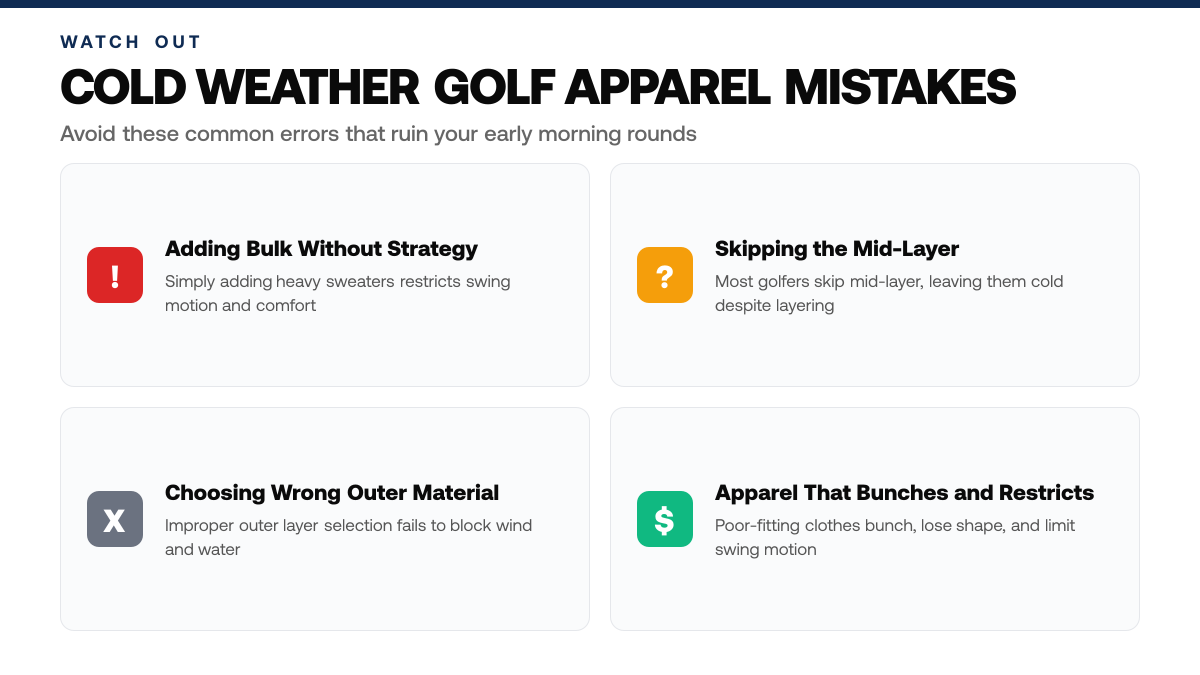
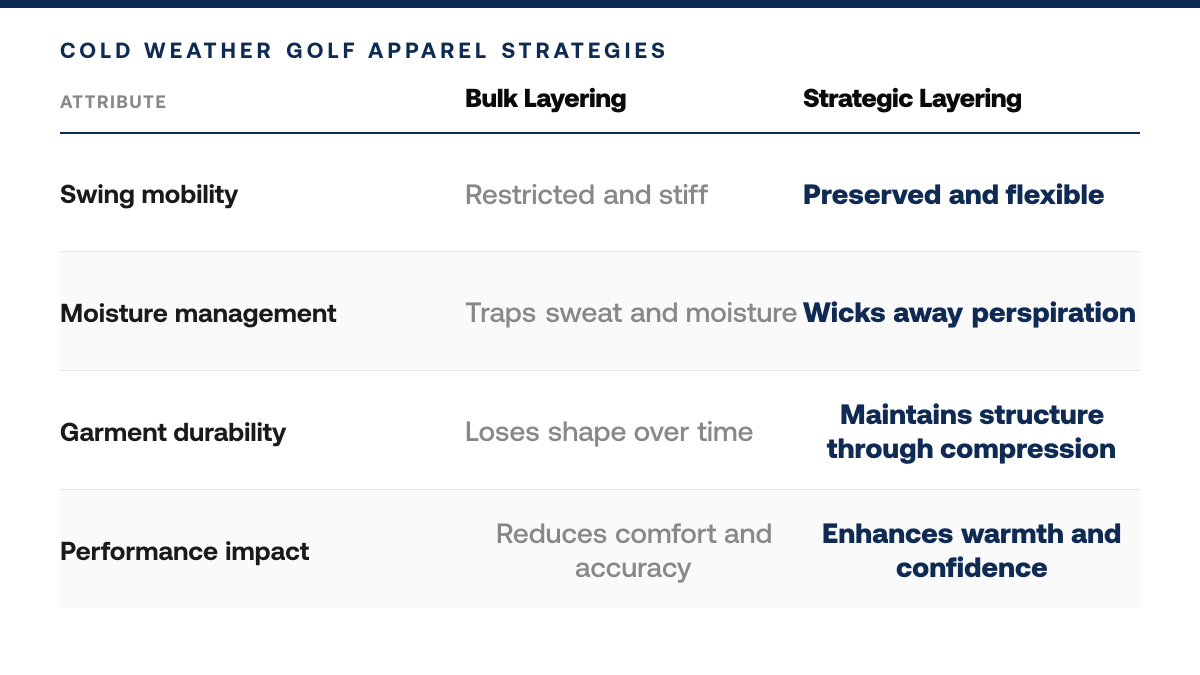
The foundation for tackling these challenges lies in strategic apparel selection. Rather than simply adding bulk with heavy sweaters, golfers need clothing that manages temperature and moisture while preserving mobility and style. Research shows that proper layering and fabric choice can make the difference between a miserable round and one where you stay warm, dry, and confident throughout your game.[1]
This article covers how to build a cold-weather golf wardrobe that keeps you comfortable without sacrificing performance or personal style. You'll learn which fabrics and fits work best for early morning conditions, how to layer effectively, and how to choose pieces that reflect your identity while delivering the functionality serious golfers demand. Cold-weather golf apparel often bunches, restricts swing motion, or loses shape after a season of layering, Haven Golf Company's Airflex™ material stretches with your swing and maintains structure through repeated compression, so early-morning rounds stay comfortable from the first tee to the eighteenth.
TL;DR
Layering is the core cold-weather golf strategy: a moisture-wicking base layer, insulating mid-layer, and windproof outer shell work together to keep you warm and dry.
The base layer pulls sweat away from skin, the mid-layer traps heat, and the outer layer blocks wind and water, each serves a distinct function in the system.
Most golfers skip the mid-layer or choose the wrong outer material, leaving them cold despite wearing multiple pieces.[2]
Understanding Cold Weather Golf Apparel
What Is Cold Weather Golf Apparel?
Cold weather golf apparel is specialized clothing designed to keep golfers comfortable during early morning rounds and chilly conditions while maintaining full mobility for the golf swing. Unlike casual winter wear, performance golf clothing must balance three competing demands: thermal insulation to retain body heat, breathability to allow moisture and sweat to escape during active movement, and wind or water resistance to shield against the elements. The distinction matters because golfers spend hours outdoors in stationary and dynamic phases, standing between shots, then executing a full-body swing. Fabric technology and construction methods determine how well apparel performs across the temperature swings that occur during a single round, from cool dawn conditions to warmer midday play.[1]
Why Cold Weather Golf Apparel Matters
Proper cold weather golf apparel directly affects both performance and enjoyment on the course. When a golfer is too cold, muscle stiffness reduces swing flexibility and accuracy, while overheating or moisture buildup creates discomfort that distracts from the game. The right layers and fabrics allow golfers to stay warm without sacrificing the freedom of movement essential to a consistent swing. For serious golfers who play year-round, investing in quality cold weather pieces is as important as any other equipment decision. The market reflects this commitment: golfers demonstrate strong engagement with apparel purchases, with the majority acquiring golf-related merchandise regularly. Cold weather rounds demand clothing that performs, not just looks good.
The Growing Cold Weather Golf Market
Cold weather golf apparel has become a significant category as more golfers embrace year-round play and the sport continues to expand. The golf community now includes millions of players across all demographics, and women's participation in particular is reshaping apparel demand and design priorities. Golfers and lifestyle shoppers increasingly seek high-performance pieces that reflect personal identity, patriotism, or school and team pride, not just functional basics. This shift has driven innovation in fabric blends, construction techniques, and style options that allow cold weather gear to perform at the highest level while expressing individual taste. The convergence of performance demand and style expectation means cold weather golf apparel must deliver on both fronts.
Key Fabric Technologies for Cold Weather Golf
Merino Wool and Synthetic Blends
Merino wool has become a gold standard for golf base layers because it naturally regulates temperature, wicks moisture efficiently, and resists odor even after multiple rounds without washing. The fine fibers feel soft against skin without the itchiness associated with traditional wool, making it ideal for golfers who plan to wear their base layer in contact with their skin all day. Synthetic blends like polyester-nylon combinations offer similar moisture-wicking properties with added durability and easier care. Choose a blend that suits your preference for natural versus synthetic feel; both perform exceptionally well in cold conditions when matched with proper mid and outer layers.
Thermal Insulation Technologies
Modern thermal mid-layers use advanced insulation technologies that trap air and body heat without adding substantial weight or bulk. Fleece fabrics remain popular because they compress easily for storage and offer excellent warmth-to-weight ratios, while lightweight down and down-alternative materials provide premium insulation in even thinner profiles. When selecting a mid-layer, verify that the insulation allows your full range of motion and doesn't create pressure points under your arms or across your shoulders where tension during the swing could create discomfort. Quality thermal mid-layers maintain their loft and insulating properties through multiple compressions, ensuring consistent performance throughout the season.
Step-by-Step Process
1. Select a moisture-wicking base layer
Start with a fitted base layer designed to pull sweat away from your skin. Look for synthetic materials like polyester or merino wool blends that dry quickly and maintain comfort during your swing. This foundation prevents moisture buildup that can chill you in cold morning conditions, keeping your core temperature stable throughout the round.[2] The base layer should fit snugly enough to function effectively but not so tight that it restricts blood flow or movement. Many golfers prefer base layers in neutral colors that layer seamlessly under bright polos or patterned golf shirts without creating visual bulk.
2. Add an insulating mid-layer for warmth
Layer a fleece or lightweight down mid-layer over your base to trap body heat without adding bulk. Choose a mid-layer that allows full arm mobility and doesn't restrict your shoulder rotation or swing mechanics. The insulating layer should feel snug but not tight, preserving your natural range of motion on the course.[2] Consider a mid-layer with articulated sleeve construction that follows the natural bend of your arm during the swing. Zippered mid-layers offer flexibility to adjust warmth as conditions or your body temperature change mid-round, making them ideal for transitional morning temperatures.
3. Top with a protective outer shell
Finish your layering system with a wind- and water-resistant outer shell jacket. Select a shell that's tailored to your frame, not oversized, so it moves with you rather than against you. Ensure the jacket has articulated sleeves and a cut that accommodates your golf posture without bunching or pulling across the chest and shoulders.[2] Look for outer shells with moisture-resistant coatings rather than fully waterproof materials, which can trap condensation and sweat inside. Golf-specific shells often feature shorter hems and tapered waists that work well with golf bags and don't interfere with your swing or walking gait.
4. Verify fit and mobility before play
Before heading to the course, perform a few practice swings in your complete outfit. Raise your arms overhead, rotate your torso, and simulate your normal golf swing to confirm nothing restricts movement. Check that layers don't bunch at the waist or shoulders, and that sleeves allow full extension without riding up or pulling tight at the wrists. Walk around your home for ten minutes to assess comfort during the stationary phases of golf when you're not actively swinging. This real-world test reveals binding points or hot spots that might only become apparent after several holes on the course.
How This Works in Practice
Example 1: The Early-Morning Commuter Building Layered Confidence
Picture a golfer who tees off at dawn three times a week before work, where temperatures hover near freezing and wind cuts across the fairway. She reaches for a Haven Golf Company polo in a patriotic colorway, deep navy with subtle flag detailing, layered under a lightweight thermal base and a performance windbreaker. The polo's fabric breathes without losing warmth, and the tailored fit means the layers move with her swing rather than bunching at the shoulders. By round three, she notices something unexpected: the patriotic design isn't just functional; it anchors her confidence. She's not just staying warm, she's showing up as herself, proud and prepared. The combination of performance engineering and personal identity transforms a pre-dawn routine from purely functional into something she genuinely looks forward to. Within weeks, her swing tempo steadies, and her playing partners ask where she found the gear.
Example 2: The Team Player Uniting School Pride with Cold-Weather Performance
Consider a male golfer representing his alma mater in a weekend tournament where the forecast calls for overcast skies and dropping temperatures by afternoon. He selects a Haven Golf Company polo featuring his school's colors and crest, a design that signals belonging without sacrificing performance. The fabric's moisture-wicking properties keep him dry as the round progresses and conditions tighten; the structured collar maintains its shape through wind gusts that would flatten cheaper alternatives. His teammates notice the unified look, and the shared visual identity strengthens their collective focus. What began as a practical choice, picking apparel that performs in cold, damp conditions, becomes a psychological anchor. The polo bridges the gap between serious athletic function and meaningful personal expression, proving that style and performance aren't competing priorities but complementary forces that elevate the entire experience.
Why Identity Amplifies Performance
Both scenarios reveal the same truth: apparel that performs in harsh conditions while reflecting personal pride, whether patriotic, school-based, or team-rooted, doesn't just keep you warm. It anchors confidence and focus when the stakes feel highest. Cold mornings and tournament pressure demand gear that works; adding a layer of personal meaning transforms that gear into a psychological advantage.
Cold Weather Golf Apparel Checklist
Verify your polo features moisture-wicking fabric to keep sweat from cooling against your skin during early morning rounds.
Check that your base layer fits snugly without restricting arm movement for your golf swing.
Confirm your outerwear has wind-resistant properties to block cold air on exposed fairways.
Test your gloves for grip security and dexterity before heading to the course in cold conditions.
Layer your polo with a lightweight mid-layer that compresses for easy storage in your golf bag.
Inspect seams and construction quality to ensure durability through repeated layering and movement.
Verify sizing across multiple pieces to confirm they layer smoothly without excess fabric or gaps at wrists and collar.
Confirm the outer shell's hem length works with your golf bag and posture without riding up during your swing.
Common Mistakes to Avoid
Mistake: Over-layering with too many heavy pieces
Excessive bulk restricts your swing mechanics and reduces mobility in your shoulders and torso, directly compromising your shot consistency and distance control. Instead, choose fewer, higher-quality insulating layers that trap warmth without adding volume, modern technical fabrics deliver thermal protection in thinner profiles than traditional materials.[3]
Mistake: Under-layering to stay 'light' and mobile
Skimping on insulation leaves you vulnerable to sudden temperature drops mid-round, which can stiffen muscles and degrade performance in the back nine. Layer strategically with a moisture-wicking base and a mid-weight insulating layer so you stay warm without sacrificing swing freedom.[3]
Mistake: Choosing cotton or non-technical fabrics in cold conditions
Cotton absorbs moisture from perspiration and holds it against your skin, accelerating heat loss and leaving you colder than if you wore nothing. Opt for synthetic blends or merino wool that wick moisture away from your body and retain warmth even when damp, keeping you comfortable throughout your round.[3]
Mistake: Ignoring wind-resistant properties in your outer layer
A highly breathable outer shell without wind protection offers little defense against early morning gusts that dramatically increase heat loss. Prioritize outer layers with DWR (durable water-resistant) finishes and tightly woven fabrics that block wind while still allowing some moisture vapor to escape from inner layers. This balance prevents both wind chill and internal condensation buildup.
Frequently Asked Questions
Should I layer multiple thin pieces or wear one thermal jacket for cold golf rounds?
Layering thin pieces offers flexibility, you can adjust as your body warms during play, while a dedicated thermal jacket provides consistent insulation without bulk. The choice depends on your course conditions and how much you move between shots. For early morning rounds with temperature swings, layering lets you shed a piece if needed; for sustained cold, a thermal jacket maintains warmth more efficiently. According to Today's Golfer, thermal golf jackets are engineered specifically for the sport's demands, accounting for the unique movement patterns and pace of play that distinguish golf from other outdoor activities.[4]
Are newer golf apparel brands as reliable as established names?
Emerging brands often innovate with fresh designs and materials, but proven performance standards and consistent fit across sizes remain the deciding factors when choosing cold-weather gear. Established brands have years of field testing and customer feedback baked into their products. LINKS Magazine highlights several under-the-radar golf apparel brands entering the market, yet the most reliable choice still hinges on whether a brand's thermal pieces deliver predictable warmth, durability, and sizing accuracy across multiple purchases, qualities that take time to establish.[5]
What's the difference between golf-specific thermal wear and regular cold-weather clothing?
Golf-specific thermal apparel accounts for the sport's unique demands: unrestricted shoulder and arm mobility for your swing, moisture management during slower play, and layering compatibility with golf shirts and vests. Regular cold-weather clothing prioritizes general warmth but often restricts movement or adds bulk that interferes with your swing mechanics. Thermal jackets designed for golf also tend to have shorter hems and tailored cuts that work under golf bags and don't ride up during your backswing.
How to Layer Golf Apparel for Cool-Weather Rounds — A golfer steps onto the first tee on a crisp autumn morning, wearing a single polo and light jacket. By the ninth hole, the sun has warmed the course and sweat begins to…