Why Airflex™ Fabric Beats Standard Cotton for Hot Weather Golf
On a humid summer afternoon, you're three holes into your round when sweat begins pooling beneath your polo. Standard cotton absorbs the moisture and clings to your skin, pulling your focus away from your swing and making every movement feel heavy. This scenario plays out for countless golfers who rely on traditional fabrics that simply weren't engineered for the thermal demands of the course.
Cotton's limitations in hot weather are well documented. The fabric absorbs perspiration but doesn't manage moisture effectively, leaving you damp and uncomfortable when you need to stay cool and composed. Modern performance fabrics have been specifically designed to address these shortcomings, using advanced fiber technology and weave structures that prioritize breathability and moisture movement away from the skin.[1]
This article explores how engineered performance fabrics like Airflex™ overcome cotton's thermal and moisture challenges, keeping you dry and comfortable during competitive play or casual rounds. You'll learn what makes these materials different, how they perform in real conditions, and why they've become the standard choice for golfers who refuse to compromise on comfort or style. Cotton absorbs sweat and clings to skin in humid heat, turning breathability into a wet, restrictive barrier that kills both comfort and swing tempo, Haven Golf Company's Airflex™ material wicks moisture away from the body while maintaining structure, so you stay dry and unrestricted through eighteen holes.
TL;DR
Airflex™ fabric outperforms standard cotton by delivering superior moisture-wicking and rapid drying, keeping golfers comfortable during hot-weather play.
Enhanced breathability in Airflex™ allows air circulation that cotton cannot match, reducing sweat buildup and heat retention on the course.
Active pursuits demand performance fabrics, Airflex™ engineered properties make it the ideal choice for golfers seeking style and functional superiority.[5]
Understanding Airflex™ Fabric vs. Cotton for Hot Weather Golf
What Is Airflex™ Fabric?
Airflex™ is a synthetic-blend fabric engineered to outperform traditional cotton in moisture management and durability. While cotton's natural fiber structure absorbs moisture and retains heat, making it feel heavy and clammy in warm conditions, Airflex™ uses advanced synthetic blends designed to repel water and promote rapid evaporation. This fundamental difference in fiber behavior means Airflex™ keeps you dry and cool on the course, even during intense play or humid weather. The fabric's construction prioritizes breathability without the weight penalty that comes with cotton's moisture-holding properties.[3]
Why Durability Matters for Golf Apparel
Golf apparel takes a beating, repeated washing, sun exposure, and the friction of movement all degrade fabric over time. Airflex™ maintains its shape, color, and elasticity through countless wash cycles and extended sun exposure, a critical advantage for players who invest in quality polos and expect them to last season after season. Cotton, by contrast, tends to fade, shrink, and lose its form with regular care and outdoor wear. For golfers seeking apparel that reflects personal identity, patriotism, or school and team pride, fabric longevity ensures your statement stays vibrant and sharp, not faded and stretched.[3]
Market Demand for Performance Fabrics
The golf apparel market is evolving rapidly, with players increasingly prioritizing technical performance alongside style. Record 545 million rounds played in 2024, surpassing 531 million in 2023 according to National Golf Foundation, reflects a growing player base that demands gear matching their commitment to the game. Men's segment contributes approximately 59% of total golf apparel market revenue, with stable demand for technical polos, trousers, and accessories, while the women segment is expected to grow at a CAGR of 5.54% from 2026-2034. This expansion signals that golfers across all demographics are willing to choose fabrics that deliver real performance benefits, moisture management, durability, and style retention, over commodity cotton alternatives.[3]
Global golf apparel market projected to reach USD 10.05 billion by 2035 at a CAGR of 6.3%[5]
Top wear (polos, shirts) accounts for 60% share of global golf apparel market[5]
Brands utilizing smart fabric integration seeing early adopter engagement increase by over 20%[5]
Men's segment contributes approximately 59% of total golf apparel market revenue with stable demand for technical polos[5]
Asia-Pacific golf apparel market projected to grow at fastest CAGR of 7.98% from 2025 to 2032[5]
Online retail channels account for over 30% of total golf equipment and apparel distribution[5]
Step-by-Step Process
1. Evaluate Fabric Composition and Fiber Content
Before purchasing a performance polo, examine the garment label and product specifications to identify the fabric blend. Look for synthetic fibers like polyester or nylon that are specifically engineered for moisture-wicking, rather than pure cotton which absorbs sweat and retains moisture. Check whether the fabric includes advanced technology layers designed to pull moisture away from your skin. Understanding the exact composition helps you distinguish between standard cotton polos and technical alternatives built for hot weather performance.[4]
2. Test Moisture-Wicking Performance Before Committing
Request product samples or visit a retailer where you can physically test the polo's moisture-wicking ability. Wear the garment during practice rounds or warm-weather activities to assess how effectively it manages perspiration. This is exactly the kind of detail Haven Golf Company builds its products around. Pay attention to whether sweat dries quickly on the fabric surface and whether you experience the clammy feeling common with cotton. Real-world testing on the course reveals performance that marketing claims alone cannot convey, ensuring the polo meets your specific comfort needs in hot conditions.[4]
3. Verify Durability Claims and Longevity Guarantees
Research the manufacturer's durability promises and check whether independent reviews or product warranties support claims about the polo's lifespan. Look for information on how the fabric resists pilling, fading, and degradation after repeated washing and sun exposure. Confirm whether the garment maintains its moisture-wicking properties after multiple seasons of use. Verifying these claims protects your investment and ensures the polo will perform consistently throughout its intended lifespan.[4]
4. Follow Proper Care Instructions to Preserve Performance
Wash the polo in cool water and air dry rather than using high heat, which can damage synthetic fibers and degrade moisture-wicking capabilities. Avoid prolonged direct sunlight during storage, as UV exposure breaks down the fabric's technical properties over time. Store the garment in a cool, dry location away from heat sources. Adhering to these care practices extends the polo's lifespan and maintains the performance properties that make it superior to standard cotton in hot weather conditions.
How This Works in Practice
Example 1: The Tournament Player's Heat Challenge
Picture a competitive golfer preparing for a summer tournament in a humid climate where temperatures regularly exceed 85°F. In previous seasons, he wore standard cotton polos that absorbed sweat and clung to his body within the first nine holes, creating distraction and discomfort that affected his concentration on critical shots. When he switched to Airflex™ fabric for tournament play, the difference was immediate: the moisture-wicking technology kept him dry, his movements remained unrestricted, and he reported feeling sharper mentally throughout the round. By eliminating the constant awareness of damp fabric and the urge to adjust his shirt, he could focus entirely on his game. Over the course of a tournament weekend, that sustained confidence and reduced distraction translated into steadier play and better decision-making under pressure, exactly the edge competitive golfers seek.
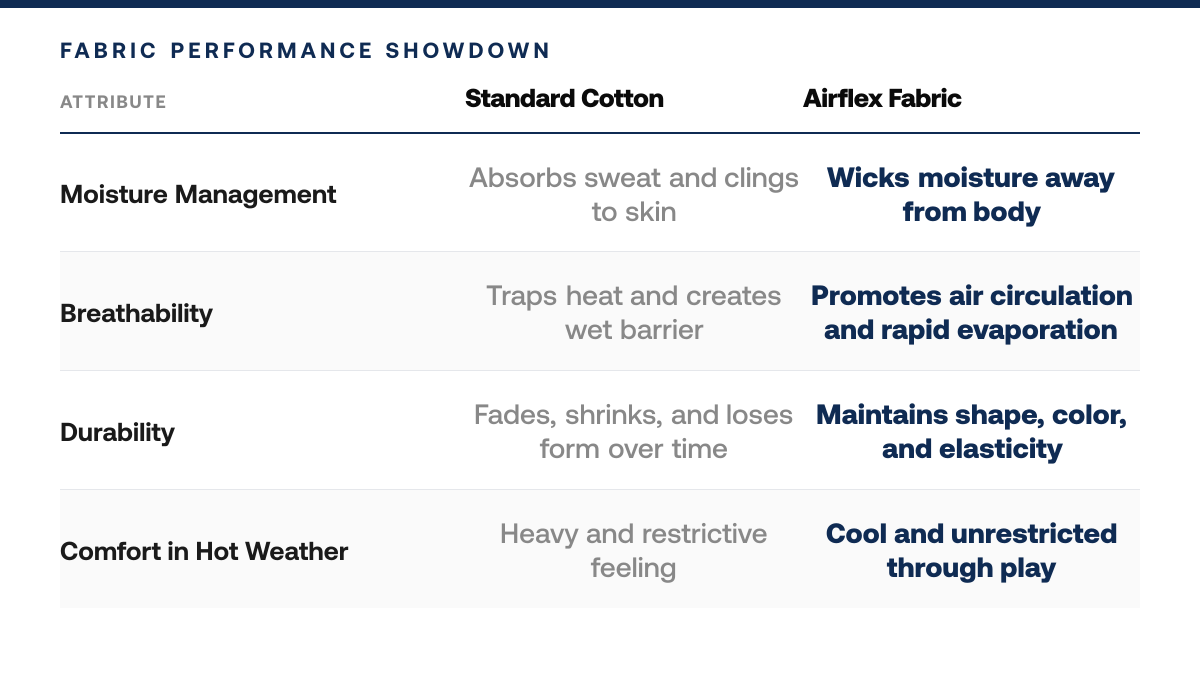
Cotton vs. Airflex™ Performance Comparison
Attribute
Standard Cotton
Airflex™ Fabric
Moisture Management
Absorbs sweat and clings to skin
Wicks moisture away from body
Breathability
Creates wet, restrictive barrier in heat
Enables air circulation without weight penalty
Durability & Appearance
Fades, shrinks, loses form with wear
Maintains shape, color, and elasticity through cycles
Comfort in Hot Weather
Feels heavy and clammy during play
Keeps dry and cool even during intense play
Example 2: The Weekend Golfer's Comfort Win
Consider a casual golfer who plays weekend rounds year-round and wanted a polo that would perform equally well whether he was teeing off in spring or battling August heat. His cotton polos had served him adequately in mild weather, but summer rounds left him exhausted and uncomfortable, with sweat pooling at his back and sleeves riding up awkwardly. When he invested in Airflex™ polos for his weekend rotation, he noticed that even on the hottest days, the fabric stayed light and breathable against his skin. The improved fit and freedom of movement made his swing feel more natural, and he found himself enjoying the round rather than enduring it. Within weeks of wearing Airflex™, his weekend golf became genuinely pleasurable again, a shift that kept him on the course more often and deepened his love of the game.
Why Comfort Unlocks Performance
Both scenarios illustrate the same principle: when a golfer stops fighting against fabric and starts trusting it, confidence and focus follow naturally. Airflex™ removes the friction, literal and mental, that cotton introduces in hot, humid conditions, letting golfers play the game they love without distraction or compromise.
Performance Polo Checklist
Verify the polo's moisture-wicking capability meets your sweat management needs in hot weather
Check the breathability rating to ensure adequate airflow during active play
Confirm colorfastness by reviewing care instructions and fade-resistance claims
Test fit consistency across sizing to ensure reliable comfort and mobility
Compare Airflex™ fabric performance against standard cotton in moisture and breathability metrics
Common Mistakes to Avoid
Mistake: Assuming synthetic fabrics always feel cheap or stiff
Many golfers dismiss performance synthetics without trying them, believing they can't match cotton's comfort. This assumption costs you premium hand-feel and moisture-wicking benefits. Airflex™ blends synthetic performance with a soft, natural touch, test it on-course to experience the difference between outdated synthetics and modern fabric engineering.[2]
Do's and Don'ts for Hot-Weather Golf Apparel
Priority
Do
Don't
Moisture Control
Choose fabrics engineered to repel water and promote rapid evaporation
Rely on natural fibers that absorb perspiration and retain heat
Durability Investment
Select performance materials that maintain vibrant color and elasticity through extended wear
Accept fabrics that fade and shrink with regular washing and sun exposure
Active Play Comfort
Prioritize breathability and structure that supports unrestricted movement
Settle for heavy, clammy fabrics that pull focus from your swing
Mistake: Ignoring care labels and washing Airflex™ like regular cotton
Tossing Airflex™ gear into a hot wash or high-heat dryer breaks down the fabric's performance properties and accelerates pilling and fading. Follow the care instructions, gentle wash, cool dry, to preserve breathability and durability. Proper maintenance ensures your investment performs season after season in hot-weather conditions.[2]
Mistake: Choosing cotton polos for hot weather without considering sweat management
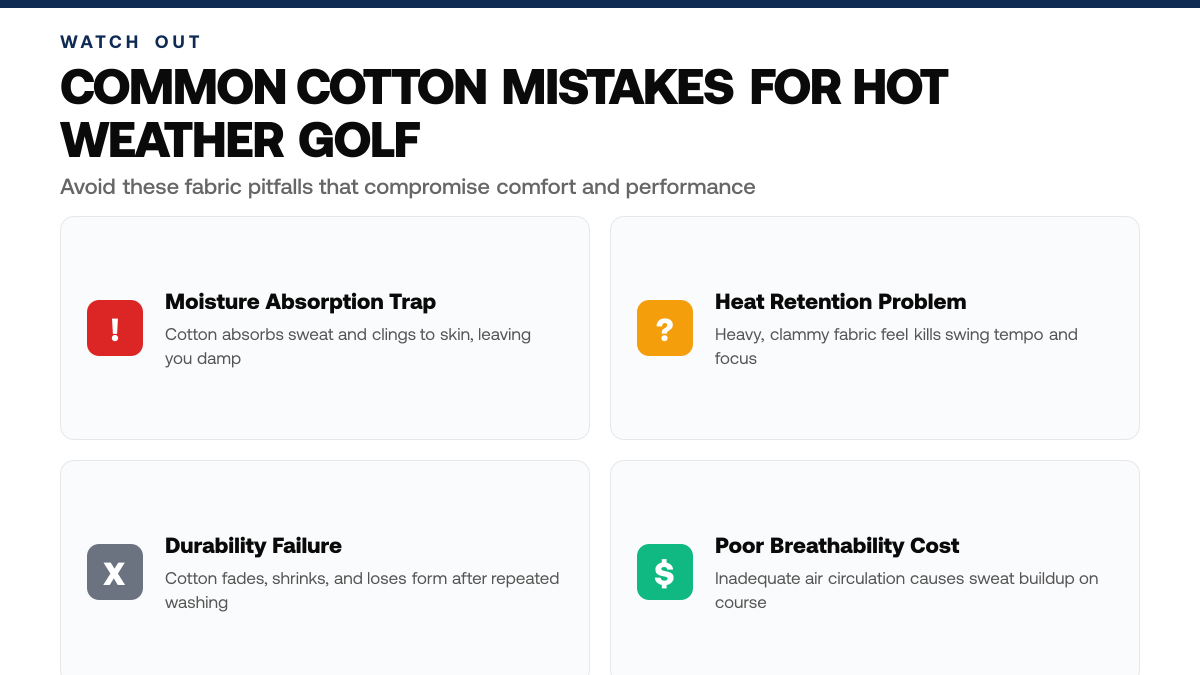
Cotton absorbs moisture and clings to skin, leaving you damp and uncomfortable during rounds. Airflex™ wicks sweat away quickly, keeping you dry and focused. For summer golf, fabric choice directly impacts comfort and performance, synthetic blends outperform cotton in heat and humidity.[2]
Where Comfort Becomes Performance
The distinction between adequate and exceptional athletic wear rarely announces itself on the course. It emerges in the small moments, the absence of distraction, the sustained focus across eighteen holes, the body's ability to remain cool and composed when conditions demand it. Once a golfer recognizes that fabric choice directly influences mental clarity and physical endurance, the relationship to gear fundamentally shifts. It ceases to be aesthetic or habitual and becomes strategic.
Frequently Asked Questions
Why does Airflex™ outperform cotton in hot weather golf?
Airflex™ fabric is engineered to wick moisture away from skin and dry faster than cotton, keeping you cool and dry during rounds in heat and humidity. Cotton absorbs sweat and holds moisture, which reduces breathability and increases discomfort. For golfers playing in warm climates or summer conditions, Airflex™ maintains performance and comfort where standard cotton polos fall short.
Does Airflex™ work for all body types and style preferences?
Yes. Airflex™ is available across multiple fits and design styles, from classic solid colors and traditional cuts to bold patriotic designs, military-inspired collections, and team-themed apparel. Whether you prefer understated elegance or statement-making style, Airflex™ polos are tailored to fit different body types and reflect personal identity, lifestyle, and pride in affiliation.
Is Airflex™ worth the investment compared to cotton?
Airflex™ pricing reflects superior durability and performance longevity. While the upfront cost may exceed basic cotton polos, Airflex™ resists fading, maintains shape, and outlasts multiple cotton replacements over time. This delivers better long-term value, fewer replacements mean lower total cost of ownership for golfers who prioritize both performance and lasting quality.
How to Choose Golf Polo Fabric for Your Swing Type — Walk into any pro shop and you'll notice something that wasn't true a decade ago: golfers are as deliberate about their polo fabric as they are about their clubs. The…
5 Best Golf Polos for Hot Weather Conditions — Stepping onto the course on a scorching summer day, you're immediately aware of every layer of fabric clinging to your skin. The sun beats down, humidity rises, and your…