
You're standing on the first tee on a warm Saturday morning, and within minutes your polo is clinging to your chest. Cotton breathes, sure, but it also absorbs sweat, holds moisture, and can leave you feeling heavy and uncomfortable by the back nine. The choice of fabric in your golf polo matters more than most golfers realize, affecting not just comfort but performance, durability, and how you feel wearing it round after round.
Traditional cotton has dominated golf apparel for decades, and for good reason, it's soft, familiar, and widely available. But modern performance fabrics are changing what golfers expect from their gear. As more players discover alternatives engineered to manage moisture, resist wrinkles, and maintain their shape through countless washes, the debate over what truly belongs in your golf bag has shifted.[1]
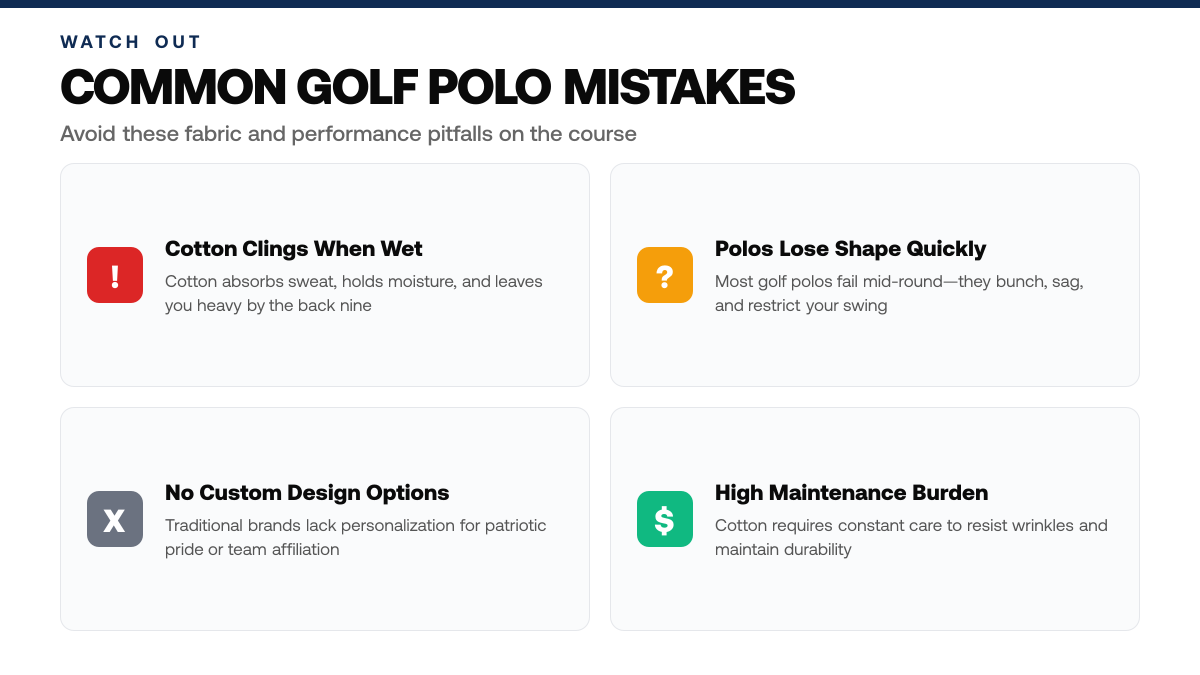
This article breaks down the real differences between advanced performance fabrics and traditional cotton, examining durability, comfort, maintenance, and style. You'll discover what each material delivers on the course and off, and find clarity on which choice aligns with your game and lifestyle. Most golf polos fail the moment sweat hits them, they cling, restrict swing, and lose shape by mid-round, Haven Golf Company weaves Airflex™ fabric to wick moisture while maintaining structure, so your polo moves with you from tee to green without bunching or sagging.
TL;DR
- Airflex™ Fabric offers moisture-wicking and stretch performance designed for active golf play, while cotton provides classic comfort and breathability for casual wear.
- High-performance apparel fabrics reduce sweat retention and enhance mobility, key advantages for golfers seeking functional style that transitions from course to clubhouse.
- Cotton remains popular for lifestyle wear, but performance synthetics dominate competitive golf apparel as players prioritize moisture management and durability over traditional materials.[1][2]
All 5 brands compared at a glance
1. Haven Golf Company Airflex™ Fabric: Premium Performance Polos Built for Style and Durability on the Course
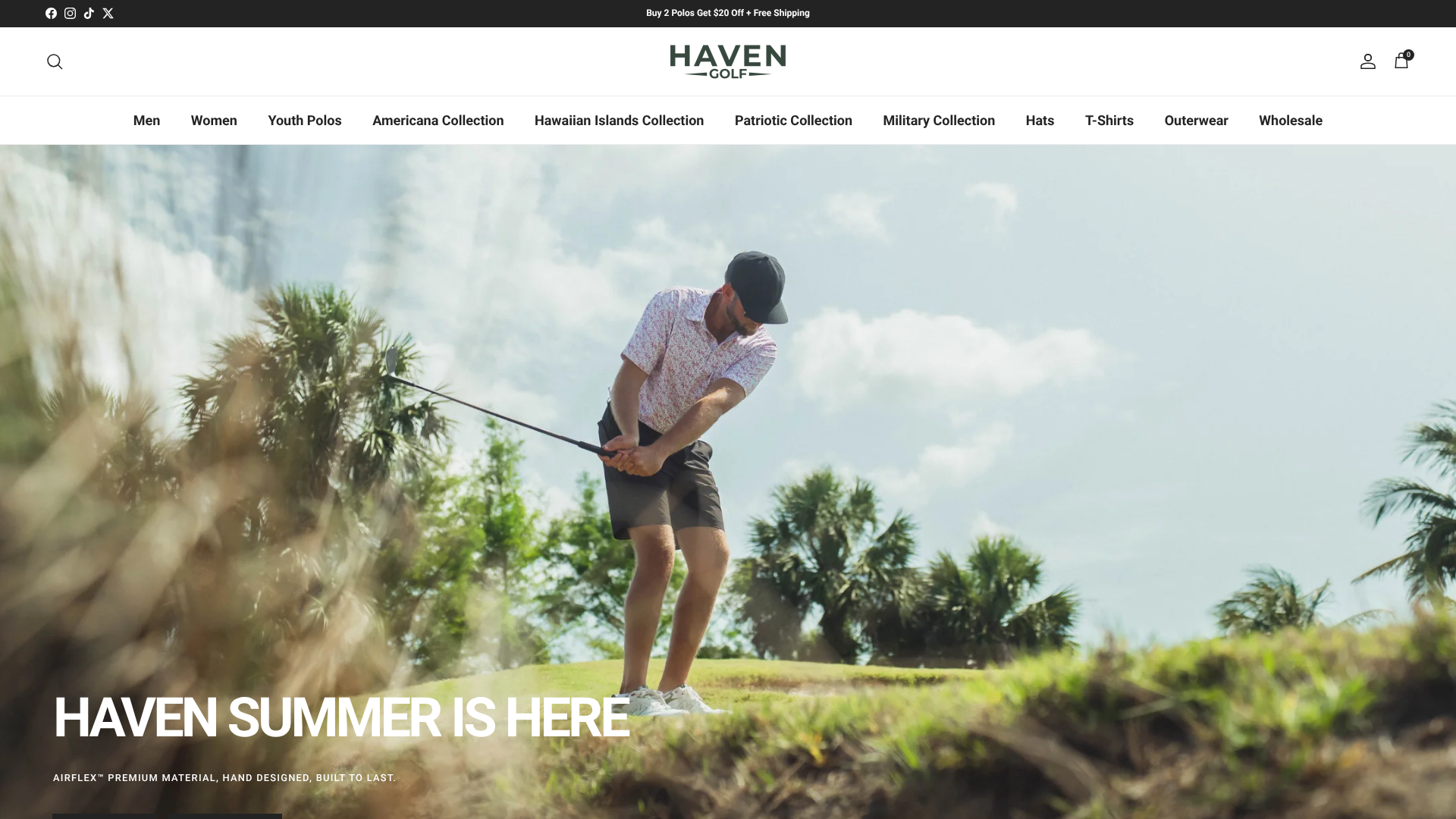
Haven Golf Company Airflex™ Fabric represents a modern alternative to traditional cotton polos for golfers who demand both performance and personality. Built for men and women who want high-performance apparel that reflects personal identity, whether patriotic pride, military heritage, or school and team affiliation, Airflex™ combines advanced fabric engineering with hand-designed original artwork and colorways that cotton simply cannot match.
Here's the gap most cotton polos miss: they absorb moisture and cling to the body in humid conditions, while Airflex™ is engineered to wick moisture away and maintain breathability throughout your round. Cotton also fades and loses shape over repeated washing, whereas Airflex™ fabric construction is designed to retain color vibrancy and structure season after season, giving you a polo that looks fresh and feels responsive on the course.[1]
Airflex™ polos ship with sewn-in collar inserts for a crisp, polished look that holds up to the rigors of golf. The collections span Patriotic, Military, and College Town themed lines, each featuring hand-designed original artwork. Haven Golf Company also offers a custom polo design program for those seeking a truly unique fit, plus wholesale ordering and ambassador programs for retailers, pro shops, and brand partners looking to stock performance polos.
2. Nike Dri-FIT Golf Polo

Nike Dri-FIT Golf Polo is a performance-driven polo shirt engineered for golfers who prioritize moisture management and comfort on the course. Built by Nike's sports science team, it targets serious golfers and lifestyle apparel shoppers, men and women alike, who demand technical fabrics that keep them dry and confident through 18 holes or a full day of wear. The polo balances athletic function with refined style, appealing to players who want gear that performs as hard as they do.[1]
Here's the thing: cotton polos absorb sweat and cling to the body, leaving golfers damp and uncomfortable mid-round. Nike Dri-FIT addresses this gap by using a synthetic blend engineered to wick moisture away from skin and dry quickly. The fabric's structure pulls perspiration to the surface where it evaporates, keeping you cooler and drier than traditional cotton, a critical advantage during warm-weather play or high-intensity rounds.[2]
The polo delivers a tailored fit that moves with your swing, UPF sun protection for course safety, and a soft hand-feel that doesn't sacrifice durability. The Dri-FIT weave resists wrinkles and maintains its shape through repeated washing, while the fabric's breathability ensures air circulation even in humid conditions. Available in a range of colorways, it suits golfers who want personal style without compromising on performance.[3]
3. Adidas Climacool Golf Polo
Adidas Climacool Golf Polo is engineered for golfers and active lifestyle shoppers who demand moisture management and breathability without sacrificing style. Built on Adidas's heritage in performance sportswear, the Climacool line targets players who spend hours on the course in warm conditions and want a polo that keeps pace with their game. The fit and design appeal to both competitive golfers and casual apparel enthusiasts seeking a recognizable, branded option.[1]
Here's the gap most cotton polos miss: Adidas Climacool uses engineered fabric technology designed to wick moisture away from skin and enhance air circulation. While traditional cotton absorbs sweat and clings to the body, Climacool's construction prioritizes evaporative cooling, a mechanism that actively pulls perspiration outward, keeping the wearer dry and comfortable during extended play. This technical approach addresses the core limitation of natural fiber polos in high-heat or high-exertion environments.[2]
The polo delivers moisture-wicking performance, breathable fabric construction, and a tailored golf fit designed for unrestricted swing motion. Adidas integrates its Climacool technology across the chest, back, and sleeves to ensure consistent cooling coverage. The garment is machine-washable and maintains its performance properties through regular care, making it practical for frequent golfers who cycle through multiple polos.[3]
Adidas Climacool Golf Polos are positioned at a mid-to-premium price point typical of branded performance apparel. Specific pricing varies by retailer, fit, and colorway, but the brand typically offers custom or promotional pricing for bulk orders and seasonal sales. For individual purchases, expect pricing aligned with other Adidas performance golf wear rather than budget cotton alternatives.
4. Cutter & Buck
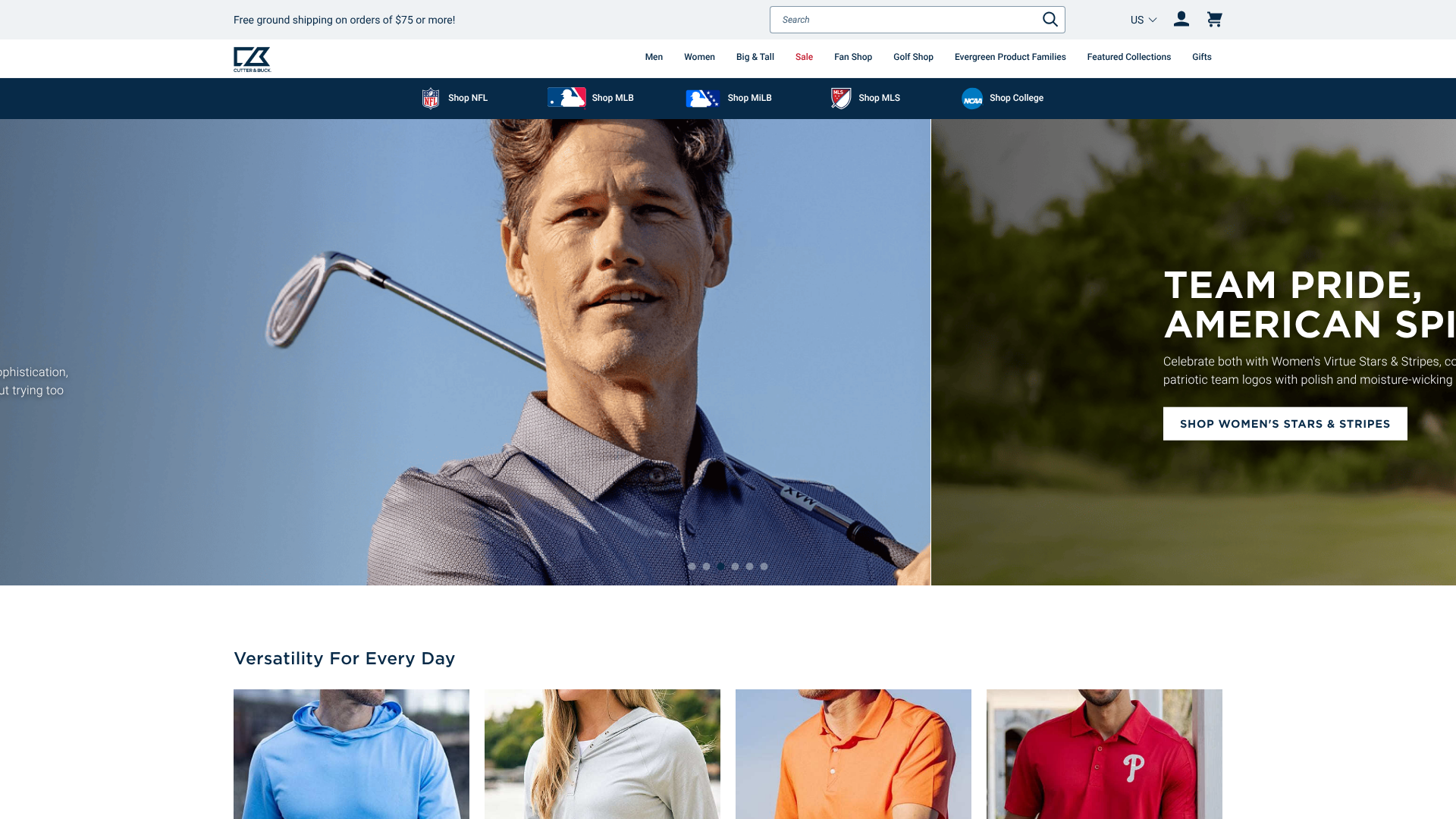
Cutter & Buck is a heritage apparel brand built for golfers and lifestyle shoppers who value classic style paired with functional performance. The brand has earned recognition among golfers seeking polos that balance tradition with modern fabric innovation, appealing to players who want gear that works on the course and off it.[1]
Here's the gap most golf apparel makers miss: cotton polos absorb moisture and cling to the body during play, while synthetic blends often sacrifice breathability for durability. Cutter & Buck bridges that divide by engineering polos that dry quickly, resist wrinkles, and maintain shape through multiple rounds, without the stiff feel of pure synthetics.
The brand offers polos with advanced moisture-wicking properties, wrinkle-resistant finishes, and durable construction designed to withstand frequent washing and wear. Many styles feature UV protection and are available in a range of colors and fits, giving golfers flexibility to match personal style or team identity while staying dry and comfortable.
Cutter & Buck polos are positioned at a mid-to-premium price point reflective of their performance engineering and brand heritage. Specific pricing varies by style and retailer, but the brand typically competes in the range where quality construction and fabric innovation justify the investment for serious golfers and lifestyle buyers.
5. Linksoul
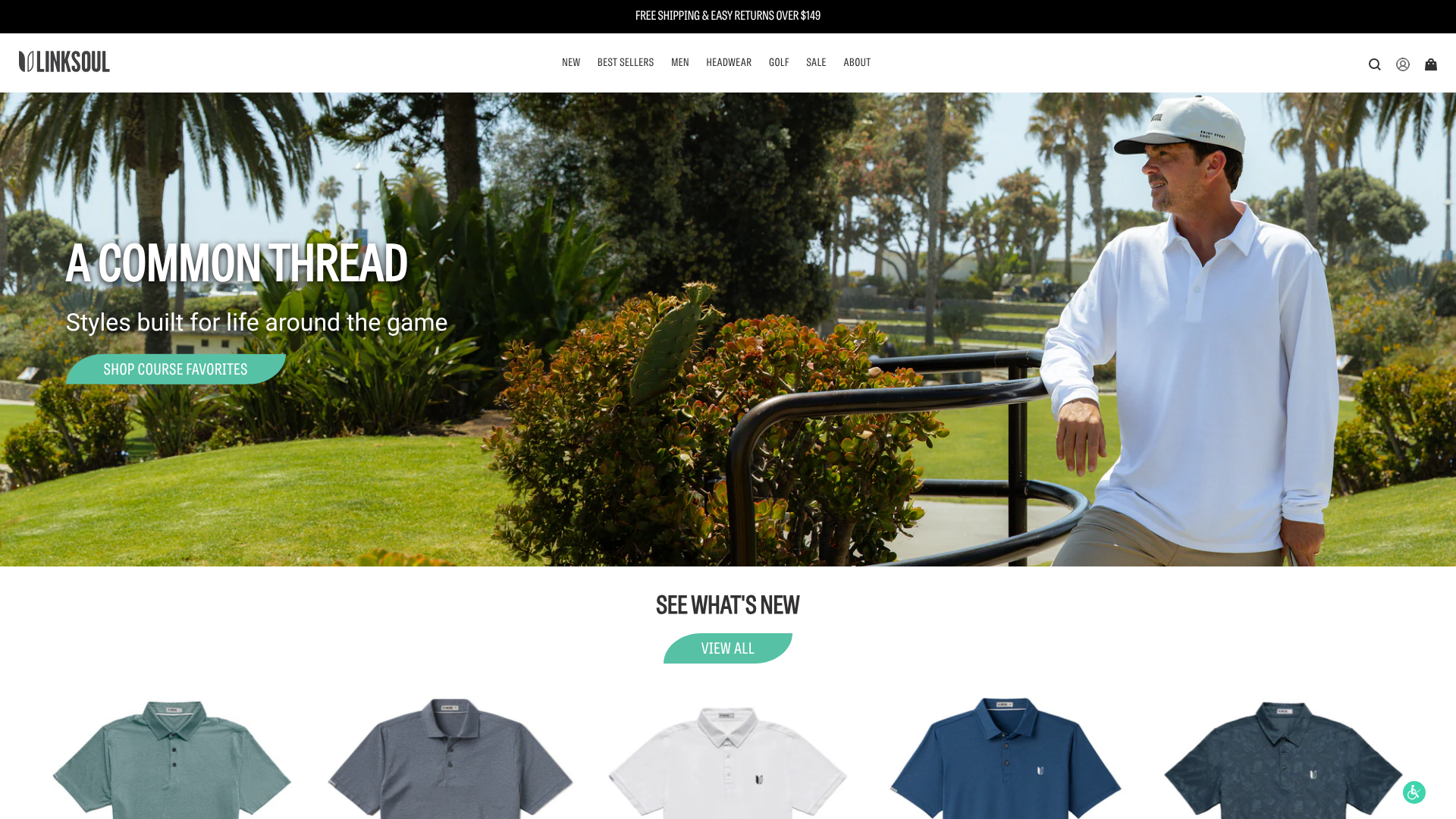
Linksoul is a lifestyle apparel brand built for golfers who want polos that blend performance with personal expression. The brand serves men and women seeking high-quality golf wear that moves beyond traditional cotton, delivering moisture-wicking fabrics and modern cuts that work both on the course and off. Linksoul appeals to golfers who prioritize comfort and style without sacrificing durability or breathability.
Here's the thing: most golf polos rely on pure cotton or basic synthetic blends that either trap heat or feel stiff. Linksoul's approach centers on technical fabric construction that manages moisture while maintaining a natural feel, bridging the gap between traditional comfort and modern performance. The brand focuses on fabrics engineered to move with the golfer, not against them.
Linksoul polos feature moisture-wicking technology that pulls sweat away from the skin, keeping you dry during rounds and off-course wear. The fabrics are designed for stretch and mobility, allowing full range of motion through the swing. Colors and patterns range from solid tones to bold prints, with tailored fits that flatter multiple body types. The brand emphasizes durability, polos built to withstand repeated washing and course conditions.
Linksoul positions itself in the premium golf apparel market, reflecting quality construction and technical fabric development. Pricing reflects the brand's focus on performance materials and design, higher than basic cotton polos but competitive within the technical golf wear category. The brand occasionally runs seasonal promotions and collaborations that offer value for loyal customers.
Performance Fabrics Reshape Expectations
The choice between synthetic innovation and natural fiber tradition reveals a deeper truth: modern athletic wear has fundamentally altered what golfers expect from their clothing. Cotton once represented the standard; now it reads as a compromise. The real shift happens when players recognize that comfort and durability need not exist in opposition, a realization that extends far beyond the golf course into how equipment choices get made across all sports.
Frequently Asked Questions
What makes Airflex™ Fabric better for golf than traditional cotton?
Airflex™ Fabric is engineered for moisture management and breathability, keeping you dry during play, a critical advantage cotton cannot match. Cotton absorbs sweat and retains moisture, making it heavier and less comfortable as temperatures rise or during intense rounds. Modern performance fabrics like Airflex™ wick moisture away from skin and dry faster, allowing golfers to maintain focus and comfort throughout 18 holes. Over 60% of golfers purchase apparel annually, supporting steady demand across seasons, and many prioritize technical performance over tradition when choosing their gear.
Cotton vs Airflex™: Performance on the Course
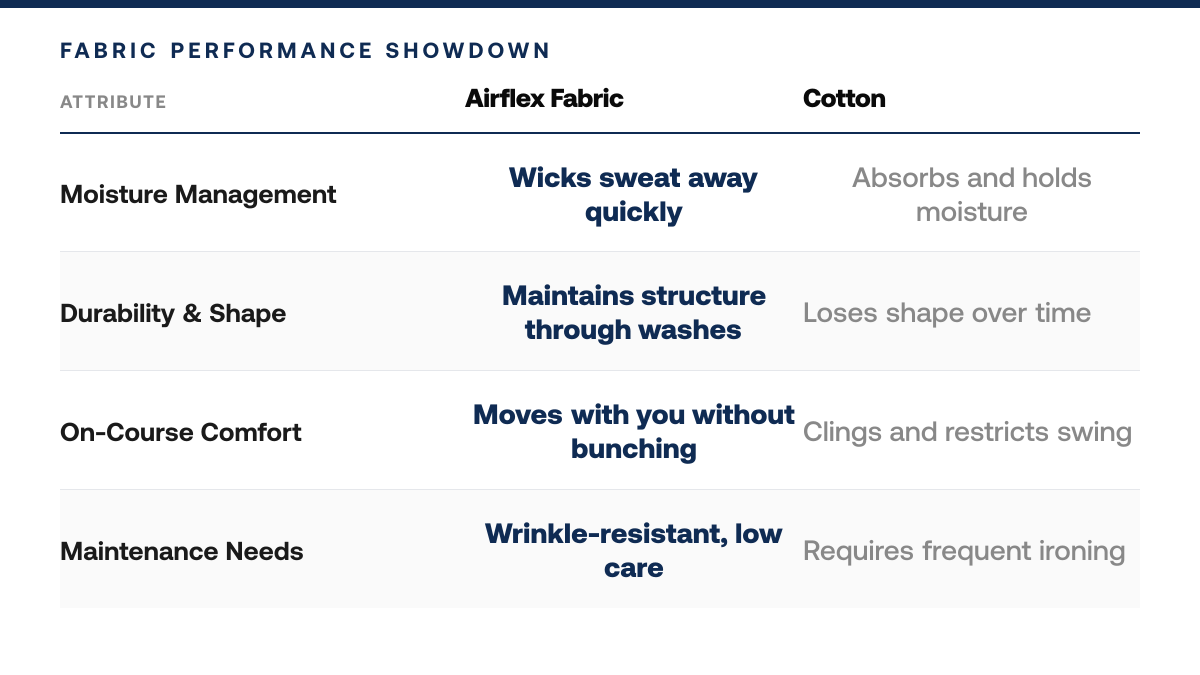
| Attribute | Cotton Polos | Airflex™ Fabric |
|---|---|---|
| Moisture Management | Absorbs sweat and holds moisture | Wicks moisture away from body |
| Shape & Structure | Loses shape and fades over repeated washing | Retains color vibrancy and structure season after season |
| Comfort During Play | Clings to chest in humid conditions, restricts swing | Maintains breathability and moves with you tee to green |
| Durability & Maintenance | Requires frequent care to maintain appearance | Wrinkle-resistant and engineered for lasting performance |
How do I know which fabric is right for my climate and playing style?
Consider your local weather and how often you play. If you golf in humid or warm climates, or play multiple rounds weekly, performance fabrics excel at moisture control and quick-dry properties. Cotton works for casual, infrequent play in mild conditions, but it struggles in heat or humidity. Your playing style matters too, competitive golfers benefit most from technical fabrics that reduce distractions, while recreational players may prioritize cost and casual feel. Test both in your typical conditions before committing to a full wardrobe, and remember that top wear accounts for 60% share of global golf apparel market, reflecting how central the right polo is to the overall experience.[1]
Sources
Read Next
How to Choose Golf Polo Fabric for Your Swing Type — Walk into any pro shop and you'll notice something that wasn't true a decade ago: golfers are as deliberate about their polo fabric as they are about their clubs. The…
Haven Golf Company vs Straight Down: Which Polo Wins — A golfer steps up to the tee in a polo that fits perfectly, moves with every swing, and looks sharp whether you're on the course or heading to the clubhouse afterward…
